
Toyota Makes Highlander All-Electric For 2027

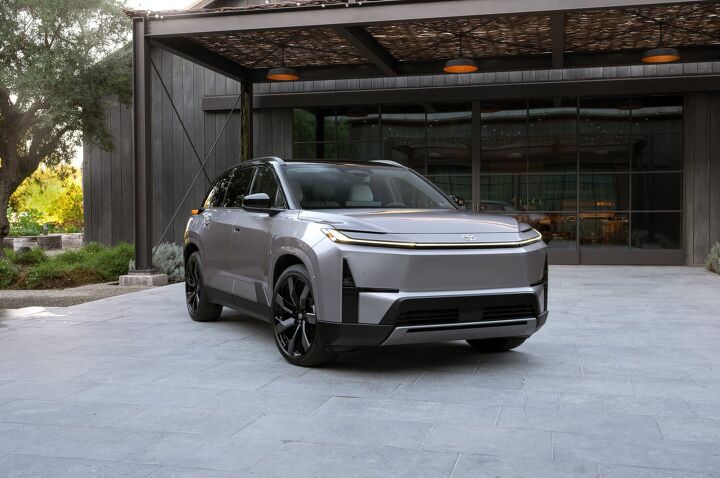
Toyota has decided to reinvent the Highlander as an all-electric SUV for the 2027 model year. This is assuredly a response to the Grand Highlander gobbling up sales that would have gone to its little brother. But one still wonders if this is the best play for Toyota to make.
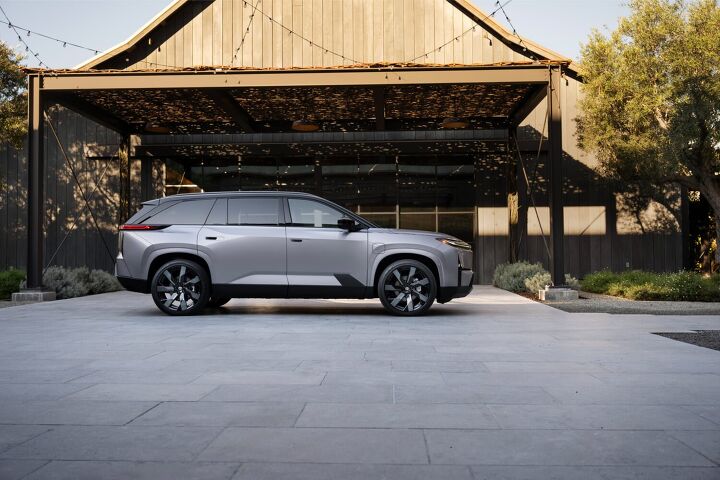
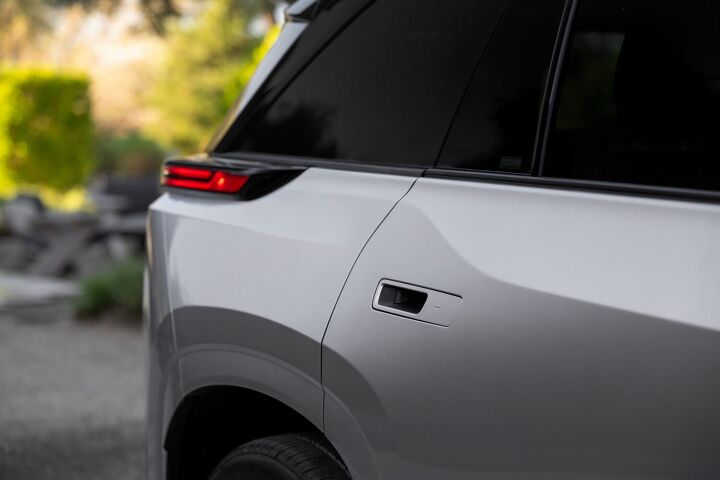
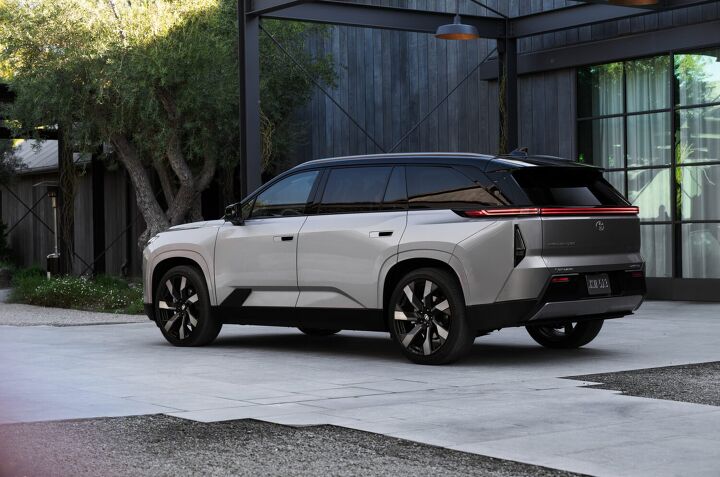
Gone are the soft curves and conspicuous headlamps of the current model. For 2027, the Highlander has embraced boxiness and the styling language of Toyota’s other electrified models. The front of the vehicle is reminiscent of the battery powered C-HR and bZ crossovers.
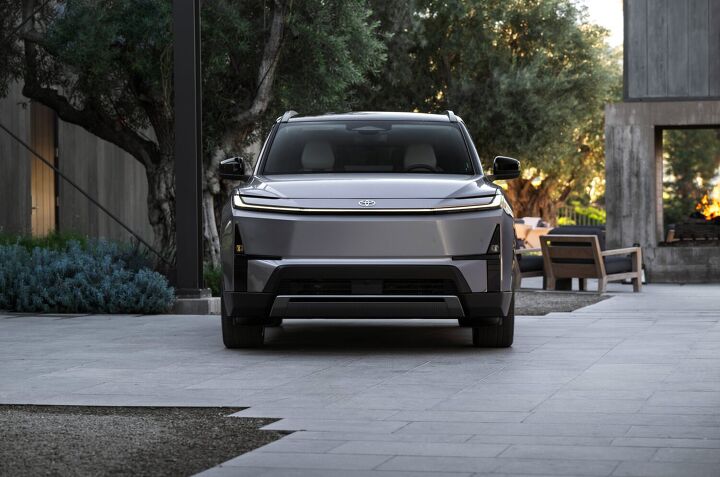
Larger than before, the next Highlander is about 4 inches longer than what's on sale today with a wheelbase that has grown by over 8 inches. It’s likewise about two inches longer. This makes it nearly as large as the Grand Highlander in terms of overall footprint and will assuredly help improve interior space. However, most of that looks to be going toward giving occupants in each of the three rows more space instead of maximizing cargo capacity. But both metrics should benefit.
It also comes with two-tone paint options, which is nice if you like the high-contrast look. At a minimum, nobody is going to confuse the SUV with its predecessor.
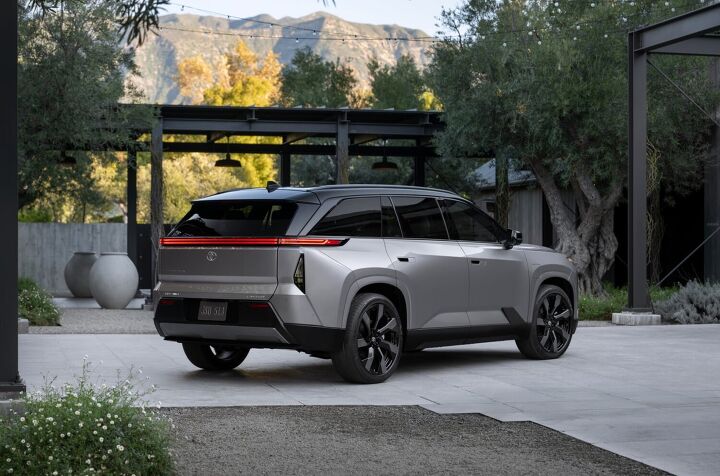
“Our design mission was to create a new Highlander that pursued the robust proportions of an SUV while also capturing the sophisticated, high-tech aspects of all-electric performance,” said Chief Designer Masayuki Yamada. “To accomplish that goal, we designed a model that balanced aerodynamics, interior space, and capability so it is equally suited for elegant urban or outdoor enthusiast lifestyles.”
The new model rides on a modified Toyota Next Generation Architecture-K (TNGA-K) platform, with the automaker promising unparalleled quiet and comfort thanks to leveraging sound aerodynamics and some clever, sound-absorbing materials. Obviously, the lack of combustion will further tamp down NVH.
In the past, the standard Highlander utilized a turbocharged 2.4-liter inline-four pushing 265 horsepower. Meanwhile, the hybridized variant leveraged 2.5 liters and some electric motors to make a little less power in exchange for improved fuel economy.
For the 2027 model year, Toyota has opted to give the front-drive XLE trim a singular electric motor boasting 221 hp and 198 lb-ft of torque. Fancier models will receive an extra motor, all-wheel drive, along with 338 hp and 323 lb-ft to help lug around the heavy battery packs.
Standard units will come with a 77.0-kWh power unit Toyota believes will deliver 287 miles of range on base trim. Dual-motor variants will lose a few miles. But there will be an optional 95.8-kWh battery that’s supposed to manage 320 miles between charges on the all-wheel drive Highlanders.
Charging comes by way of the Tesla-based NACS port that’s basically standard in our corner of the universe. When necessary, fast-charge should take all versions of the Highlander from a 10 to 80 percent state of charge in about 30 minutes. That’s pretty good. But it also depends upon you actually finding a compliant charging station.
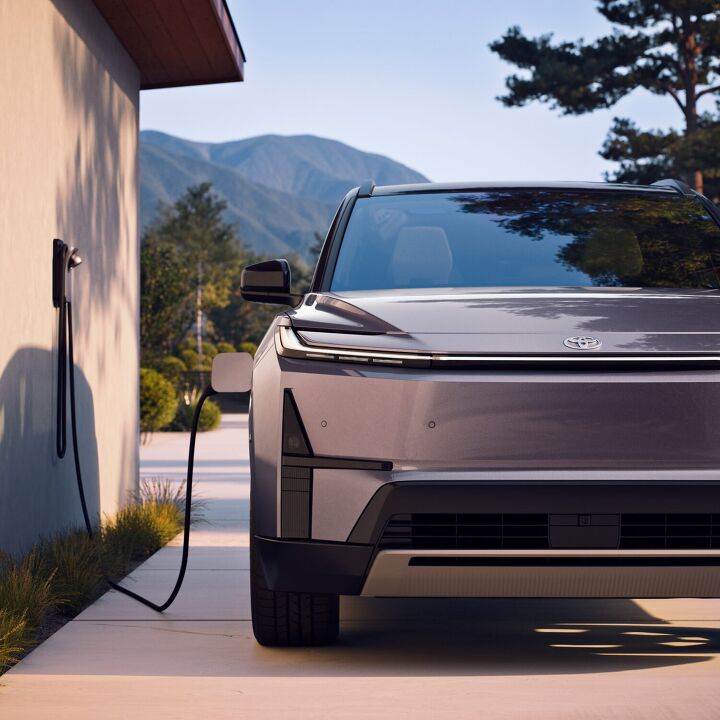
Level 2 charging (240 volts) takes considerably longer. Those with a depleted battery can expect to need to spend the night somewhere to recoup all of their lost energy. It’ll take about seven hours with the smaller battery and roughly eight with the larger unit.
While we cannot imagine anyone seriously overlanding an all-electric SUV on anything other than a dare, Toyota has given the new Highlander several off-road driving modes. Toyota’s Muti-Terrain Select system is apparently included on all all-wheel drive models.
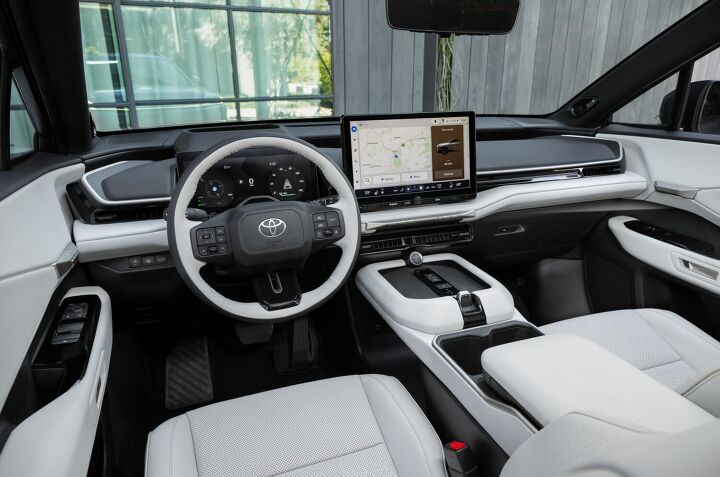
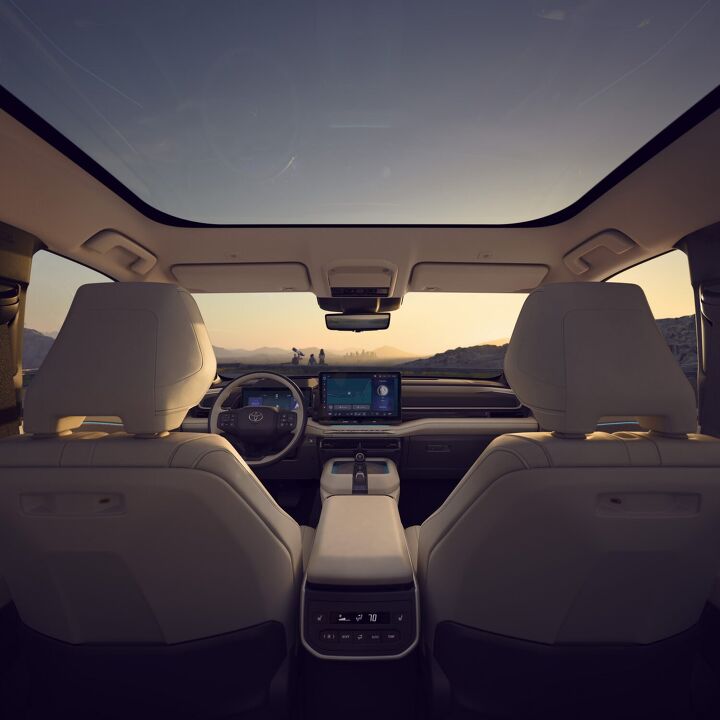
The interior looks to be a slightly slicker version of what we’ve seen from the new RAV4 and comes with a 12.3-inch instrument display and a 14.0-inch central touch screen. Physical buttons seem few and far between.
Unless the automaker plans on leading with the premium trims for the electric Highlander’s introductory year, it doesn’t look like there will be a bargain version of the vehicle. The XLE looks to be the base trim and comes with faux-leather upholstery, heated front seats, and some unnecessary ambient lighting options.
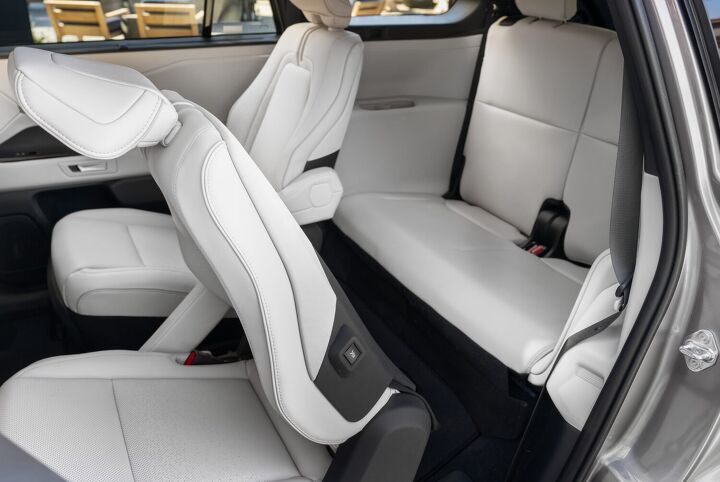
Climbing the trim ladder to the Limited will allow customers to add heated (and even cooled) seats elsewhere in the SUVs and a bunch of extra tech. Most of these are part of an upgraded driver assistance package (Toyota Safety Sense 4.0). Meanwhile, customers can dress up the Highlander with a panoramic roof, larger 22-inch wheels, and an upgraded sound system.
The fact that Toyota seems to be foregoing a struggle trim boasting cloth seats and has chosen to make the now-larger Highlander an all-electric model leaves us with some strong doubts that it’ll be available for less than the gasoline powered Grand Highlander. It’s hard to imagine the EV starting much below $60,000 and basically impossible to see a scenario where there is a $50,000 version. While the manufacturer hasn’t officially touched upon MSRP, it’ll assuredly be far more expensive than the gasoline-powered Highlander that’s still available.
The only silver lining is that building the vehicle at Toyota Battery Manufacturing North Carolina (TBMNC) will help the manufacturer avoid importation tariffs.
Despite other outlets claiming that this is a shrewd move by the company, we have some concerns. Toyota is basically copying the same recipe the brand used for the bZ4X (now just bZ) — which yielded 18,570 U.S. deliveries in 2024 and only garnered 15,609 sales in 2025.
To be fair, the current Highlander (pictured below) isn’t in an enviable position. The tight third row makes the Grand Highlander the obvious pick for larger families and those with fewer children are probably going to save themselves some money with a RAV4.
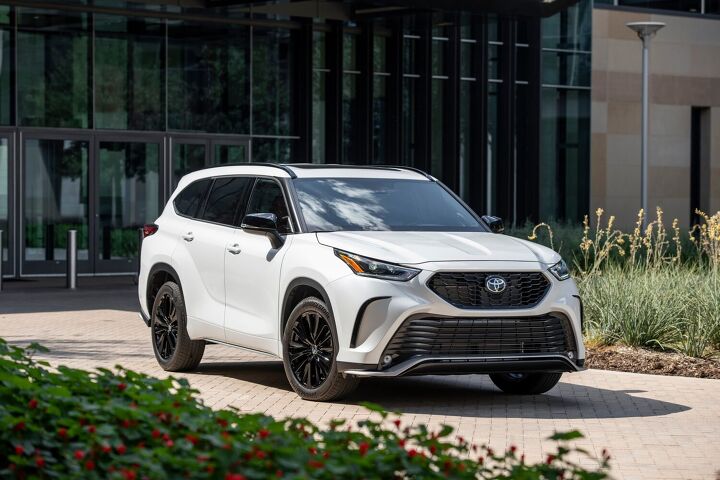
Sales clearly reflect this. When the Grand Highlander entered our market in 2023, sales of the smaller Highlander showcased a steep decline. Toyota sold 222,000 units of the Highlander in 2022, which wasn’t even a record year. But that figure dropped to just 56,000 by 2025, as the annual volume of the Grand Highlander spun up to 136,000.
Toyota obviously needed to reinvent the Highlander to help it make better sense in the lineup. But it’s not clear that the resulting updates are going to accomplish this. Electric vehicles haven’t been seeing the kind of appreciation manufacturers had hoped for, especially not in North America.
Expect to the 2027 Toyota Highlander to arrive late in 2026.
[Images: Toyota]
Become a TTAC insider. Get the latest news, features, TTAC takes, and everything else that gets to the truth about cars first by subscribing to our newsletter.
Consumer advocate tracking industry trends and regulations. Before joining TTAC, Matt spent a decade working for marketing and research firms in NYC. Clients included several of the world’s largest automakers, global tire brands, and aftermarket part suppliers. Since adding automotive writing to his repertoire, he has become an ardent supporter of the right-to-repair movement, discussed the status of the automotive sector on national broadcasts, participated in a few amateur rallying events, and driven more rental cars than anyone should ever have to. Handy with a wrench, Matt grew up surrounded by Detroit auto workers and learned to drive by twelve. Alleged to be contrarian, Matt claims to prefer understeer and motorcycles.
More by Matt Posky









Comments
Join the conversation
So it’s ev only .Well that ends Toyota as a supplier for my company .I think they are making a total mistake destroying the gas fueled Highlander for an ev only version .Ev sales are tanking .Inalways thought Toyota was the best vehicles and smart enough to not go all in ev .Guess I was wrong .Join the list of companies with a vehicle line that will be in the red as long as it exist .Really foolish .
I thought Toyota was smarter than this .They won’t sell and when people figure out that , come trade in time , they are worth almost nothing , they won’t be happy .Offering a hybrid version only on the grand Highlander is stupid .Its like vw’ s van that’s ev only ( stupid) .No one wants them as EVs.If they had just made a gas fueled version you would see a lot more on the streets .EVs are not a vehicle for every use and Americans usually look at vehicles that can do everything they want ,seamlessly.EVs can’t do that , sorry ev cultist but it’s a fact .Toyota will no longer be on my list of company vehicles to buy.