


Study: Hydrogen Power Is Also Bad

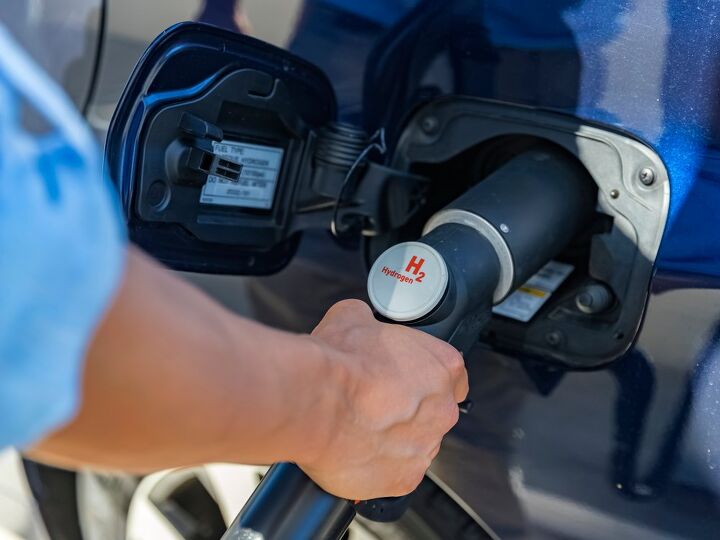
Of all the American adages, “there ain't no such thing as a free lunch” has to be the most applicable and it often comes to mind whenever the automotive sector spins itself up over alternative energy vehicles. While it is comforting to assume that novel powertrains are going to create a world where nothing is wasted and no environmental harm is done, the laws of nature don’t really support the theory.
Research conducted by Princeton University and the National Oceanic and Atmospheric Association, and shared by SciTechDaily and Jalopnik, is suggesting that widespread use of hydrogen power could result in long-term complications for the environment.
But what doesn’t?
Despite battery technologies formerly being hyped as the savior of mankind, we’ve learned that there are serious ethical issues pertaining to cobalt mining. We also know that increased nickel demand has resulted in individual plants dumping millions of tons of waste material into the ocean. Lithium is similarly troublesome, as large-scale procurement often results in toxic chemicals seeping into nearby drinking water. Even the batteries the above materials go into producing end up being classified as hazardous waste and have to be disposed of properly in order to minimize their impact.
The point is that there doesn’t seem to be any way around things having some kind of environmental cost. If you eat, something else has to die. But it takes time to break through the marketing hype and figure out what the true costs actually are. We know the dangers of relying on fossil fuels because we have decades of research under our belts and all-electric propulsion seems to be the next item being carted to the guillotine of truth.
But what about hydrogen power? Some automakers have championed it as the next big thing since the early 2000s, noting that hydrogen is the most abundant element in the universe and that the vehicles utilizing it emit nothing more than clean water vapor. It almost sounds too good to be true — and it likely isn’t if the latest research conducted by Princeton University and the National Oceanic and Atmospheric Association happens to be accurate.
From SciTechDaily:
The reason for this is that hydrogen gas reacts readily in the atmosphere with the same molecule responsible for breaking down methane, which is a potent greenhouse gas. If the level of hydrogen emissions surpasses a specific threshold, this shared reaction is likely to result in an accumulation of methane in the atmosphere, leading to long-term climate consequences.
“Hydrogen is theoretically the fuel of the future,” said Matteo Bertagni, a postdoctoral researcher at the High Meadows Environmental Institute working on the Carbon Mitigation Initiative. “In practice, though, it poses many environmental and technological concerns that still need to be addressed.”
Bertagni is the first author of a research article published in Nature Communications, in which researchers modeled the effect of hydrogen emissions on atmospheric methane. They found that above a certain threshold, even when replacing fossil fuel usage, a leaky hydrogen economy could cause near-term environmental harm by increasing the amount of methane in the atmosphere. The risk for harm is compounded for hydrogen production methods using methane as an input, highlighting the critical need to manage and minimize emissions from hydrogen production.
Though the multi-billion-dollar question is whether or not that accumulates into something that would be worse than maintaining the status quo. The alleged x-factor is how much hydrogen we can keep from leaking into the atmosphere and how easily hydroxyl radical (OH) can break it all down. Researchers suggested that a relevant hydrogen spike could mean OH would be spread too thin to help dissipate other greenhouse gasses, namely methane.
“If you emit some hydrogen into the atmosphere now, it will lead to a progressive build-up of methane in the following years,” Bertagni explained. “Even though hydrogen only has a lifespan of around two years in the atmosphere, you’ll still have the methane feedback from that hydrogen in 30 years from now.”
Though a lot of this hinges on how production is done. Presently, the overwhelming majority of hydrogen is produced via nonrenewable natural gas in a process that creates an enormous amount of carbon dioxide. However, splitting water into hydrogen and oxygen using electricity from renewable sources is supposed to be the pathway forward and is presumed to be much better for the environment.
Considering some of the issues being faced by countries that have tried to aggressively swap over to renewables, this will be easier said than done. Germany was formerly seen as a trailblazer in terms of transitioning to renewable energy sources. But the nation ultimately ran into trouble and failed to meet its own energy needs, encouraging a return to coal-fired power plants that will undoubtedly release more particulate matter into the atmosphere.
Granted, the country has historically had a problem producing enough energy for itself. But the swap to green energy appears to have backfired completely — either due to poor implementation or because the relevant technologies just aren’t ready.
Businesses will likewise need to take into account exactly where hydrogen tech is today. As there are presently very few places one can even purchase the gas, companies will need to figure out how to transport it cheaply while keeping leaks to an absolute minimum as they ramp up the infrastructure. Automakers will likewise have to get serious about providing vehicles using hydrogen fuel cells once everything is in place.
“If companies and governments are serious about investing money to develop hydrogen as a resource, they have to make sure they are doing it correctly and efficiently,” Bertagni said. “Ultimately, the hydrogen economy has to be built in a way that won’t counteract the efforts in other sectors to mitigate carbon emissions.”
But you always have to wonder where the information is coming from. While we don’t have much reason to doubt Princeton University and the National Oceanic and Atmospheric Association, the study was funded by the Gordon and Betty Moore Foundation and National Science Foundation — the latter of which is tied directly to the United States government, which one could argue has vested interest in maintaining the petrodollar and other U.S. interests.
Still, that additional context may be indicative of nothing and the study itself ( which is worth a read) seems pretty straightforward. We just want you to have as much information as possible when making up your own mind.
[Image: Literator/Shutterstock.com]
Become a TTAC insider. Get the latest news, features, TTAC takes, and everything else that gets to the truth about cars first by subscribing to our newsletter.
Consumer advocate tracking industry trends and regulations. Before joining TTAC, Matt spent a decade working for marketing and research firms based in NYC. Clients included several of the world’s largest automakers, global tire brands, and aftermarket part suppliers. Dissatisfied, he pivoted to writing about cars. Since then, he has become an ardent supporter of the right-to-repair movement, been interviewed about the automotive sector by national broadcasts, participated in a few amateur rallying events, and driven more rental cars than anyone ever should. Handy with a wrench, Matt grew up surrounded by Detroit auto workers and learned to drive by twelve. A contrarian, Matt claims to prefer understeer and motorcycles.
More by Matt Posky









Comments
Join the conversation
A lot of posters are clearly assuming the hydrogen fuel in question is LIQUID hydrogen, which is better known as rocket fuel. And, yeah, that is dangerous, tricky stuff. That's why it's not being used for hydrogen fuel cell vehicles - those run on compressed hydrogen GAS.
I remember well how oil spills destroyed pristine Alaska and Gulf environments and we were told that was okay. So here comes clean hydrogen and we are getting unproven worried theories funded by those same liars and varmints of past disasters? Someone get a rope and let's take care of this today.