


Honda Prepares Recall For Nearly 300,000 Vehicles Over Engine Issue

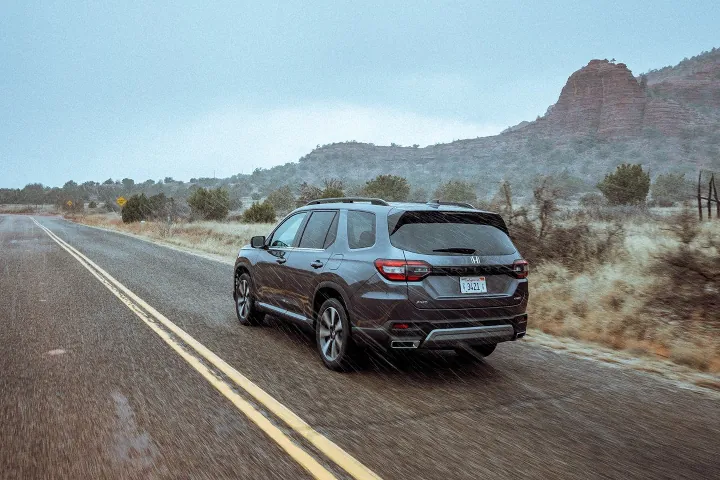
According to the National Highway Traffic Safety Administration (NHTSA), Honda will soon be recalling 294,612 inside the United States over an assumed software defect pertaining to the fuel injection electronic control unit. This follows customer reports that select Honda and Acura vehicles were suffering from power losses and stalled engines.
The relevant documents identify the 2022-2025 Acura MDX Type-S, 2021-2025 Acura TLX Type-S, and 2023-2025 Honda Pilot as the impacted models. While a formal recall announcement had not yet been issued by all parties until today, the NHTSA already had a campaign code for the defect (No. 25V031000) and Honda responded with a recall acknowledgement issued on January 28th. The manufacturer had already determined that there was a defect related potentially violating U.S. motor vehicle safety standards and decided to conduct a safety recall by January 16th.
Issuing recall notifications directly to the impacted customers will be the next step.
Based on the relevant safety reports, the defect has been attributed to “improper programming of the fuel injection electronic control unit (FIECU) settings.” Affected vehicles may see “sudden changes in the throttle opening” illuminating the service engine light and/or have their “engine to lose drive power, hesitate and/or stall.”
The company became aware of the issue late in 2023 after vehicle telematics indicated a “trend of increased torque monitor data.” Initially, it was assumed to be an issue with the on-board diagnostics. It wasn’t until December of 2024 when it started exploring other avenues. Thus far, the automaker has received 674 warranty claims and no reports of injuries or crashes related to the defect.
Honda has been in contact with Denso about the fuel injection ECU and the supplier has said that the settings for the correction control logic of the air flow rate and fuel injection volume were incorrect. In some instances, the above can allegedly cause a torque control failure to be detected by the ECU, stalling out the engine.

The current plan will be for Honda to contact its dealerships by the end of the month. Owners are expected to be notified closer to March 17th to give the company time to sort out the recall. The fix will be a software reflash for the ECU, which has become a very common remedy for defects in recent years. Repairs will be done free of charge and customers who previously paid for repairs pertaining to the recall will be eligible for reimbursement via the NHTSA plan.
Changes have already been made to the equipment being installed on all the relevant Honda and Acura vehicles manufactured after January 16th, 2025.
Honda has had a bad run of run with U.S. regulators of late. In November, the NHTSA wanted to investigate 1.6 million vehicles produced by the company between 2016 and 2020. The company has likewise seen a general uptick in recalls in recent years. However, that’s something we could say about literally every automaker currently in operation.
This has been attributed to modern vehicles becoming more complicated. Today’s automobiles come with more features and are heavily reliant upon integrating hardware with software. The amount of writing has likewise increased exponentially, resulting in more opportunities for something to go wrong. Electrical issues (including those that impact other systems) are now the most common form of automotive recalls by far and have been attributed to the general rise we’ve seen across the industry. But we’ve likewise seen companies utilizing cheaper materials for engine components, which presumably hasn’t helped things.
Concerned Honda or Acura owners can contact the National Highway Traffic Safety Administration Vehicle Safety Hotline at 1-888-327-4236 (TTY 1-800-424-9153) or go to the NHTSA recall website. Alternatively, Honda's customer service hotline is 1-888-234-2138. Just make sure to have your VIN handy.

[Images: Honda]
Become a TTAC insider. Get the latest news, features, TTAC takes, and everything else that gets to the truth about cars first by subscribing to our newsletter.
Consumer advocate tracking industry trends and regulations. Before joining TTAC, Matt spent a decade working for marketing and research firms based in NYC. Clients included several of the world’s largest automakers, global tire brands, and aftermarket part suppliers. Dissatisfied, he pivoted to writing about cars. Since then, he has become an ardent supporter of the right-to-repair movement, been interviewed about the automotive sector by national broadcasts, participated in a few amateur rallying events, and driven more rental cars than anyone ever should. Handy with a wrench, Matt grew up surrounded by Detroit auto workers and learned to drive by twelve. A contrarian, Matt claims to prefer understeer and motorcycles.
More by Matt Posky






Comments
Join the conversation
Wonder what differs in the Pilot versus the Ridgeline and Passport
Maybe it's time to force all manufacturers to publish the source code of all the software that runs on every road legal vehicle. Drivers don't appear to actually drive the car any more - they are just a voting member among a bunch of software co-drivers.
Other industries have similar requirements - the gaming industry in Nevada is required to register all software on electronic gaming machines with the Nevada Gaming Commission. If your software checksums don't match during an inspection, the gaming license holder is fined or shut down.