


Dodge May Deliver Hi-Po SRT Hurricane Motors


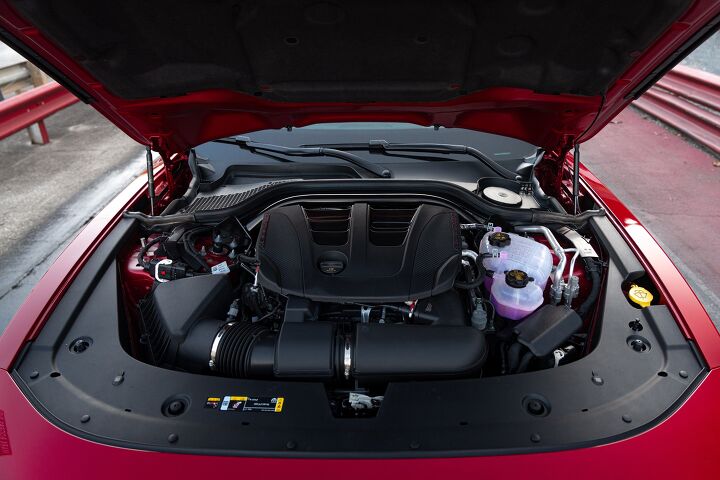
While many are excited that Stellantis has resumed production of the 5.7-liter Hemi V8, it sounds as though the company has no plans to abandon development of the 3.0-liter Hurricane I6.
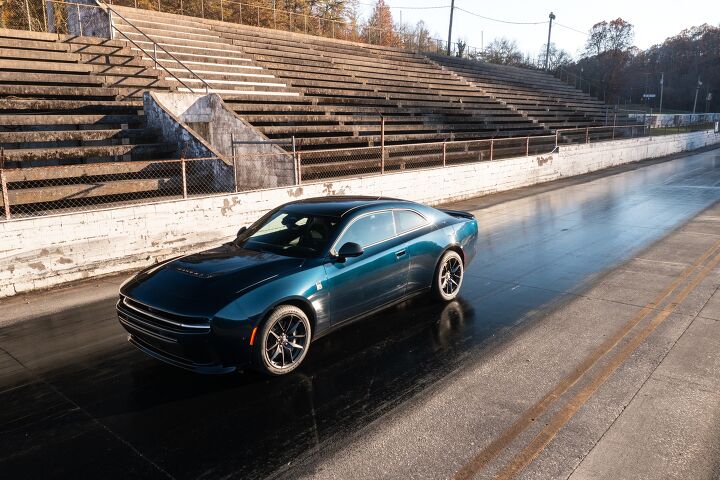
With the exception of the electrified variants, that are seeing their production being heavily scaled back, the Dodge Charger is presently available with Hurricane motors featuring either 420 horsepower and 468 lb-ft of torque (R/T model) or 550 hp and 531 lb-ft of torque (Scat Pack). But it sounds as though even spicier variants are in the works.
News comes by way of The Drive, which recently discussed the future of the Dodge Charger with the people responsible. Formerly synonymous with the Hemi motors, author Andrew Collins asked what might be next for the model.
“We’ve got a lot in the works for SRT, that’s for sure,” responded Matt McAlear, Dodge CEO and head of Chrysler and Alfa Romeo North America. “The SRT’s gonna continue to be the biggest, baddest, boldest, best thing we do, and it’ll be fun.”
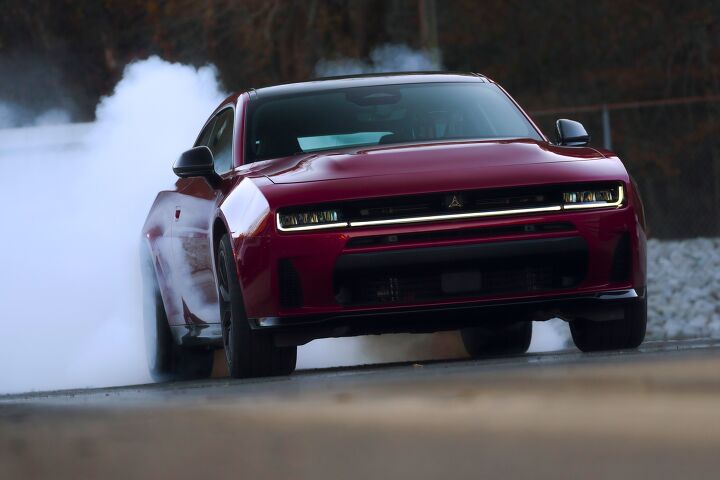
That’s a pretty clear admission that hi-po SRT models are forthcoming — and likely not just for the Charger. But he dropped some hints that the performance donation might not necessarily be limited to the returning V8 motors.
“V8’s not a bad word, but performance is performance,” McAlear noted. “We’re gonna continue to push the limits of this engine [the Hurricane I6] and see what it can do.”
This reportedly included mentions that the SRT division was already working on performance upgrades for the Hurricane, with the CEO adding that the twin turbos provided a lot of tuning potential.

That’s certainly true. But fans have still been clamoring to see the V8 return to what many previously viewed as the last true American muscle car ever since the current-generation Charger was revealed.
In terms of performance, it doesn’t really matter how the cylinders are oriented. I’ve driven Hemi and Hurricane-equipped pickups, with the only glaring difference being the sound. While the 3.0-liter I6 sounds nice, the turbos mute the soundtrack a little and most Americans just feel more secure with the rumble of a V8.
Obviously, there are other differences. The 5.7-liter V8 does offer a tad more towing capacity than the Hurricane-equipped trucks. Some would likewise prefer the mechanical simplicity of the older V8 relative to the twin-turbo Hurricane. But this might not matter to quite so many people on something like an extra-spicy Dodge Charger.
It may also be supremely difficult to install the Hemi into that particular model. The current Charger was originally developed as an EV with the ability to field the 3.0-liter twin turbo. While there’s likely enough room to cram the Hemi into the engine bay, the cost of developing such a vehicle could prove prohibitively expensive.
Stellantis may not be in a huge rush to design such a car just because U.S. emission regulations have suddenly eased up and customers claim to want one.
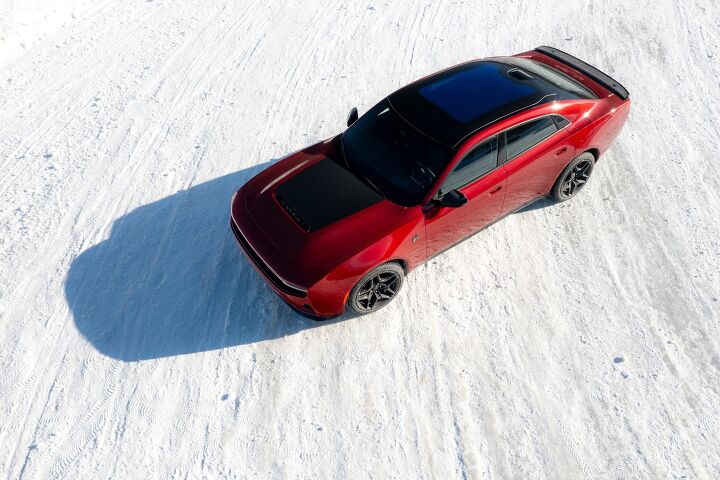
The current gasoline-powered Dodge Charger also weighs quite a bit more than the older models due to the addition of an all-wheel drive system and structural changes designed to accommodate battery packs for the EV variant. Considering that the Hemi V8s are likewise heavier than the Hurricane motors, Stellantis may be hesitant to put more weight over the front axle.
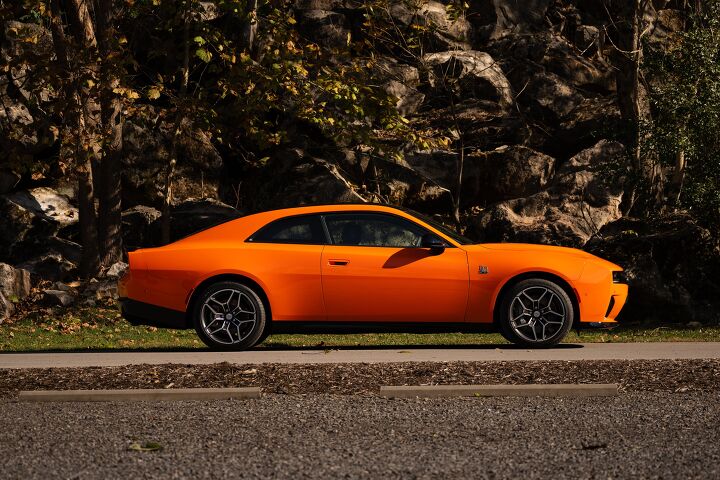
Dodge has even tuned the new car’s exhaust to have a deep rumble, rather than the trumpety note that I6 motors are typically known for. R/T models are also a bit faster than the predecessors on paper. It’s very clear that the company is keen to deliver what customers have said they wanted, even if a V8 option is still off the table.
Will some people still be waiting until Dodge installs a V8 and dumps the touchscreen-focused interior before they’re ready to buy? Almost certainly. But their ranks may be smaller than we think and could even come down a bit further after we see what the — presumably forthcoming — SRT-tuned version of the 3.0-liter Hurricane has to offer.
[Images: Stellantis]
Become a TTAC insider. Get the latest news, features, TTAC takes, and everything else that gets to the truth about cars first by subscribing to our newsletter.
Consumer advocate tracking industry trends and regulations. Before joining TTAC, Matt spent a decade working for marketing and research firms based in NYC. Clients included several of the world’s largest automakers, global tire brands, and aftermarket part suppliers. Dissatisfied, he pivoted to writing about cars. Since then, he has become an ardent supporter of the right-to-repair movement, been interviewed about the automotive sector by national broadcasts, participated in a few amateur rallying events, and driven more rental cars than anyone ever should. Handy with a wrench, Matt grew up surrounded by Detroit auto workers and learned to drive by twelve. A contrarian, Matt claims to prefer understeer and motorcycles.
More by Matt Posky









Comments
Join the conversation
It depends an the frequency and weight of your right foot and your driving ability.
Turbo and super chargers alone do NOT increase gas mileage, in fact they can decrease mileage because all they do is pump more air, which allows for increased power from..... burning more gasoline. The weight savings from going from a larger engine to a smaller/lighter engine is what increases miles per gallon, but only when you are not accelerating hard and using the turbo. T/S charging allows that tiny engine to burn more gas and air with every stroke, increasing power to that of a larger engine, at the cost of over stressing it.
In a diesel truck T/S charging makes sense. A diesel engine must already withstand high compression and is built with far more strength than any gas engine has to be engineered for. And when you try to convert a gas engine to diesel its going to be a fail, for the same reasons.