


Canada’s New Deal With China Is Making Everyone Crazy

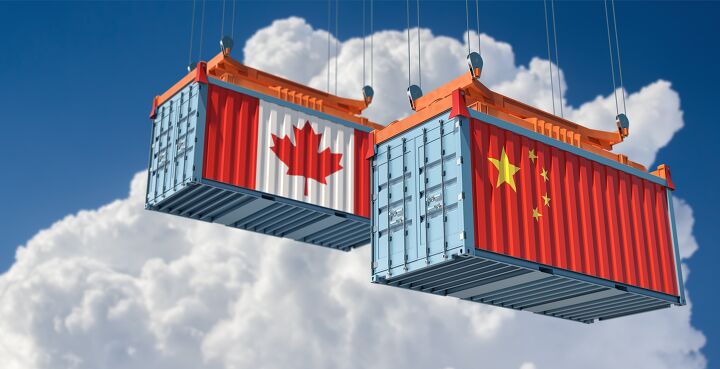
Canadian Prime Minister Mark Carney looks to have struck a deal with China to allow all-electric vehicles to be imported into the country. This strategic partnership comes without the 100 percent tariff the nation imposed on Chinese EVs in 2024. In exchange, China looks to be softening similar fees imposed on Canadian goods — mainly those related to farming.
While this is presumably great news for Canada’s farming industry, the automotive sector has already expressed its displeasure.
“The larger reality is we don’t know anything about it,” David Adams, chief executive of the Global Automakers of Canada, was quoted as saying by Financial Post. “This announcement just throws a wrench in the gears. Nobody knows anything. Nobody can tell you anything, not even the minister’s office.”
As the primary lobbying arm of most automakers already doing business inside the country, fresh competition isn’t something the Global Automakers of Canada is going to welcome with open arms. While they’re happy to sell all-electric vehicles, with some companies still claiming total electrification as their end goal, they also want to be the ones to sell those cars — rather than handing that business over to Chinese rivals.
Unifor has likewise expressed some strong opinions on the issue. With automotive jobs having been on the decline for years, the union is allegedly worried that importing more products from China will negatively impact future employment.
Unifor President Lana Payne publicly described the current labor situation as “a fight for our lives.” Ontario Premier Doug Ford seems to be in agreement, noting that domestic jobs tend to suffer whenever cheap foreign-made products come into the Canadian market.
Seeing Unifor, which typically supports left-wing causes, singing a similar tune to a member of Canada’s Progressive Conservative Party feels relevant. However, the situation may just stem from reports that Mark Carney doesn’t appear to have consulted the usual groups about the decision to let China import 49,000 EVs into the country without lofty tariffs. Instead, he seems to have made this choice while visiting Beijing to meet with Chinese officials (including President Xi Jinping) and business owners.
But the real issue is the long term ramifications. Carney also shared plans to create a Canada-China partnership to ramp up investments into technology and clean energy. The automotive sector is likely to remain a big part of that, especially since Canada didn’t really bother to walk its long-term EV mandates by much. The country saw a mild revision for 2026, with the rest of the deal going largely unchanged. Canada still claims to want 100% of all light passenger vehicles to be all-electric models by 2035.
Boiled down, it looks like Canadian leadership may be willing to sacrifice a portion of its already suffering automotive sector in the hope that its new deal with China will secure business for other export-focused industries. As a possible perk, relations between the countries should tighten and auto jobs could eventually return under Chinese brands.
While trade officials in the United States previously said that any deals Canada made with China were of little concern, with Donald Trump even suggesting that the duo should indeed collaborate if it would benefit Canada, the president is now singing a slightly different tune.
Attending the World Economic Forum in Davos, Trump responded to earlier statements made by Carney that were extremely critical of the United States’ foreign policy. The Canadian Prime Minister even went so far as to indirectly suggest that the established world order may need to be supplanted, with “middle powers” forming new alliances as part of a "new world order."
The assumption is that Carney was referencing the recent deals he negotiated with China.
“Canada gets a lot of freebies from us, by the way. They should be grateful, also, but they’re not. I watched your prime minister yesterday. He wasn’t so grateful,” Trump said. “Canada lives because of the United States. Remember that, Mark, next time you make your statements.”
With the United States–Mexico–Canada Agreement (USMCA) up for renegotiation later this year, none of the above bodes well for trade relations between the two nations. However, it could be argued that Mexico was already subsuming some of the industrial deals that would have previously gone to Canada.
The USMCA has arguably worked out slightly better for Mexico than Canada. But the core issues date back to before the trade deal was established. Canadian manufacturing has been on a slow decline for decades. Part of this is due to high energy and labor costs in Canada. But the nation has also suffered somewhat under the recently established tariffs.
From the vantage of your author, it seems daft to ignore how integrated the United States and Canada happen to be in terms of trade. But a lot of the recent decisions from both nations don’t really seem to take that into account.
While Canada is poised to get some cheap EVs, the partnership may discourage other automakers from investing into the region. However, it could similarly be argued that many companies weren’t given Canadian manufacturing the shot it deserved anyway.
While 49,000 electric vehicles is a drop in the bucket in terms of annual sales, it makes up about a quarter of yearly EV sales. That could be enough to nullify market share of brands like Tesla or Volvo. But this may only be the beginning, as there’s technically no official limit to how many cars Canada imports moving forward.
Rumors have suggested that leadership intends on sticking with the 49,000 vehicle limit for the next three years. But the Prime Minister’s Office has said nothing official on the subject.
Present EV volumes likely don’t warrant the kind of investment that would result in automakers building new facilities in Canada. We’ve already seen legacy brands walking back promises to build electric models in the country after sales projections for EVs fell short of the desired targets. The assumption is that Chinese companies will feel similarly.
But that hasn’t prevented non-Chinese automakers from expressing concerns. The prospect of fresh competition is no longer an empty threat and they want stability. Years of changing leadership has resulted in shifting and sometimes conflicting business strategies. Electric vehicle mandates have come and gone, or been revised, as EV sales failed to meet projections.
Efficiency regulations are constantly changing, encouraging more small-displacement motors and turbocharging. While Donald Trump has vowed to deregulate the industry (which automakers like), he also introduced a slew of new tariffs (which automakers do not like). Ideally, the automotive sector wants all governments to cater to its every whim while showering it with subsidies. But, in lieu of that, it’ll accept a situation where it can reliably count on the same regulations and trade policy for more than a four-year stretch.
There are also concerns that Canadian EV regulations could result in a situation where established automotive brands selling large numbers of combustion vehicles could be forced to pay Chinese firms that exclusively sell electric models. Eventually, businesses that fail to reach federal EV quotas will be subjected to government fines. However, those brands can purchase carbon credits from automakers that do comply — and the Chinese firms undoubtedly will.
However, EV sales are presently cooling off in North America. This has led the public to question the utility of such regulations while legacy automakers have started to reconsider how many assembly lines they’ll actually need to dedicate to all-electric models. With Canada having previously tied a lot of its future auto investments to electrification, there are real fears that factory deals will fall through.
In summation, the whole situation is a complete mess right now. We have members from opposing parties criticizing Carney’s deal with China and industry groups concerned that they were never consulted. Meanwhile, relations between U.S. and Canadian leadership appears to have taken a turn for the worse just six months between the two are supposed to renegotiate their current trade relationship.
U.S. Commerce Secretary Howard Lutnick has even suggested that Carney’s recent statements at the World Economic Forum in Davos seriously threatens Canada’s trade status with the United States. We'll probably see if that was really the case in July when the USMCA is revisited.
[Images: Lightboxx/Shutterstock; JHVEPhoto/Shutterstock]
Become a TTAC insider. Get the latest news, features, TTAC takes, and everything else that gets to the truth about cars first by subscribing to our newsletter.
Consumer advocate tracking industry trends and regulations. Before joining TTAC, Matt spent a decade working for marketing and research firms based in NYC. Clients included several of the world’s largest automakers, global tire brands, and aftermarket part suppliers. Dissatisfied, he pivoted to writing about cars. Since then, he has become an ardent supporter of the right-to-repair movement, been interviewed about the automotive sector by national broadcasts, participated in a few amateur rallying events, and driven more rental cars than anyone ever should. Handy with a wrench, Matt grew up surrounded by Detroit auto workers and learned to drive by twelve. A contrarian, Matt claims to prefer understeer and motorcycles.
More by Matt Posky









Comments
Join the conversation
Likely that most of 49000 will be chinese made Teslas.
Canada already faultered on this after a little pressure from the USA/Trump. Not a nig surprise, but smart decision. The USA does NOT need Canada contrary to some delusional people, but Canada needs the USA to survive financially and for security.