
Analysts Predicting New Vehicle Sales Dropping Big in April
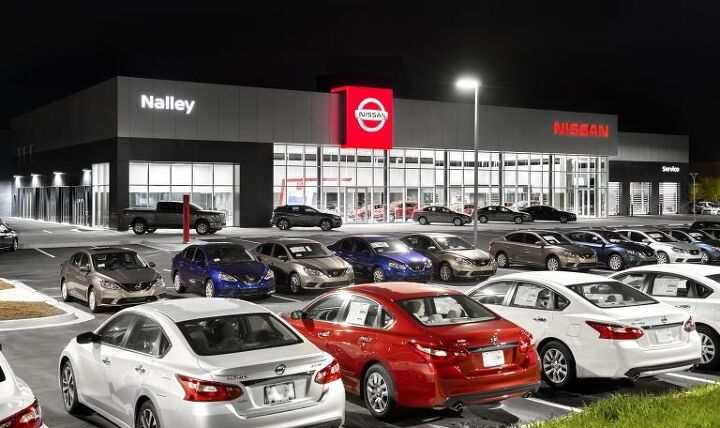
When automakers report April sales next week, the numbers are going to be a bit ugly, analysts predict, but the comparisons to last April are tough because the numbers were artificially inflated, they note.

According to the experts at J.D. Power & Associates and GlobalData, total new car sales will fall 7.3 percent compared to the year-ago period. The total number of new vehicles sold will come in at about 1.37 million vehicles, which equates to a seasonally adjusted annualized rate (SAAR) of about 16 million units.
Selling 16 million units in one year is the bottom end of the curve what’s deemed a “good” sales year for automakers. Why the drop? Automakers offered huge incentives on vehicles sold before the implementation of tariffs from the Trump administration that were predicted to increase new vehicle prices by as much as $10,000 per vehicle.
Those massive increases never happened because automakers convinced President Donald Trump to adjust some of the tariffs and the car companies ate some of the losses on vehicles as well. In short, people bought while they thought cars were cheap.
In April of last year, the industry was still feeling the effects of a tariff‑driven rush to retail lots, as an additional 53,000 consumers accelerated purchases ahead of anticipated tariff impacted price increases,” said Thomas King, president of OEM Solutions at J.D. Power.

“That pull‑ahead pushed April 2025 to an annualized sales pace of 17.2 million units—one of the strongest months of the year and well above the full‑year 2025 pace of 16.3 million units. As a result, traditional year‑over‑year comparisons provide limited insight into the underlying health of consumer demand again this month.
“Stripping out the inflated prior-year baseline, April 2026 points to continued resilience in new‑vehicle demand, even as consumers contend with elevated fuel prices and broader economic uncertainty.”
That uncertainty comes from, in part, the affordability — or lack thereof — of new vehicles. The average retail transaction price is just under $46,000, according to Power data, and the average interest rate on a new car loan is 6.73 percent, which is down slightly from March, but still higher than car buyers are used to in recent years.

Despite easing borrowing costs, average monthly finance payments are expected to increase 3.1 percent year over year to $812, Power officials noted. Some of that is due to a decline in trade-in equity, which has been hampered by buyers who have negative equity on their vehicles. This forces buyers to either come up with the difference or rollover the amount owed into their new vehicle.
Average trade‑in equity is declining toward $7,099, down $660 from a year ago, while the share of vehicles carrying negative equity is trending to reach 31.3% — the highest level for the month of April since 2020 and an increase of 5.5 percentage points from 25.8% a year ago as consumers who purchased during the peak of inventory shortages four years ago return to market.
“In response, manufacturers are increasing incentive support to help offset the impact of negative equity. Average incentive spending per vehicle is trending towards $3,141, an 11.1% increase from a year ago,” King noted.
[Images: Nissan, Toyota, Ford, Michael Strong]

Michael Strong has spent more than 25 years writing about the automotive industry. A Detroit-area native, he’s written about everything from local car shows to product reviews to financial news. Currently he writes and edits for a variety of national and local publications. He’s also a longtime member of the Automotive Press Association and the International Motor Press Association, and a graduate of Georgia Southern University. Hail Southern! Despite a love for ’70s land yachts and BMWs from the late ’80s and early ’90s, his personal vehicle is neither of those.
More by Michael Strong










Comments
Join the conversation
That's okay, their free tariff refunds they can pocket will hold them over through the declining sales.
I found a 2012 Chevy Colorado about 3 hours away. 87K miles, not bad. Most importantly, it has a regular air breathing V8. I'm sorely tempted. Swap the radio, add a rear camera, and be done.