


Winter EV Driving: Range and Elevation Lessons From A 20"+ Snow Storm
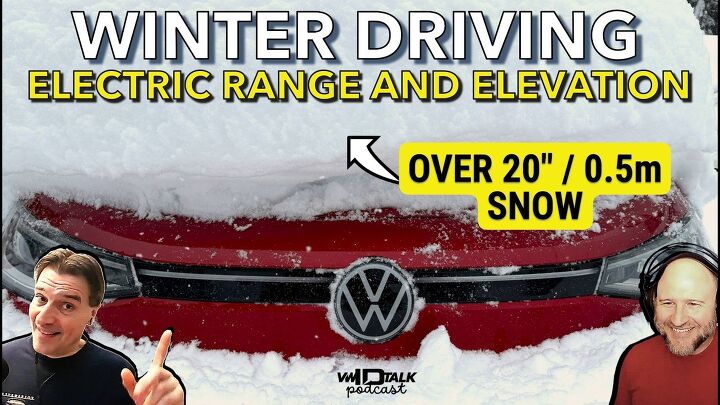
In this episode of the VWIDTalk Podcast, we analyze real-world data from a mountain ski trip in 20+ inches of snow.
We demonstrate how freezing temperatures and a 4,000-foot elevation gain impact EV range, limit power output to 50%, and affect regenerative braking. Learn how to manage mountain physics, deal with frozen sensors, and use essential winter gear like snow socks to stay safe.
What we cover in this episode:
Mountain Physics: How much battery it really takes to climb 4,000 feet versus the energy you get back on the way down.
Power Limits: Why your car might only give you 50% power when the battery is near freezing.
Sensor Failures: Dealing with "intimidating" dashboard errors when the front radar gets covered in slush.
The Rescue: How "snow socks" and a little manpower saved Jan after a 90-degree slide in a potholed parking lot.
Winter Essentials Checklist:
We also break down why you should carry sand, a 12V jumpstarter, and why upgrading to an AGM battery might save your trip.
Subscribe for our upcoming deep dive on how to change and code your 12V battery!
Check out the VWIDTalk Podcast on YouTube and wherever you get your podcasts ( Apple Podcasts, Spotify, Overdrive and more).
A transcript, cleaned up by AI and edited by a staffer, is below.
The TTAC Creators Series tells stories and amplifies creators from all corners of the car world, including culture, dealerships, collections, modified builds and more.
[Image: YouTube Screenshot]
Become a TTAC insider. Get the latest news, features, TTAC takes, and everything else that gets to the truth about cars first by subscribing to our newsletter.
Transcript:
Podcast Transcript: Winter EV Driving & Mountain Trips
Hosts: Jan & Wes
Topic: Real-world impact of cold weather, elevation, and snow on EV range and performance.
The "Guess-o-Meter" (GOM) and Range Anxiety
Jan recently took his EV on a ski trip involving a 4,000-foot elevation gain and 25 inches of snow.
Pre-Trip: The car was charged to 100%. Based on recent flat-ground driving ($3\text{ miles/kWh}$), the car predicted 199 miles of range.
The Ascent: After driving 75 miles uphill, the battery dropped to 44% with only 64 miles of estimated range left. The consumption worsened to 2 miles/kWh.
The Descent: Physics works in your favor on the way down. Jan returned with 12% battery and 22 miles of range.
The Reality: While the car thought the trip would take 135 miles of range, it actually took 177 miles. Cold and elevation resulted in a 15% loss compared to the initial estimate.
Key Learning: Uphill climbs are expensive, but regenerative braking recovers a significant portion of that energy on the way down. However, you won’t get it all back because energy is still being spent to heat the cabin and the battery.
Winter Performance & Charging Tips
The 100% Rule: If your destination is at the top of a mountain, do not charge to 100% before heading back down. You need "buffer room" in the battery to store the energy recovered from regenerative braking. If the battery is full, you'll have to use your mechanical brakes, wasting energy and increasing wear.
Power Limitations: When a battery is near freezing, its internal resistance increases. To protect the cells, the car may limit maximum output power to 50% and reduce regenerative braking capacity.
Battery Heating: In extreme cold, the car may use roughly 1.3–2 kW just to keep the battery at a safe operating temperature.
Driving in Snow: Sensors and Traction
Sensor Failure: Heavy snow or slush (even just 5mm) can cover the front radar (usually near the logo). This triggers multiple dashboard errors, disabling Travel Assist and Emergency Braking. You may need to pull over and wipe the sensor manually.
Traction Mode: On AWD models, engaging "Traction Mode" helps in deep snow.
Getting Stuck: Even with AWD and "Three-Peak Mountain Snowflake" rated tires (like Michelin CrossClimate 2s), deep icy potholes can leave an EV high-centered or spinning.
Winter Essentials Checklist
If you are heading into mountain snow, Wes and Jan recommend carrying these items:
Item
Purpose
Snow Socks / Chains
Essential for ice; some states (like Washington) accept "Snow Socks" as a legal alternative to chains.
Grippy Gloves
For installing traction devices in the cold.
Antifreeze Washer Fluid
Prevents the reservoir and pump from cracking.
Long Snow Brush/Scraper
Necessary to clear the entire roof and windshield.
Small Bag of Sand
Providing instant "grit" if a tire is spinning on ice.
12V Jump Starter
Even EVs use a 12V lead-acid battery to engage the high-voltage system. If the 12V dies in the cold, the car won't start.
Pro Tip on 12V Batteries: If you replace your 12V battery, upgrade to an AGM (Absorbent Glass Mat) battery. It handles cold better and lasts longer, but remember that the car's computer must be "coded" to recognize the new battery type to optimize the charging curve.

Driven by ID owners, the VWIDTalk Podcast is operated by VW ID owners for VW ID owners, sharing best practices, tips, tricks, and mods in engaging, multi-participant discussions on everything to do with Volkswagen's lineup of electric vehicles. Dive deep, stay positive, and most importantly, enjoy the ride. Hosts: VWIDTalk.com moderators and ID.4 owners Jan Kalis and Wes Garrison
More by VWIDTalk Podcast, TTAC Creator









Comments
Join the conversation
Some people are dumb/bored/brainwashed enough to try anything.
Regen is pretty cool stuff.
Added bonus: you don't end up with hot-brake vibration on the way down a steep incline like you do in an ICE car.