

Rare Rides Icons: The Cadillac Eldorado, Distinctly Luxurious (Part LXXIII)

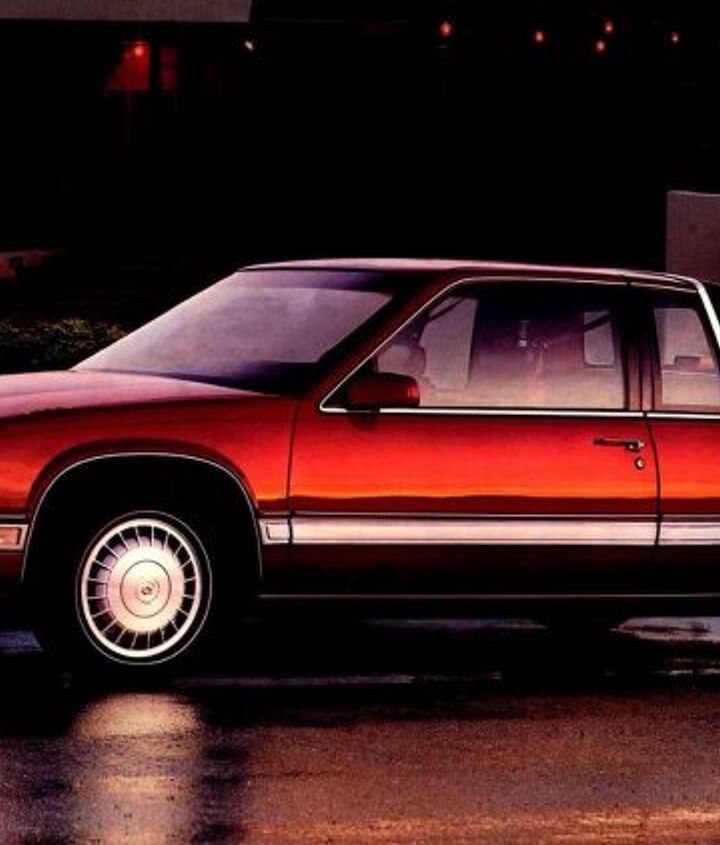
The Eldorado’s 11th generation debuted in 1986 with downsized styling in line with the rest of Cadillac’s portfolio, save the lone rear-drive Fleetwood Brougham. The smaller coupe (sans convertible version from 1986 onward) was newly very similar in looks to its platform mates the Oldsmobile Toronado and Buick Riviera. And like the other two, it implemented a new transverse engine layout. Said layout paid dividends in the interior, where Cadillac promised just as much space as the outgoing Eldorado. But boy did it look different inside.
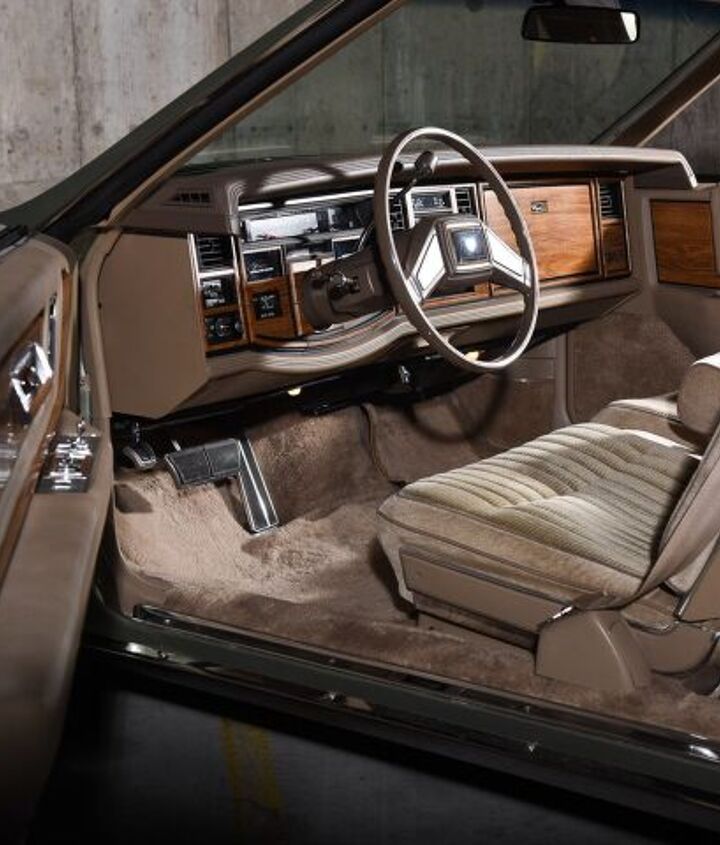
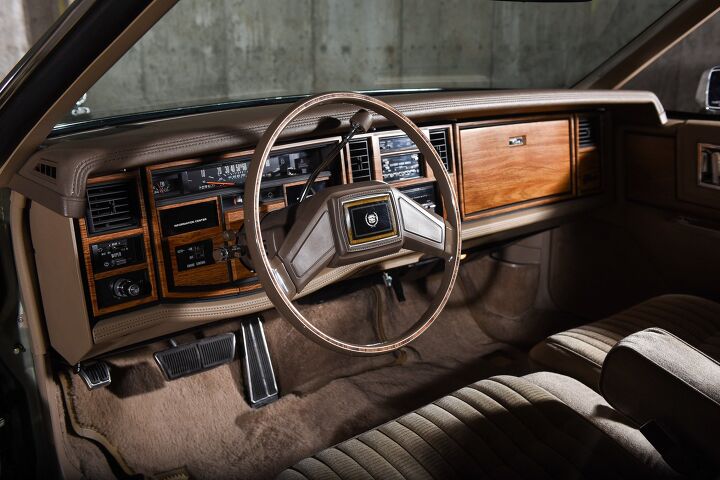
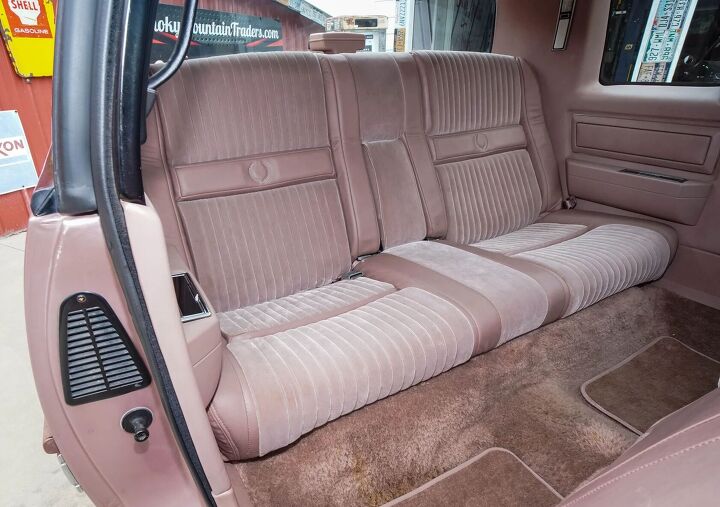
Note: The beige Eldorado interior is a 1985, while the two-tone pink is a 1986. Both are in basic trim specification for the year.
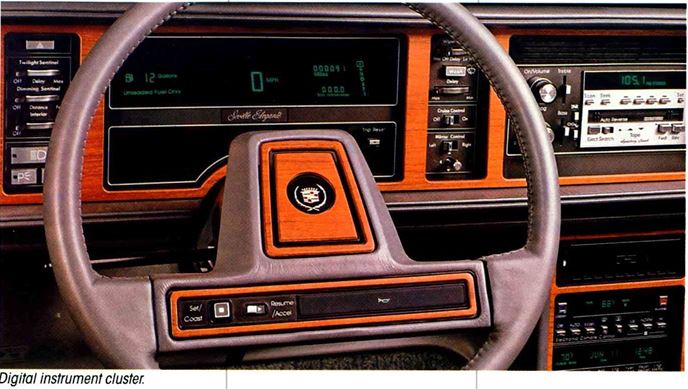
Changes inside the ‘86 Eldorado revealed a concerted effort to modernize and appeal to a younger customer base. The horizontal sweeping dash design that was a staple of the American car since the Fifties was replaced by a tiered pod design, with separate areas for gauges, infotainment, HVAC, and trip computer functions. The two-spoke wheel was redesigned, was shared with the Toronado. Buttons for cruise control that were formerly on a stalk moved to the face of the wheel. The horn pad was reduced to a space bar button at the bottom right of the wheel spoke.
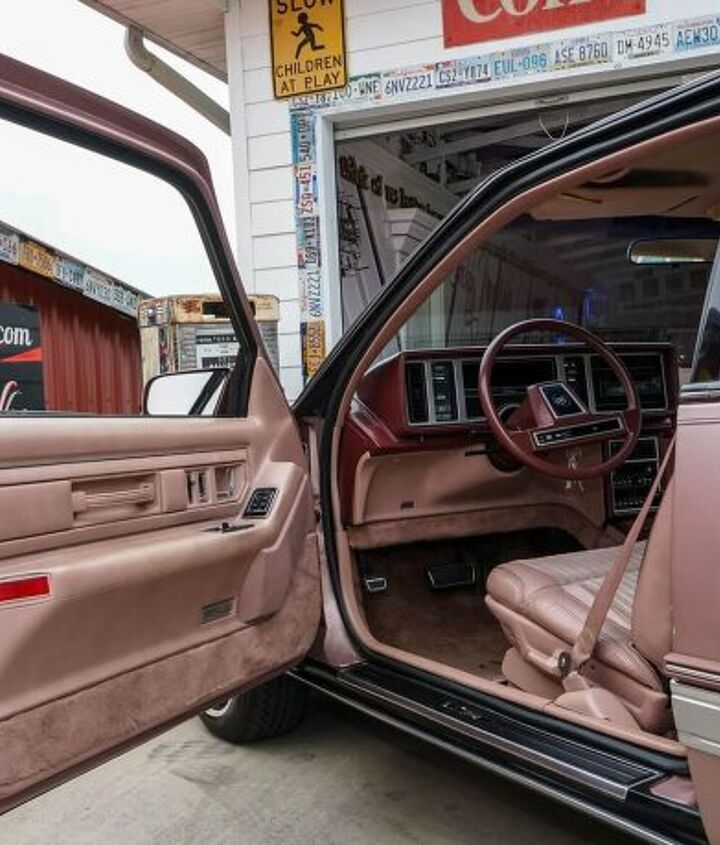
For the first time the Eldorado had digital gauges as standard, and they were the only option. The sweeping horizontal speedometer and accompanying fuel gauge needles were a thing of the past. In their place was a digital readout in bright green for speed, and a “gallons remaining” indicator. To the right of the speedo was the odometer, trip odometer, and a gear indicator that was newly digital.
At the left of the instruments were the lamp controls, consolidated onto a panel with the smallest emergency flasher button your author has ever seen. Twilight Sentinel and Dimming Sentinel were sliders, while the parking and headlamp features were large gray buttons. Wiper controls were moved from the left of the wheel to the right, and were accompanied by a cruise control on/off switch and the power mirror adjustments. Finishing out the upper “driver’s” pod was the stereo, which took the place formerly occupied by the climate control.
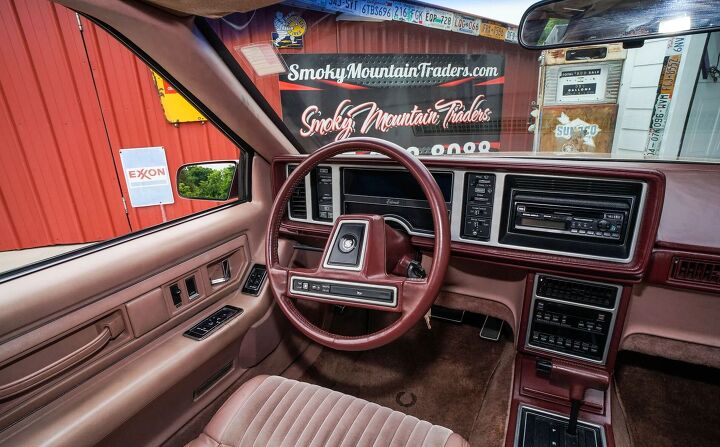
Below all this action was a new center stack, a brand new feature for Cadillac as it mimicked the dash setup found on European vehicles. Prominent placement was given to an upper central vent, and just below was the electronic climate control unit (borrowed by Audi and used in period). Well out of view of anyone, the trip computer and its associated functions were now at the bottom of the center stack.
In the center of the passenger compartment was a new floor-mounted shifter, another first. It was embedded in a center console between the seats; a bench seat was no longer available. As shoppers noticed the lack of a bench seat, they’d also notice a lack of something else: wood.
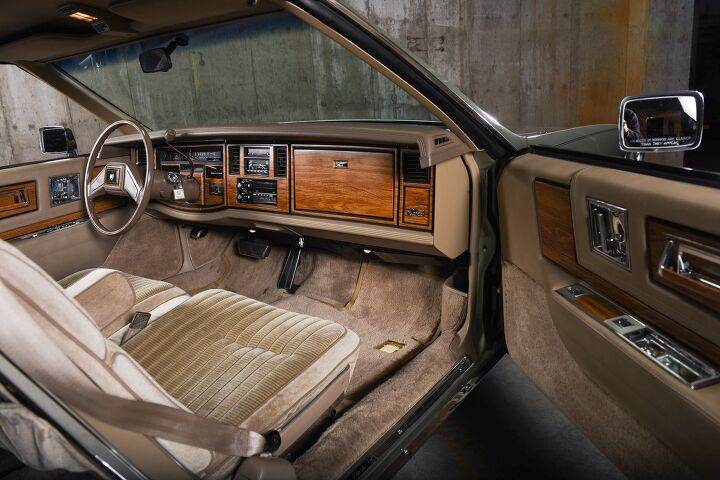
For the first time there was no wood as standard on the Eldorado’s interior. If a customer wanted wood (American walnut in this instance), they had to step up to the Biarritz. Standard trim surrounds were black or silver in 1986. It was a stark departure when compared to the 1985’s interior as shown here.

Venturing onto the passenger side of the interior, there was notable separation provided via the cliff-style drop off of the driver’s dash pod. A new horizontal glove box angled upward toward the windshield. The passenger was faced with two air vents that were color-matched to the dash instead of black, and a Cadillac script next to the glove box lock. Carpeting, formerly confined to the floor now wrapped up the side of the center console and under the dash.
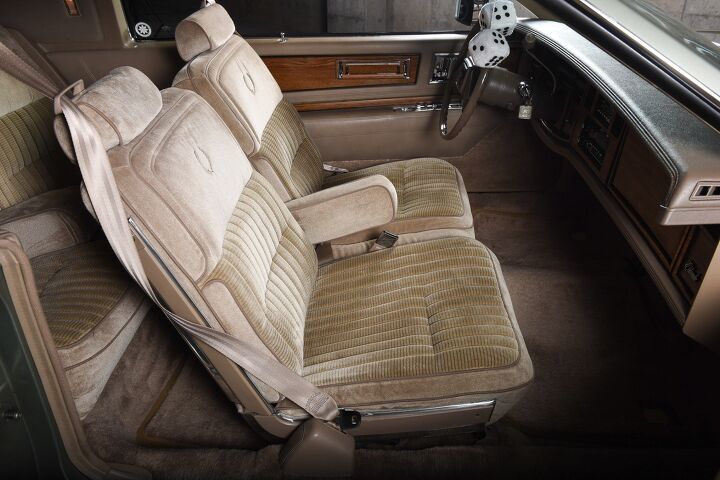
Another notable change was in door panel design: Trim was reduced to a minimum and the entire panel was presented in the interior’s color. The grab bar was no longer metal and wood, but a plastic pull that did not lift toward the occupant. Gone was the ash tray from the passenger door panel (smoking kills!), instead there was a window switch and power seat controls.
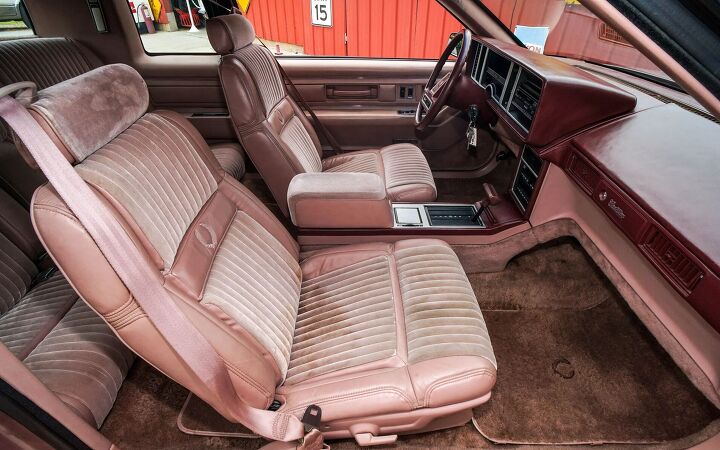
Seat design remained roughly the same as in 1986, with some revisions to the cushion design. All featured a Cadillac crest embroidered into the middle, with vertical ribbing and stitching that was similar to the previous year. Cloth interiors moved more toward a velour style fabric and away from the corduroy of the prior generation. The central armrest was now attached to the center console base rather than the seat itself.
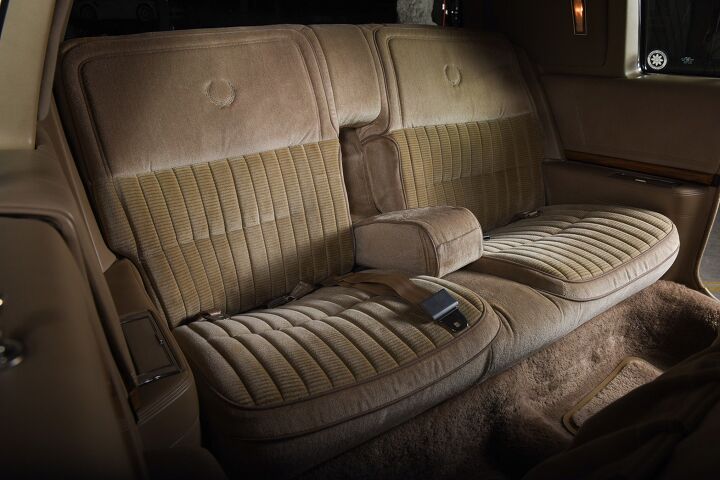
Access for rear passengers was worse than the prior generation given the large B-pillar now present in the design. Seat backs at the rear looked to be taller than before as it was a taller vehicle overall, but seat bottoms appeared shorter and less supportive. Middle rear passengers fared better than in 1985, as they were not forced to straddle a chasm between the two outboard seats. Rear passengers were still given their own ashtrays, unlike the front passenger. The rear compartment was a brighter space to be certain, as the large rear side window made for a smaller C-pillar.
In our next installment we’ll review the revisions made to the eleventh Eldorado during its run from 1986 to 1991. There was a minor crisis at Cadillac during those years, and designers were forced to find a way to quickly and cheaply return the brand’s offerings back to some semblance of large car status. Simultaneously, the reputation of the HT4100 V8 was rightfully in shambles, and it needed to be replaced as quickly as possible.

Become a TTAC insider. the latest news, features, TTAC takes, and everything else that gets to the truth about cars first by subscribing to our newsletter.
Interested in lots of cars and their various historical contexts. Started writing articles for TTAC in late 2016, when my first posts were QOTDs. From there I started a few new series like Rare Rides, Buy/Drive/Burn, Abandoned History, and most recently Rare Rides Icons. Operating from a home base in Cincinnati, Ohio, a relative auto journalist dead zone. Many of my articles are prompted by something I'll see on social media that sparks my interest and causes me to research. Finding articles and information from the early days of the internet and beyond that covers the little details lost to time: trim packages, color and wheel choices, interior fabrics. Beyond those, I'm fascinated by automotive industry experiments, both failures and successes. Lately I've taken an interest in AI, and generating "what if" type images for car models long dead. Reincarnating a modern Toyota Paseo, Lincoln Mark IX, or Isuzu Trooper through a text prompt is fun. Fun to post them on Twitter too, and watch people overreact. To that end, the social media I use most is Twitter, @CoreyLewis86. I also contribute pieces for Forbes Wheels and Forbes Home.
More by Corey Lewis









Comments
Join the conversation
These were pitiful. A glorified Grand Am.
These might have been fine had the mini-me versions not been released for every brand. Those mini-me versions were too similar looking in size and thus made these larger ones seem pointless.