


1979 Continental Mark V - The Pinnacle of American Luxury

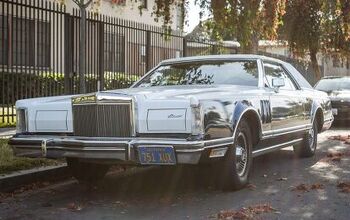
Late 70s American cars get a lot of hate, but as Joe Ligo goes for a drive, he finds plenty to like about this 1979 Lincoln Continental Mark V Bill Blass Designer Edition.
Peep the video to learn exactly what he liked.
A transcript, cleaned up by AI and edited by a staffer, is below.
he TTAC Creators Series tells stories and amplifies creators from all corners of the car world, including culture, dealerships, collections, modified builds and more.
[Image: YouTube Screenshot]
Become a TTAC insider. Get the latest news, features, TTAC takes, and everything else that gets to the truth about cars first by subscribing to our newsletter.
Transcript:
Style is primarily a matter of instinct. Depending on your instincts, you might see this as the pinnacle of American luxury cars—or as a garish, lackluster behemoth. Perhaps it’s both. But one thing this 1979 Lincoln Continental Mark V Bill Blass Designer Edition is definitely not is subtle.
If you’ve seen our Lincoln Mark VII video, you know this story has two timelines. This one begins with Ford Vice President Lee Iacocca, who directed the development of the 1969 Continental Mark III, based on the Ford Thunderbird. The Mark III launched into a fast-growing segment: the personal luxury car. The idea was simple—share mechanical components with lower-priced models, add a thick layer of luxury, and charge a premium.
The 1972 Mark IV built on that success and reintroduced the world to opera windows. These small portholes, inspired by 1920s cars, quickly became an industry trend. To stand out in the increasingly crowded luxury coupe market, Lincoln introduced the Designer Series in 1976, with colors and materials chosen by renowned design houses like Pucci, Cartier, and Givenchy. Among them was a single American name: Bill Blass.
Blass’s story reads like a classic American success tale. He grew up in Fort Wayne, Indiana, during the Great Depression. As a child, he often went to the movies and dreamed of designing elegant clothes for the rich and famous. By 15, he sold his first dress; by 17, he had joined the Parsons School of Design in Manhattan. After serving in World War II, Blass returned to New York and, in 1970, bought a design firm—renaming it Bill Blass Limited. His clothes made him famous, but his licensing deals made him wealthy, extending his name to luggage, furniture, perfume, and eventually, cars.
For 1977, Lincoln introduced the Continental Mark V, based on a previously rejected design proposal. Its sharp, angular styling replaced the softer Mark IV, and from 1977 through 1979, the exterior remained largely unchanged. In person, it’s enormous—low-slung and imposing. At just four and a half feet tall, the roofline barely reaches chest height, but the car stretches over 19 feet, longer than a modern Lincoln Navigator.
Up front, a tall waterfall grille sits above a massive bumper, followed by a seemingly endless hood. Despite having the aerodynamics of a dining table, the Mark V manages to look purposeful, with an angled C-pillar and rear end that appear to push the car forward. Bill Blass models added distinctive touches like a simulated convertible “carriage roof.” For 1979, the edition featured two-tone white and midnight blue metallic paint—like a sail gliding over water—with gold pinstriping and stylized logos. The “land yacht” nickname feels earned here.
Details abound: concealed headlights, cornering lamps, a hood ornament, turbine wheels, and the iconic Continental spare-tire hump on the trunk. Some call it tacky, but it’s unmistakable. The Mark V offered a wide range of trims, colors, and special editions, including the extravagant 1978 Diamond Jubilee Edition for Ford’s 75th anniversary. Yet the 1979 Bill Blass remains the cleanest and most refined of them all.
Inside, Blass continued his nautical theme with white leather and blue accents. The thickly padded seats are easy to sink into—and harder to climb out of. Despite the car’s size, rear legroom is surprisingly limited. Still, the driver’s experience was the focus. The Mark V offered power seats, windows, and locks; a power sunroof; automatic headlights; cruise control; an analog clock; a CB radio; and even a quadraphonic 8-track player. Instead of a buzzer, a soft chime reminded you to buckle your seatbelt.
Look closer, though, and you’ll notice parts shared with lesser Fords, like the pickup-style steering wheel. Underneath, the Mark V rode on the same platform as the 1972 Thunderbird, with a Ford three-speed automatic and a large V8. For 1979, only the 400 cubic-inch (6.6-liter) engine was available, producing 166 horsepower. On paper, that’s weak—but behind the wheel, it feels adequate. Despite emissions-era constraints, the car will still move when asked, though it’s more at home gliding than sprinting.
The sheer size can be unwieldy. The hood stretches endlessly, visibility is poor, the power steering feels numb, and body roll is substantial. But straighten the road, and the Mark V transforms into a quiet, smooth cruiser. The heavy structure and sound insulation create a serene ride—more magic carpet than muscle car.
Modern luxury cars pride themselves on being “driver-focused,” but that usually means performance-oriented. In contrast, personal luxury cars like the Mark V focused on comfort—isolating the driver from the world outside. Few vehicles achieved that as well as this one.
By the late 1970s, though, the automotive world was changing. GM had already downsized the Cadillac Eldorado, and rising fuel prices and new regulations made cars like the Mark V untenable. 1979 marked its final year. The smaller Mark VI followed, offering better fuel economy but lacking the presence and success of its predecessor. Lincoln’s partnership with Bill Blass continued until 1992. Blass sold his company in 2000, and it eventually faded without him.
The Mark V, however, went out on top. Buyers recognized it as the last of its kind, making it the best-selling Mark ever.
Today, personal luxury cars are often dismissed as relics of excess. But are modern designs really so different? Floating rooflines have replaced opera windows, and digital displays have replaced CB radios. Yet we still crave oversized, indulgent vehicles. At its worst, the personal luxury car was all style and no substance—but at its best, it offered something rare: a sense of occasion.
Driving this Mark V, you feel that. The appeal isn’t just wealth—it’s the feeling of it. That democratization of luxury, the idea that anyone could feel special behind the wheel, is deeply American. Like Bill Blass himself—a boy from Indiana who rose to fame in Manhattan—this 1979 Lincoln Continental Mark V Bill Blass Designer Edition embodies its namesake’s spirit.
And if you don’t understand its charm, there’s no convincing you. As Bill Blass said, style is primarily a matter of instinct.
(Technical note: Continental was a sub-brand under Ford’s Lincoln-Mercury division, consisting only of the Mark-series coupes. The Lincoln Continental was a separate model under the Lincoln brand, though both shared styling cues and dealerships. Most people refer to these as Lincoln Continental Marks—and so do we.)
Thanks for watching Auto Moments. If you enjoyed this episode, please share it and check out our other videos.

Joe Ligo is an Emmy Award-winning TV producer and the director of The Last Independent Automaker, a six-part documentary on the history of American Motors Corporation. He's also the creator of the webseries AutoMoments, which features reviews and stories of classic cars. Previously he's worked with Hagerty, The Drive, The Autopian and MotorWeek. He owns a 1972 AMC Ambassador Brougham sedan.
More by AutoMoments | TTAC Creator









Comments
Join the conversation
We sold and drove these cars extensively and they were beautiful riding on the interstate in a straight line but as soon as a turn arrived it was like piloting an aircraft carrier where you turn the wheel and it would take a while before the helm would respond.
On the whole it was a winner ane deservs Icon status despite some details I always found cringeworthy.
Highlights: The seats in Blass edition where by far the nicest and most tastefull seats on any American car of that era. The basic lines and stance were esthetically sound and achieved the desired effect - cleaned up just enough from the III & IV but refusing to follow the times or appopgize for what it was. Proper round wheel arches were a welcome relief from Detroit's tendency to put truck-like square arches on sedans & coupes.
Fails: Unlike wheel arches, eliptical opera windows are just plain wrong on any car after 1930, even more so on a crisp, linear silhoutte like the 70's Lincolns. That awful immitation wood trim that looked borrowed from an cheap TV cabinet was inexcusable for an exclusive luxury car. It could have gotten a nicer steering wheel and a more padded dash. Other than the nice upbolstery, the interior lagged behing the 1st gen Versailles who's wheel, dash, door trim and console looked more premium and less archaic.