


Junkyard Find: 1983 Toyota Camry LE Sedan
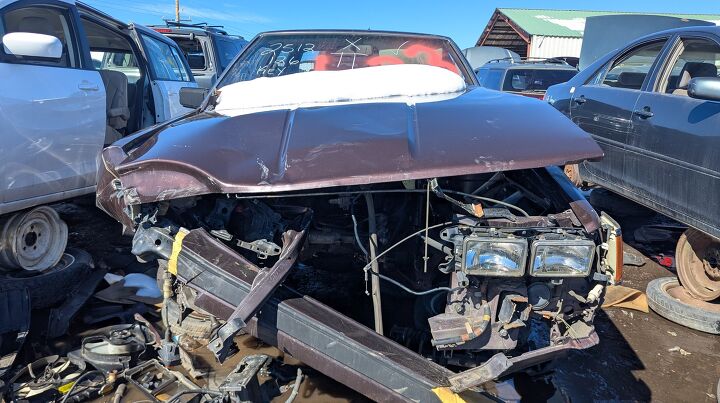
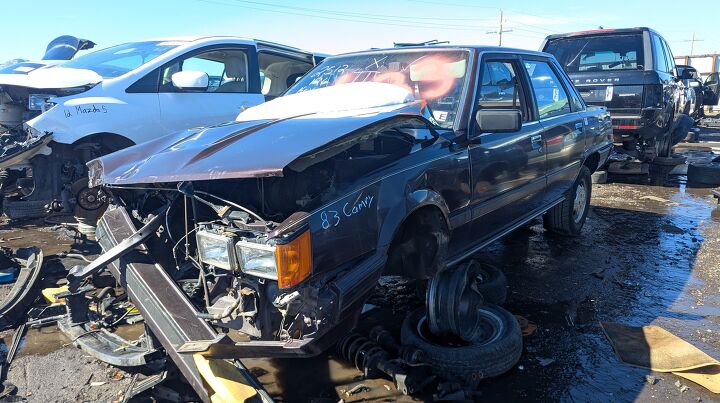
The Toyota Camry has been the best-selling sedan in America for nearly three straight decades, so commonplace that it's hard to remember a time when they weren't everywhere. The first examples of the Camry reached our shores in the spring of 1983, and I just found one of those cars in a Denver-area car graveyard.
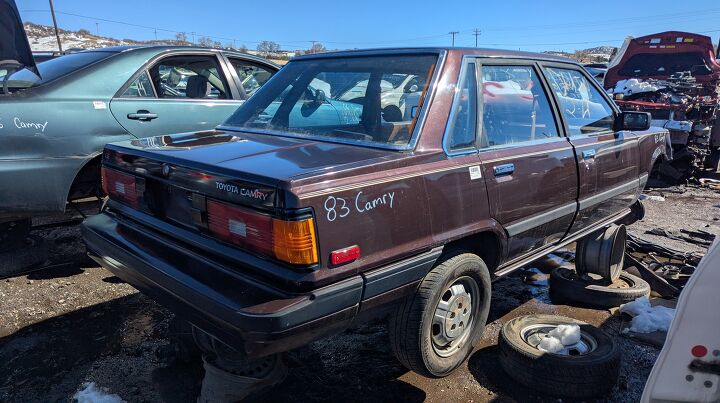
Toyota managed to move just 52,651 Camrys in North America for the 1983 model year (with 13+ million more since then), so these first-year cars are very rare.
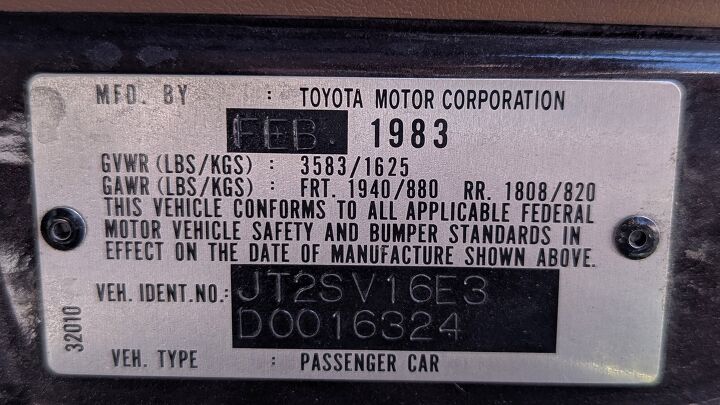
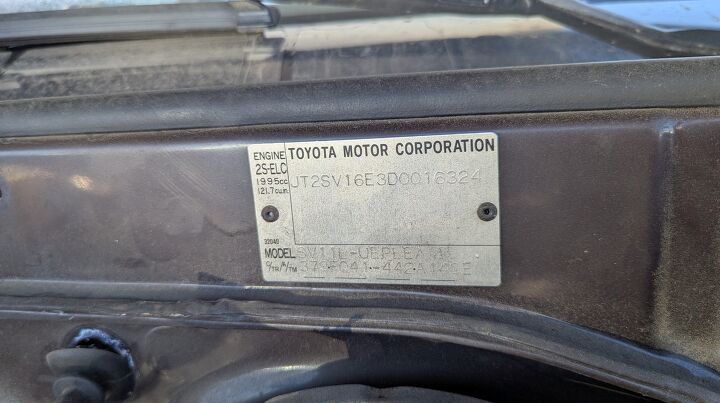
This car rolled off the Tsutsumi line in February of 1983 and the sequence number in its VIN is 016324, so it's very likely that it was on one of the first shiploads of Camrys to cross the Pacific.
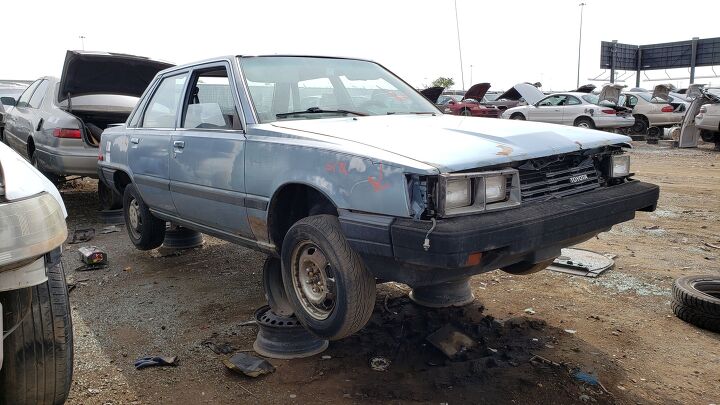
However, I spotted an even earlier Camry at a Denver boneyard back in 2020.
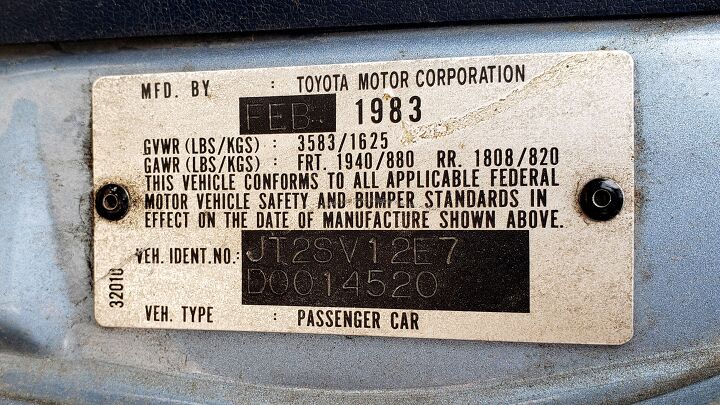
That car was also built at Tsutsumi in February of 1983, but its VIN sequence number is even earlier: 014520. These cars might have been on the same ship.
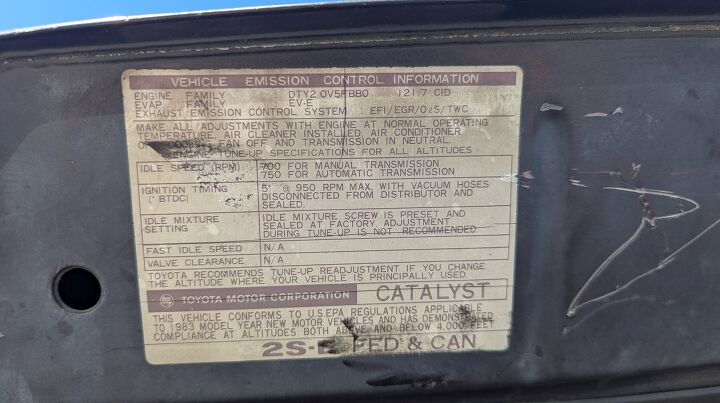
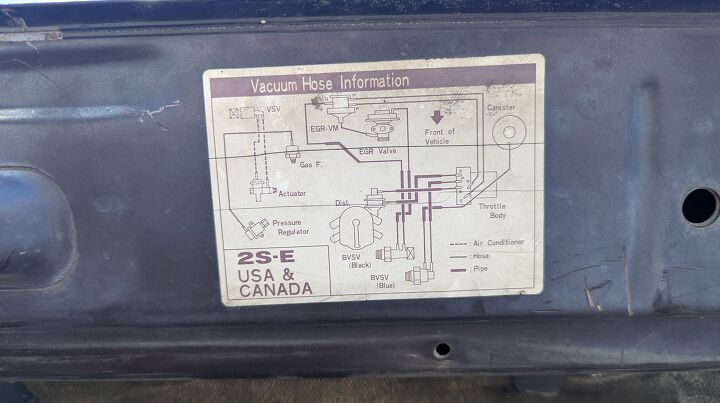
Toyota's stronghold in the United States was still California in those days, but the underhood emissions sticker tells us that this car is a "49-state" federal model.
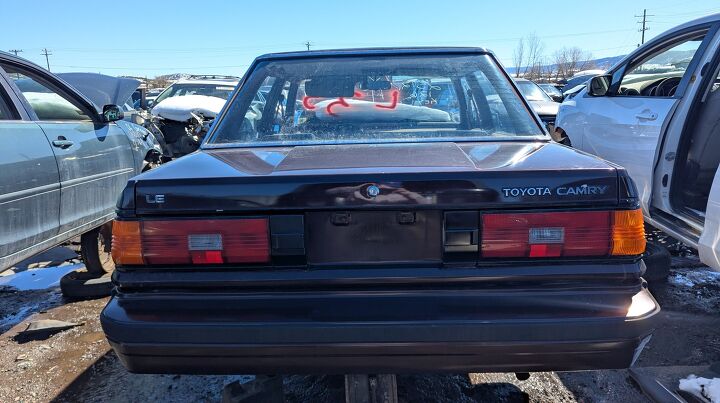
The front-wheel-drive Camry was the replacement for the rear-wheel-drive Corona in the North American market.
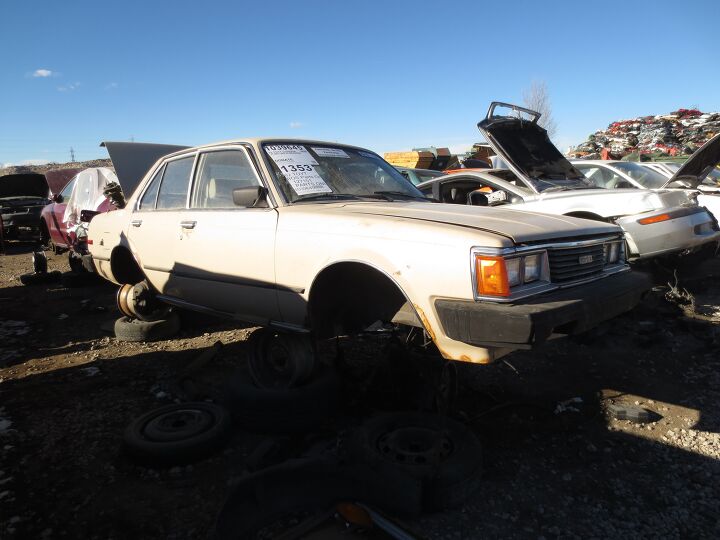
The Corona first appeared in North America as a 1966 model, and it was the first Japanese car to be a legitimate sales hit here. Corona sales here continued through the 1982 model year (the car we knew as the Cressida was still a member of the Corona family in its homeland after that, of course).
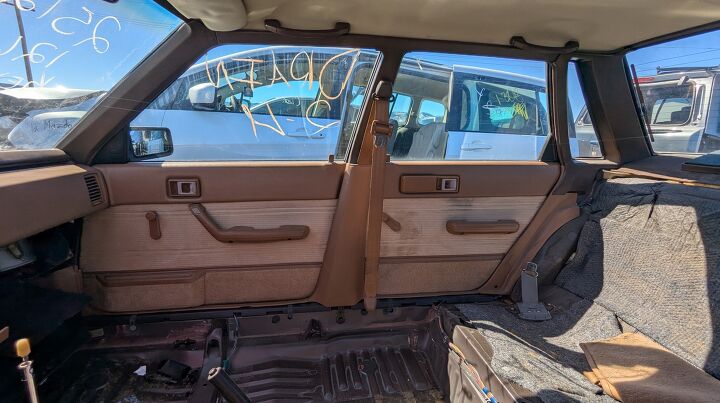
But the Corona's rear-wheel-drive layout made its interior cramped and its fuel consumption high, so the Camry made sense as its New World replacement.
The very first car to use the Camry name was never sold in North America. This was the 1979-1982 Celica Camry, which was really more of a Carina than a Celica. LASRE shock!
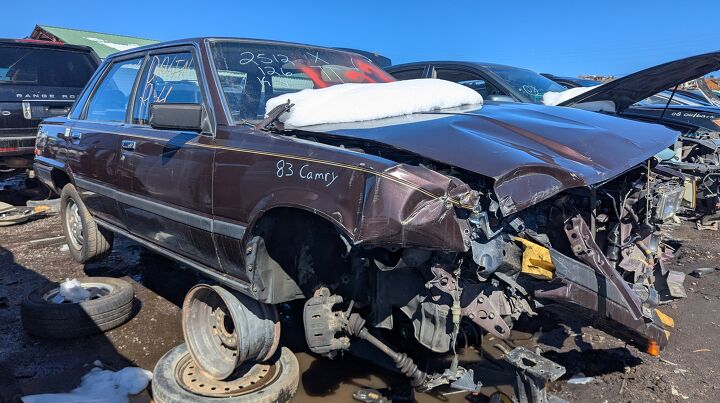
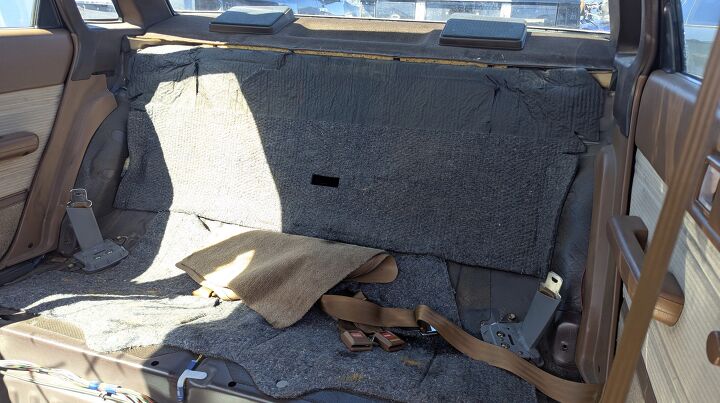
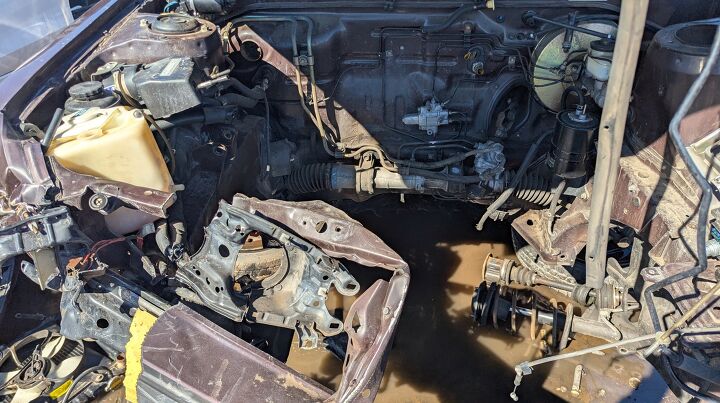
This car was completely rust-free and seems to have had a nice interior when the crash happened.
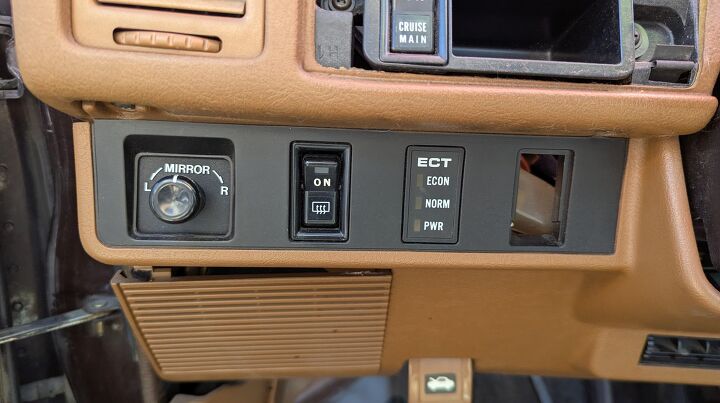
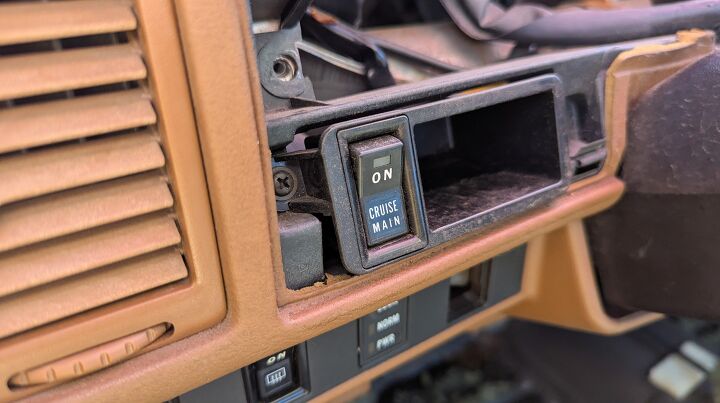
It's loaded, with automatic transmission, power mirrors, air conditioning, cruise control, the works.
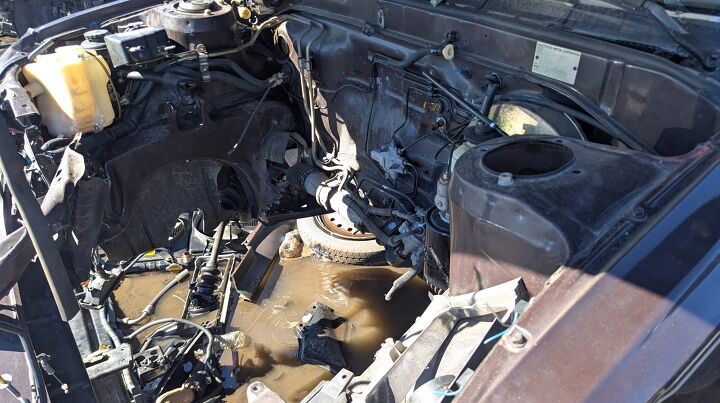
Someone bought the 2S-E engine from this car. This was a 2.0-liter SOHC straight-four that also went into the early front-wheel-drive Celicas. The sound of melting snow in a junkyard is soothing, so I shot a video.
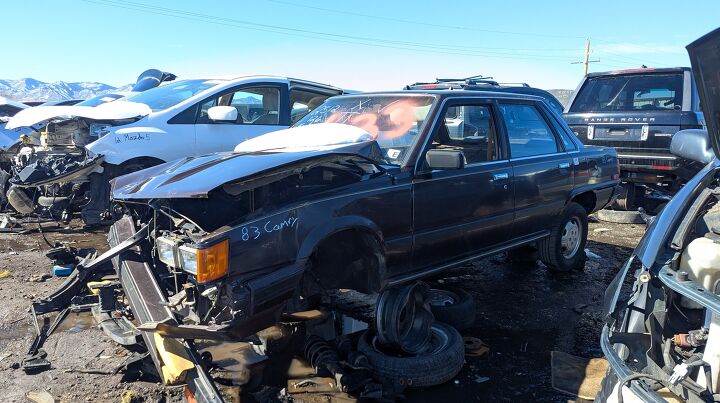
Because it had a mid-year introduction, the first-year Camry doesn't show up in any of my 1983 price guides. The 1984 MSRP for a 1984 Camry LE sedan with automatic transmission was $10,098, or about $32,252 in 2026 dollars.
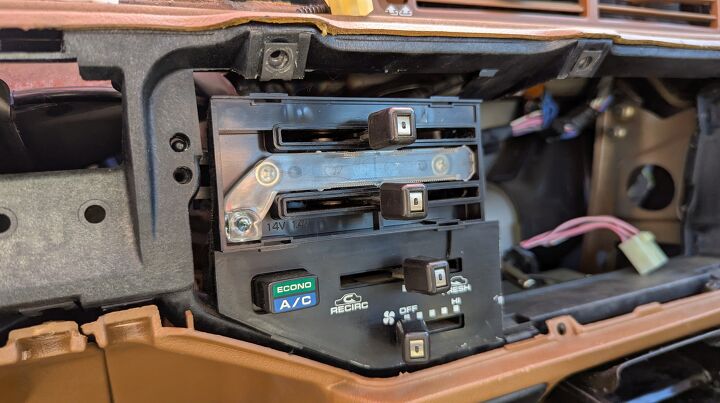
The air conditioning would have been another $650 ($2,075 after inflation).
Not just the family car. The family Camry!
The V10 Camry was designed with the American market in mind, but there were JDM sales.
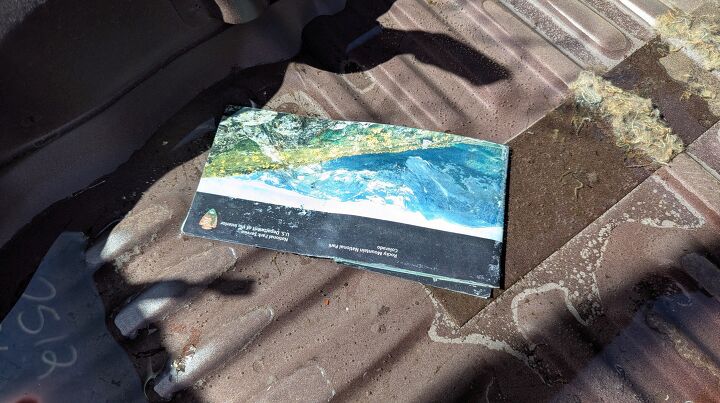
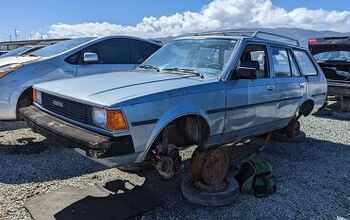
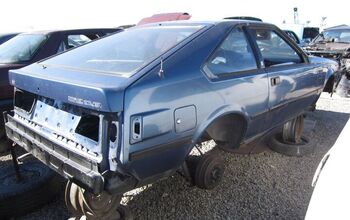
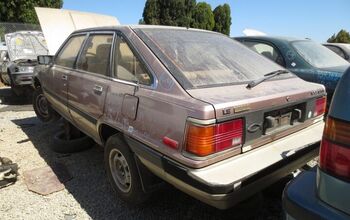
1983 Toyota Camry in Colorado junkyard.
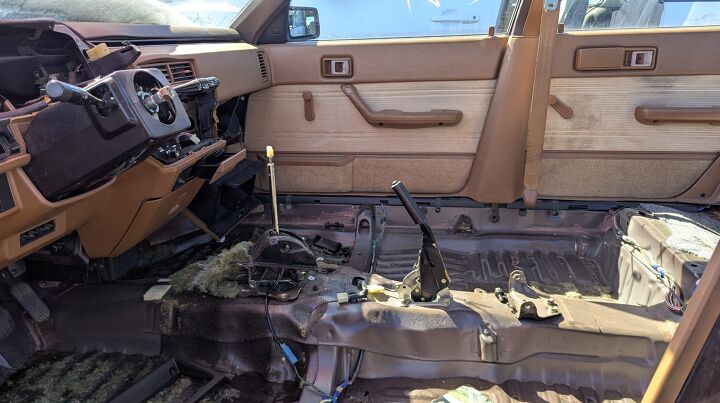
1983 Toyota Camry in Colorado junkyard.
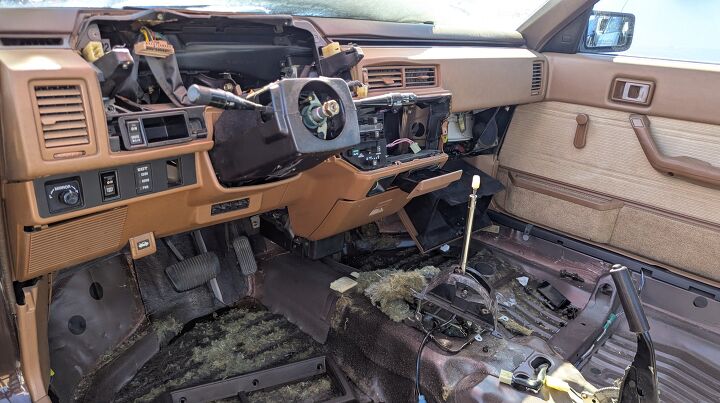
1983 Toyota Camry in Colorado junkyard.
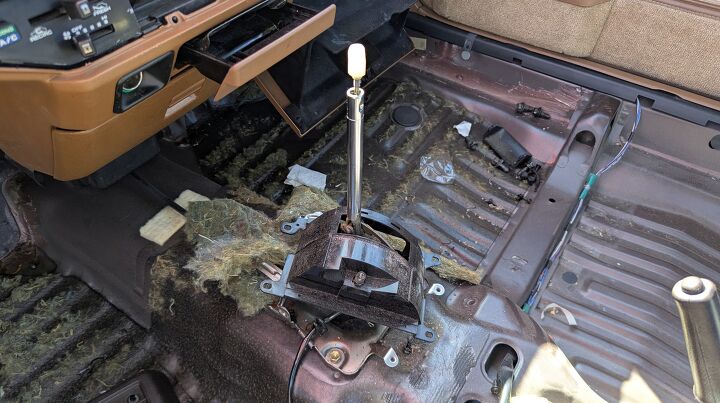
1983 Toyota Camry in Colorado junkyard.
1983 Toyota Camry in Colorado junkyard.
1983 Toyota Camry in Colorado junkyard.
1983 Toyota Camry in Colorado junkyard.
1983 Toyota Camry in Colorado junkyard.
1983 Toyota Camry in Colorado junkyard.
1983 Toyota Camry in Colorado junkyard.
1983 Toyota Camry in Colorado junkyard.
1983 Toyota Camry in Colorado junkyard.
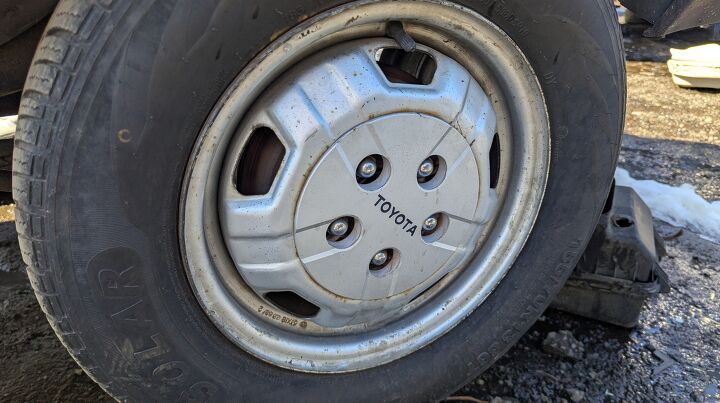
1983 Toyota Camry in Colorado junkyard.
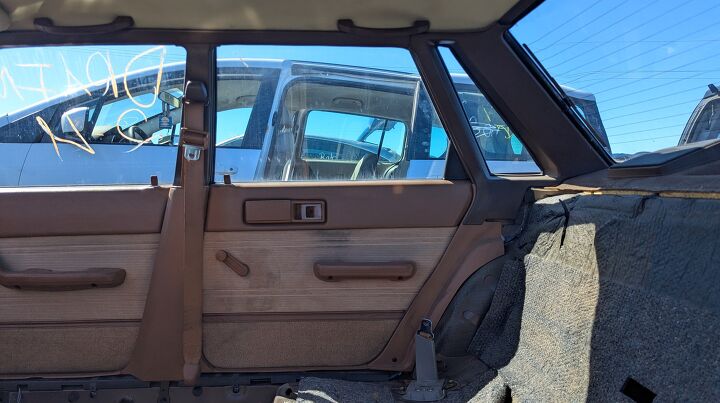
1983 Toyota Camry in Colorado junkyard.
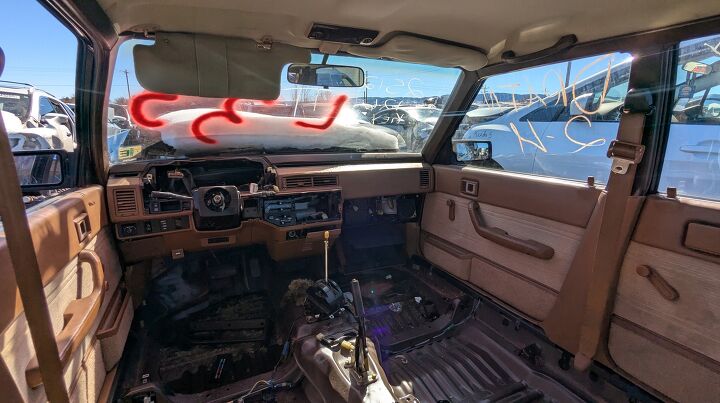
1983 Toyota Camry in Colorado junkyard.
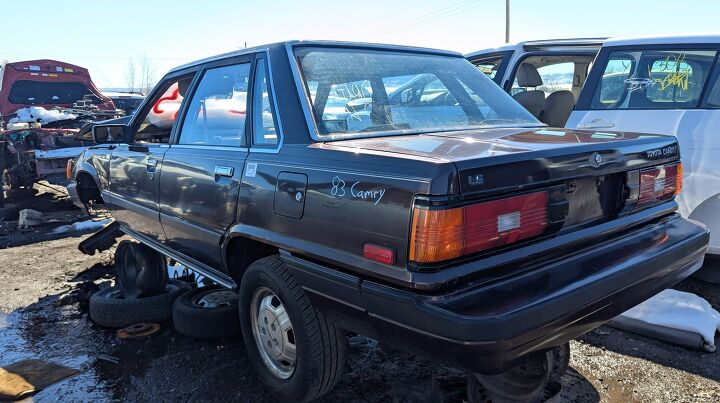
1983 Toyota Camry in Colorado junkyard.
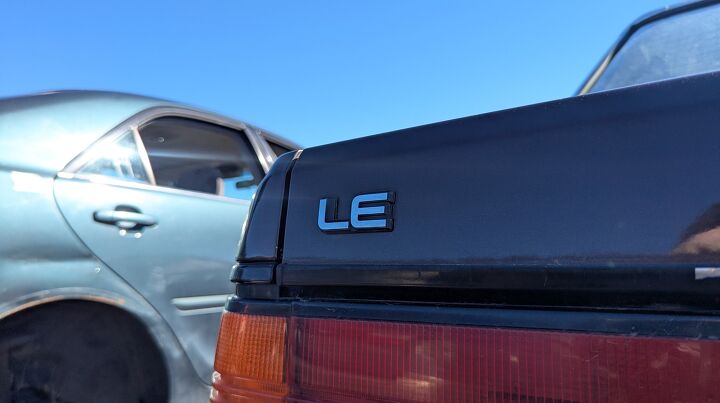
1983 Toyota Camry in Colorado junkyard.
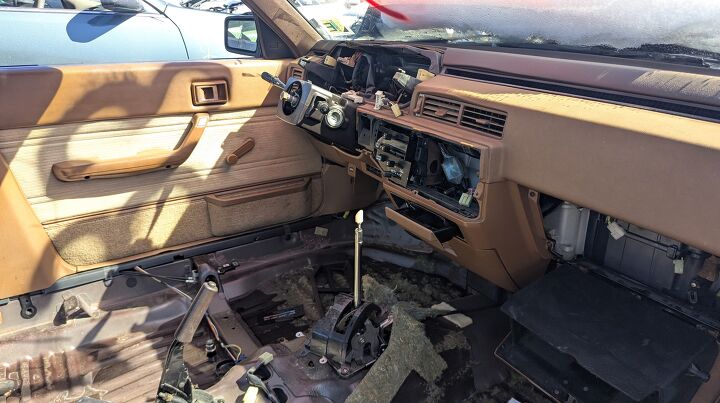
1983 Toyota Camry in Colorado junkyard.
[Images: The Author]
Become a TTAC insider. Get the latest news, features, TTAC takes, and everything else that gets to the truth about cars first by subscribing to our newsletter.

Murilee Martin is the pen name of Phil Greden, a writer who has lived in Minnesota, California, Georgia and (now) Colorado. He has toiled at copywriting, technical writing, junkmail writing, fiction writing and now automotive writing. He has owned many terrible vehicles and some good ones. He spends a great deal of time in self-service junkyards. These days, he writes for publications including Autoweek, Hagerty and The Truth About Cars.
More by Murilee Martin









Comments
Join the conversation
Ah, the days of distributors complete with vacuum and centrifugal advance. And don't forget the dozen vacuum lines snaking around the engine compartment. The Toyota trucks of that time were much worse, with more than twice as many vacuum lines to get emission compliance with a carburetor.
By the time this 83 Camry was sold Toyota had improved tremendously over a few years before, when they had lots of trouble with exhaust manifolds and so on (but so did most all car makers, but Toyota solved the problems. Others continued with stuff that self-destructed in a short time).
Around the 1983 models was when the Toyota reputation for much better reliability began. There were a few hiccups, such as the 1984 ignition modules that failed. To Toyota's credit they extended the warranty on those modules almost indefinitely and not just to the original owner.
About those diesel VW Rabbits. They were good for fuel economy as long as they stayed running. Most did ok if the coolant was kept full. Often there were small drips and if left alone, with low coolant, the head gasket would fail.
Also, some had trouble with the bolt that held everything to the front of the crankshaft. At a minimum, this was the cam belt sprocket (which also drove the diesel injection pump and the oil pump) and a pulley for the water pump/alternator belt. If the bolt got loose, the sprocket could move on the end of the crankshaft. That meant poor running or a no start situation. Worst case was, pistons would hit the valves. VW came up with a fix after a few model years. This required replacing the crankshaft, sprocket and fitting a larger, stronger bolt. None of our customers that got in this predicament authorized the work due to the cost. We figured out a "shade tree" fix that held up.
Also had some fleet customers that bought diesel Rabbit pickups. The idea was lower cost of vehicles and fuel.
Many of them got converted to gasoline engines after the companies got tired of repair bills.
As mentioned at the beginning, the Rabbits were OK at regular passenger commuter service if things were looked after. This was the time when "full service" fueling stations were disappearing so if people did not ever open the hood they would have a headache later.