
Gas-guzzling Former Roommates Poised to Become Eco Rivals
Steph Willems
by Steph Willems

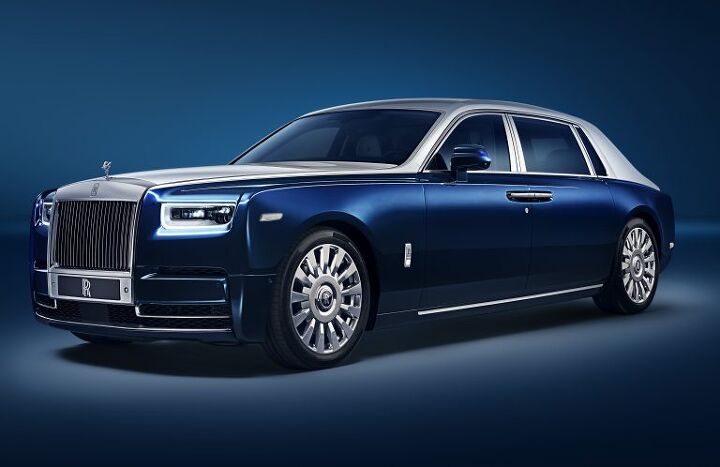
For nearly five decades, Rolls-Royce and Bentley shared the same bed, then lived amicably under the same roof for another 18 years, becoming ever closer to each other due to dwindling shared finances. Then two Germans showed up and they parted ways, forever.

While still representing the richly browned upper crust of British motoring, the two brands have maintained fairly similar development paths, launching sedans, coupes, and now SUVs in quick succession of each other. Now, because green types look down on ornate, porky, roadgoing behemoths powered by gas-swilling eight- and twelve-cylinder engines, both brands have decided to embrace the environmental movement.

Naturally, news of these tentative electric product plans hit the presses almost simultaneously.

Two weeks ago, as Rolls-Royce released a bevy of its massive Cullinan SUVs into the hands of journalists, CEO Torsten Müller-Otvös told Bloomberg that hybrid vehicles were not a proper fit for the BMW-owned company. Not electrics, however.

“There is an electric future for Rolls-Royce. We have not made our plan about what comes first, and what comes when, but we know that we will go full electric,” he said. “We will not do hybrids or whatever. Our proposition is full electric. It will come in the next decade, step by step by step.”

What form this proposition will take is murky. Müller-Otvös recently said he had no plans to add another model to the brand’s portfolio, which suggests it could be an electric variant of an existing model. That said, the CEO said he’ll “go with the flow” if the public demands it.
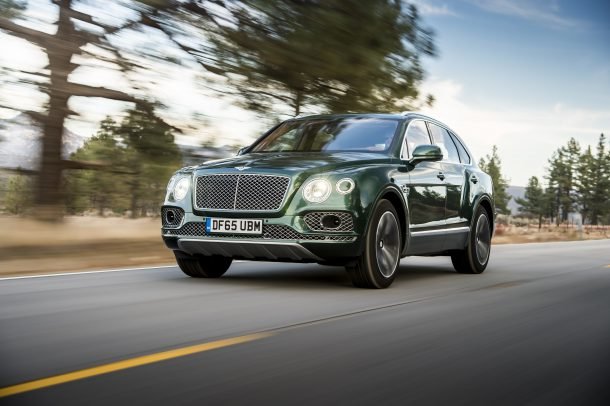
Meanwhile, a Reuters report suggests the future electric Roller might have some friendly British (headquartered) competition. Bentley is reportedly in the midst of discussions over a potential EV due to its excessive corporate emissions, the strict regulatory environment, and Europe’s march towards combustion vehicle bans. It’s no secret that VW’s lesser brands are all on board with HQ’s plan for a multitude of EVs in the coming years.

A high-end dedicated electric platform under development by Porsche and Audi (Premium Platform Electric, or PPE) offers an opportunity, but Bentley needs to make a decision fairly quickly. Top brass would have to give the project the green light, so to speak, within a year.

“When is the first full-electric Bentley? That is currently in the decision process, but our target is definitely before 2025,” said Bentley CEO Adrian Hallmark.

[Image: BMW Group, VW Group]

Steph Willems
Steph Willems

More by Steph Willems

Comments
Join the conversation
2 of 15 comments
  • Dan R Dan R on Oct 31, 2018

    We should all buy a RR to help stop climate change!

  • WallMeerkat WallMeerkat on Nov 01, 2018

    The story is an interesting one. BMW and VW wanted a halo brand and were fighting over buying the RollsRoyce-Bentley company. BMW looked the top contender as it already supplied engines, Mercedes showed interest but then decided it could do better by digging out an old marque, but VW swooped in and won. However it turned out that they won the factories, production lines and rights to the Bentley marque. BMW negotiated with the Rolls Royce parent company and obtained the rights to the marque on cars. They did give VW a grace period to run out current Rolls Royce cars, and VW looked to replace the BMW engines in the Bentleys with the previous home-grown engines. BMW built a brand new factory at the Goodwood estate and released the Phantom.

  • Amwhalbi My 1972 Mercury Capri was my first stick shift car. God, I miss that thing. It was a blast to drive.
  • Vid169489471 The technology exists today to produce a variable color temperature (kelvin) LED lamp. It can vary from 2700k that soft orange look to 6500k the bright daylight with the bluish tint.Since everything in a late model car is computer controlled, it would be an easy task to write a few lines of code that enables your vehicle to not only dim down from hi to low beam but to shift color temp down to the 2700k range for oncoming traffic, then back up to 5000k once oncoming traffic has passed. For the operator it would be automatic and seamless. For older cars they could be retrofitted with LEDs that are 2700k on low beam and 5000k on hi beam. As far as standards, there could be a lumens max, and a minimum. Several States already have minimum lumen standards going back to the old incandescent bulbs. Why not update these to national standards.
  • Jam169859557 More regulation is needed for ALL vehicle lighting systems. [list=1][*]The lighting that is most blinding are the rapidly flashing red, blue and amber lights on emergency vehicles. The lights themselves are blinding, flashing so rapidly that it's impossible for even the sharpest eyes to adjust. What's worse, is the nature of the emergency requires a careful view of the area surrounding the emergency vehicle. There is something going on that needs to be seen. More flashing lights is not the solution.[/*][*]Brighter headlights need to be regulated. The tall riding vehicles do not need headlights positioned so high that they blind drivers in lower riding vehicles. And those heasdlights need to be aimed properly. When I first started driving my 2020 Subaru Outback, many drivers would flash their lights, hoping I would dim my lights. This stopped after I performed am easy adjustment that tilted the beam lower. Late model Subaru headlamps are designed with a sharp cutoff that project less glare above the hood line. When the headlights are properly aimed, other drivers are not blinded by the beam.[/*][*]Customized light assemblies make it more difficult to see the marker lights (tail lamps, turn signals and side marker lamps) that have been tinted. There are many municiple codes that prohibit this tinting, but these laws are seldom enforced.[/*][/list=1]Solutions: Tight controls on emergency vehicle lighting. In trying to make these vehicles more visible, a dangerous side effect is reducing the ability of drivers to see the surrounding perils.Headlight design regulations that reduce the height of the headlight assemblies. Just because a pickup truck has a hood that sits 4 feet abouve the pavement, it does not mean the headlights need to be so high. Owneres should maintain proper adjustments to their vehicle headlights.Establish and enforce regulation requiring a illumination standard be followed.
  • Stl170698708 as someone who hates big government, and their interference;but you can add me to the list of people that are blinded by the lights.unfortunately "the poop is out of the horse and no way is it going back in"They have had 5 years to make lights bigger, badder and brighter because in the vehicle work it is go big or go home!Trucks are the worst because so many people use them to express their dominance and that is big, big, big $$ both at the Original Purchase and in the Aftermarket world.If, we are so lucky to get some good government regulation on this it will also take some very good Court enforcement to get the aftermarket people with fines and lawsuits.Much like the EPA did with the Diesel Tuner Industry that felt emission regulations didn't apply to them.This is from someone that owns said pickup truck with the same bright headlights,but i only use the truck when I have too and always turn off the Fog lights when driving in traffic.
  • Art65765977 I saw a porsche 911 with the most amazing headlights from behind approaching the Sunshine skyway in Florida. The pattern was 108 degrees across sweeping the road like a broom. My brother and I were amazed. I don't know what it looked like from the front but i am sure it was better than American cars
Next