
Enzo Ferrari: The Supercar That Defined the 2000s
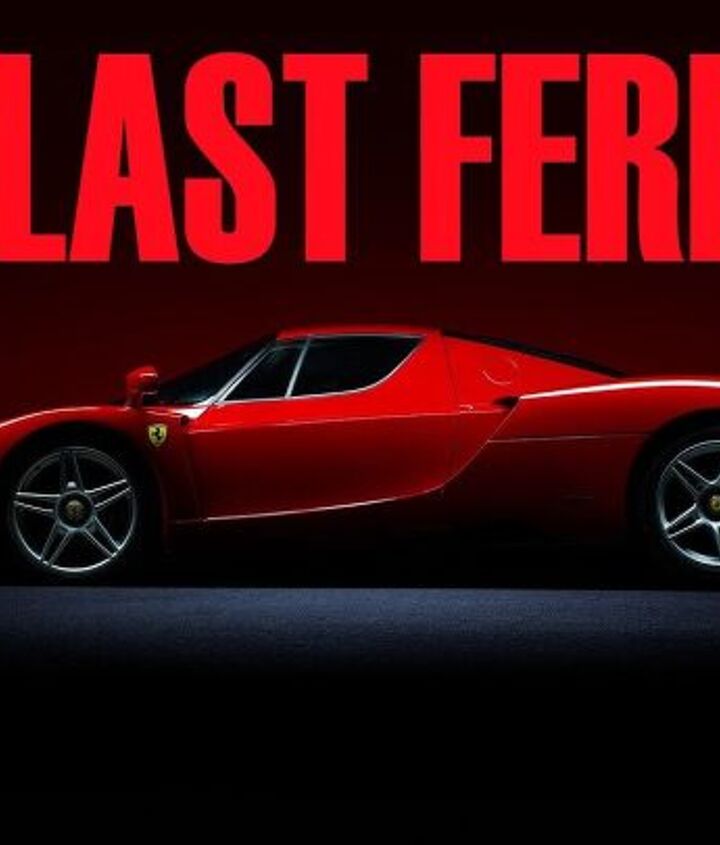
Check out the latest video from Chris Vs. Cars -- it's a look into Ferrari in the Aughts.
Every so often Ferrari decides the world needs reminding that it is not merely a car company but a force of nature. The 288 GTO did that in the 1980s. The F40 then turned the dial up so far it nearly snapped off. The F50… well, that one was a bit misunderstood, but technically brilliant nonetheless. And then came the Ferrari Enzo. The car so important, so utterly loaded with technology, they named it after the man who started it all. No pressure, then.
The TTAC Creators Series tells stories and amplifies creators from all corners of the car world, including culture, dealerships, collections, modified builds and more.
A transcript, cleaned up via AI and edited by a staffer, is below.
[Image: YouTube Screenshot]
Become a TTAC insider. Get the latest news, features, TTAC takes, and everything else that gets to the truth about cars first by subscribing to our newsletter.
Transcript:
Every so often, Ferrari decides the world needs reminding that it’s not merely a car company, but a force of nature. The 288 GTO did that in the 1980s. The F40 then turned the dial up so far it nearly snapped off. The F50 was a bit misunderstood, but technically brilliant nonetheless.
Then came the Ferrari Enzo — a car so important, so utterly loaded with technology, they named it after the man who started it all. No pressure, then.
The Enzo arrived in 2002, and that timing was no coincidence. Ferrari had just gone on the biggest winning spree Formula 1 had ever seen. Michael Schumacher was rewriting history, Ross Brawn was rewriting strategy, and the Scuderia was sweeping up constructors’ and drivers’ championships as though nobody else had bothered to show up.
While the rest of the paddock looked on with a mix of awe and despair, Ferrari thought: why not bottle this success? Why not build a car that carried Formula 1 thinking onto the road — not as a gimmick, but as a philosophy? That’s what the Enzo was: not a road car dressed up like a racer, but a racer barely tamed for the road.
The first hints came in 2001, when odd-looking 348s were spotted near Maranello — their proportions all wrong, their rear ends stretched. These weren’t design experiments gone bad; they were test mules hiding something serious: a new mid-mounted V12 and the underpinnings of Ferrari’s next halo car.
Unlike the F50, which borrowed its engine directly from Formula 1, this would be all new, designed specifically for the Enzo and nothing else. Ferrari called it the F140B — a 6.0-liter naturally aspirated V12 carved entirely from aluminum. It had four valves per cylinder, variable valve timing, and Bosch Motronic management. The numbers were ferocious: 651 horsepower at 7,800 rpm and 657 Nm of torque at 5,500.
But the numbers told only half the story. The engine wasn’t just powerful — it was alive. It screamed past 8,000 rpm with the fury of an F1 car but delivered a broad wave of torque that made it usable on the road. Ferrari had created an engine so good it became the backbone of its flagship cars for nearly two decades, from the 599 GTB to the LaFerrari.
Power went to the rear wheels through a six-speed automated manual gearbox controlled by paddles. Today that sounds normal, but in 2002, it was revolutionary. Earlier Ferrari systems were slow and clunky, but this one shifted in just 150 milliseconds — blink and you’d miss it. For the first time, the paddles made sense: no delays, no drama, just instant, rifle-bolt precision.
Underneath, the Enzo used a carbon-fiber tub reinforced with aluminum honeycomb for strength and crash safety. The whole structure weighed next to nothing but could withstand immense forces. At just 1,365 kg dry, the Enzo was astonishingly light for a big V12 car.
Ferrari resisted the temptation to slap on a giant spoiler like the F40. Instead, the bodywork itself was the wing. The nose channeled air through sculpted ducts, the floor generated downforce, and the small rear wing was active — adjusting itself based on speed and braking. At 186 mph (300 km/h), the Enzo produced 775 kg of downforce, nearly three-quarters of its own weight. This was active aero before active aero became a buzzword, and it worked brilliantly.
Braking came from something that seemed almost like science fiction in 2002: carbon-ceramic discs developed with Brembo. They offered relentless stopping power, lap after lap. Until then, they had been used only in prototypes and F1 cars. On the road they squealed and grumbled, but when needed, they stopped the car with such violence you half-expected your organs to end up on the dashboard.
Zero to 62 mph came in 3.65 seconds. Zero to 124 mph in 9.5 seconds. Top speed was 221 mph (355 km/h). In 2002, that made the Enzo one of the fastest cars on the planet — and crucially, one of the most controllable at those speeds. Rivals like the Lamborghini Murciélago looked dramatic, yes, but the Enzo was on another level of sharpness.
Design-wise, Ken Okuyama at Pininfarina was tasked with clothing all this engineering. The Enzo wasn’t beautiful in the classical Ferrari sense — it wasn’t flowing or curvaceous. It was aggressive and angular, with a front end that looked like it came straight off Schumacher’s race car. It wasn’t meant to seduce; it was meant to intimidate. Park an Enzo anywhere and it doesn’t look like a car — it looks like a machine that’s come to end cars.
Ferrari built just 399 units between 2002 and 2004, and you couldn’t simply buy one. Ferrari chose who got one — loyal customers already owning F40s and F50s. If you weren’t on Maranello’s Christmas card list, you weren’t getting an Enzo. Every single one was sold before production began. Owners included Michael Schumacher, naturally, and Lawrence Stroll.
Today, values have skyrocketed. Auctions regularly pass $3 million, with pristine examples fetching even more. But Ferrari wasn’t done. Using the Enzo as a base, they built the FXX — a track-only beast with 800 horsepower, stripped of road-legal nonsense. The FXX wasn’t really a customer car; it was a rolling laboratory. Owners could drive it, but only under Ferrari’s watchful eye as engineers gathered data for future models.
The Enzo was the first true supercar of the 21st century and set the template for what we now call hypercars: active aero, paddle-shift gearboxes, carbon-ceramic brakes — all of it filtered down from here. More than that, it was the last naturally aspirated V12 halo Ferrari. The LaFerrari went hybrid, the SF90 went turbo, and the future looks increasingly electrified.
That makes the Enzo a full stop at the end of an era — the last time Ferrari built a car that was pure V12, pure noise, pure lunacy, without compromise. The Enzo was never designed to be polite. It wasn’t built to pamper or to please. It was built to scare, to impress, and to underline Ferrari’s dominance at the dawn of the 21st century.
It carried the founder’s name not as a marketing stunt, but because nothing less would do. And that’s why, more than 20 years later, it still feels like more than just a supercar.

I am a proud owner of a single turbo 335i and a Ducati 999s. I make a lot of content on both, as well as just sharing my opinion on just about everything car and motorcycle related,
More by Chris VS Cars | TTAC Creator





Comments
Join the conversation
The problem is Ferrari at this time was owned by FIAT, the same company that now owns pathetic Dodge/Chrysler/Jeep.
You sit in side an Enzo and besides the crappy automatic transmission (sorry, "Automated Manual") is the junky climate controls that look like leftovers from FIAT garbage.
Meanwhile, you had the Ford GT, which came with a proper manual because they expected their owners to know how to drive. And not to put too fine a point on it but the difference in build quality between the two was the difference between a ProMaster and a Transit.
The Porsche Carrera GT might have something to say about which super car defined the 00's.