

TTAC Throwback: Why You Should Buy This 1973 SAAB Sonett III
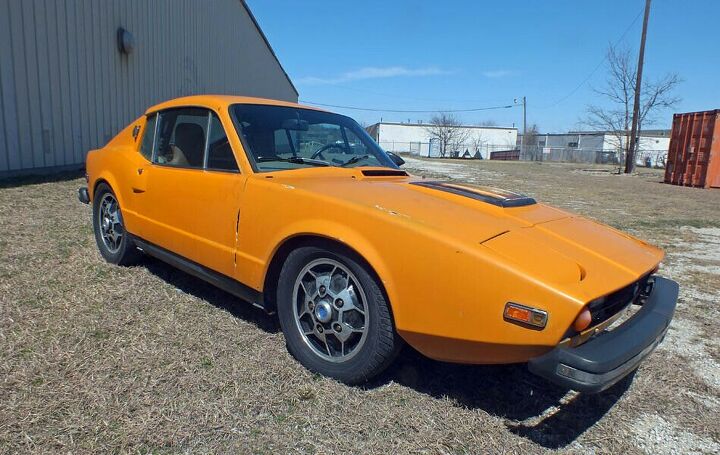
The name Sonett has precisely zero connection with the fourteen-line poems Shakespeare was so adept at writing; those are sonnets. Instead, it comes from a Swedish slang expression: Så nätt den är, which I’m told translates more or less to mean “how neat it is.” And neat the little front-drive sportsters are. The first SAAB Sonett was a roadster of compelling curvaceousness. It debuted in 1956, and the trolls in Trollhättan built precisely half a dozen of them.
The car most of us think of as a SAAB Sonett began with the Sonett II, a fiberglass-bodied coupe of singular, if not entirely successful, styling, which was introduced in 1967. This car was based on the SAAB 96 floorplan and retained that model’s front-wheel drive and three-cylinder (in 60 horsepower Monte Carlo trim), two-stroke powerplant, at least at first. It also inherited column gear shift and freewheeling(!) from the 96. Not long after the Sonett II entered production, the characterful three-pot gave way to a four-cylinder V4 from Ford, the Sonett earning a power bulge on its hood in the process.
The Sonett II would last until 1970 when it was massaged into the Sonett III with the help of Sergio Coggiola an Italian automotive and industrial designer who had honed his skills at Ghia. SAAB was not wealthy, so the 96 floorpan and structure were retained in the name of cost savings, as was a fiberglass body. The body responded nicely to Coggiola’s touch, and the Sonett III was taut and dartlike where its predecessor had been ungainly.
Blessed with its new, cohesive shape and modish pop-up headlights, the Sonett III was ready for the 70s. Its interior aesthetic was equally groovy. A pod held the instruments right in the driver’s line of sight, and they could grasp the floor-shift lever when reclining on orthopedically designed seats. A trick movable lumbar support pillow was a forward-thinking nod to passenger comfort, lacking in many traditional sports cars.
From that perch, the driver and a lucky passenger could revel in the low-slung Sonett’s superb front-wheel-drive traction and excellent road-holding abilities – in a Sonett III, you will make it to the key party, I mean, ski party, on time, even in a blizzard.
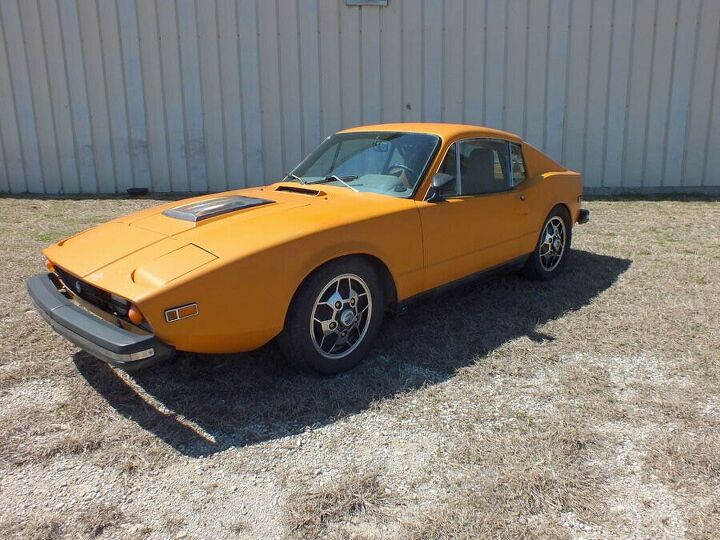
I’ve grown weary of pundits whining about “wrong wheel drive.” SAAB’s little disco dart has the handling prowess and style to vindicate the merits of front-wheel-drive in a sporting car (as if BMC’s giant-slaying Mini weren’t enough).
The SAAB Sonett III was neither molded in the same vein as the then aging crop of trad British sports cars, nor was it anything like Datsun’s 240Z, which allied conventional thinking to otherworldly production acumen (a formula that would ultimately prevail). There’s hardly any reason to mention Mustang or Camaro in this conversation, either. Those cars had much to recommend them, but they lacked the panache of an imported sports car. Instead, like most of its brethren, the Sonett III was utterly individualistic and unique – a bracing glass of brännvin in a Coca-Cola world.
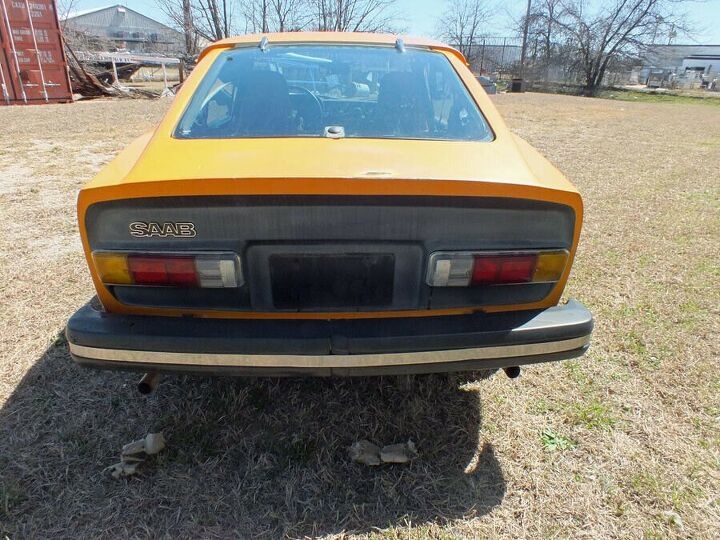
Of course, Coke outsells Swedish “burn wine” because it’s sweet and approachable. Thus, there aren’t many Sonet IIIs hanging around to play with; that’s why this specific car appeals. Even though it has corrosion and needs, let’s be honest, a complete restoration, it merits that level of attention just to preserve one of an endangered species.
Buy this Sonett III, add a period aftermarket 8-track player, and pop in Dark Side of the Moon (another of 1973’s gifts to the world), then drive with no destination. The throaty growl of the Ford V4 will act like the hypnotic droning chant of wizened monks; it will elevate you to a plateau of existence where you can focus simply on the connection between your hand and the gear lever and steering wheel and your feet and the pedals. You are the SAAB, and the SAAB is you. OHHHHHHMMMMMM.
If all the above philosophical claptrap isn’t enough to convince you, did I mention the modish pop-up headlights?
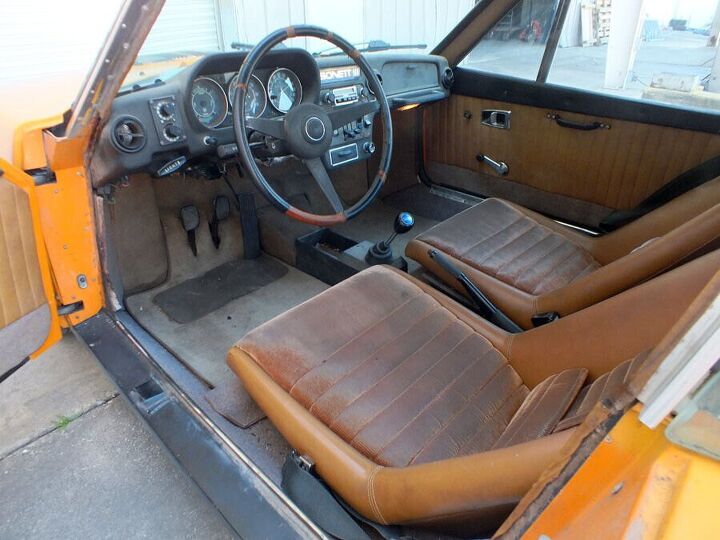
Having much in common with the SAAB 96, the Sonett III shares many of that model’s foibles, not the least of which is corrosion (there’s that word again). Of course, the Sonett has a fiberglass body, which doesn’t rust, but the floorpans and inner body structure do. Pay special attention to the sills (this car shows rust here). Also, check suspension mounting points. If possible, get under the car or put it on a lift to check for rust; a strong flashlight and old screwdriver are helpful here.
Ford’s V4 engine should be able to rack up 100,000 miles between rebuilds, but the fiber balance shaft gears can fail well before that point. Steel replacement gears can be had, but finding them might not be easy. Water pumps will weep like my mother watching Beaches, and accessing the bolts to swap them out can provoke much cursing.
Drive the car if you can and pray that the transmission shifts easily, is quiet, and doesn’t pop out of gear. If it misbehaves, a rebuild could be in the future. Renewing the clutch is a costly proposition too.
If that sounds damning, take heart; the fiberglass body will be rust-free, and the interior trim is simple enough that much of the restoration could be undertaken at home. However, you’ll probably want your friendly neighborhood upholsterer to handle the seats.
The Sonett III is better for someone willing to take on a more esoteric (read: Harder to find parts for) restoration. It’s not like an MGB or Mustang, where richly-illustrated catalogs serve a would-be restorer. When rebuilding a Mustang or MG everything from a window-winder handle to a whole bodyshell is waiting for you to enter your credit card information and click the “order now” button. With a Sonett, befriending fellow owners, scouring swap meets, and specialists’ websites for needed bits are your path to completing the restoration.
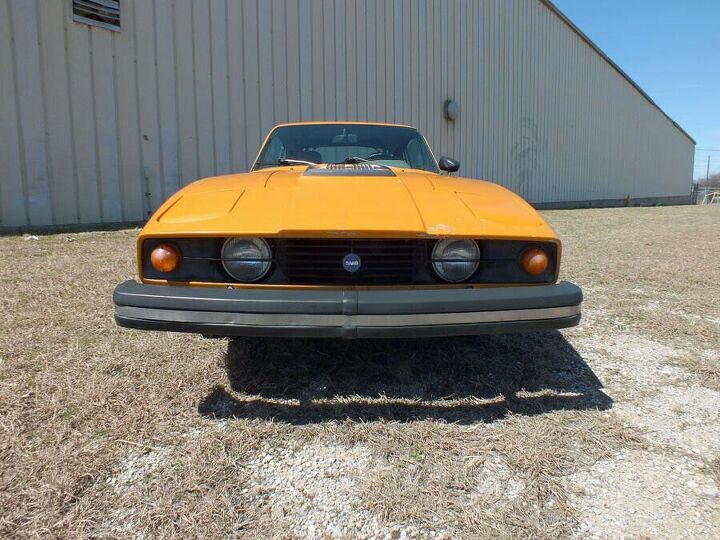
I wouldn’t call the “buy it now” price low, especially considering the car needs more than “gentle recommissioning.” Still, it would be exponentially more expensive if it said Alfa-Romeo or Zagato on the grille instead of SAAB. What’s more, this Sonett III presents honestly; it looks like cars I’d see sitting in someone’s sideyard in the 1990s when I was a broke teenager searching out weird sportscars for cheap. Today, I’m a broke middle-aged man, still looking for weird sports cars (which are no longer very cheap), and this tasty Swedish meatball fills the bill in fine fashion.
Here, again, is the link.
TTAC Throwback is a new series devoted to cars we think deserve to be owned by someone who really loves them. Just imagine Sarah McLachlan crooning In the Arms of an Angel as the camera pans past a deserving car up for adoption, hoping desperately that it doesn't get recycled into a Nissan Versa (I’ve, I’ve got something in my eye). Now go ahead, put in your bid; there now, don’t you feel better? You’re doing the right thing!
[Images courtesy of the seller]
Become a TTAC insider. Get the latest news, features, TTAC takes, and everything else that gets to the truth about cars first by subscribing to our newsletter.

There's an old quote which goes something like: "One drives a Bentley, one is driven in a Rolls, and one presents a Delage to one's mistress." As for me, I'll stick to my Lincoln. You'll find my byline at Autoguide.com, Crankshaft, Old Cars Weekly, and sundry other publications.
More by Bryan Raab Davis






Comments
Join the conversation
Looks like the General Leif in that orange. :P
Sold for less than $6,999...