


John Deere Paying Nearly $100 Million In Right-to-Repair Settlement

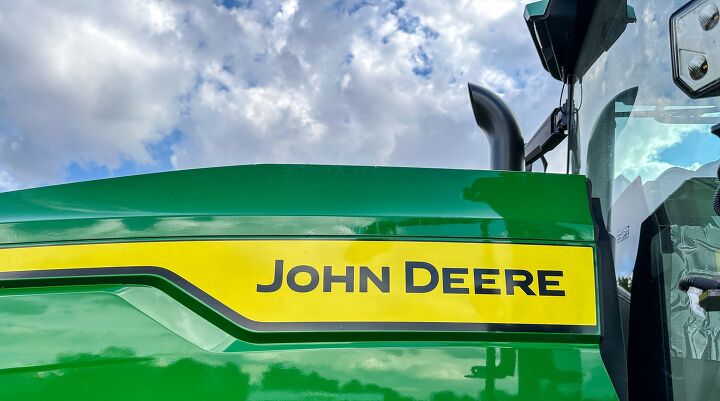
While the right-to-repair movement has been focusing heavily on automobiles in recent years, John Deere has remained the arch enemy. As one of the first businesses to leverage software and specialized diagnostic equipment to prevent owners from servicing their own equipment, it has been targeted by a slew of lawsuits and was even placed under investigation by the Federal Trade Commission (FTC).
This means that John Deere serves as an indicator of what types of legislation and court decisions automakers may encounter if they stay on the same path. As a major manufacturer of agricultural equipment, Deere implemented firmware that required specialized diagnostic tools that were exclusively possessed by certified dealerships.
Customers were almost universally outraged by the decision, noting that it resulted in excessive downtime as they waited for repairs. The issue became so severe that many farmers couldn’t even harvest or grow their crops because they were forced to wait for technicians using specialized diagnostic gear through the most important parts of the season. Lawsuits abounded claiming that John Deere had prevented them from earning a living, with independent repair shops arguing that the company was monopolizing repairs.
By 2021, the Federal Trade Commission launched a formal investigation into John Deere. The goal was to determine whether the company had prevented farmers from accessing diagnostic equipment and parts. By 2024, the FTC was effectively accusing the business of monopolizing repairs and wanted to see if the issue went far enough to see if Deere had violated consumer protection laws.
In January of 2025, the FTC and several states formally sued John Deere to address unfair repair restrictions that increased costs for farmers. At the time, allegations were made that companies engaging in the kind of practices seen from Deere may even be running the risk of promoting agricultural shortfalls. But the focus was on abusing customers and using technology to monopolize tractor repairs.
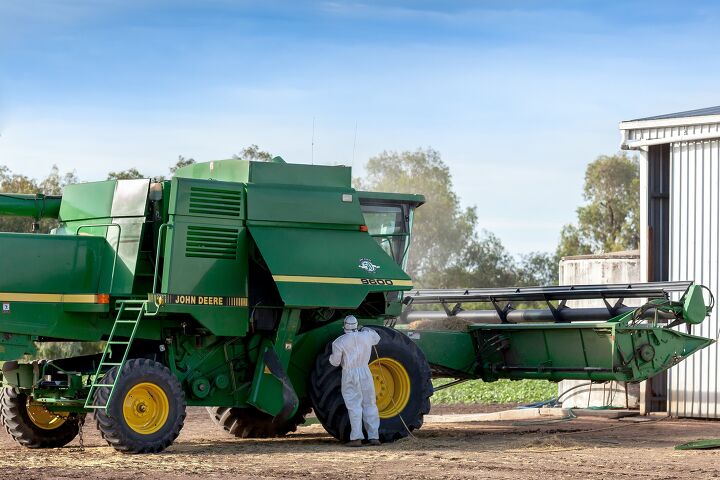
On Monday, John Deere agreed to pay $99 million into a settlement to farmers that are part of a class action over repair gatekeeping. Reuters reported on the topic the following day, noting that it was tied to the broader right-to-repair movement.
From Reuters:
The settlement fund covers eligible plaintiffs who paid Deere’s authorized dealers for repairs to large agricultural equipment from January 2018, according to a document filed on Monday in the federal court in Chicago, Illinois.
In the settlement, Deere also agreed to make available to farmers for 10 years "the digital tools required for the maintenance, diagnosis, and repair" of large agricultural equipment, including tractors, combines, and sugarcane harvesters, the filing showed.
The proposed accord requires a judge's approval.
"This settlement addresses the issues raised in the 2022 complaint and brings this case to an end with no finding of wrongdoing," Deere said in a separate statement.
Deere also faces a separate lawsuit brought by the U.S. Federal Trade Commission. A U.S. judge ruled in 2025 that Deere must face that lawsuit, which accused the company of forcing farmers to use its authorized dealer network and driving up their costs for parts and repairs.
As noted, the FTC doesn’t see things like John Deere does. It remains concerned that Deere and other equipment manufacturers (which would include automakers) are blocking customers from accessing the necessary tools to service and repair their property. These assertions were even leveled at John Deere directly in numerous court filings made over the last three years.
The company had previously signed a memorandum of understanding in 2023, stating that it would provide third parties with the technology to diagnose and repair its equipment. But there was some fine print that Deere would only comply in a manner that kept its intellectual property safeguarded. Opponents have said that this is insufficient and that the IP argument is being used as a smokescreen as more companies normalize anti-right-to-repair business tactics.
Interestingly, we’ve already seen overlap with other industries. Older tractors have spiked in value due to the perception that they’ll be significantly easier to maintain and may even last longer than the complicated, modern equivalent. Many farmers are happy to forego newer features if it means less downtime and the freedom to have equipment fixed when/how owners want.
We’ve seen the same thing taking place with automobiles. There is a growing assumption that newer vehicles boast both physical and software-based handicaps that are designed to intentionally shorten their potential lifespan while also making service and repairs as difficult as possible. The claim is that these decisions were predicated on the assumption that manufacturers would make more money by forcing people to go back to the dealership whenever something goes wrong — by cutting out DIY mechanics, aftermarket part suppliers, and independent repair shops.
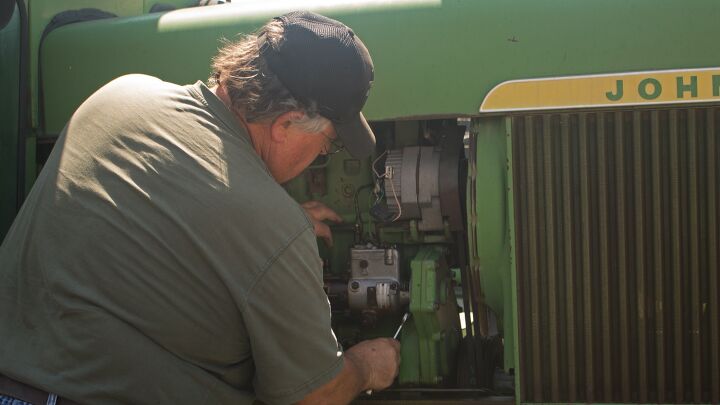
But those concerns are hardly limited to agricultural equipment and automotive manufacturers. We’ve seen computers, smartphones, thermostats, refrigerators, washers, dryers, and a slew of other products all implement some form of electronic gatekeeping and planned obsolescence in recent years.
The bottom line is that people want control of the products they own and the right-to-repair movement is attempting to take it back. However, progress remains rather slow and numerous industries have done everything in their power to normalize software-defined products, permanent internet connectivity, and physical components that only last as long as they absolutely have to to avoid a lawsuit.
Automakers should look to John Deere to see what’s in store for them. As of now, the company still has to face legal actions being taken by the Federal Trade Commission and it seems likely that there will be more class-action lawsuits launched by owners. But there are even bigger issues at play than how mad this is making customers.
With the economy clearly struggling, there’s really no way for people to continue paying for products that have been designed to bilk them out of as much money as possible. Consumers are growing increasingly hip to the scam and their tolerance or abuse is declining along with their purchasing power. Meanwhile, these companies are inviting a future where everything stagnates because individuals cannot properly address maintenance issues.
The best case scenario is one where people snub new products with unsavory features until companies realize they need to produce genuinely useful equipment offering real value before they go bankrupt or regulators force their hand. But some regulators have occasionally helped make the problem worse by mandating certain features under the guise of promoting safety or limiting emissions — requiring even more complicated tech.
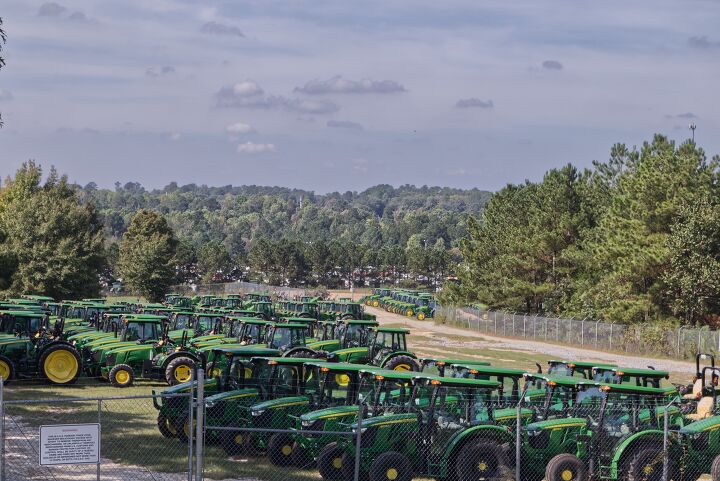
Meanwhile, the worst case scenario would be for these companies to maintain their current trajectory until every aspect of the relevant industries have been centralized. People won’t really own any of the things they’ve purchased and we’ll be one administrative hiccup away from complete disaster. Equipment repair is already becoming more costly and time consuming. What happens when one of these OEMs runs into serious trouble and falls even further behind? Do we just accept that farmers won’t be able to farm and millions of people can no longer drive to work? Something tells me that people won’t just sit around and wait while they starve.
[Images: KK Stock/Shutterstock; Edward Haylan/Shutterstock; Berns Images/Shutterstock; Billy F Blume Jr/Shutterstock]
Become a TTAC insider. Get the latest news, features, TTAC takes, and everything else that gets to the truth about cars first by subscribing to our newsletter.
Consumer advocate tracking industry trends and regulations. Before joining TTAC, Matt spent a decade working for marketing and research firms based in NYC. Clients included several of the world’s largest automakers, global tire brands, and aftermarket part suppliers. Dissatisfied, he pivoted to writing about cars. Since then, he has become an ardent supporter of the right-to-repair movement, been interviewed about the automotive sector by national broadcasts, participated in a few amateur rallying events, and driven more rental cars than anyone ever should. Handy with a wrench, Matt grew up surrounded by Detroit auto workers and learned to drive by twelve. A contrarian, Matt claims to prefer understeer and motorcycles.
More by Matt Posky






Comments
Join the conversation
Is anyone else seeing this? Popup ads on this site from Deere proclaiming "You Can Repair Your Own Tractor".
Little starvation could be useful for Americans. So people might wake-up