Tesla Robotaxis Involved in 14 Crashes in Eight Months
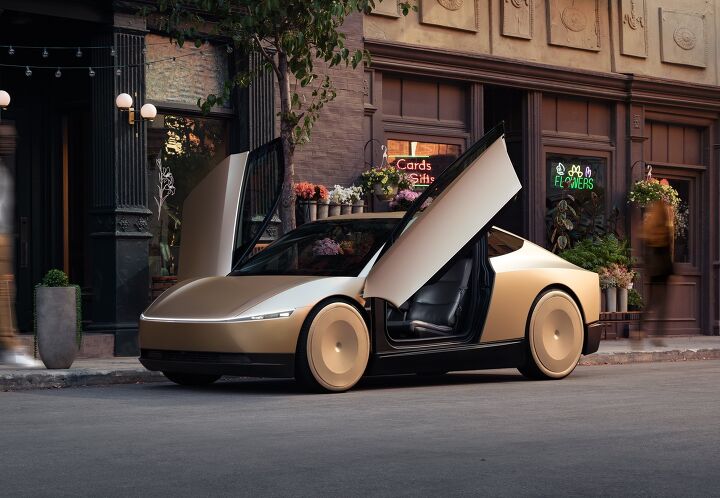
Tesla CEO Elon Musk kicked off the arrival of the company’s robotaxi concept during a showy event Michael Bay or Steven Spielberg would appreciate. However, eight months after their Austin, Texas debut, they’ve been involved in 14 crashes.
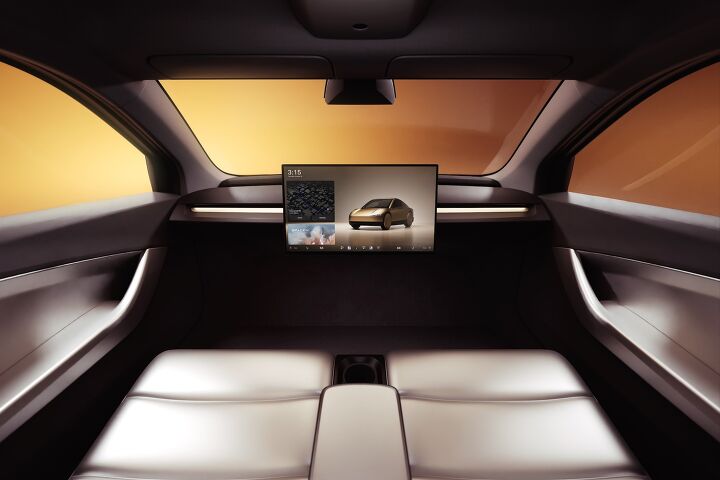
According to data from the National Highway Traffic Safety Administration (NHTSA), the EV maker’s self-driving vehicles — equipped with human safety drivers — were involved in their first crash one month after their June 2025 debut.
The next incident report, according to a Bloomberg report, came in December. The collision resulted in minor injuries and hospitalization. A second July incident resulting in injuries was also recorded with NHTSA at that point. Crashes involving self-driving vehicles must be reported to NHTSA.
In December, Tesla allowed a “few” robotaxis to be put into service without the human safety driver.
Last month, five more crashes occurred and were reported, plus an additional incident from December. It appears not all of the collisions were necessarily the fault of the Tesla vehicle. In one of the January crashes, an Austin city bus hit a parked robotaxi.
It is unclear how many robotaxis are in service in Austin, but Musk said last month there were 500 robotaxis in Austin and the company’s second market, San Francisco. He’s said previously the expansion plans call for expansion to seven other locations by the end of the third quarter of this year.
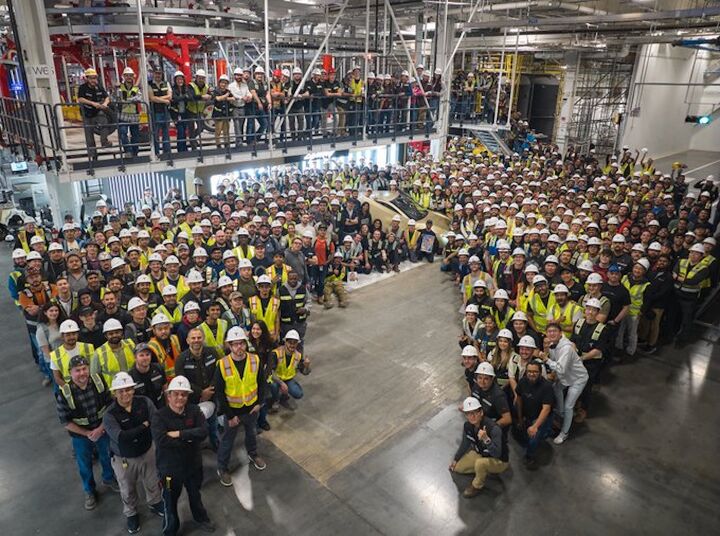
The news comes after Tesla showed off the first Cybercab, which is a separate vehicle from the Model Y-based robotaxis currently in limited use, after it rolled off the production line at the company’s plant, Giga Texas, just outside Austin. Musk has long maintained that the operation of a full-time, autonomous rideshare fleet would be one of the company’s profit centers.
The new Cybercabs will be available for $30,000, Musk has said repeatedly. Unlike the Model Y robotaxi, there are no controls for steering, braking, or acceleration.
Michael Strong has spent more than 25 years writing about the automotive industry. A Detroit-area native, he’s written about everything from local car shows to product reviews to financial news. Currently he writes and edits for a variety of national and local publications. He’s also a longtime member of the Automotive Press Association and the International Motor Press Association, and a graduate of Georgia Southern University. Hail Southern! Despite a love for ’70s land yachts and BMWs from the late ’80s and early ’90s, his personal vehicle is neither of those.
More by Michael Strong
Latest Car Reviews
Read moreLatest Product Reviews
Read moreRecent Comments
- Amwhalbi My 1972 Mercury Capri was my first stick shift car. God, I miss that thing. It was a blast to drive.
- Vid169489471 The technology exists today to produce a variable color temperature (kelvin) LED lamp. It can vary from 2700k that soft orange look to 6500k the bright daylight with the bluish tint.Since everything in a late model car is computer controlled, it would be an easy task to write a few lines of code that enables your vehicle to not only dim down from hi to low beam but to shift color temp down to the 2700k range for oncoming traffic, then back up to 5000k once oncoming traffic has passed. For the operator it would be automatic and seamless. For older cars they could be retrofitted with LEDs that are 2700k on low beam and 5000k on hi beam. As far as standards, there could be a lumens max, and a minimum. Several States already have minimum lumen standards going back to the old incandescent bulbs. Why not update these to national standards.
- Jam169859557 More regulation is needed for ALL vehicle lighting systems. [list=1][*]The lighting that is most blinding are the rapidly flashing red, blue and amber lights on emergency vehicles. The lights themselves are blinding, flashing so rapidly that it's impossible for even the sharpest eyes to adjust. What's worse, is the nature of the emergency requires a careful view of the area surrounding the emergency vehicle. There is something going on that needs to be seen. More flashing lights is not the solution.[/*][*]Brighter headlights need to be regulated. The tall riding vehicles do not need headlights positioned so high that they blind drivers in lower riding vehicles. And those heasdlights need to be aimed properly. When I first started driving my 2020 Subaru Outback, many drivers would flash their lights, hoping I would dim my lights. This stopped after I performed am easy adjustment that tilted the beam lower. Late model Subaru headlamps are designed with a sharp cutoff that project less glare above the hood line. When the headlights are properly aimed, other drivers are not blinded by the beam.[/*][*]Customized light assemblies make it more difficult to see the marker lights (tail lamps, turn signals and side marker lamps) that have been tinted. There are many municiple codes that prohibit this tinting, but these laws are seldom enforced.[/*][/list=1]Solutions: Tight controls on emergency vehicle lighting. In trying to make these vehicles more visible, a dangerous side effect is reducing the ability of drivers to see the surrounding perils.Headlight design regulations that reduce the height of the headlight assemblies. Just because a pickup truck has a hood that sits 4 feet abouve the pavement, it does not mean the headlights need to be so high. Owneres should maintain proper adjustments to their vehicle headlights.Establish and enforce regulation requiring a illumination standard be followed.
- Stl170698708 as someone who hates big government, and their interference;but you can add me to the list of people that are blinded by the lights.unfortunately "the poop is out of the horse and no way is it going back in"They have had 5 years to make lights bigger, badder and brighter because in the vehicle work it is go big or go home!Trucks are the worst because so many people use them to express their dominance and that is big, big, big $$ both at the Original Purchase and in the Aftermarket world.If, we are so lucky to get some good government regulation on this it will also take some very good Court enforcement to get the aftermarket people with fines and lawsuits.Much like the EPA did with the Diesel Tuner Industry that felt emission regulations didn't apply to them.This is from someone that owns said pickup truck with the same bright headlights,but i only use the truck when I have too and always turn off the Fog lights when driving in traffic.
- Art65765977 I saw a porsche 911 with the most amazing headlights from behind approaching the Sunshine skyway in Florida. The pattern was 108 degrees across sweeping the road like a broom. My brother and I were amazed. I don't know what it looked like from the front but i am sure it was better than American cars
Comments
Join the conversation
I've said it before and I'll say it again: True, unsupervised self driving is dead in the water without dedicated, pedestrian-free roads, and networked vehicles that are all computer controlled. We'll probably see it first in China, because we can't build anything in the United States anymore.
Watched a YT video of one ride in a Waymo from MIami to south Miami-Dade county. Aside from taking the complete wrong way and being outrageously expensive, it can't distinguish between red and green lights, Drops off person in the middle of the road, runs a red light, instantly stops for an ambulance in the opposite lanes on a divided road. Truly awful and really highlights how bad this technology is. But, even if it hit a child, some here would say how good it is.
There is no way Waymo has done 20 million real world miles and billions of simulation miles. If that were true, it would know the difference between red and green lights.