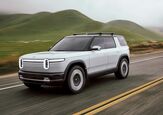


San Francisco Blackout Leaves Waymo Vehicles Flummoxed


Over the weekend, San Francisco suffered widespread blackouts and Waymo’s self-driving test mules didn’t know how to handle the situation. Vehicles simply parked themselves at intersections, forcing the company to shut down taxi services until the power outage was over.
While human drivers should all know that any intersection with a disabled traffic light defaults to being a four-way stop, Waymo vehicles apparently had trouble with the concept. Rather than attempting to cautiously navigate through intersections during the blackout, the vehicles just stopped moving — clogging up traffic in the process.
Waymo has said that the cars actually do know how to handle disabled traffic signals. But had never encountered them at the scale witnessed over the weekend. The issue was allegedly made worse by human drivers opting to simply go around them as they sat idle at the non-functional lights.
That’s not exactly encouraging, especially when you look at some of the footage. For example, ABC News posted a video where nearly six Waymo robotaxis were all stalled at the same intersection. Human drivers aren’t having any issue moving through the intersection. But the Waymo vehicles were collectively paralyzed.
Granted, it’s a lot of variables to throw at a self-driving automobile. But the companies operating these cars on public roads have repeatedly claimed that they’re statistically superior to human drivers, which doesn’t mesh with what we’re seeing.
We’ve been hard on Waymo of late. However, the company has given us plenty of reasons for that. Waymo vehicles have been faulted for illegally passing school buses (prompting a recall), hitting dogs, and driving through an active crime scene — and that was just within the last two months.
If we go back even further, there’s no shortage of instances where the businesses’ vehicles behaved in an undesirable manner. In the past, General Motors’ Cruise and other brands of robocabs were around to absorb some of the criticism. But Waymo doesn’t have as much competition anymore, meaning it’s now taking the brunt of our attention.
Some have argued that, since blackouts aren’t a regular occurrence, Waymo’s inability to cope with them isn’t that big of a deal. However, if the point is that these vehicles are supposed to be as effective as the best human drivers, your author would argue the complete opposite point.
Programming the cars to be cautious is admirable and presumably wise. But, if they’re so timid that they end up creating a traffic jam, that’s an obvious shortcoming. These cars likewise weren’t pulling off to the side of the road to let more competent human motorists go around them. They were clogging up the flow of traffic, making the situation more dangerous.
“[This weekend’s] power outage was a widespread event that caused gridlock across San Francisco, with non-functioning traffic signals and transit disruptions," stated a Waymo spokesperson. "While the failure of the utility infrastructure was significant, we are committed to ensuring our technology adjusts to traffic flow during such events."
Fair enough. But people are getting tired of the company having to recalibrate its vehicles while they’re operating on public roads. That’s something that needs to be addressed by both Waymo and the government that continues to allow them to operate on city streets.

[Images: Waymo]
Become a TTAC insider. Get the latest news, features, TTAC takes, and everything else that gets to the truth about cars first by subscribing to our newsletter.
Consumer advocate tracking industry trends and regulations. Before joining TTAC, Matt spent a decade working for marketing and research firms based in NYC. Clients included several of the world’s largest automakers, global tire brands, and aftermarket part suppliers. Dissatisfied, he pivoted to writing about cars. Since then, he has become an ardent supporter of the right-to-repair movement, been interviewed about the automotive sector by national broadcasts, participated in a few amateur rallying events, and driven more rental cars than anyone ever should. Handy with a wrench, Matt grew up surrounded by Detroit auto workers and learned to drive by twelve. A contrarian, Matt claims to prefer understeer and motorcycles.
More by Matt Posky









Comments
Join the conversation
"But the companies operating these cars on public roads have repeatedly claimed that they’re statistically superior to human drivers, which doesn’t mesh with what we’re seeing."
Is whatever you're 'seeing' backed up by any actual data, or is it anecdotal observations drawn from headlines and confirmation bias? Calling out a few examples over a months-long time span without any reference to what human drivers might be causing over that period is basically pointless.
I realize this isn't a scientific journal, but yikes.
Nothing a that a software upgrade wold not fix (unless the upgrade completely shuts down the system).