
Jim Farley Forgot the Wisdom of “Pull”
“You might wonder why this platform and vehicle had to be electric. The choice enabled how it is built, and we also believe electric vehicles are by far the best product for the customers we are going after.
“You can charge at home, waking up every day with a ‘full tank.’
“The vehicle is a mobile power plant with high-power outlets and the ability to provide backup power for your home.
“And it will be unbelievably fun to drive, with the low center of gravity from the battery, instant torque from the electric motors, and our obsessive chassis engineering.”
That is from a piece posted by Doug Field in August about the first vehicle that will be made on the “Ford Universal Electric Vehicle Platform.”
Field is Ford’s chief EV, digital and design officer.
Rhetorically, this is in keeping with what is typically said about EVs—the torque and the quickness and the ability to charge at home.
What Do People Actually Want?
But those comments bring to mind something that Patrick L. Anderson, principal and CEO of Anderson Economic Group, said last week on “ Autoline After Hours.” Anderson suggested that one of the problems that exists in the market regarding electric vehicles is that there doesn’t seem to have been a whole lot of asking consumers what they’re actually interested in as opposed to telling them what they should be interested in.
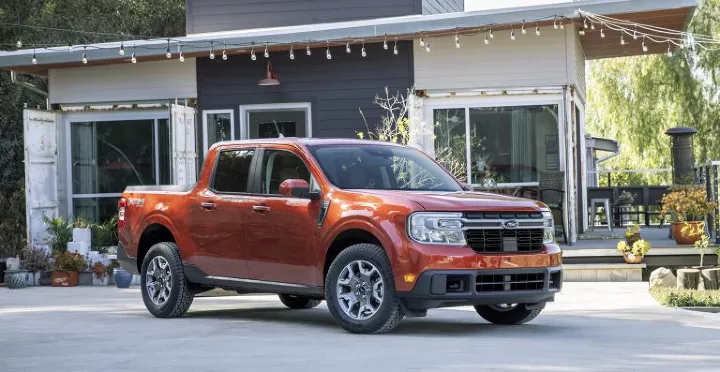
The vehicle that will be built on the FUEVP is a midsize four-door pickup. It is supposed to cost $30,000. (Remember when the F-150 Lightning was first available in 2022 with an MSRP of $39,974? The least expensive model is now about 37% more expensive. Not bad for three years.)
Do owners of Rangers (with the exception of those who bought Ranger Raptors) really concern themselves with “fun to drive” and “low center of gravity” or did they buy the truck because they’re interested in utility and wanted something more than a Maverick but less than an F-150?
And is the midsize truck what people are really interested in?
Through November, there were 62,864 Rangers sold, which is an impressive 53.5% increase over the same period in 2024. But although Maverick sales were up a comparatively paltry 11.9% year-over-year, there were 141,873 sold—more than twice as many Rangers.
(The Maverick has been an out-of-the-park success since its introduction.)
Profit Follows Purchase
The headline on the news release describing Ford’s pivot to things other than EVs reads:
“Ford Follows Customers to Drive Profitable Growth; Reinvests in Trucks, Hybrids, Affordable EVs, Battery Storage; Takes EV-Related Charges”
Apparently trying to lead customers didn’t work out so well. Through November it sold 25,583 F-150 Lightnings, 47,882 Mustang Mach-Es, and 5,091 E-Transits. Realize that three models selling just 78,556 units isn’t good business.
So Ford, correctly, is making the shift so that there will be less of a concentration on EVs and more on plain-old gasoline engines and hybrids.
Analyst Warren Browne (see him here) recently looked at the landscape of factories that are to come on line with EV products, and wrote:
“Some existing and future capacity should be classified as assets with no realistic economic purpose (given the size of the investment). Based on known forward product plans, the following assembly sites are viewed as volume deficient—unless there is a substantial change in additional product allocations or significant reductions in BEV prices.”
One of the sites on Browne’s list is BlueOval City—a complex that sits on six square miles in Western Tennessee—that was to be where the next-gen EV full-size pickup would be built.
In Ford’s announced pivot:
“On the BlueOval City campus, the Tennessee Electric Vehicle Center is renamed Tennessee Truck Plant. The facility will produce all-new Built Ford Tough truck models with production starting in 2029. These new affordable gas-powered trucks will broaden Ford’s truck family and extend its market leadership, replacing the previously planned next-generation electric truck.”
Gas-powered trucks.
These are what the market wants. Given Ford’s long dominance in that space it is curious how company management apparently missed what consumers really want.
Not Acknowledging Reality
To be sure there is the issue regarding regulations that required Ford (and other OEMs) meet emissions and fuel-economy standards that are apparently going away as of last week’s Oval Office announcement, but it is still hard to conceive of why Ford missed the mark so widely, unless it is an issue of believing their own PR.
Of the F-150 Lightning Field said:
“The F-150 Lightning is a groundbreaking product that demonstrated an electric pickup can still be a great F-Series.”
In 2022 there were 15,617 Lightnings sold.
In 2023, 24165.
In 2024, 33,510.
A pickup truck is the quintessential mass-market vehicle, and the F-Series is the quintessential pickup truck.
Somehow those numbers don’t equate to the greatness of the F-Series, and I suspect that Field knows that.
CEO Jim Farley:
“This is a customer-driven shift to create a stronger, more resilient and more profitable Ford. The operating reality has changed, and we are redeploying capital into higher-return growth opportunities: Ford Pro, our market-leading trucks and vans, hybrids and high margin opportunities like our new battery energy storage business.”
Yes, the “operating reality has changed” with regard to the regulatory landscape.
But consumers pretty much haven’t changed.
Give the People What They Want
Consider Toyota, which essentially has had two EVs on the market—the Toyota bZ4X (now just “bZ”) and the Lexus RZ (yes, the Mirai fuel cell vehicle is an electric vehicle, but not a battery-powered one, and it is still something of a concept car that’s made it into—limited—production).
And which has more than 30 hybrid models, from the stalwart Prius to the Land Cruiser.
Through the third quarter (Toyota is one of the companies that doesn’t release monthly figures) Toyota sold 1,865,876 vehicles and Ford 1,658,908 vehicles.
Of the Toyota sales, 892,408 were electrified (yes, including the bZ4X, RZ and Mirai), or 47.8% of its total sales. Hybrids, hybrids and more hybrids mainly.
Here’s a company that was roundly criticized for what some claimed are half-assed efforts at going electric that has nearly half of all the products it is selling are hybrids, a.k.a., “electrified” vehicles. There is a demand. It fulfills the demand with product.
Yes, it helped create the demand by launching the Prius, which had a selling proposition that it would save gas (and help save the environment, as early adopters tended to be greener than the average consumer).
“Oh, it’s too expensive.” “Oh, there are two propulsion systems; its too complicated.”
Oh, Prius is on its fifth generation.
A Pull System
One of the things about the Toyota Production System that isn’t often mentioned nowadays is that it is a “pull system,” not a “push system.” In assembly operations, station A doesn’t move its production forward (push) until station B calls for it (pull). And so on down the line. This assures that what is wanted is produced when it is wanted. No more. No less. (And because of the pull arrangement, the associates on the line have better visibility into and control of quality, which results in the production of better products, products that have fewer problems when in the hands of consumers.)
This “pull” thinking extends to the market, as well. Production is coordinated with demand. If people want something, you build them. You don’t push what you think they want on them.
One of the people in the auto industry who knows this better than most is Jim Farley, who came to Ford from Toyota.
Knowing is one thing. Using that knowledge is another.
Expectations, Again
Now Ford says it “expects approximately 50% of its global volume will be hybrids, extended-range EVs and fully electric vehicles” by 2030. This shift in resources is costing the company literally billions of dollars. It is taking a $19.5 billion charge.
Note the “global volume,” not just the U.S., that the company is citing. It would be surprising if 50% of Toyota’s U.S. volume isn’t made up of electrified vehicles before 2030.
The problem at Ford (and to an extent at GM) is that it seems management wasn’t merely meeting regulations with electric vehicles but was absolutely excited about the technology.
Meanwhile, consumers were still getting their post-COVID lives in order. Remember when companies—including Ford—allowed people to work entirely from home and then just a few days a week in the office? One of the consequences of that approach was people figuring they could do without getting a new vehicle. Then when it became clear people were expected to be back in the office nearly all of the time and they looked in the new vehicle market, EVs that were much pricier than gas-powered vehicles didn’t seem all that appealing, no matter how hard executives claimed those vehicles are cool and the future.
Student loans. Increasing insurance prices. Overall inflation. All issues that have nothing to do with the limited EV charging infrastructure that’s often pointed to as a culprit in the lack of acceptance.
Whether you love your vehicle or not, at the end of the day it is a transportation tool. For most people the characteristics of that tool is that it has to work reliably and be convenient to use—to say nothing of being affordable.
Most people buy their pots and pans at places like Target, not Sur La Table.
How a mainstream company like Ford missed that is hard to figure.
Le Creuset may be cool and offer some benefits, but most people opt for the Farberware.
Long-time automotive journalist Gary Vasilash is co-host of "Autoline After Hours" and is a North American Car, Truck & Utility of the Year juror. He is also a contributor to Wards Auto and a juror for its 10 Best Interiors UX and 10 Best Engines & Propulsion Systems awards. He has written for a number of outlets, ranging from Composites Technology to Car and Driver.
The TTAC Creators Series tells stories and amplifies creators from all corners of the car world, including culture, dealerships, collections, modified builds and more.
Check out Gary's Substack here.
[Image: Ford]
Become a TTAC insider. Get the latest news, features, TTAC takes, and everything else that gets to the truth about cars first by subscribing to our newsletter.

Long-time automotive journalist Gary Vasilash is co-host of "Autoline After Hours" and is a North American Car, Truck & Utility of the Year juror. He is also a contributor to Wards Auto and a juror for its 10 Best Interiors UX and 10 Best Engines & Propulsion Systems awards. He has written for a number of outlets, ranging from Composites Technology to Car and Driver.
More by Gary Vasilash









Comments
Join the conversation
Sedan! Sedan! Sedan! Sedan!
My significant other and myself have bought 3 new Escapes, a 2009, 2019 and a 2022. Last one was great with a fun and strong 250hp turbo 2.0 and 8-speed auto that gets about 30mpg on the highway! Have not had issues with any. When Ford announced they were canceling the line, I was livid, saying it was our last Ford. I have since found that the Maverick is based on the Escape platform and is available with the same powertrain. So, I'm giving it a look and pricing one out. I've had pickups, don't really have much of a use for them at my age, and the SUV is more practical for us, but we'll see. If they don't build what I want, there are others that will! There are some great people at our local Ford dealership that we would be sorry to say bye to! Wake up Ford!