


Report: Vehicle Shipments to America Drop by About 70 Percent

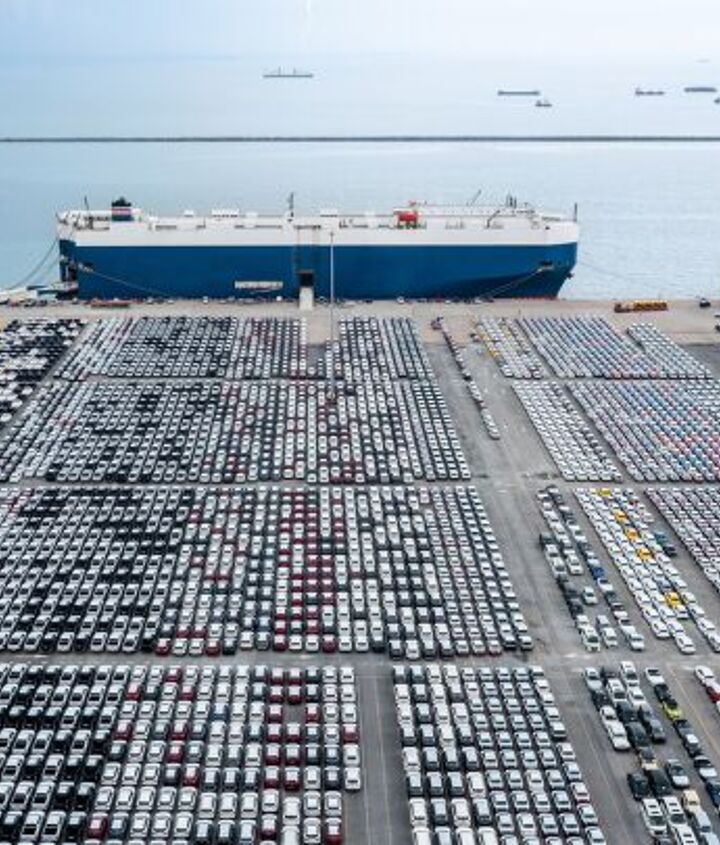
In what is likely a reaction to tariff taxes put in place by the Trump administration, new data is showing that vehicle shipments to this country have plummeted by about 70 percent.
Automotive News reported this morning that the volume of vehicles being shipped to America via ocean carriers has dropped 72 percent when using the standard industry measure of ‘20-foot equivalent units’ or TEUs. That metric is understood to be the cargo capacity equivalent to that of a 20-foot shipping container. The more you know. It’s a decent yardstick given many North American vehicles are in the ballpark of just three or four feet short that for total length.

Under the category of motor vehicles for transporting people, the total TEU quantity for May 2025 was just under 3,600 compared to nearly 13,000 one year ago. Talking heads are chalking the drop as a response to Trump’s tariff taxes in which manufacturers are taking a wait-and-see approach given the flux in White House decision making. Many overseas OEMs are likely hitting the pause button for now, hoping there will be tacos for supper and more favorable conditions reappear in the medium term.

What does this mean for consumers? At present, car prices are mostly flat, with third-party information suggesting a half- to one-percent increase in transaction prices year-over-year for April. However, if shipment numbers continue this trend and supply dries up, one can bet their MAGA hat prices will increase at a more rapid pace. It doesn’t take an economics major to understand the concept of supply and demand - just like it doesn’t take an engineering major to understand that dozens of new assembly plants can’t be built in this country overnight to offset the lack of imports.
[Images: Mister Din, Rangsarit Chaiyakun, Audley C Bullock via Shutterstock]
Become a TTAC insider. Get the latest news, features, TTAC takes, and everything else that gets to the truth about cars first by subscribing to our newsletter.
Matthew buys, sells, fixes, & races cars. As a human index of auto & auction knowledge, he is fond of making money and offering loud opinions.
More by Matthew Guy












Comments
Join the conversation
Inventory control needs to be considered. I forget if manufacturers like to have 60,90, or 120 days inventory on hand. Inventory control allows the auto maker to control the flow of supplies, plant schedules, and corporate costs. Gone are the days of 'stack them deep and sell them cheap."
Now, if some of our more frequent MAGA-leaning contributors want to do salacious things at truck and rest stops, it won't harm the supply chain. They'll just have to turn their red hats around.
This likely translates to a 15-20% increase in vehicle prices over the next 12-18 months. Thanks Donny T - great outcome. Vehicle production capacity is already too high in North America...and any notion that manufacturers intend to increase capacity by building more plants in North America (ie, the USA) is pie-in-the-sky thinking. For those who think otherwise, make a note of US auto production facilities in 2025...then diarise to check those figures in 2030.