

Audi Abandons EV Deadline

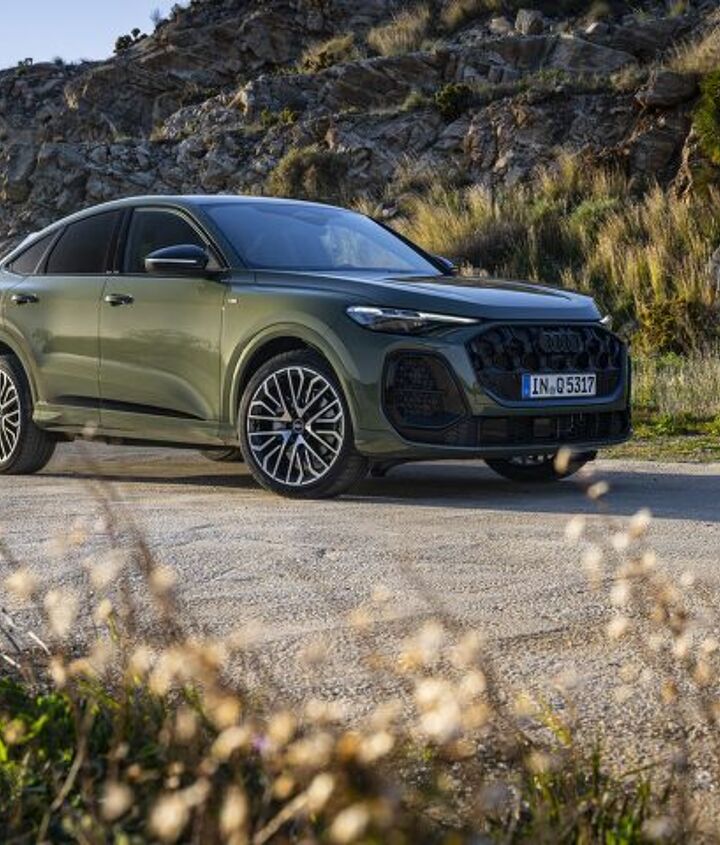
Despite previous assurances that Audi would only develop electrified models after 2026, and pivot exclusively to selling all-electric vehicles by 2033, the company has abandoned those deadlines so it can continue building combustion models.
Considering how many manufacturers have already taken this approach after EV sales failed to manifest at the desired pace, Audi’s decision is hardly a bombshell. But it leaves a few lingering questions, most of which pertain to development. With automakers having spent the last decade vowing to focus entirely on electrified models, spending billions of dollars in the process, one wonders just how much attention has been paid to upcoming combustion models.
Audi CEO Gernot Döllne recently told Autocar that the electrification timeline was determined by the brand’s former management. But he has been heading the company since 2023, when the company was still publicly suggesting that the deadlines were feasible. That said, Audi did start dropping serious hints that it would keep building combustion engines in 2024 — likely indicating that the change in management came with a change in priorities.
That’s not to absolve Audi’s board or the top brass at Volkswagen Group, who went along with the electrification scheme. CEOs can — and often do — become convenient scape goats when plans go awry. However, Döllne does seem to have different priorities than his predecessors.
“Audi is launching from 2024-2026 a completely new line-up of internal combustion engine and plug-in hybrid vehicles, and that gives us complete flexibility for at least another seven, eight, maybe 10 years, and then we will see how our markets develop,” he explained to Autocar.
“We have already decided to extend the production beyond the communicated end dates of the past.”

From Autocar:
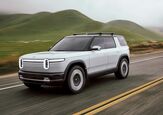
Döllner also confirmed Audi would lead development of all Volkswagen Group hardware and software architectures for larger models in the future (essentially anything from an A5-sized vehicle and up), including the next-generation SSP platform that would see the Group move to ‘software-defined vehicles’ for the first time. This project involves Rivian, whom the VW Group has invested in, and the first Audis on the SSP platform would hit the market in late 2027/2028.
Audi is however trimming its model range and it has no plans to replace the A1 and Q2 models. The Q3 and A3 models would represent the entry point of the range, with the A8 the range-topper on the “low car” side and the Q7 and Q8, and a mooted Q9, where the range would end on the SUVs and crossovers.
An all-electric A3-sized model was in development for 2026 as an additional model in the range, Döllner confirmed, but there were no plans for Audi to create its own version of the Volkswagen ID 2/Skoda Epiq/Cupra Raval entry-level electric car.
“Software-defined vehicles” may be the next item on the industry’s chopping block now that EV plans are being walked back. While automakers view the pivot to software as incredibly lucrative, Western consumers are signaling fatigue toward screen-reliant infotainment and touch controls.
Safety testing has likewise indicated that screens are distracting and less intuitive than traditional buttons. Meanwhile, there are growing concerns that software-defined vehicles are further complicating repairs and providing manufacturers with unprecedented access to what are supposed to be privately-owned automobiles.
That’s speculative, of course. It will also probably be several years before there is sufficient consumer pushback to make a meaningful difference. In the interim, companies like Audi will attempt to leverage even more over-the-air updates to digitally customize vehicles and connectivity to harvest user data.
As for powertrain options, Audi claims that it wants to take a flexible approach moving forward — presumably meaning it’ll offer a mix of combustion vehicles, hybrids, plug-in hybrids and all-electric vehicles. But the lineup will be undoubtedly vary between regions.
In Europe, Audi EVs have a much higher take rate than they do in North America. The European Union likewise has rules in place that will effectively ban the sale of gasoline-driven combustion vehicles in 2035. Whether or not that timeline is realistic is debatable. However, the pressure to push electrics in Europe remains strong and somewhat at odds with what’s been happening in the United States. That means Audi won’t be abandoning EV development, even as it continues with combustion cars for other markets.

[Images: Audi]
Become a TTAC insider. Get the latest news, features, TTAC takes, and everything else that gets to the truth about cars first by subscribing to our newsletter.
Consumer advocate tracking industry trends and regulations. Before joining TTAC, Matt spent a decade working for marketing and research firms based in NYC. Clients included several of the world’s largest automakers, global tire brands, and aftermarket part suppliers. Dissatisfied, he pivoted to writing about cars. Since then, he has become an ardent supporter of the right-to-repair movement, been interviewed about the automotive sector by national broadcasts, participated in a few amateur rallying events, and driven more rental cars than anyone ever should. Handy with a wrench, Matt grew up surrounded by Detroit auto workers and learned to drive by twelve. A contrarian, Matt claims to prefer understeer and motorcycles.
More by Matt Posky









Comments
Join the conversation
Audi's EV's are dated and not compelling, though they are definitely more reliable than their gasoline counterparts.
Progress is about change, and that includes changing a plan if and when the conditions require a change of plan.
I like EVs. I've not yet owned one, but I still think they are a great idea.
IMO, large cities need to incorporate more EVs into their public systems.
Also, I like the idea of limiting ICE vehicles coming into large city centers.
For city living, and those living within a 50 mile radius and drive into a city for work, shopping, entertainment, etc., EVs are much smarter choice as they are less polluting.
Our national issue and problem with people accepting EVs is a lot to do with a serious lack of recharge stations. We may have a "lot" of recharge stations, but they are but a fraction of petrol station availability.
When EVs started to be a big thing, my thinking was that we needed to quickly start building national infrastructure of recharging stations. Tax incentives for investment could have motivated the petrol industry to invest in becoming "energy" companies and not "oil and gas" companies. The petrol industry already have prime locations, and they are everywhere, even in remote areas.
If those companies were incentivized to start including recharging, more people would see full EVs as viable. But, that did not happen, and is still not happening.
To me, back then, Hybrids should have been pushed more, as they are a viable and transitional vehicle type to get people used to the ideas and feel of full EVs.
Also, Hybrids are more fuel efficient, thus they burn less petrol and that results in less harmful emissions.
As an automotive enthusiast I'm happy to know that ICE vehicles are continuing, and new models are being designed and built.
Still, that does not mean that Audi, nor other vehicle manufacturers are or have abandoned EVs. To the contrary, there are even more and more EVs coming from those companies who are going to still design and produce ICE vehicles.
I am very happy to read that vehicle makers have, FINALLY, got a clue that putting ridiculous amounts and types of tech in a vehicle does NOT result in happy customers. The idea that an EV must include more and more tech is based on what?
To me, it seems that auto makers looked at the success of Tesla, and then decided that Tesla must have it right, because look at how many EVs they sell.
Well, when you ask the wrong question, you won't get the right answer you need.
Tesla's success is due to early adopters who had more disposable income to purchase their rather expensive EV. Other vehicle manufacturers looked at what Tesla was producing and they thought that customers would want more and more tech glitz in their own EV offerings.
Thankfully, the public has spoken up, and the auto makers now have some better information and data the most drivers do NOT want all of that tech in their cars, because their vehicles are not dance clubs, and the great majority do not live in their cars.
I HATE Tesla vehicle interior design, if one can even call it "design".
Their interiors are more the lack of design. Boring as hell to look at, and functionally idiotic, as nearly everything a driver needs to adjust is done through an overgrown iPad stuck on top of the lazy design dash.