

Junkyard Find: 1986 BMW 325es
When I first became a wise and fair judge for the 24 Hours of Lemons race series, back in 2008, I got a lot of static from Internet Car Experts who noted the large quantity of BMW E30s in every race and proclaimed that any E30 in any condition was worth at least ten times more than the Lemons $500 limit on car cost. Because I spent a great deal of time in self-service junkyards and saw that—at least in California—such places were overflowing with unwanted E30s, I knew they were wrong. 15 years later, though, E30s have become fairly rare in junkyards, so this fairly complete 325es in a Colorado yard caught my eye a few weeks back.
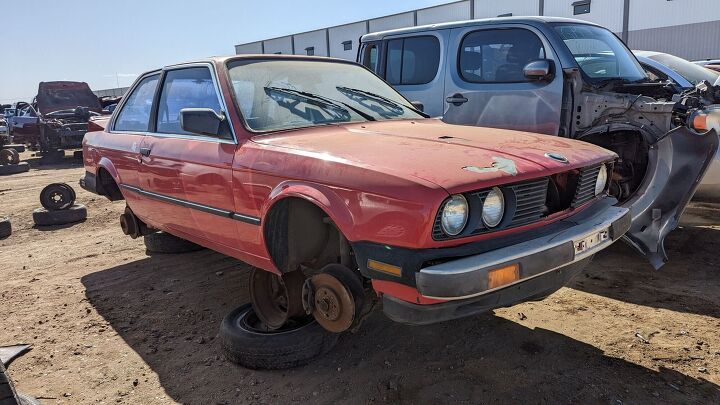
The E30 was the direct descendant of the E21 (sold in North America as the 320i), and it was available new on our continent from the 1984 through 1992 model years. It was the second generation of the BMW 3 Series.
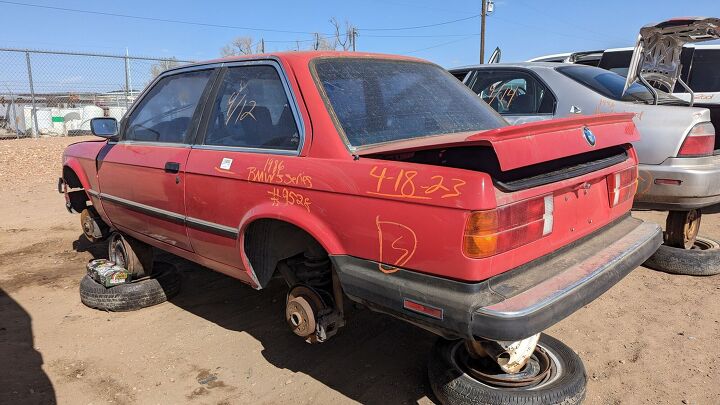
The supply of junkyard E30s began drying up about 2011 or 2012, at around the same time as millions of budding car freaks got smartphones, went online, and learned that they needed to obtain E30s to modify and then crash into concrete abutments and light poles in mall parking lots.

I still find the occasional example during my car-graveyard travels, but nowadays you'll find your local Ewe Pullet is going to be far better stocked with E36s, E46s and an ever-increasing number of E90s.
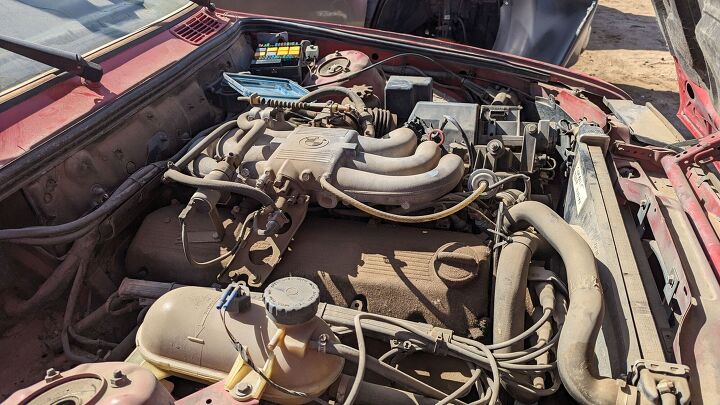
BMW stopped selling the four-cylinder 318i in the United States after 1985, bringing it back for 1991, so every new 3 Series model available here for the 1986 model year had a 2.7-liter straight-six.
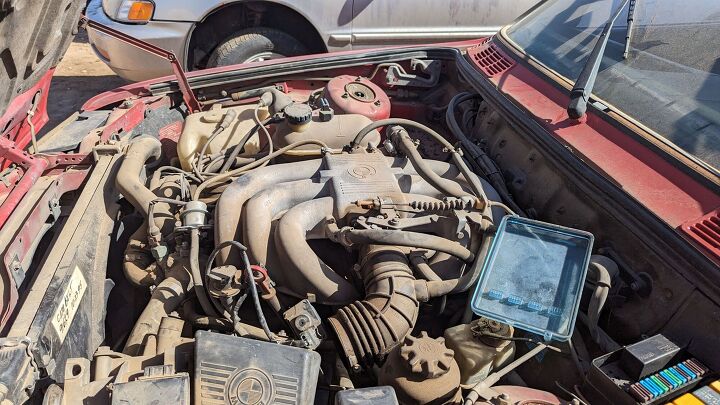
If this is the original engine, which I doubt given the frenzied pace at which Colorado E30 aficionados have been swapping parts around since the dawn of the smartphone era, it was rated at 121 horsepower and 170 pound-feet.
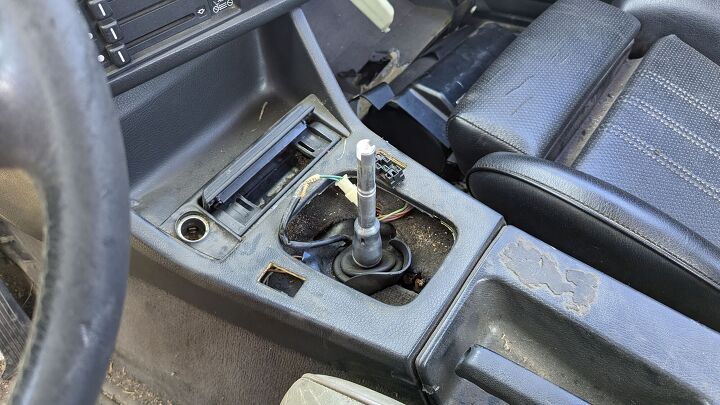
This one has the base five-speed manual transmission, as is proper. The optional four-speed automatic cost an extra $595 (about $1,639 in 2023 money) and became increasingly popular as the 1980s wore on.
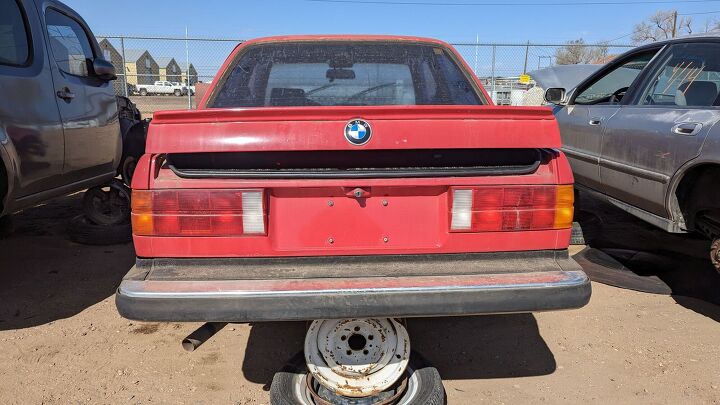
The build sticker says it began life as a 325es, and its original limited-slip differential might have been intact when I shot these photos (if so, there's a 99.999% chance that some junkyard shopper has yanked it by the time you are reading these words).
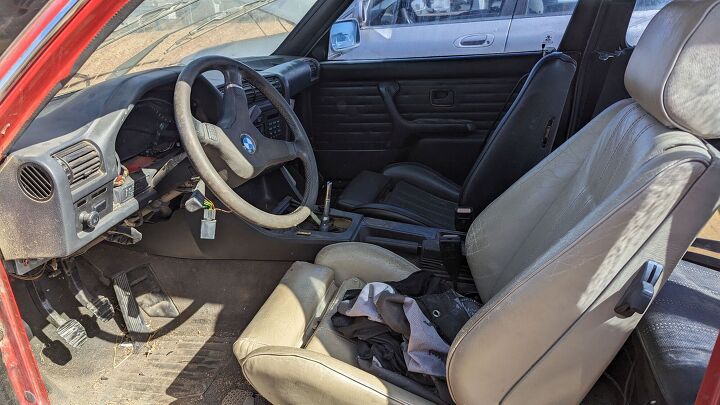
The 325es was the quickest of the US-market 3 Series cars of 1986, since its two-door configuration made it 11 pounds lighter than the 325e sedan. You could get the limited-slip differential as a $370 option on the 325e ($1,019 after inflation).
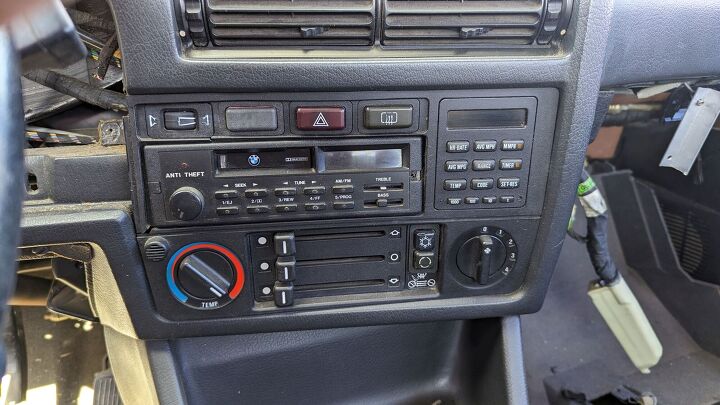
The 325e and 325es got power windows and sunroof, plus other luxury goodies, but all of the '86 E30s sold here were packed with upscale features (including air conditioning and a pretty good AM/FM/cassette deck).

The official price tag for the 1986 325es was $21,950, which comes to about $60,450 now. The cheapest possible new E30 that year (and therefore the cheapest available new four-wheeled BMW) was the 325 two-door, which cost $19,560 ($53,868 today).

There wasn't much direct competition for this car. Honda had just begun selling the Acura Integra in 1986; its power-to-weight ratio beat the 325es (20.6 lb/hp to 23 lb/hp) and it was much cheaper ($9,859, or $27,151 now), but it was front-wheel-drive and lacked snob appeal.

How about a 1986 Alfa Romeo GTV6, then? Rear-wheel-drive, an impressive 18.3 lb/hp power-to-weight ratio thanks to its screaming V6 engine, great Italian looks and a sticker price of only $16,500 ($45,441 today). Not many American car shoppers were brave enough to make that choice, sadly.
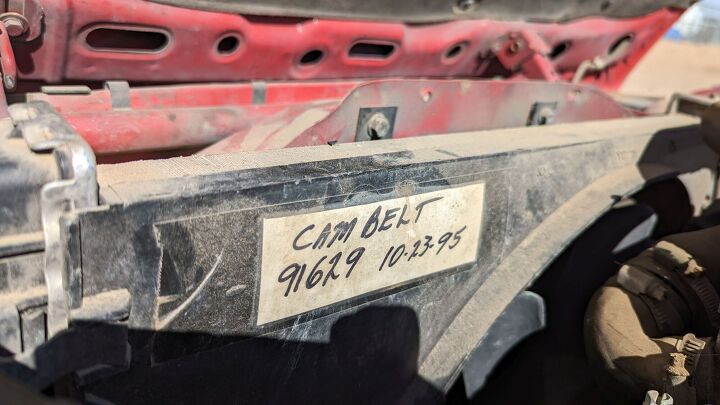
The gauge cluster is gone, but we can see that this car had 91,629 miles when it got a timing belt job at age nine.
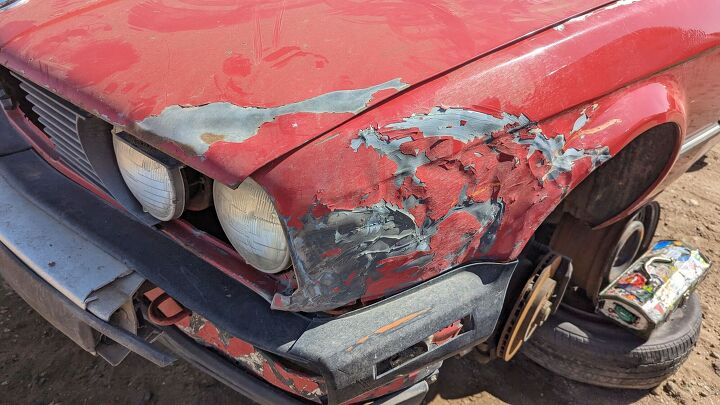
It's not at all rusty, though the body has plenty of rough areas and the paint is peeling. It wouldn't be so tough to fix this car up.

I'm surprised that a 325es in such un-thrashed condition made it to this place, to be honest. You never know what you'll find in the junkyard!
BMW has outperformed the energy crisis, the economic crisis, singlehandedly caused the automotive identity crisis, and now… makes its most powerful argument against the midlife crisis.
[Images: Murilee Martin]
Become a TTAC insider. Get the latest news, features, TTAC takes, and everything else that gets to the truth about cars first by subscribing to our newsletter.

Murilee Martin is the pen name of Phil Greden, a writer who has lived in Minnesota, California, Georgia and (now) Colorado. He has toiled at copywriting, technical writing, junkmail writing, fiction writing and now automotive writing. He has owned many terrible vehicles and some good ones. He spends a great deal of time in self-service junkyards. These days, he writes for publications including Autoweek, Hagerty and The Truth About Cars.
More by Murilee Martin










Comments
Join the conversation
Junkyard Finds: Necrophiliacs of the World, Unite!
These were great cars to drive. Even with the Eta engine. They were mechanically pretty reliable compared to current BMWs, but they had the usual electrical issues and poor trim quality. The engine, drivetrain, and chassis worked really well together. On a twisty road, they felt much more balanced than the other mid-'80s compact family size options. These had the ability to live to a very high mileage, unfortunately, the odometers didn't.