

Everything Car Related Has Become Extremely Expensive


Fuel prices continue to climb globally due to the situation in the Middle East. But it’s hardly the only issue impacting the cost of owning and operating a motor vehicle. Insurance rates have ballooned over the last several years, as have manufacturing costs. Automakers are blaming tariffs, citing billions in increased costs for 2025. But they were also raising prices on vehicles rather dramatically prior to those tariffs coming into play.
That’s not to suggest the tariffs aren’t playing a major role. According to Automotive News, automakers have estimated that tariffs instituted by the Trump administration have added roughly $35.4 billion in overhead since coming into effect. Toyota allegedly shouldered the largest burden, at over $9 billion. But even the brands that are based in America (and should incur the least amount of tariffs) are still citing several billion dollars in increased operating costs.
This will assuredly result in automakers trying to raise MSRPs. But it’s unclear how much higher they can go as buyers have signaled they’re tapped out. It also needs to be said that the industry had already spent the last few years increasing the price of products. Tariffs are just the newest economic excuse.
Before that, we had companies bemoaning the development cost of all-electric vehicles — which came out and then failed to sell despite being heavily subsidized. Regulatory solutions were also alleged to have raised the price of automobiles. Some of that was down to companies needing to include costly new safety features and the rest came down to exploiting regulatory loopholes by producing larger, most expensive vehicles.
At this point, it almost feels like the last few years have been all about creating a crisis chain to help rationalize the rising cost of goods. Prior to the 2020 response to the pandemic, U.S. auto loans were typically landing between 2-6 percent APR (or lower) while the average cost of a new vehicle was under $38,000. Today, the average price of a new vehicle is around $50,000 with the typical interest rates having effectively doubled.
It’s a similar situation in Canada, just with different dollar valuations.
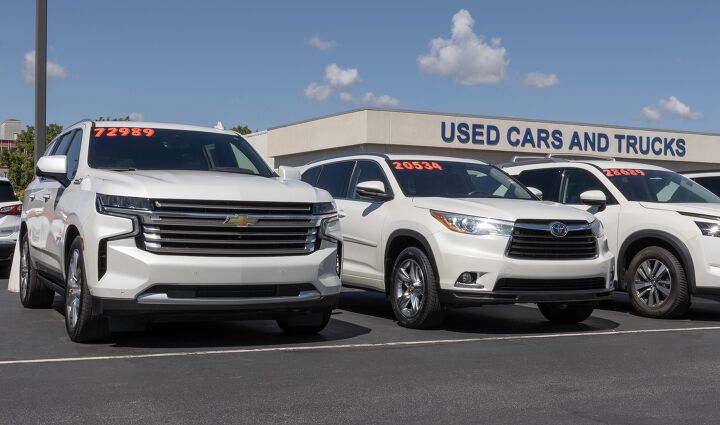
Used vehicle prices have likewise ballooned. Demand for quality secondhand automobiles is now quite high, with some examples fetching formerly unheard of values. This is due to a lack of affordable models on the new market and many customers simply disliking the way in which current automobiles have been designed.
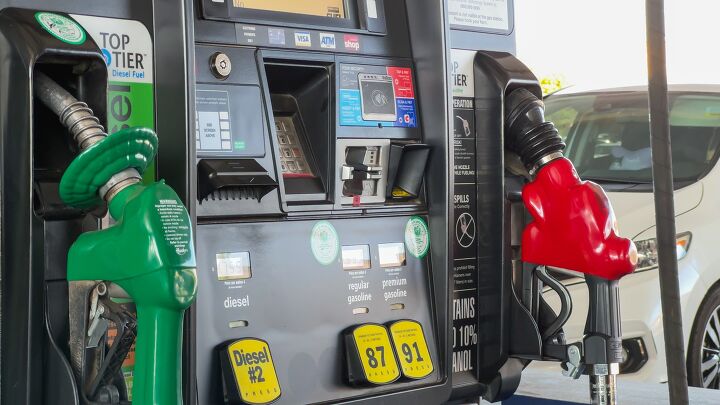
Fuel and energy prices have also spiked across the board. The sudden influx of data centers is ballooning regional electricity costs. Meanwhile, the situation in the Middle East has reached a point where trade ships cannot leave the Strait of Hormuz. This has led to volatility in the per barrel pricing of oil and spikes in fuel prices. Some of that is down to retailers taking advantage of the situation. However, it doesn’t change the fact that gasoline and diesel prices have jumped up by almost a dollar, compared to the same period last year, in North America — which is actually doing quite a bit better than elsewhere.
Europe saw an overall jump in energy prices after the Russo-Ukrainian War kicked off. While the worst of that happened from 2020-2023, and was heavily added to by some countries snubbing nuclear power (e.g. Germany), prices eventually stabilized. But they never really came back down and there’s been fresh pressure on consumers as the global oil and natural gas market has again grown more volatile.
Some countries, like Australia, are even claiming to be running out of fuel. The island nation has begun signaling that it only has about a month of fuel left, with media reporting that stations have already run dry in select areas.
The New South Wales government said that 32 out of 3,000 service stations in the state were out of at least one fuel type by the start of the week. While Premier Chris Minns stated that should be sufficient for most areas, concerns were expressed about isolated areas that only had one or two stations — especially if the situation worsens.
But everything is pointing to exactly that happening. Several smaller towns have begun reporting that they’re effectively out of fuel and have no clue when it’ll be returning.
Officially, the country’s National Roads and Motorists' Association (NRMA) has said that panic buying has played a significant role in the shortages. But it also expressed concerns that supplies will continue to dwindle due to the now closed Strait of Hormuz not shipping any crude. The group estimated that Australia only had about a 30-day supply of fuel left and warned that some parts of the country may see permanently high prices as a result.
There has been talk of fuel rationing and lowering the quality of fuel at refineries to get it out to the public more quickly. Neither are ideal solutions.
Meanwhile, the way modern vehicles have been intentionally designed to be difficult to fix has yielded rising repair and maintenance fees. Jobs that could have previously been done by the owner in their driveway now require hiring technicians at an hourly rate.
Insurance rates have gone up, too. Prior to 2020, the average U.S. auto insurance rate was somewhere in the neighborhood of $1,500 annually. But it grew to over $2,200 per year by the end of 2025. Reasons as to why vary. But they typically include repairs costing more than they used to and a higher percentage of the population foregoing insurance. The latter issue is assumed to be due to the sudden influx of illegal immigrants, who don’t tend to purchase insurance, and former insurance policy holders that simply can no longer afford to pay their bills.
Speaking of not being able to pay their bills, the average auto loan debt is almost as high as the typical price of a new vehicle. Delinquencies are also approaching record levels, with subprime delinquencies at their highest point in over 30 years. According to the Federal Reserve, Americans are estimated to be carrying over 1.67 trillion dollars in automotive debt and has increased by almost 60 percent over the last decade — which hardly seems sustainable.
While the above represents a few snapshots of how costly vehicle ownership has become, with the primary focus being on the North American market, these issues are largely global. Even China, which is assumed to cope more easily with fuel shortages and tariffs than most Western nations, is experiencing a marked slowdown in vehicle demand. It has sizable oil reserves (some of which was bought from the U.S. during the Biden Administration) and its ability to manufacture most of what it requires domestically has been immensely helpful. But it still needs to trade with the rest of the world and there are legitimate fears of a global recession while local demand has also declined.
If you’re wondering who to blame, there are plenty of places to point your finger. Governments have clearly made a mess of things, whether we’re discussing decades of regulations, subpar energy policies, corporate subsidization, or foreign relations. But the relevant companies (energy conglomerates, insurance firms, banks, and automakers) have also been wildly exploitative in recent years. Pricing seems to hinge on whatever they believe they can get away with to maximize profits, with any semblance of business ethics being thrown out the window in the quest for “shareholder value.”
Even the consumers themselves can be faulted by making purchases they could not afford at the present interest rates. Granted, those staggeringly high rates or prices were their fault — nor was the fact that the middle class had been hollowed out to funnel wealth to the upper classes. But having enough customers buying beyond their means likewise encouraged the relevant industries to continue running with the scheme for years.
[Images: Keegan Divant/Shutterstock; Jonathan Weiss/Shutterstock; HannaTor/Shutterstock; Elena Shishkina/Shutterstock]
Become a TTAC insider. Get the latest news, features, TTAC takes, and everything else that gets to the truth about cars first by subscribing to our newsletter.
Consumer advocate tracking industry trends and regulations. Before joining TTAC, Matt spent a decade working for marketing and research firms based in NYC. Clients included several of the world’s largest automakers, global tire brands, and aftermarket part suppliers. Dissatisfied, he pivoted to writing about cars. Since then, he has become an ardent supporter of the right-to-repair movement, been interviewed about the automotive sector by national broadcasts, participated in a few amateur rallying events, and driven more rental cars than anyone ever should. Handy with a wrench, Matt grew up surrounded by Detroit auto workers and learned to drive by twelve. A contrarian, Matt claims to prefer understeer and motorcycles.
More by Matt Posky













Comments
Join the conversation
"Everything Car Related Has Become Extremely Expensive"
• This has not been my experience.
(Perhaps I make different choices than some of you. Perhaps ayaalreadytoldya.)
Tools, parts, fuel, lubricants, supplies, registration, insurance, more parts, more tools, all quite reasonable for the most part.
I plan to pay $89.99 for an alignment. The tire place will install and program my new tire pressure sensors for $25 per tire ($125 total). That will be the first time I've paid someone else to touch my vehicles in the past maybe 18 months?
Last time I paid money to a dealership was for a part for someone else's vehicle and that was like once in the past 5 years. I don't have any car payments. I don't have any lease payments. I generally choose my vehicles carefully (except when a kid doesn't know better or when a family member gifts me a vehicle). Maybe dealerships are the part of financial ruin that I'm missing out on? Maybe I'm a more careful shopper than some of you.
Maybe I'm not good at whining and complaining. I'm happy to be living in the American part of North America in 2026.
Things got expensive when you could no longer work on the car yourself. Now, I'm afraid to raise the hood just to check the oil, brake, and radiator fluids. Replacement of the windshield requires re-alignment of the monitors....that's not cheap!!
That's why I paid the "brand tax" on a new Toyota banking on long term reliability and minimal break downs. To hedge my bet, will lean in heavy with preventive maintenance via frequent oil changes, replace radiator hoses at 75k miles, replace the battery at 36 months, etc, etc. 🚗🚗🚗