

Junkyard Find: 1954 Dodge C-Series
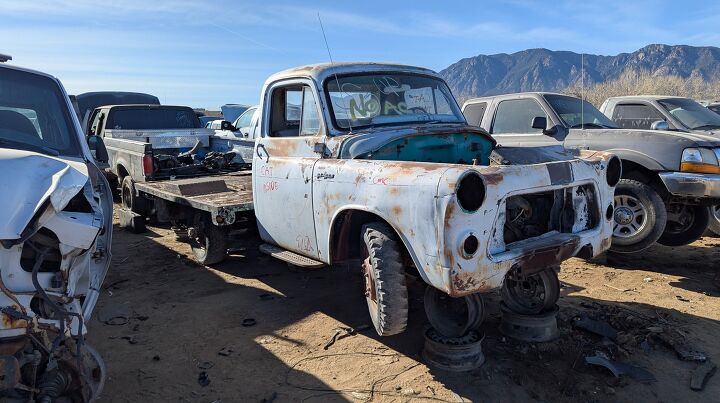
Used-up American trucks of the 1940s and 1950s show up in U-Pull car graveyards on a regular basis, which can be surprising to Internet Car Experts who believe all such Rare Classics™ are worth big money. Here's the latest: a 1954 Dodge found in the shadow of Pikes Peak recently.
Just in Colorado in recent years, I've documented a 1949 Willys Jeep, a 1956 Willys Station Wagon, a 1958 Chevrolet Apache, a 1960 Dodge D-200, a 1952 IHC L-130, a 1959 IHC B-110 and a 1959 IHC Metro-Mite in their final parking spaces.
I've also walked by dozens more that were so crashed and/or trashed and/or stripped that they weren't worthy of an article.
1954 is an important year for Dodge/Fargo trucks, with the new C-Series finally replacing the old prewar engineering with an all-new chassis.
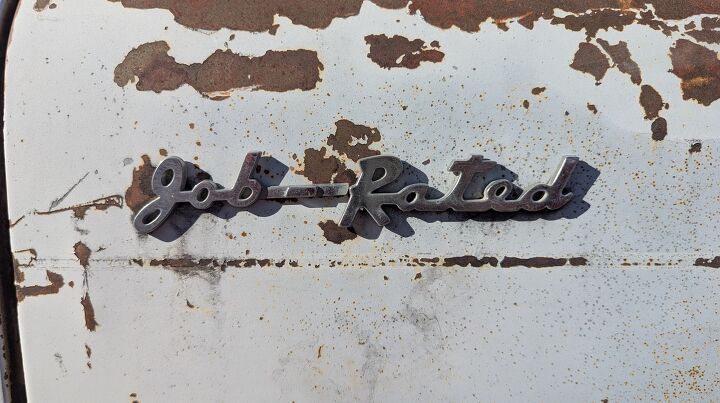
Not only that, but Chrysler's futuristic new Powerdome Hemi V8 engine could be had in the '54s.
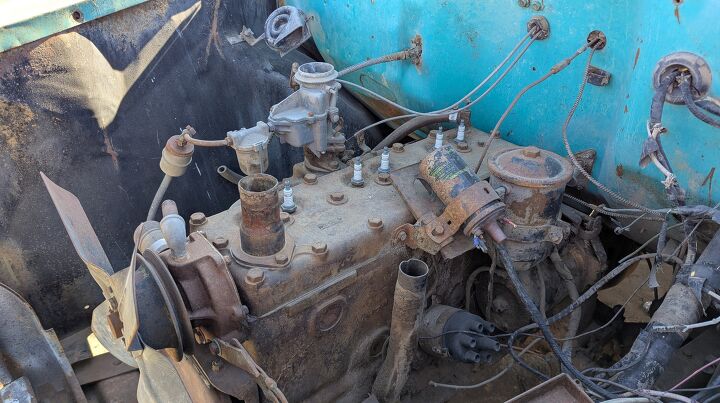
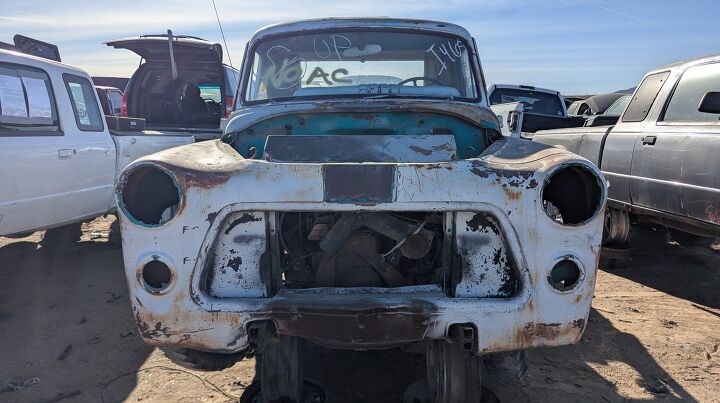
This truck didn't get a Hemi, or at least that's not what was under its hood at the end.
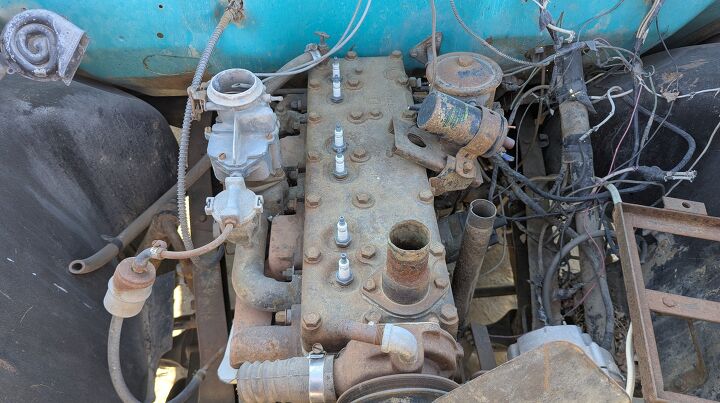
This is Chrysler's good old reliable flathead straight-six, which would be a 230-cubic-incher rated at 110 horsepower if it's the original plant. The 230 began production in 1942 and was used in civilian Dodge trucks through 1960 (and well beyond that in military Dodges).
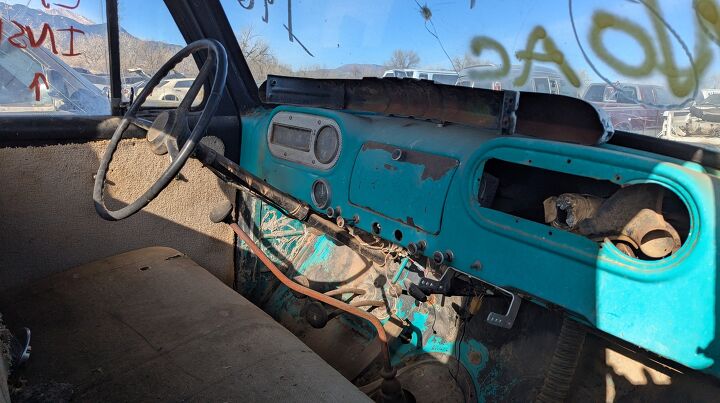
I couldn't get inside the cab, thanks to the outside door handle mechanisms being bad plus both the inside latches having been purchased by junkyard customers (and I wasn't willing to climb in through the open window).
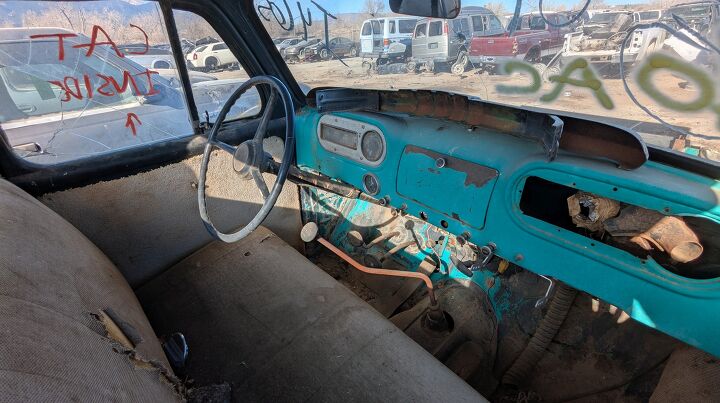
That means I can't tell you if the transmission is the base three-speed or the optional four-speed.
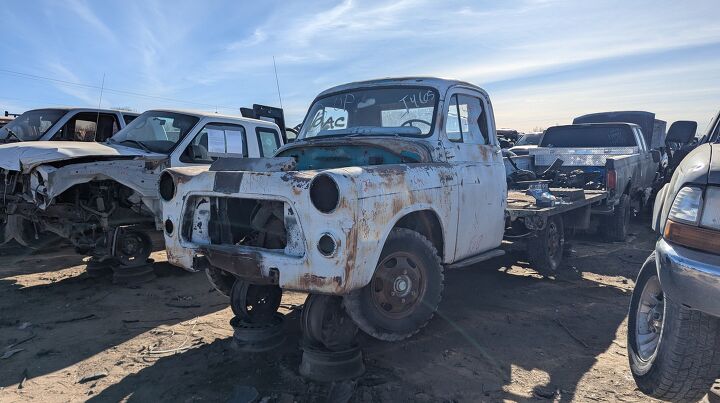
Likewise, I couldn't open the driver's door to look for a build tag, and the firewall tag was long gone. That's a disappointment, because I wanted to know whether this truck was built at Maywood Assembly in Southern California or Warren Truck Assembly in Michigan.
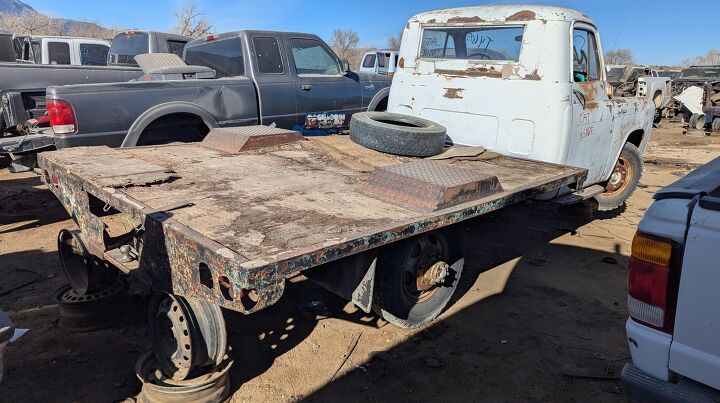
This truck worked hard during its life. If it was sold new as a chassis-and-cab, then its MSRP would have been $1,417 ($17,070 in 2026 dollars).
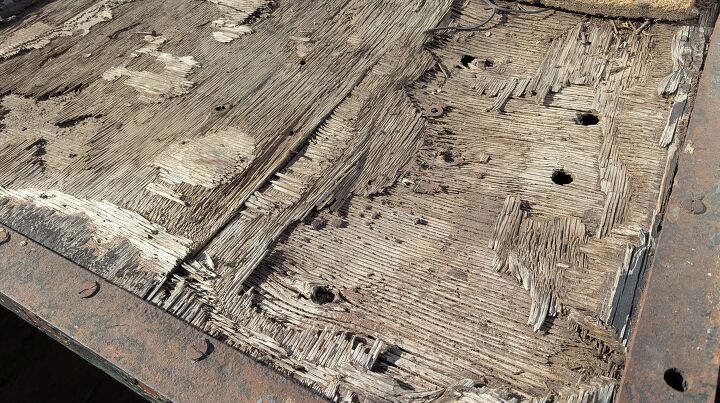
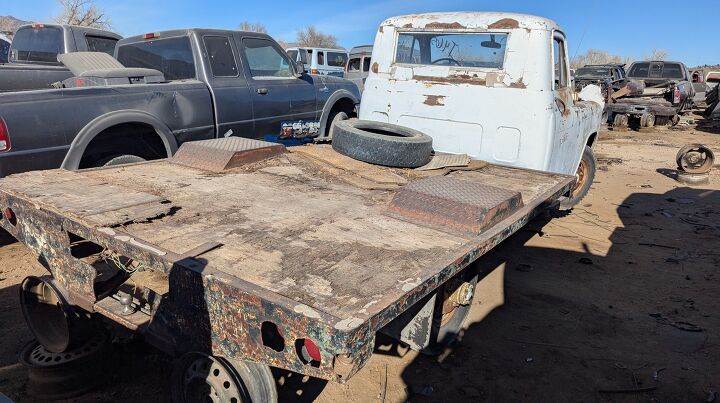
The layers of plywood on the flatbed's surface have rotted and been replaced and then rotted some more, many times.
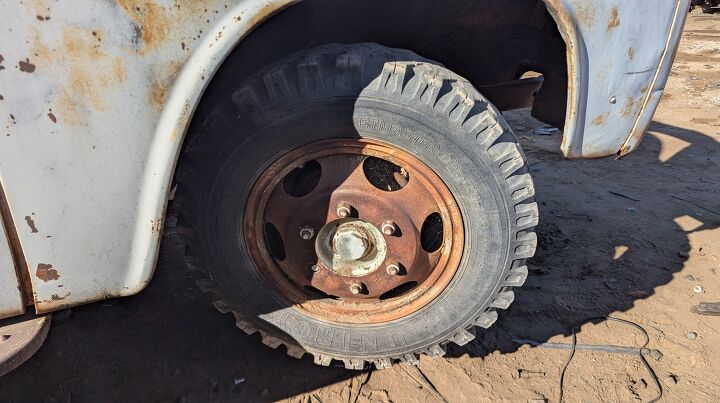
I'm not sure when this Dodge last moved under its own power, but these Uniroyal Fleetmasters appear to be of 1970s vintage.
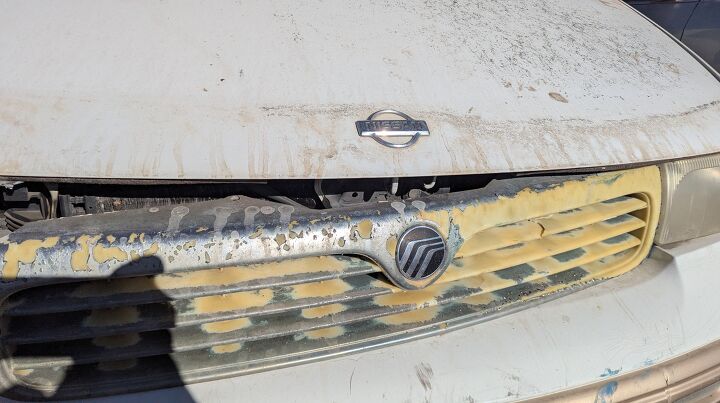
Nearby, this Nissan Quest provided a lesson in badge engineering with its Mercury Villager grille swap.
Searching the Internet Movie Car Database for early Dodge C-Series trucks brought up some interesting results. For example, this not-so-well-known 1970 Robert Redford dirt-bike film with a good Johnny Cash/Carl Perkins soundtrack.
How about this fine 1957 film, starring Orson Welles and a 1955 C-Series?

1954 Dodge C-Series truck in Colorado Springs junkyard.
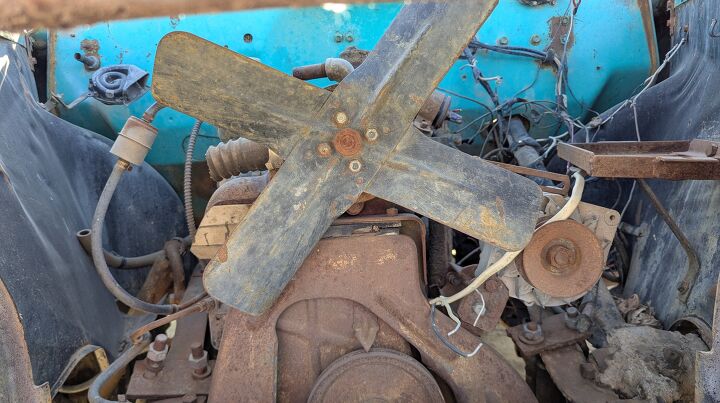
1954 Dodge C-Series truck in Colorado Springs junkyard.
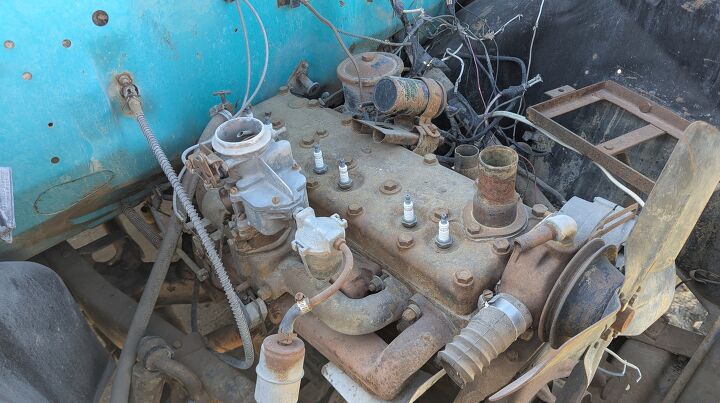
1954 Dodge C-Series truck in Colorado Springs junkyard.

1954 Dodge C-Series truck in Colorado Springs junkyard.
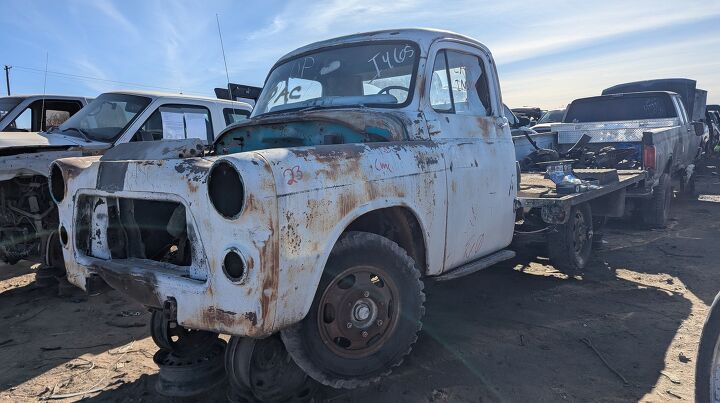
1954 Dodge C-Series truck in Colorado Springs junkyard.
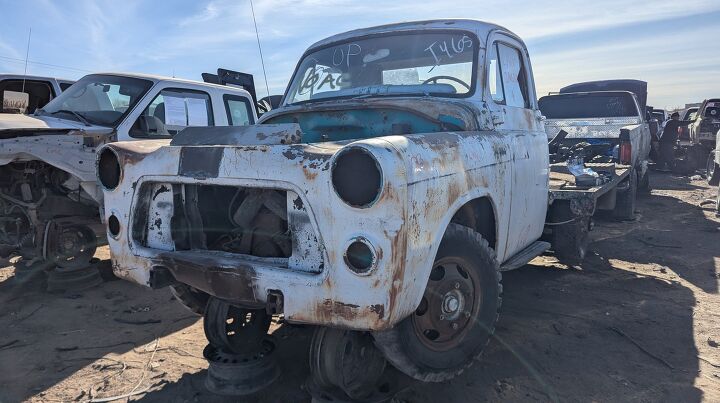
1954 Dodge C-Series truck in Colorado Springs junkyard.
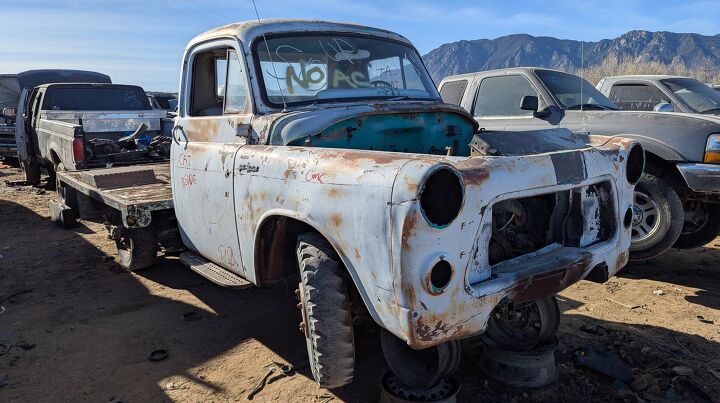
1954 Dodge C-Series truck in Colorado Springs junkyard.
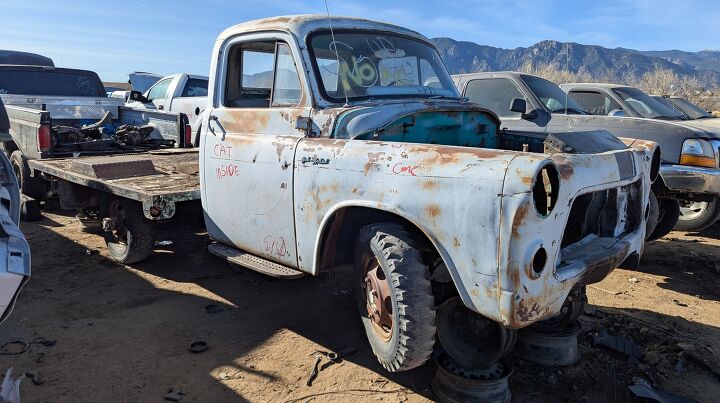
1954 Dodge C-Series truck in Colorado Springs junkyard.
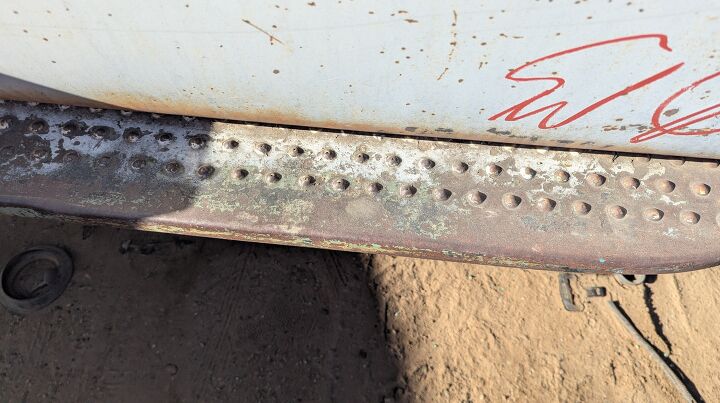
1954 Dodge C-Series truck in Colorado Springs junkyard.
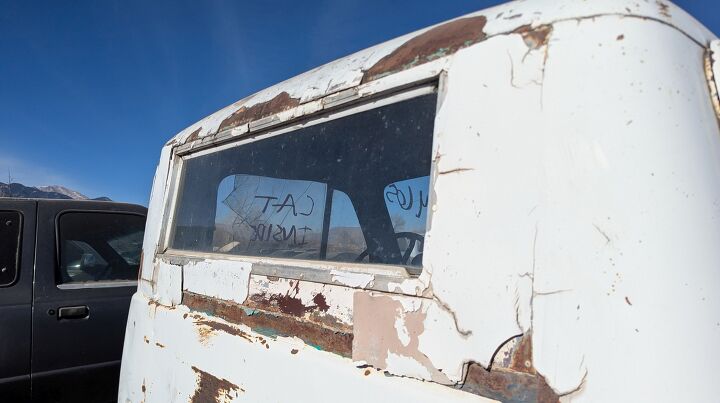
1954 Dodge C-Series truck in Colorado Springs junkyard.
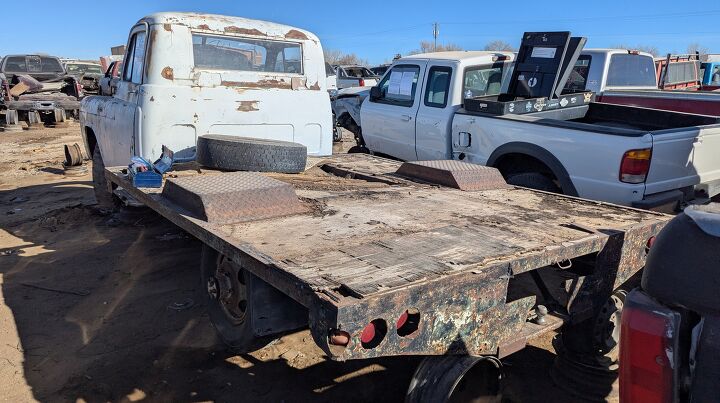
1954 Dodge C-Series truck in Colorado Springs junkyard.
[Images: The Author]
Become a TTAC insider. Get the latest news, features, TTAC takes, and everything else that gets to the truth about cars first by subscribing to our newsletter.

Murilee Martin is the pen name of Phil Greden, a writer who has lived in Minnesota, California, Georgia and (now) Colorado. He has toiled at copywriting, technical writing, junkmail writing, fiction writing and now automotive writing. He has owned many terrible vehicles and some good ones. He spends a great deal of time in self-service junkyards. These days, he writes for publications including Autoweek, Hagerty and The Truth About Cars.
More by Murilee Martin








Comments
Join the conversation
"Job - Rated!"
I am still amazed that Chrysler Corp. inline sixes were all L-head throughout the 1950s, in cars as well as trucks. At least the 241 OHV V-8 was available, though not on this truck. The ''Big Three'' were still selling everything they could build in 1954, so I guess Chrysler decided to get the most out of their tooling.