
Abandoned History: The Mercedes-Benz X-Class, Nissan Luxe

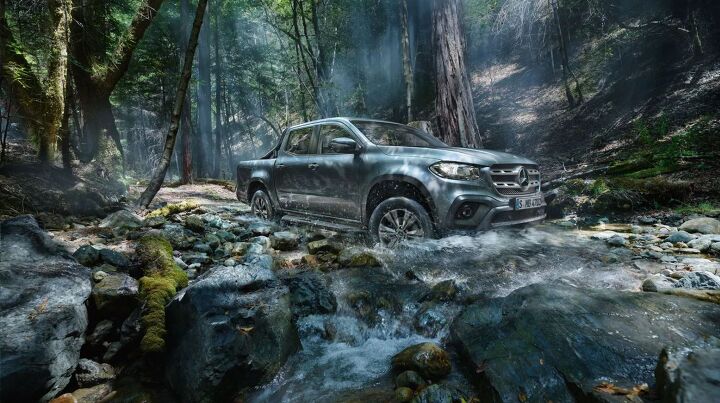
Sort of like the Cimarron we covered in our last edition of Abandoned History a couple of months ago, today’s vehicle is pretending to be more than it is. It’s the luxury X-Class truck Mercedes-Benz sold in markets outside the USA. Can you tell what it actually is?
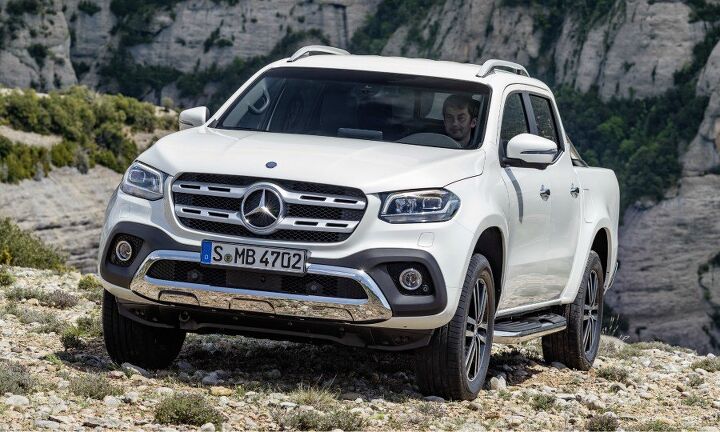
Mercedes billed its X-Class as the first pickup from a premium manufacturer. I suppose that means the Cadillac Escalade EXT and Lincoln Blackwood fell short of premium manufacturer status according to Mercedes. The X-Class was designed to “shift the limits of the classic pickup world” with its design. Breaking new ground as an urban lifestyle and family vehicle all in one, X-Class was up to almost any challenge.
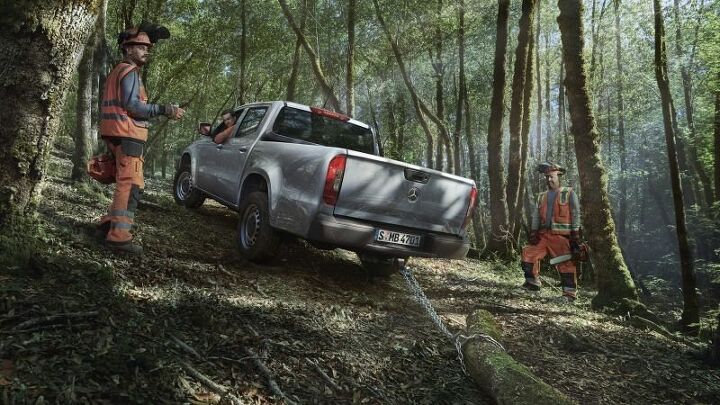
Said challenges were presumably the same ones that applied to the Nissan Navara, which is what the X-Class was underneath. The third-gen Navara pickup went on sale late in 2014 in global markets and continues in production in three different factories today. As an aside, the Navara was not the basis for Nissan’s new Frontier in North America, as suspected. Nissan went a different direction and created an all-new Frontier based on the most recent F-Alpha platform for the 2022 model year. The D41 Frontier will be sold only in the North American market.
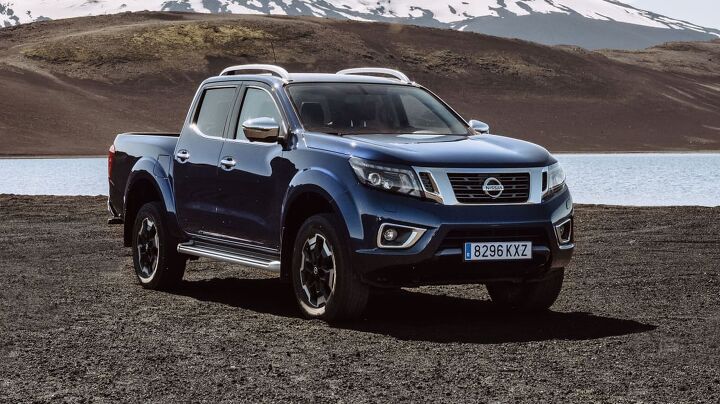
The X-Class was jointly developed by Mercedes and Renault-Nissan-Mitsubishi and was announced in October of 2016 as the daringly named X-Class Concept. Designed to grab a piece of the growing midsize pickup market outside the US, it was sold in Australia, New Zealand, South and Central America, Europe, and Africa.
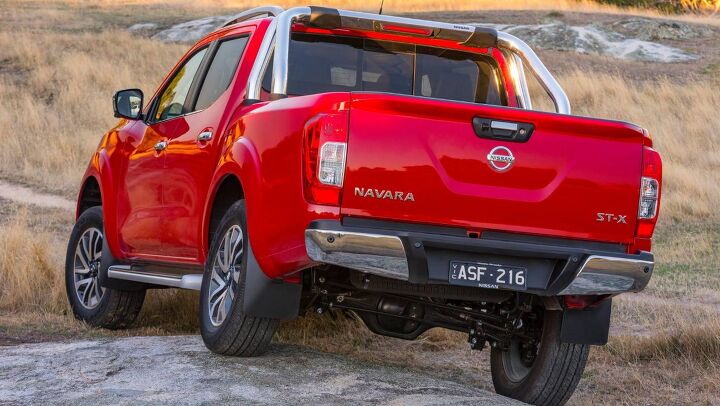
The X-Class was a bit more than a badge swap: The Navara’s transformation into a luxurious Mercedes saw angles softened and required new front and rear fender designs. The front and rear clips were softer and more Mercedes, and the rear end less curvaceous and more upright. Fender arches were softer as well, as Mercedes turned an everyday Nissan into an upscale lifestyle device.
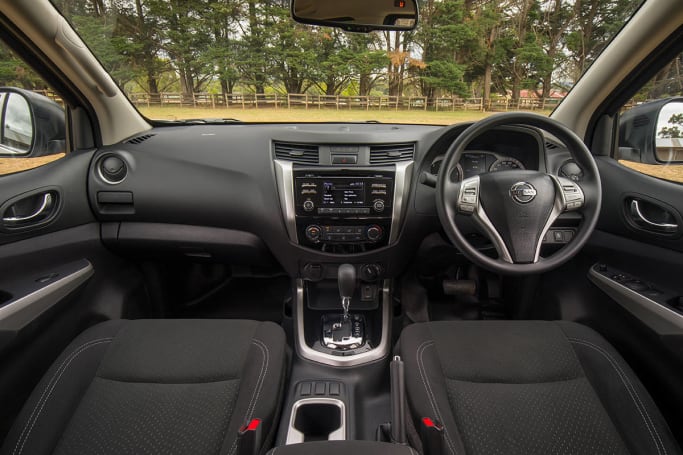
Mercedes reworked the Navara’s interior for X-Class purposes and did well in its disguise of the truck’s more basic roots. Seats, panels, most trim, door handles, dashboard, steering wheel, all were from Mercedes. Don’t think it was E-Class level finishing in there though, this was a tough working luxury truck and a part of the company’s commercial vehicle offerings. Most notably in the interior, X-Class implemented a central Mercedes infotainment screen.
The X-Class debuted in South Africa in July 2017 and entered full production in November that year. All X-Class trucks were produced in Spain, at Nissan Motor Ibérica in Barcelona. Available in rear- or 4MATIC all-wheel drive, X-Class offered a six-speed manual or seven-speed automatic. Of four engines on offer, two were Mercedes mills. The base 2.0-liter inline-four was the only gasoline engine, made by Mercedes. Two mid-spec engines were Renault-Nissan designs, a 2.3-liter inline-four with one or two turbos, and fueled by diesel. The largest X-Class engine was a 3.0-liter V6 turbodiesel, from Mercedes. That V6 was in diesel Grand Cherokees in 2007 and 2008 and was widely used across other Mercedes models including the S-Class.
Trims were three, and all P words: Pure, Progressive, and Power. Exterior trim badges indicated the engine used and started with the X200. The media reception for the X-Class was generally positive but always made sure to mention the truck was a Nissan underneath while referencing its price. In the U.K. the 2018 X-Class was over £42,000 ($56,000 USD). For comparison, a Defender presently starts at £45,600, and an E-Class wagon is £40,420. A four-door Hilux starts at £30,720. The Navara is discontinued in the UK as of 2022, but starts at £25,000.
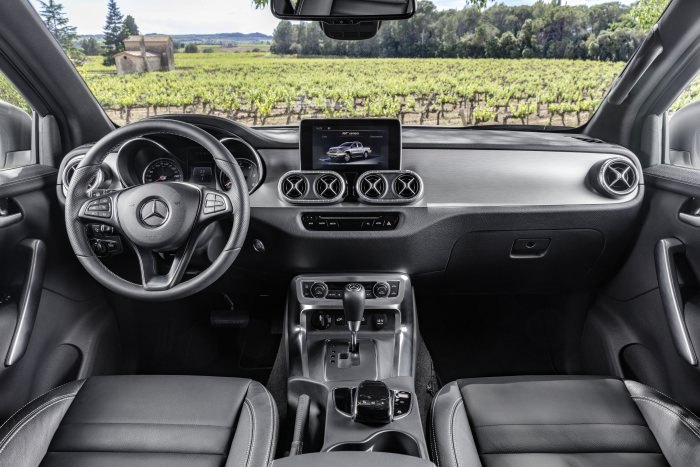
If you’re thinking the X-Class was a bit of a cynical approach to a luxury truck by Mercedes, you’d be right. Mercedes targeted a wide array of customers: Farmers of South America, families in Brazil, contractors in Australia, and trendy people across Europe. But customers saw through the veiled Nissan, and sales were slow. The X-Class was meant to expand Mercedes’ commercial sales market share, and lessen the dependence on its Sprinter van. The intended competition was the Ford Ranger, Toyota Hilux, and Volkswagen Amarok (discontinued), but was more expensive than all those.
After its first full year on sale in 2018, just 16,700 total X-Class trucks were sold across Europe, Australia, and South Africa. As of the first nine months of 2019, Mercedes shifted 10,000. Mercedes told Nissan to stop building the X-Class as of May 2020, just two and a half years after it started production. Today, Mercedes’ commercial unit relies on the Sprinter lineup for the majority of its sales, as well as a couple of smaller vans, Vito and Citan.
For their part, Mercedes has left the X-Class as Abandoned History, and purged mention from its sites. But a search netted one helpful result: The Mercedes of Latin America X-Class Concept page is still alive and well and lifestyley and it’s in English. Let us all look back fondly on the time Mercedes sold a very dressed-up Nissan.
[Images: Nissan, Mercedes-Benz]
Interested in lots of cars and their various historical contexts. Started writing articles for TTAC in late 2016, when my first posts were QOTDs. From there I started a few new series like Rare Rides, Buy/Drive/Burn, Abandoned History, and most recently Rare Rides Icons. Operating from a home base in Cincinnati, Ohio, a relative auto journalist dead zone. Many of my articles are prompted by something I'll see on social media that sparks my interest and causes me to research. Finding articles and information from the early days of the internet and beyond that covers the little details lost to time: trim packages, color and wheel choices, interior fabrics. Beyond those, I'm fascinated by automotive industry experiments, both failures and successes. Lately I've taken an interest in AI, and generating "what if" type images for car models long dead. Reincarnating a modern Toyota Paseo, Lincoln Mark IX, or Isuzu Trooper through a text prompt is fun. Fun to post them on Twitter too, and watch people overreact. To that end, the social media I use most is Twitter, @CoreyLewis86. I also contribute pieces for Forbes Wheels and Forbes Home.
More by Corey Lewis









Comments
Join the conversation
Agree for now Ford is not able to build enough but by 2024 or 2025 it might be different especially if Ford decides to produce Mavericks in Thailand and other places. I ordered my XLT Maverick hybrid on July 25 and got notified that it will be produced the week of Feb 14. In the long run the wait period would have to be shortened but with a chip shortage for now it is what it is. I don't remember Big Al saying that this Mercedes pickup would out sell the Big 2 1/2. I do see Ram closing in on Ford and GM truck sales--Ram has really upped their game. If the Maverick is successful long term then GM and Ram will likely come up with their own compact trucks. A compact Toyota pickup with the Prius hybrid drivetrain could be something to watch for.
I love that all these US IP addresses are pinging MB Brasil's X Class page now. I wonder what the SEO analysts will make of it! XD