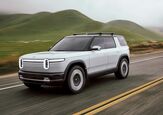
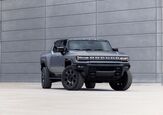

Apple ICar: The Next Big Thing?

Apple has targeted 2024 to produce a passenger vehicle that could include proprietary self-driving and battery technologies, according to Reuters.
Project Titan, The iPad creator’s automotive effort, started in 2014 with the goal of Apple designing its own vehicle. Apple later scaled back the effort to shift its focus elsewhere. Doug Field, an Apple veteran who had worked for Tesla, returned in 2018 to oversee the project, and in 2019 laid off 190 team members.
Apple has advanced to the point where it aims to build a vehicle for consumers, persons familiar with the effort said, requesting anonymity because Apple’s plans have not been made public. Apple’s creation of mass-market personal vehicles contrasts with rivals such as Alphabet’s Waymo, which built robo-taxis for a driverless ride-hailing service.
Apple’s strategy may include a new battery design that could drastically reduce their cost and increase the vehicle’s range, according to a person who has seen the designs. Apple declined to comment on its plans or future products and did not return calls to their media contacts.
Manufacturing a vehicle represents a challenge even for a company with ample resources that makes hundreds of millions of products each year with parts from around the world. In comparison, it took Tesla 17 years before it achieved profitability as a car maker. It is unclear who might manufacture and assemble an Apple car, but sources have said the company would rely on a manufacturing partner to build vehicles. Apple may decide to reduce the scope of this effort to an autonomous driving system, integrated into a car made by an existing automaker, rather than the maker of iPhones constructing an iCar from the ground up.
Pandemic-related delays could push the start of production into 2025 or beyond, persons with knowledge of Apple’s plans warned. Apple shares ended 1.24 percent higher after the news circulated on Monday, with Tesla shares ending 6.5 percent lower.
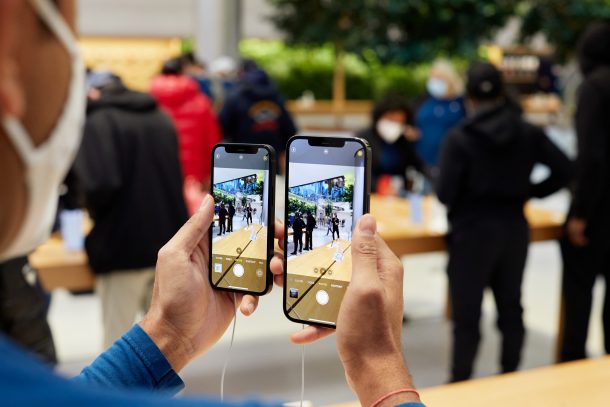
Outside partners may be required for elements including lidar sensors, necessary for self-driving cars to get a three-dimensional view of the road. An Apple car may need multiple sensors to scan different distances. These could be taken from internally-developed lidar sensors, such as those found in Apple’s iPhone 12 Pro and iPad Pro models, both released this year. Apple has reportedly held talks with potential suppliers, but it was also examining using its own sensors.

Apple plans to use a monocell battery design that bulks up individual cells, creating space inside the battery by eliminating pouches and modules that hold battery materials. More active material inside the battery could give the car a longer range. Apple is also contemplating using lithium iron phosphate chemistry, or LFP, which is less likely to overheat and is safer than other types of lithium-ion batteries.
Apple had discussions about manufacturing the car with Magna International, but these talks fizzled out as Apple’s plans became unclear. Automotive contract manufacturers require volumes that could pose a challenge to any newbie in the automotive market, Apple included.
“In order to have a viable assembly plant, you need 100,000 vehicles annually, with more volume to come,” the person said.
Apple investors reacted to the report on the company’s plans with care. Trip Miller, managing partner at Apple investor Gullane Capital Partners, said, “It would seem to me that if Apple develops an advanced operating system or battery technology, it would be best utilized with an existing manufacturer under license. As we saw with Tesla and the legacy auto companies, establishing a complex manufacturing network around the globe doesn’t happen overnight.”
Hal Eddins, chief economist at Apple shareholder Capital Investment Counsel, noted Apple has a history of higher margins than most automakers. “My initial reaction as a shareholder is that I don’t see the appeal of the car business, but Apple may be eyeing another angle,” Eddins said.
Apple started a revolution in personal technology when it rolled out the Macintosh computer in 1984. Arguably the innovation leader with the iPhone, iPad, Mac, Apple Watch, and Apple TV, Apple’s software operates across all of their devices, and services. My content has been created on Macs since the Classic was first introduced.
[Images: Apple]

With a father who owned a dealership, I literally grew up in the business. After college, I worked for GM, Nissan and Mazda, writing articles for automotive enthusiast magazines as a side gig. I discovered you could make a living selling ad space at Four Wheeler magazine, before I moved on to selling TV for the National Hot Rod Association. After that, I started Roadhouse, a marketing, advertising and PR firm dedicated to the automotive, outdoor/apparel, and entertainment industries. Through the years, I continued writing, shooting, and editing. It keep things interesting.
More by Jason R. Sakurai








Comments
Join the conversation
When the CEO of Toyota says EVs are overblown, and echoes Musk that there isn't enough electrical generation capacity, it's too late for Apple to dive into a high capital/low margin industry that's still better at mass assembly than Tesla.
Wow, I thought for a second you had made a typo---they seriously put the 1.4T in the wagon? Do they do the same for AWD? From what I've read, the 1.8T was mostly just "adequate", so I can't imagine the 1.4 is too enjoyable to drive.