
Rare Rides: A Fiat 125 Vignale Samantha From 1969

Corey Lewis
by Corey Lewis

The Rare Rides series has featured a string of two-door vehicles lately, with representation from marques around the globe. Today’s Rare Ride is sleek and also has two doors. It hailed from the Vignale factory around the same time as the 850 featured here.

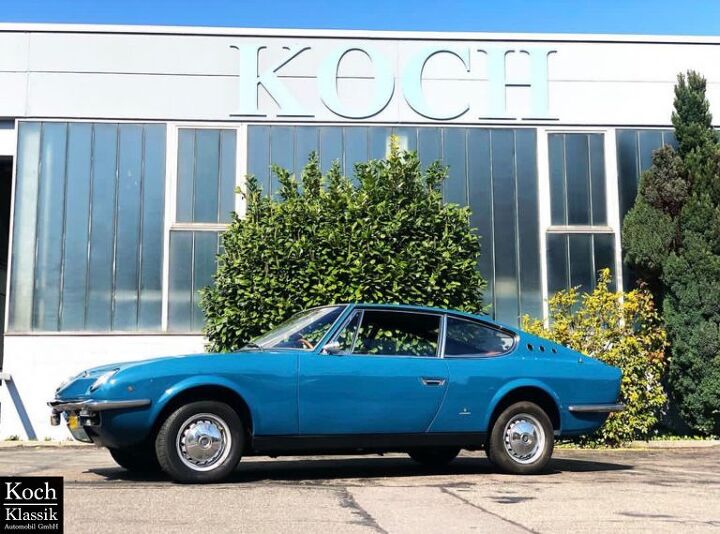
Let’s check out a very rare 125 Vignale Samantha.
Much like the upright and rebodied 850, the 125 Samantha was based on a family car made by Fiat. When it entered production in 1967, the 125 took its place in the Fiat line as a large family sedan. Not considered a luxury model, it was less expensive than the 1800.
Fiat was ahead of the curve with the 125, as it imbued its family car with a sporty personality. For its entire run, the only power offered in the 125 was a 1.6-liter DOHC inline-four. Initially the model used a four-speed manual, but a five-speed joined the lineup very quickly. For the less sporting, there was a three-speed automatic. Those gearboxes typically delivered the 90 carbureted horses to the rear wheels in standard trim.

Customers paid more for the Special trim 125S if they wished for a five-speed in their family hauler. The Special had revised camshafts, manifold, cylinder heads, and a different carburetor for an even 100 horsepower. However, it was the S version which caught Vignale’s interest.
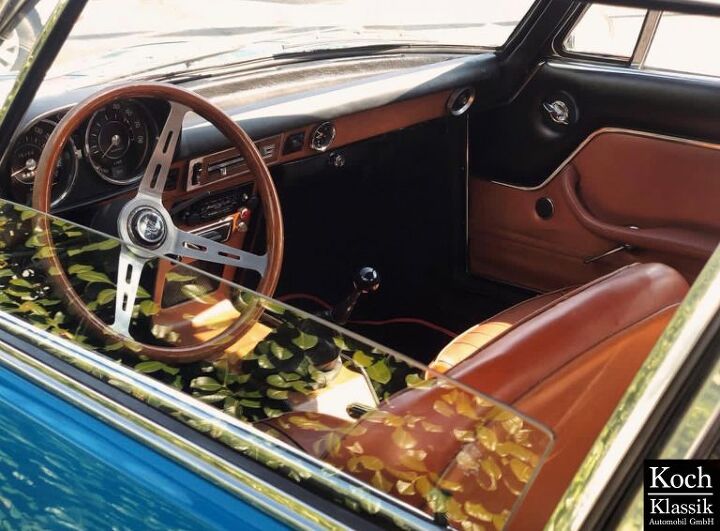
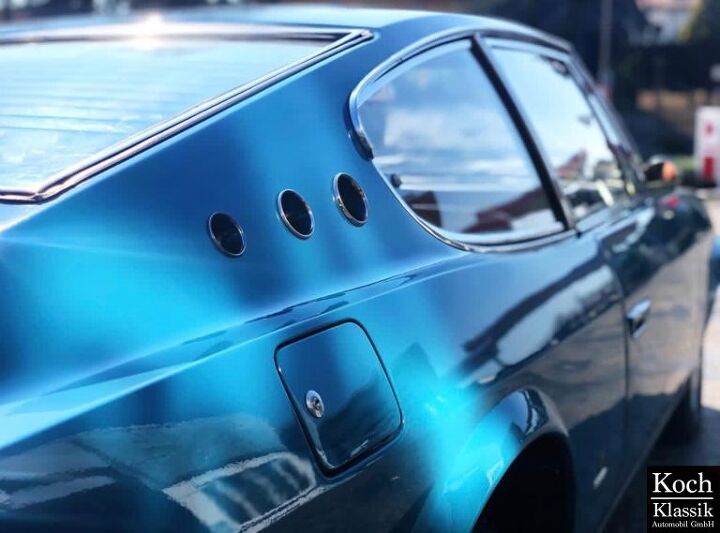
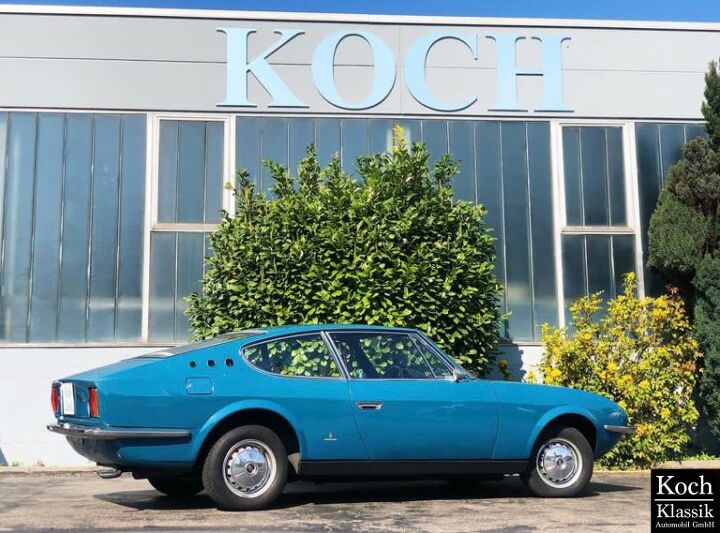
Vignale designer Virginio Vairo was employed to work up a coupe body for the 125. His most famed designs were all in the late Sixties, and all coupes: the Maserati Mexico, Fiat 124 Eveline, a Matra prototype, and the Maserati Indy. The body he designed looked entirely different from the upright 125 sedan. Smooth lines were all drawn rearward, and the swept front fascia included pop-up headlamps. The rear deck was formed around the sedan’s light clusters and contained triple portholes on either side. Changes to the interior were minimal, and included revised rear door panels.
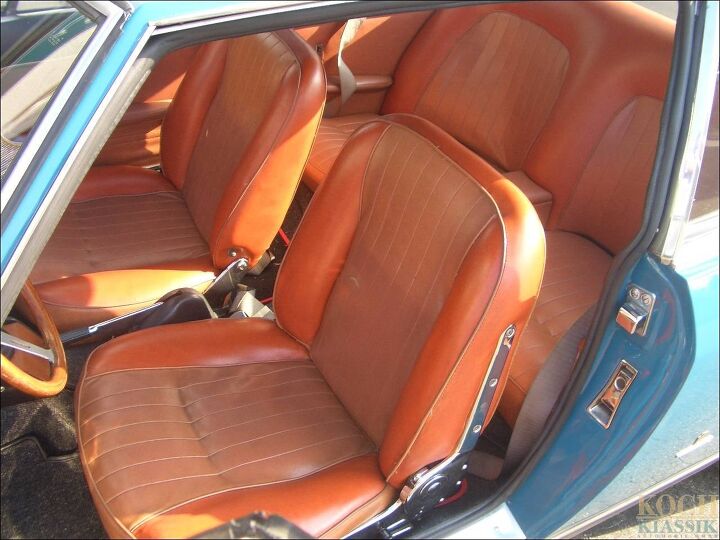
The 125 proved very popular, and Fiat built 603,877 before production ended in 1972. Other companies built it under license as a Zastava, FSO Polonez, or a Nasr in Egypt. Said licensed production carried on in some form through 1991. But the Vignale Samantha was built for a very short time, with production totaling around 100 units.
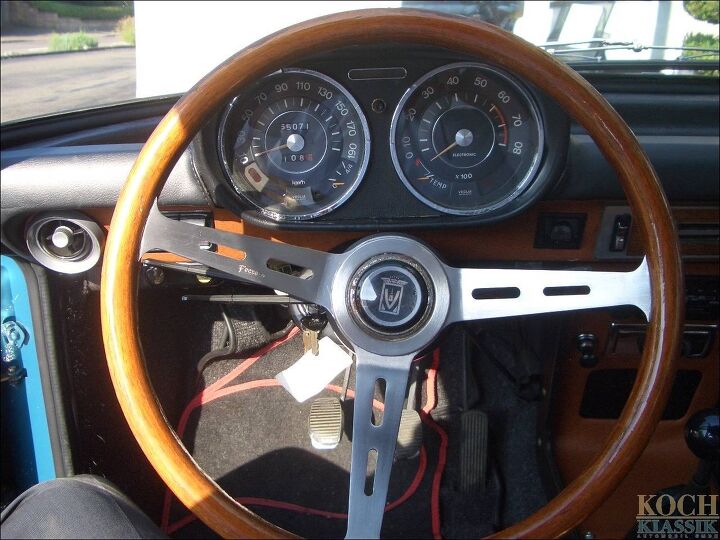
Today’s blue Rare Ride is for sale in Germany. In excellent condition, it asks just $44,000.

[Images: seller]

Corey Lewis
Corey Lewis

Interested in lots of cars and their various historical contexts. Started writing articles for TTAC in late 2016, when my first posts were QOTDs. From there I started a few new series like Rare Rides, Buy/Drive/Burn, Abandoned History, and most recently Rare Rides Icons. Operating from a home base in Cincinnati, Ohio, a relative auto journalist dead zone. Many of my articles are prompted by something I'll see on social media that sparks my interest and causes me to research. Finding articles and information from the early days of the internet and beyond that covers the little details lost to time: trim packages, color and wheel choices, interior fabrics. Beyond those, I'm fascinated by automotive industry experiments, both failures and successes. Lately I've taken an interest in AI, and generating "what if" type images for car models long dead. Reincarnating a modern Toyota Paseo, Lincoln Mark IX, or Isuzu Trooper through a text prompt is fun. Fun to post them on Twitter too, and watch people overreact. To that end, the social media I use most is Twitter, @CoreyLewis86. I also contribute pieces for Forbes Wheels and Forbes Home.

More by Corey Lewis

Comments
Join the conversation
2 of 15 comments
  • Amwhalbi My 1972 Mercury Capri was my first stick shift car. God, I miss that thing. It was a blast to drive.
  • Vid169489471 The technology exists today to produce a variable color temperature (kelvin) LED lamp. It can vary from 2700k that soft orange look to 6500k the bright daylight with the bluish tint.Since everything in a late model car is computer controlled, it would be an easy task to write a few lines of code that enables your vehicle to not only dim down from hi to low beam but to shift color temp down to the 2700k range for oncoming traffic, then back up to 5000k once oncoming traffic has passed. For the operator it would be automatic and seamless. For older cars they could be retrofitted with LEDs that are 2700k on low beam and 5000k on hi beam. As far as standards, there could be a lumens max, and a minimum. Several States already have minimum lumen standards going back to the old incandescent bulbs. Why not update these to national standards.
  • Jam169859557 More regulation is needed for ALL vehicle lighting systems. [list=1][*]The lighting that is most blinding are the rapidly flashing red, blue and amber lights on emergency vehicles. The lights themselves are blinding, flashing so rapidly that it's impossible for even the sharpest eyes to adjust. What's worse, is the nature of the emergency requires a careful view of the area surrounding the emergency vehicle. There is something going on that needs to be seen. More flashing lights is not the solution.[/*][*]Brighter headlights need to be regulated. The tall riding vehicles do not need headlights positioned so high that they blind drivers in lower riding vehicles. And those heasdlights need to be aimed properly. When I first started driving my 2020 Subaru Outback, many drivers would flash their lights, hoping I would dim my lights. This stopped after I performed am easy adjustment that tilted the beam lower. Late model Subaru headlamps are designed with a sharp cutoff that project less glare above the hood line. When the headlights are properly aimed, other drivers are not blinded by the beam.[/*][*]Customized light assemblies make it more difficult to see the marker lights (tail lamps, turn signals and side marker lamps) that have been tinted. There are many municiple codes that prohibit this tinting, but these laws are seldom enforced.[/*][/list=1]Solutions: Tight controls on emergency vehicle lighting. In trying to make these vehicles more visible, a dangerous side effect is reducing the ability of drivers to see the surrounding perils.Headlight design regulations that reduce the height of the headlight assemblies. Just because a pickup truck has a hood that sits 4 feet abouve the pavement, it does not mean the headlights need to be so high. Owneres should maintain proper adjustments to their vehicle headlights.Establish and enforce regulation requiring a illumination standard be followed.
  • Stl170698708 as someone who hates big government, and their interference;but you can add me to the list of people that are blinded by the lights.unfortunately "the poop is out of the horse and no way is it going back in"They have had 5 years to make lights bigger, badder and brighter because in the vehicle work it is go big or go home!Trucks are the worst because so many people use them to express their dominance and that is big, big, big $$ both at the Original Purchase and in the Aftermarket world.If, we are so lucky to get some good government regulation on this it will also take some very good Court enforcement to get the aftermarket people with fines and lawsuits.Much like the EPA did with the Diesel Tuner Industry that felt emission regulations didn't apply to them.This is from someone that owns said pickup truck with the same bright headlights,but i only use the truck when I have too and always turn off the Fog lights when driving in traffic.
  • Art65765977 I saw a porsche 911 with the most amazing headlights from behind approaching the Sunshine skyway in Florida. The pattern was 108 degrees across sweeping the road like a broom. My brother and I were amazed. I don't know what it looked like from the front but i am sure it was better than American cars
Next