
At Lincoln, the Battle Between New Product and Your Grandfather's Town Car Continues
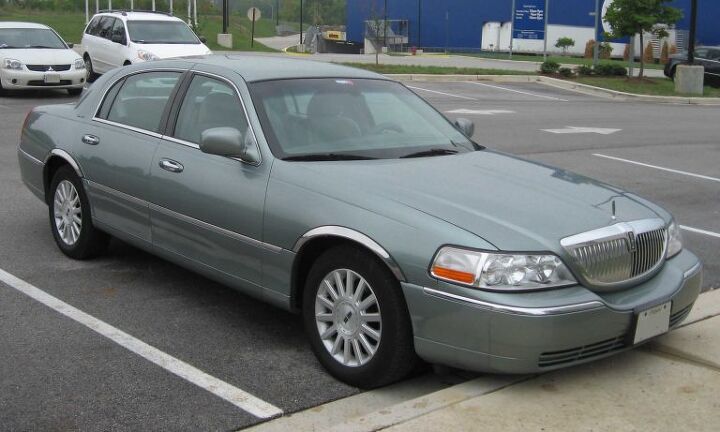
It’s been an interesting few years at Ford Motor Company, especially for the automaker’s prestige marque. Ever since Ford decided that reviving the listless Lincoln brand with a life-giving cash infusion was the right way forward, watching the division reconcile its unsavory near-past and mouth-watering distant past with its present and future has become a source of amusement.
Not to say that Lincoln’s executives and PR teams are stumbling like Gerald Ford. Far from it. However, sometimes a statement causes a “whoa, hold on a minute” moment that’s too big to ignore.
Let’s face it, to think of the previous decade in automobiledom is to not think of Lincoln. The 2000s was certainly not Lincoln’s decade — nay, the era nearly killed the brand. As parent Ford’s attention drifted, a shrinking pool of buyers found themselves considering such vehicles as the Zephyr and its later MKZ body double. The Navigator, a bright spot for Lincoln in the 1990s, spent the decade withering on the vine, with the third generation of the full-size luxury SUV only coming to an end in 2017. That’s an 11-year lifespan.
Crossovers and SUVs are sales dynamite, but Lincoln’s first MKX was a regrettable lesson in badge engineering that only increased the debate regarding Lincoln’s purpose in the marketplace. An Edge with a retro-themed grille and revamped taillights? Ford can build a Ford with high-end content without calling it anything other than a Ford. Recall the original LTD. Recall the ever higher trim ceilings on domestic trucks and SUVs of all stripes.
Then there’s the Baleen Whale nose, a homage to the classic Continentals of the early 1940s. The styling flourish seemed to get worse the more Lincoln tried to tone it down, as evidenced by the MKS and MKT refreshes.
And yet, when speaking about customer feedback and the brand’s direction to Automotive News Canada, Lincoln Canada’s product marketing manager took the opportunity to slam one of the company’s most successful products.
“Once we get people in and experience the vehicle, they find it stands up well to our competitors and they’re amazed,” Wilson said. “The toughest part is probably our past perception, that we’re still carrying the baggage of the Town Car and ‘this is your old limo airport vehicle.’”
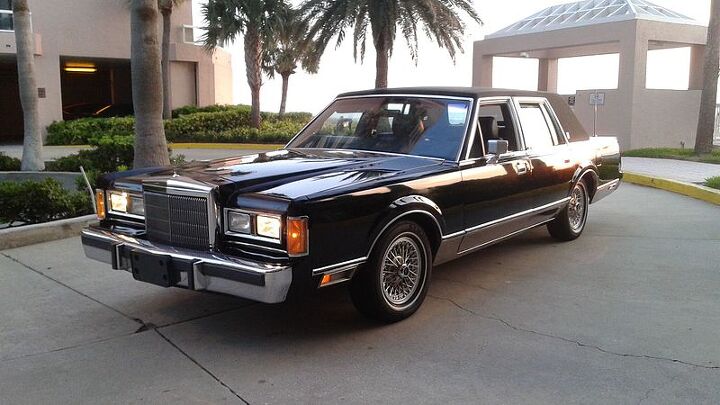
Granted, Wilson’s point focuses on image, not quality, so the Town Car dig isn’t in the same category of maliciousness as, say, Sergio Marchionne talking about the Fiat 500e. Still, is the Town Car’s history, and its image, something from which Lincoln should run? Maybe empty nesters rushing out of the house to dine for half price at 4:30 p.m. isn’t the greatest vision with which to lure in young families, but product still speaks for itself, at least to some degree.
In the first year of the new century — the beginning of Lincoln’s dark, confused decade — Town Car sales in the U.S. reached 81,399 units. Six years earlier, Americans took home over 120,000 of the cushy sedans. What was a Town Car? First and foremost, it was a model that understood its purpose, much like its builder and its buyers. Throughout its long lifespan, the Town Car remained instantly recognizable and never grew unsure as to its identity, remaining a durable, powerful, rear-wheel-drive comfort cruiser to the end.
True, livery companies loved it, too. And yes, there’s no shortage of high-mileage Panthers with arthritic suspensions still ferrying people to and from the airport, but doesn’t that say something positive about the model? That it performs a role, even in old age, that others can’t, won’t, or aren’t requested to fulfill? That it’s capable of taking years of punishment and calmly asking for more?
Don’t tell me Lincoln wouldn’t love to see some of those old Town Cars ditched in favor of new Continentals, subtly swaying a certain clientele towards their product through regular exposure. Lincoln needs younger buyers, yes. First-time buyers. Buyers attracted to the across-the-board styling movement afoot at Lincoln, something we’ll call the “Make Like Continental” initiative.
Developing a unique look is key for brand identity, just as content, quality, and segment saturation is a must-have for healthy sales and satisfied customers. And it certainly helps if those customers can’t see a Ford peeking through the skin like a sandwich through Saran Wrap. Thankfully, there’s progress being made towards this end. Sales are up compared to the grim recession-era years.
Yet I’d argue Lincoln should make itself busy sweeping the early MKZ and MKX models under the carpet before cringing at the sight of one of its best-sellers.
[Image: Michaelulrich17/ Wikimedia Commons ( CC BY-SA 4.0)]

More by Steph Willems









Comments
Join the conversation
I got it! New Town Car with inspiration taken (re dimensions, conservative elegant styling) from the RR Phantom but with a big American V8 and obviously less luxurious materials (but still nice) for the interior to cut price point 20k below the base s class mercedes. The continental should only be the ttv6 but make it a styling icon with a crazy ass 4 door convertible (halo car, tie in to glorious past). Or at the very least crib the s class coupe and convertible at a cheaper price point. Build a sleek midsized sedan on a mustang platform (yes the turbo 4 and v8 included) make Aston Martin rapide coupe like styling. Not practical but maybe brings in a younger crowd. Navigator and midsized one as is (big profit makers)
This shows you what kind of sheer buffoons the trim level Ford calls Lincoln has running it. Lincoln, as a "brand" can't muster 120k sales a year and this clown is bagging on a single model that sold 120k a year. It shows how out of touch they are. The problem isn't the successful Town Car. It's Lincoln. And Ford still has no clue what they're doing with the "brand".