Junkyard Find: 1976 Fiat 124 Sport Spider
Murilee Martin
by Murilee Martin

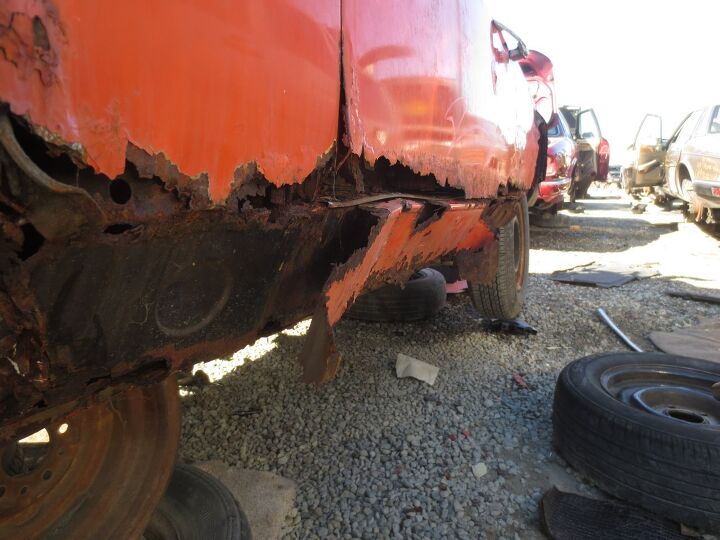
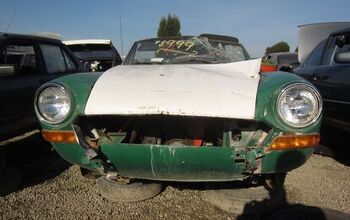
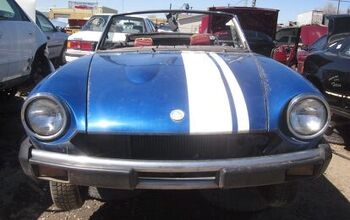
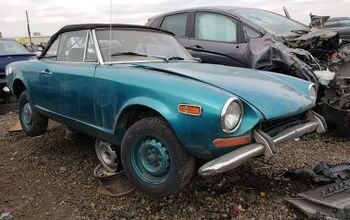
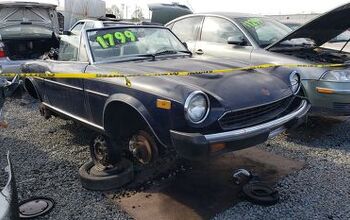
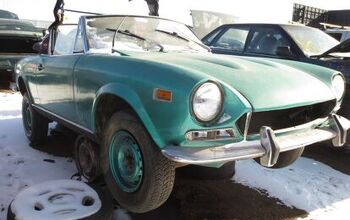
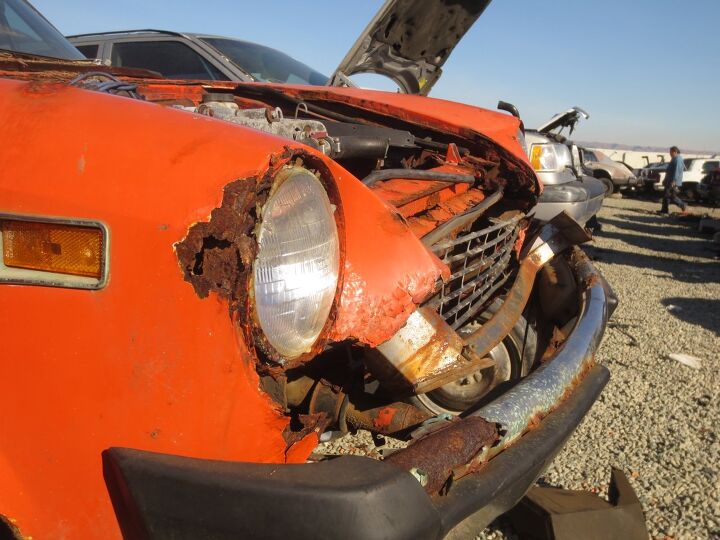
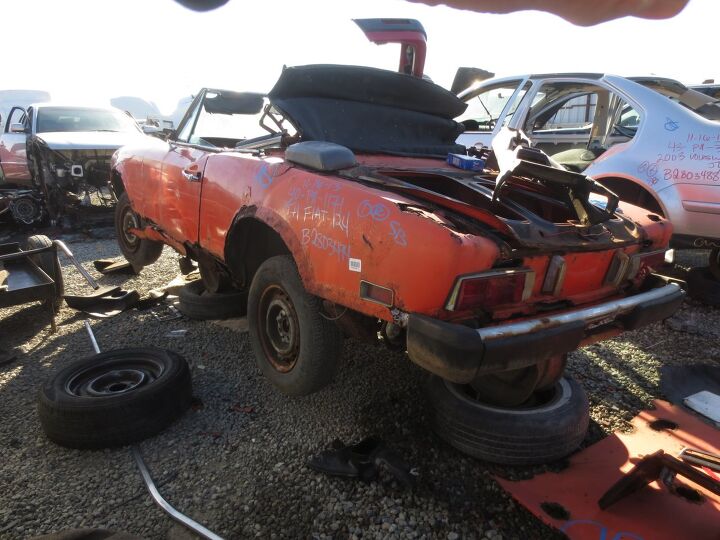
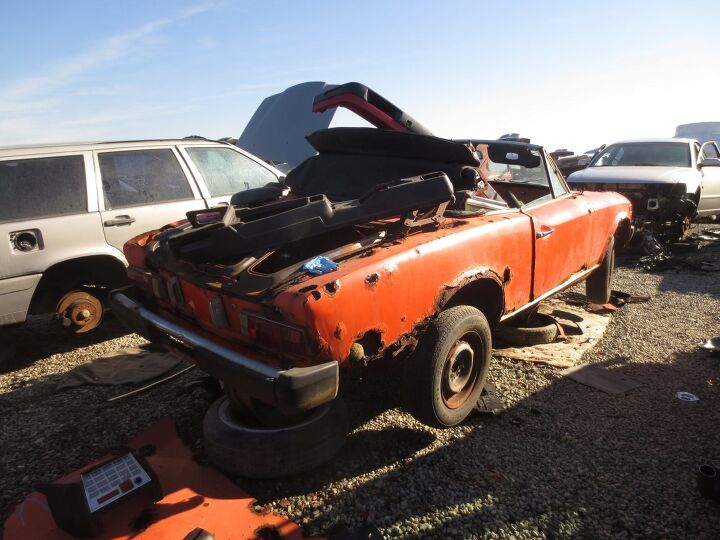
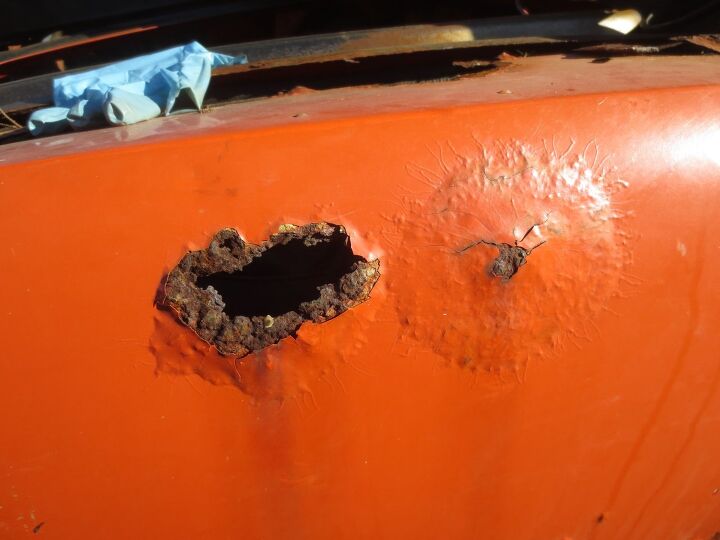
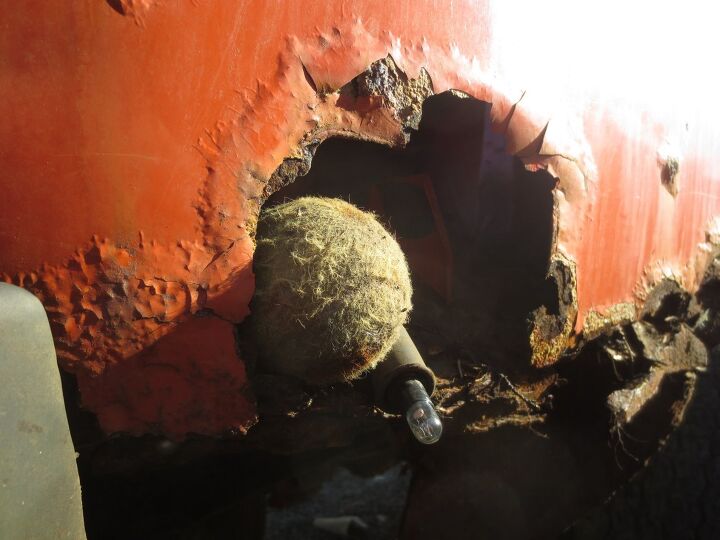
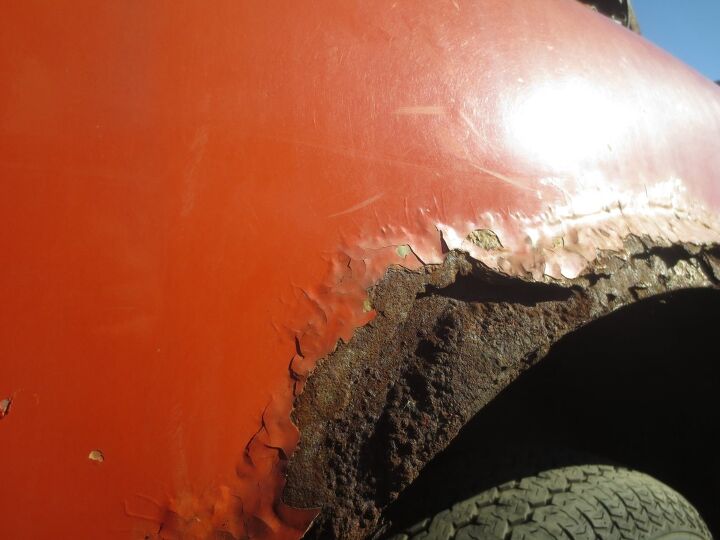
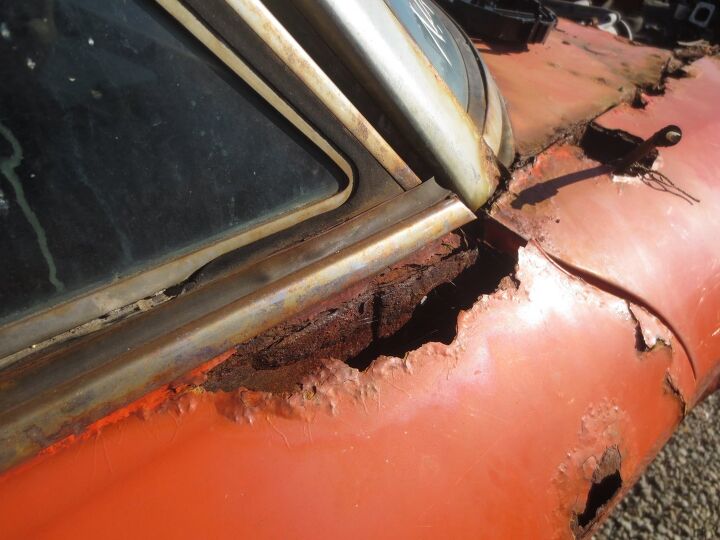
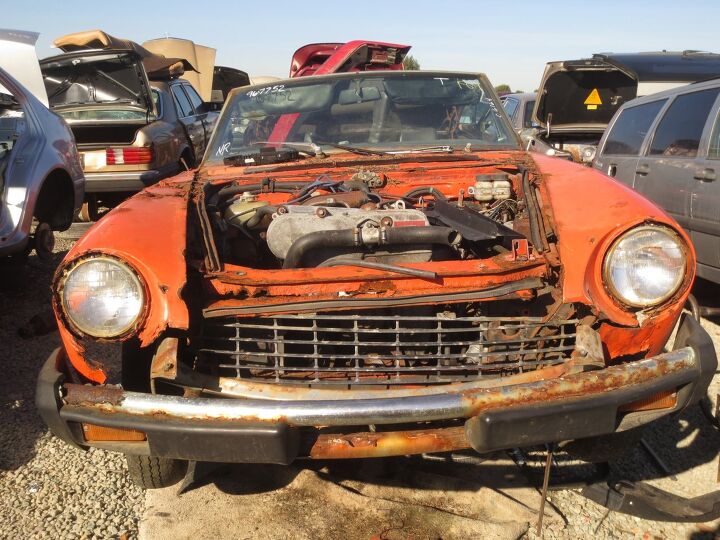
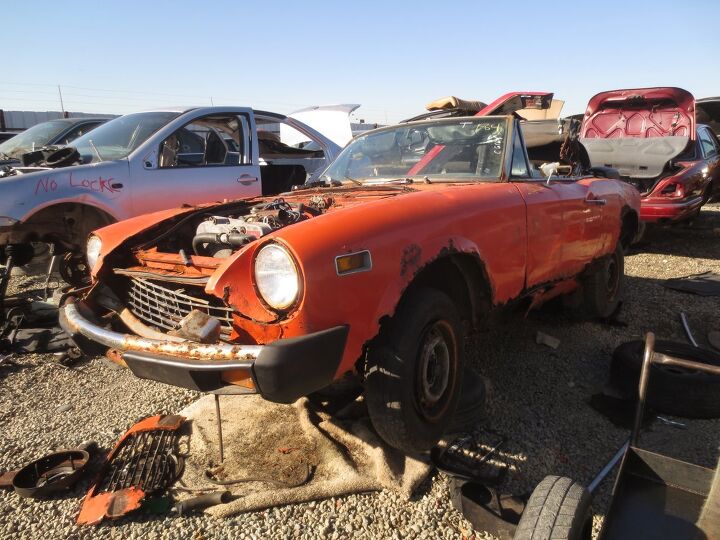
So many Fiat 124 Sport Spiders get junked, and the process has been going on for my entire junkyard-prowling career. In the three years of this series, we’ve seen this ’71, this ’73, this ’75, this ’78, and this ’80, and we might as well add the 124’s little brother, this ’71 850 Sport Spider. I don’t even photograph every 124 Sport Spider I see, because they’re almost as common in wrecking yards as ’85 Camrys. Today’s ’76, however, holds the Junkyard Find record for Scariest California Beach Neighborhood Rust.
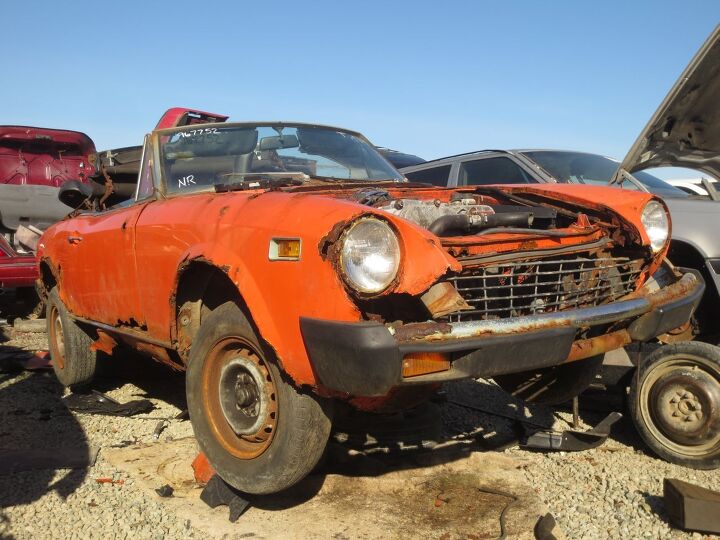
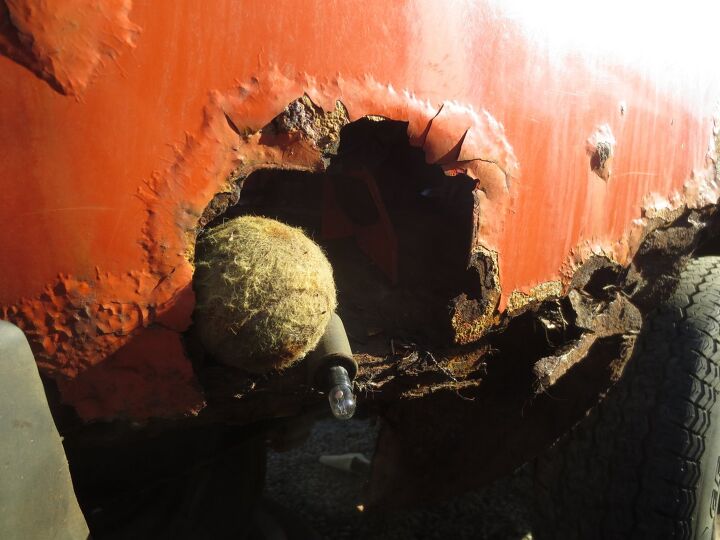
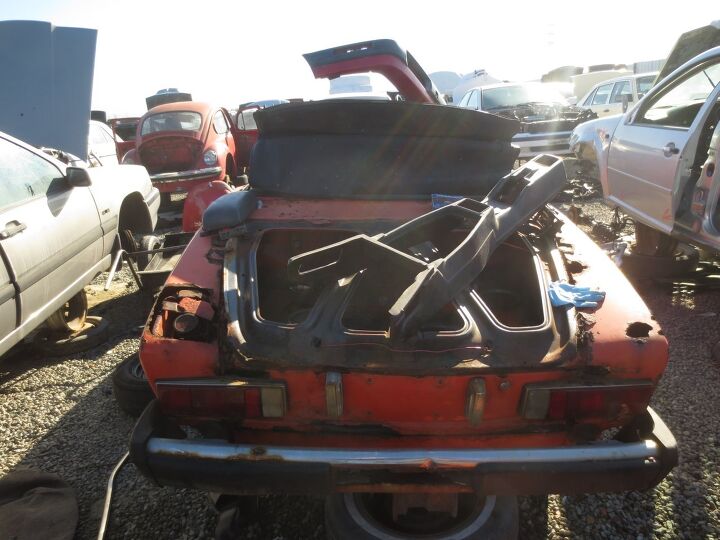
Cars that live within a block or two of the Pacific Ocean in Northern California (I found this car in one of my favorite East Bay yards during a recent drive around California in a new Mirage) often rust in a weird top-down pattern. For example, the truly frightening ’84 Toyota Van we saw last October. California cars with bad weatherstripping often rust inside the trunk, as water leaks in and sits for months during the long, rainy winters. This Fiat managed to rot from both types of California rust.
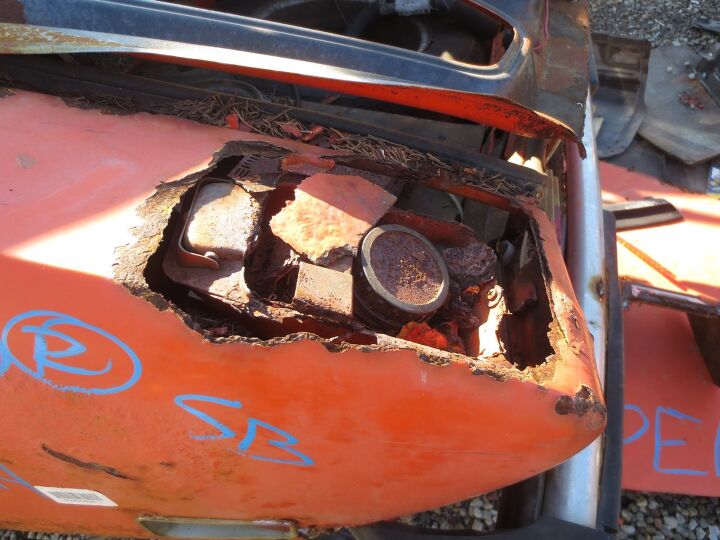
How does this even happen?
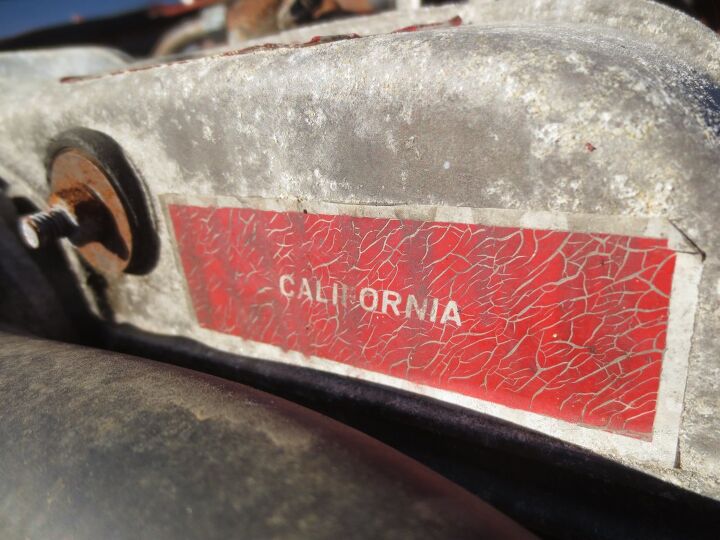
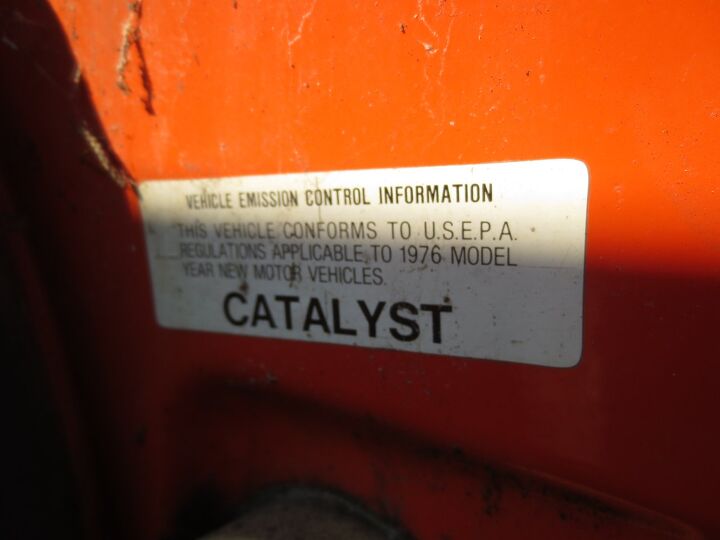
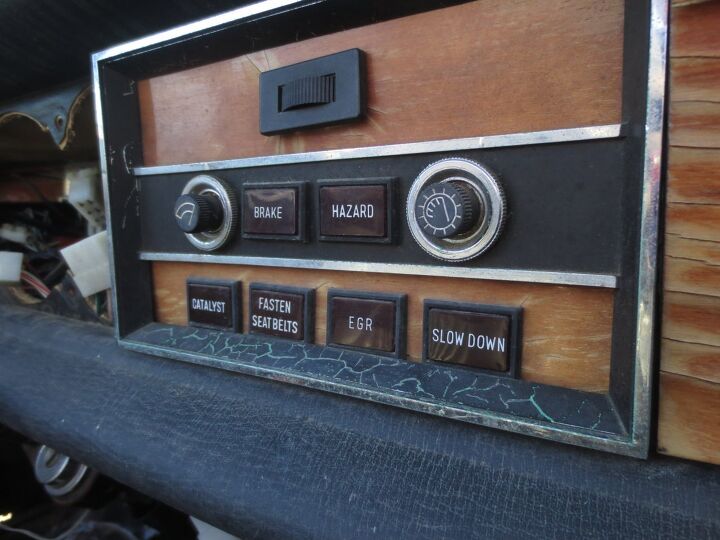
This car comes from the era of separate emissions requirements for new cars sold in California.
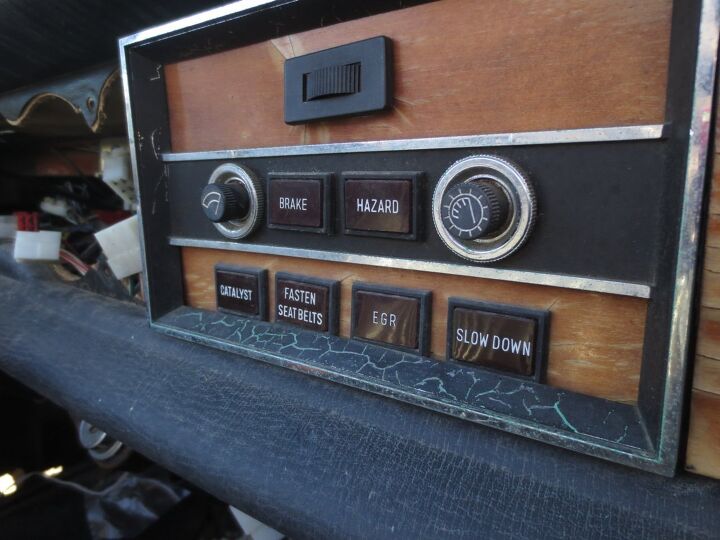
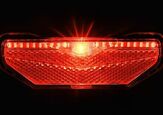
I have quite a collection of these SLOW DOWN lights, which were used to warn of an overheating catalytic converter (presumably the CATALYST indicator light warned of some other cat problem). Ferrari 328s had them, too.
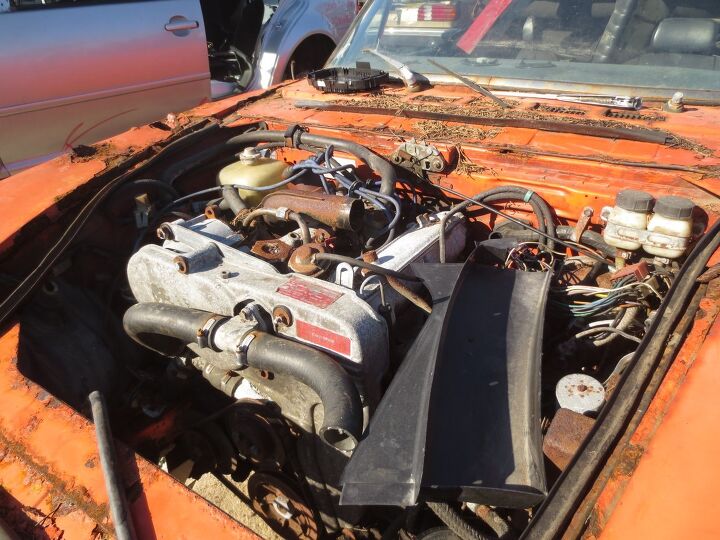
Definitely not worth restoring, but maybe someone will grab the Twin Cam engine for a nicer Fiat.
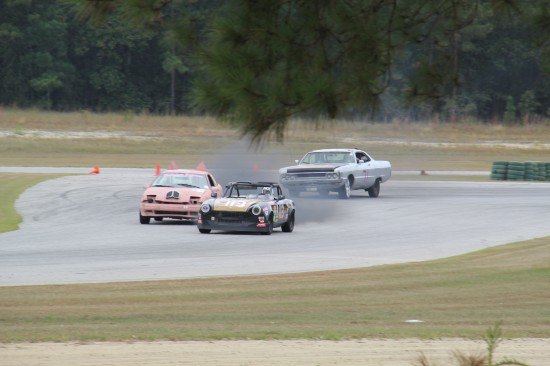
Given how cheap these cars are, we see surprisingly few 124 Sport Spiders in the 24 Hours of LeMons. I can think of a couple of Twin Cam-powered examples, and then there’s the Volkswagen TDI-powered Smokey Unit Fiat. This car is pretty quick, but its real advantage in endurance racing is its tremendous range on a tank of diesel.
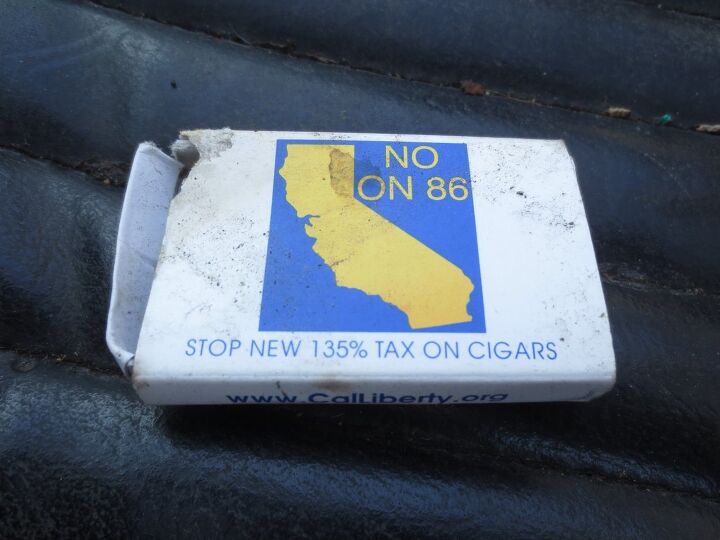
The last owner of this Fiat was against Proposition 86.
Murilee Martin
Murilee Martin

Murilee Martin is the pen name of Phil Greden, a writer who has lived in Minnesota, California, Georgia and (now) Colorado. He has toiled at copywriting, technical writing, junkmail writing, fiction writing and now automotive writing. He has owned many terrible vehicles and some good ones. He spends a great deal of time in self-service junkyards. These days, he writes for publications including Autoweek, Hagerty and The Truth About Cars.

More by Murilee Martin

Comments
Join the conversation
2 of 20 comments
  • Allan850glt Allan850glt on Mar 02, 2014

    That thing is scary rusty! Hell, I live in Buffalo and even with our long winters and heavy use of salt, never have I seen something so rusted away in my 35 years. Even having lived deep out in the sticks (Orleans County) for a few years during my adolescence, not even old relics left out in fields or friend's awful field cars, nothing looked like this. Some lazy owner obviously never bothered to wash or wax this little thing. I need a tetanus shot just looking at it.

  • Dannew02 Dannew02 on Mar 11, 2014

    Actually that's what most cars end up looking like where I live (Wisconsin) I've personally owned and daily-drove cars this rusty. WHen the stolen STOP sign used to cover the hole in the floor falls onto the street because there's more hole than floor, it's time to look for a bigger sign... GOing thru puddles and the splash gets the headliner wet (and the under dash wiring, so you have to wait for it to dry out to resume your trip) was always fun, too. American cars seemed to rust just slightly slower than imported cars, or maybe there was just more mass to dissolve. This is why I've never been in an air-cooled VW, or the Datsun 510s I keep reading about online, because every one of them sent to my part of the midwest dissolved before they were 10 years old.

  • Amwhalbi My 1972 Mercury Capri was my first stick shift car. God, I miss that thing. It was a blast to drive.
  • Vid169489471 The technology exists today to produce a variable color temperature (kelvin) LED lamp. It can vary from 2700k that soft orange look to 6500k the bright daylight with the bluish tint.Since everything in a late model car is computer controlled, it would be an easy task to write a few lines of code that enables your vehicle to not only dim down from hi to low beam but to shift color temp down to the 2700k range for oncoming traffic, then back up to 5000k once oncoming traffic has passed. For the operator it would be automatic and seamless. For older cars they could be retrofitted with LEDs that are 2700k on low beam and 5000k on hi beam. As far as standards, there could be a lumens max, and a minimum. Several States already have minimum lumen standards going back to the old incandescent bulbs. Why not update these to national standards.
  • Jam169859557 More regulation is needed for ALL vehicle lighting systems. [list=1][*]The lighting that is most blinding are the rapidly flashing red, blue and amber lights on emergency vehicles. The lights themselves are blinding, flashing so rapidly that it's impossible for even the sharpest eyes to adjust. What's worse, is the nature of the emergency requires a careful view of the area surrounding the emergency vehicle. There is something going on that needs to be seen. More flashing lights is not the solution.[/*][*]Brighter headlights need to be regulated. The tall riding vehicles do not need headlights positioned so high that they blind drivers in lower riding vehicles. And those heasdlights need to be aimed properly. When I first started driving my 2020 Subaru Outback, many drivers would flash their lights, hoping I would dim my lights. This stopped after I performed am easy adjustment that tilted the beam lower. Late model Subaru headlamps are designed with a sharp cutoff that project less glare above the hood line. When the headlights are properly aimed, other drivers are not blinded by the beam.[/*][*]Customized light assemblies make it more difficult to see the marker lights (tail lamps, turn signals and side marker lamps) that have been tinted. There are many municiple codes that prohibit this tinting, but these laws are seldom enforced.[/*][/list=1]Solutions: Tight controls on emergency vehicle lighting. In trying to make these vehicles more visible, a dangerous side effect is reducing the ability of drivers to see the surrounding perils.Headlight design regulations that reduce the height of the headlight assemblies. Just because a pickup truck has a hood that sits 4 feet abouve the pavement, it does not mean the headlights need to be so high. Owneres should maintain proper adjustments to their vehicle headlights.Establish and enforce regulation requiring a illumination standard be followed.
  • Stl170698708 as someone who hates big government, and their interference;but you can add me to the list of people that are blinded by the lights.unfortunately "the poop is out of the horse and no way is it going back in"They have had 5 years to make lights bigger, badder and brighter because in the vehicle work it is go big or go home!Trucks are the worst because so many people use them to express their dominance and that is big, big, big $$ both at the Original Purchase and in the Aftermarket world.If, we are so lucky to get some good government regulation on this it will also take some very good Court enforcement to get the aftermarket people with fines and lawsuits.Much like the EPA did with the Diesel Tuner Industry that felt emission regulations didn't apply to them.This is from someone that owns said pickup truck with the same bright headlights,but i only use the truck when I have too and always turn off the Fog lights when driving in traffic.
  • Art65765977 I saw a porsche 911 with the most amazing headlights from behind approaching the Sunshine skyway in Florida. The pattern was 108 degrees across sweeping the road like a broom. My brother and I were amazed. I don't know what it looked like from the front but i am sure it was better than American cars
Next