
Saab 9-3 Aero SportCombi Review
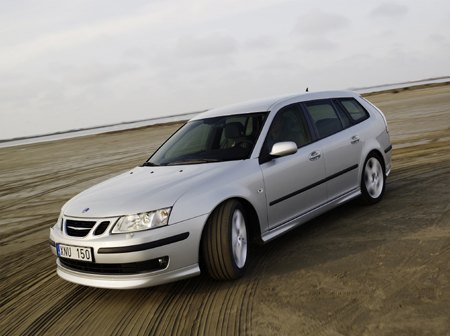
Trollhattansaab.net recently upbraided TTAC for failing to mention their champion amongst a list of station wagon alternatives to SUV’s. According to the Aussie Saab blog, the SportCombi “more than matches its competition on price, performance, specification, utility and safety.” Be that as it may, I wanted to know if Saab’s wagon deserved a place next to Volvo and Mercedes in my list of classic European station wagons. So I grabbed some seat time in an '06 Saab 9-3 Aero SportCombi (a.k.a. 9-3 Aero 5-Door).
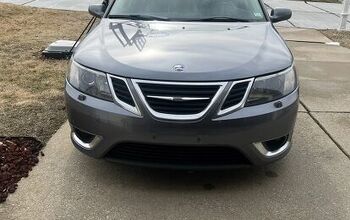
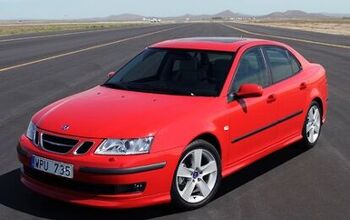
The 9-3 SportCombi shares the same clean, sensible, sober and forgettable face as all other current Saabs. Thankfully, the Aero’s deeper chin spoiler spices things up… a bit. The wagon’s profile is more, uh, “eccentric.” Blacked-out B and C pillars and an upwards swooping lower window line create a strangely truncated rear window and an odd D-pillar kink. The SportCombi’s rear end shares Volvo’s penchant for twin tower brake lights, which bracket a Pacifica-esque rounded rump. The overall design is handsome enough, though less coherent than the wagon genre’s best examples.
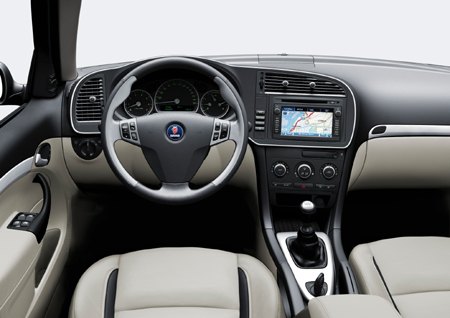
Once inside, the SportCombi’s cockpit is a smorgasbord of black plastic, black plastic and… black plastic. The polymers resemble the material The Dark Knight wore in the Batman movies. Staying with the theme, the steering wheel’s silver insets remind me of the Bat plane. My Saab salesman, however, was entranced by a clever D-shaped plastic piece on the center console, slotted to hold business cards or dry cleaning receipts. The part’s quality (or lack thereof) was strictly squirt gun level chic. In fact, I haven’t seen plastic that cheap since I darkened the door of a Chevy Citation some twenty-five years ago.
The SportCombi’s optional 10-speaker Premium Audio System continues the budget-minded bonanza. Beethoven’s Eroica wasn’t. Three hundred watts and I could still check out of Hotel California anytime I liked. How an audio system dares call itself “premium” with only two knobs (treble and bass) and no EQ or preset mix adjustments is a mystery best left to The General’s multi-national bean counting squad.
At least the Swedes got the driving position right. The glove leather chairs are amazingly comfortable and endlessly supportive. The tilting and telescoping steering wheel easily adjusts for the optimal driving position. The center console-mounted ignition remains lovably Saabish. As with nearly all cars of its size, rear knee room is limited; adults confined to the second row may wish to consult The Geneva Convention. The SportCombi’s back seats fold flat, opening the cargo space to a Home Depot-friendly 72.3 cu. ft.
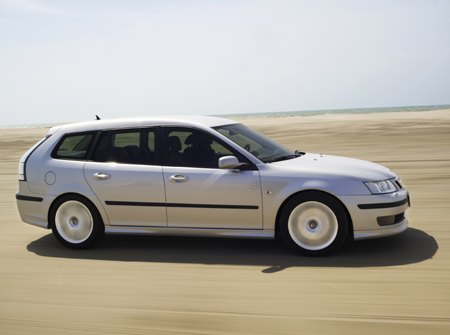
The SportCombi saves its greatest pleasures for enthusiastic drivers. Awaken its 250hp turbo-fed 2.8-liter V6 engine and the exhaust’s velvety burble speaks of the good times to come. If you like straight-line shove, the wagon won’t disappoint; the SportCombi sprints to sixty in a fraction over six seconds. Better yet, maximum torque (258 ft-lbs.) kicks in at just 2,000 rpm. Save for a brief bit of turbo lag from a standing start, power is instantly available at any gear, at any engine speed.
Paddle shifters mounted just above nine and three o’clock on the steering wheel control the SportCombi’s six-speed automatic. Unlike other sports sedans and wagons, Saab engineers did the Patek Phillipe thing: they chose one shifting algorithm and chose it wisely. The autobox is biased towards sports driving; it delivers crisp, accurate shifts.
The SportCombi Aero’s sport-tuned suspension lowers the car by 10mm and stiffens up the shocks and springs. The set-up delivers an ideal balance of body control and road feel. As you’d expect for a 60.6-inch-tall vehicle, there’s a fair amount of initial lateral roll. But once the SportCombi finds its balance, it maintains its composure during high-speed cornering– regardless of the road surface.
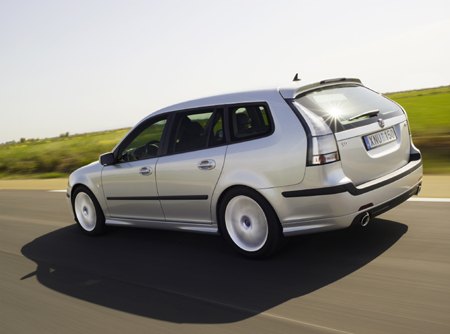
Equally admirable, torque steer is virtually nonexistent– without compromising steering feel. Less commendably, the always optimistic EPA says the SportCombi travels 17 miles for every gallon of gas in the city, and 28 on the highway. The only other major blot on the SportCombi’s dynamic playbook: throttle response. Take your foot off the accelerator under full turbo boost and, for a brief moment, the accelerator pedal seems welded to the floor. I don’t know if this problem was unique to my test vehicle. If not, it’s a completely unacceptable design flaw. If it is, it’s a completely unacceptable manufacturing aberration.
As tested, the 9-3 Aero SportCombi with Touring Package stickers for $36,715. That’s a lot of pre-discount dough for a smallish “entry-level luxury” wagon. For that money, Saab should clean up the interior deficiencies and find a way to switch off the afterburners. On the other hand, the SportCombi’s power and handling are superb for a family hauler. Taken as a whole, there’s no question that the Combi deserves a place in the pistonhead's pantheon of Euro-style station wagons. We stand corrected.
Trollhattansaab.net
More by William C Montgomery







Comments
Join the conversation
To Andy: Regarding sorry as a history major, I hate to quote wikipedia, but i have to prove my point. Forgive my persistence. Then you would know most researchers believe human (ape?) originated from Africa? Are you an African then?
P.S. I suppose Honda can soon join the "jet connection" club :)