
QOTD: To Screen, or Not to Screen?
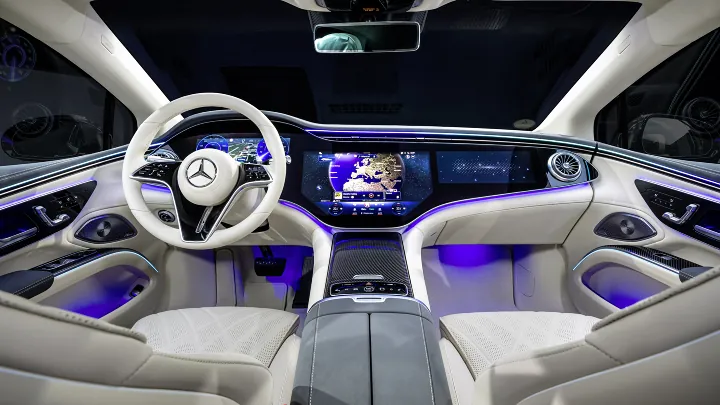
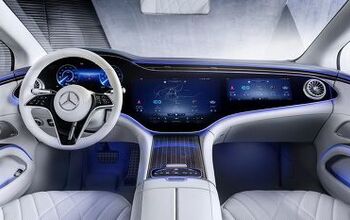
Last week Matt P. brought you a report showing the chief of design at Mercedes-Benz grumbling about the proliferation of screens in modern automobiles.
It's a good read and it got me thinking -- do you, the consumer, really hate (or like) the increase in screens across the industry?
As someone who sits his rear end behind the wheel of a different new car each week, I've found myself torn on the issue. Sometimes I find large screens easy to read, and if they're well-integrated into the dashboard, that's a plus. But I also know that they can be a pain to clean and I shudder at the repair costs involved should a screen need repair after the new-car warranty expires.
Not to mention the frustration we all feel when an automaker integrates too many controls into a touchscreen (especially if we wear gloves in the winter). And the exasperation that we have when we need to dive through menus too much. Or watching the screen go blank as a software update takes over.
Personally, I am optimistic that someday an automaker will get the balance right -- it will produce vehicles with big, easy to read screens with an user interface that uses old-fashioned buttons and knobs for the most important controls. These screens will be seamlessly integrated into the dash or center stack, and the design will make it simple to access functions without endless dives through trees of options.
We've already seen progress in this area -- volume and tuning knobs are returning and OEMs are working on better UXs, both in terms of physical control and how well the screen-only functions work. So I think it is possible.
What say you -- do you like a vehicle that's screen city? Or do you want to return to the cars of yore? Or something else?
For the purposes of this question of the day, let's focus on the screens used for instrumentation and/or infotainment, not rear-seat screens meant to entertain passengers. Let's also place the passenger-side-only screens Jeep offers into a gray area.
With that said, sound off below.
[Image: Mercedes-Benz]
Become a TTAC insider. Get the latest news, features, TTAC takes, and everything else that gets to the truth about cars first by subscribing to our newsletter.
Tim Healey grew up around the auto-parts business and has always had a love for cars — his parents joke his first word was “‘Vette”. Despite this, he wanted to pursue a career in sports writing but he ended up falling semi-accidentally into the automotive-journalism industry, first at Consumer Guide Automotive and later at Web2Carz.com. He also worked as an industry analyst at Mintel Group and freelanced for About.com, CarFax, Vehix.com, High Gear Media, Torque News, FutureCar.com, Cars.com, among others, and of course Vertical Scope sites such as AutoGuide.com, Off-Road.com, and HybridCars.com. He’s an urbanite and as such, doesn’t need a daily driver, but if he had one, it would be compact, sporty, and have a manual transmission.
More by Tim Healey
Latest Car Reviews
Read moreLatest Product Reviews
Read moreRecent Comments
- Amwhalbi My 1972 Mercury Capri was my first stick shift car. God, I miss that thing. It was a blast to drive.
- Vid169489471 The technology exists today to produce a variable color temperature (kelvin) LED lamp. It can vary from 2700k that soft orange look to 6500k the bright daylight with the bluish tint.Since everything in a late model car is computer controlled, it would be an easy task to write a few lines of code that enables your vehicle to not only dim down from hi to low beam but to shift color temp down to the 2700k range for oncoming traffic, then back up to 5000k once oncoming traffic has passed. For the operator it would be automatic and seamless. For older cars they could be retrofitted with LEDs that are 2700k on low beam and 5000k on hi beam. As far as standards, there could be a lumens max, and a minimum. Several States already have minimum lumen standards going back to the old incandescent bulbs. Why not update these to national standards.
- Jam169859557 More regulation is needed for ALL vehicle lighting systems. [list=1][*]The lighting that is most blinding are the rapidly flashing red, blue and amber lights on emergency vehicles. The lights themselves are blinding, flashing so rapidly that it's impossible for even the sharpest eyes to adjust. What's worse, is the nature of the emergency requires a careful view of the area surrounding the emergency vehicle. There is something going on that needs to be seen. More flashing lights is not the solution.[/*][*]Brighter headlights need to be regulated. The tall riding vehicles do not need headlights positioned so high that they blind drivers in lower riding vehicles. And those heasdlights need to be aimed properly. When I first started driving my 2020 Subaru Outback, many drivers would flash their lights, hoping I would dim my lights. This stopped after I performed am easy adjustment that tilted the beam lower. Late model Subaru headlamps are designed with a sharp cutoff that project less glare above the hood line. When the headlights are properly aimed, other drivers are not blinded by the beam.[/*][*]Customized light assemblies make it more difficult to see the marker lights (tail lamps, turn signals and side marker lamps) that have been tinted. There are many municiple codes that prohibit this tinting, but these laws are seldom enforced.[/*][/list=1]Solutions: Tight controls on emergency vehicle lighting. In trying to make these vehicles more visible, a dangerous side effect is reducing the ability of drivers to see the surrounding perils.Headlight design regulations that reduce the height of the headlight assemblies. Just because a pickup truck has a hood that sits 4 feet abouve the pavement, it does not mean the headlights need to be so high. Owneres should maintain proper adjustments to their vehicle headlights.Establish and enforce regulation requiring a illumination standard be followed.
- Stl170698708 as someone who hates big government, and their interference;but you can add me to the list of people that are blinded by the lights.unfortunately "the poop is out of the horse and no way is it going back in"They have had 5 years to make lights bigger, badder and brighter because in the vehicle work it is go big or go home!Trucks are the worst because so many people use them to express their dominance and that is big, big, big $$ both at the Original Purchase and in the Aftermarket world.If, we are so lucky to get some good government regulation on this it will also take some very good Court enforcement to get the aftermarket people with fines and lawsuits.Much like the EPA did with the Diesel Tuner Industry that felt emission regulations didn't apply to them.This is from someone that owns said pickup truck with the same bright headlights,but i only use the truck when I have too and always turn off the Fog lights when driving in traffic.
- Art65765977 I saw a porsche 911 with the most amazing headlights from behind approaching the Sunshine skyway in Florida. The pattern was 108 degrees across sweeping the road like a broom. My brother and I were amazed. I don't know what it looked like from the front but i am sure it was better than American cars
Comments
Join the conversation
Like with everything else, it’s a matter of balance and the right balance will differ depending on the car and its focus. For driver focused cars, I feel the modern Mazda has the best balance. Touch centric large screen works (mostly) well for Tesla but it assumes you are letting the car do half of the driving. To each their own.
Too many of those touch centric controls are missing (A) good UI designers (B) SoC fast enough and software optimized enough for smooth operation and (C) sufficiently reliable secondary controls for basic functions, however.
Not. The only thing in a car that should be a screen is the navigation system, and that doesn't have to be touchscreen, but probably works better if it is.
I'll give a nod to the backup camera because modern vehicles are so poorly designed that the windows are useless. (You had one job, windows! One job!!)