


Mega Monte Carlo GTB: The French V12 Supercar that Almost Changed Everything and Then Vanished
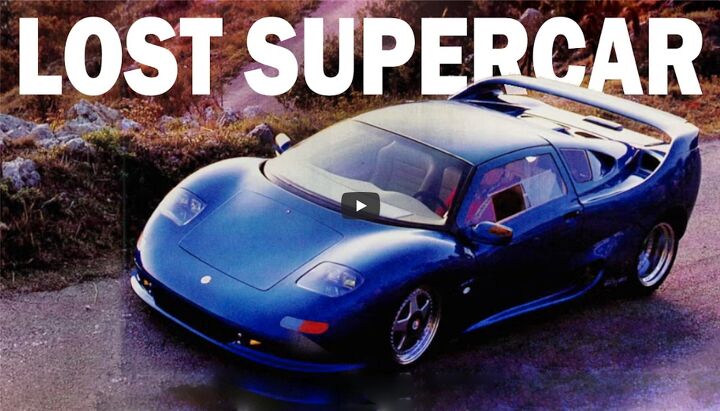
France, as any petrolhead with a functioning memory will tell you, has always been a nation of contradictions when it comes to cars.
On the other, it occasionally produces something so wildly ambitious, so completely out of step with expectations, that you’re forced to stop and ask: “Hang on… who approved this?” This is, after all, the country that birthed Bugatti — a brand that, decades later, would go on to rewrite the laws of physics with the Bugatti Veyron and then casually double down with the Bugatti Chiron.
It’s also home to Alpine, which has quietly built some of the most engaging driver’s cars of the modern era. But for every Bugatti or Alpine success story, there are a dozen obscure, almost mythical machines that flickered briefly into existence before disappearing into the shadows. And few are as fascinating — or as gloriously convoluted — as the Mega Monte Carlo GTB. So let me tell you all about it ….
The TTAC Creators Series tells stories and amplifies creators from all corners of the car world, including culture, dealerships, collections, modified builds and more.
An AI-generated transcript edited by a staffer is below.
[Image: YouTube Screenshot]
Become a TTAC insider. Get the latest news, features, TTAC takes, and everything else that gets to the truth about cars first by subscribing to our newsletter.
Summary: The Fascinating Rise and Fall of the Mega Monte Carlo GTB
This video explores the bizarre and little-known history of the Mega Monte Carlo GTB, one of the most ambitious and obscure supercars ever to emerge from France.
France's Forgotten Supercar Dream
The presenter begins by noting France's long history of automotive innovation and eccentricity, from advanced suspension systems to legendary brands like Bugatti and Alpine. Yet alongside those successes are numerous forgotten projects, none more intriguing than the Mega Monte Carlo GTB.
Origins in Monaco
The story began in the late 1980s when entrepreneur Fulvio Ballabio founded Monte Carlo Automobile with the goal of creating a Monaco-based supercar capable of competing with Italian and German exotics.
The first version, the MCA Centenaire, was developed to commemorate the centennial of the Automobile Club of Monaco. Early plans included a Lamborghini-sourced V12 engine, but limited demand and financial challenges prevented the project from gaining traction.
Constant Reinvention
The project underwent multiple transformations:
- MCA Centenaire (late 1980s–early 1990s) – Monaco luxury supercar.
- MIG M100 (1993) – Endurance-racing-focused machine intended for the 24 Hours of Le Mans.
- Mega Monte Carlo GTB (mid-1990s) – The final road-going version after acquisition by French company Mega.
The Le Mans-focused M100 featured a twin-turbocharged 3.5-liter V12 designed by engine specialist Carlo Chiti. Despite promising specifications, development problems prevented the car from qualifying for Le Mans.
Mega Takes Over
After the project was acquired by Mega, a company better known for utility vehicles, the car received a significant redesign.
Key upgrades included:
- A naturally aspirated Mercedes-Benz V12 mounted midship.
- Rear-wheel drive.
- Six-speed manual transmission.
- Revised styling and engineering.
Advanced Technology Ahead of Its Time
What made the Mega Monte Carlo particularly impressive was its engineering.
Highlights included:
- Full carbon-fiber monocoque chassis.
- Carbon construction cured in an autoclave.
- Hybrid structure using steel subframes and aluminum reinforcements.
- Fully independent double-wishbone suspension.
- Lightweight design focused on performance and handling.
In the early 1990s, such technology was rare outside racing and exotic cars like the Jaguar XJR-15.
A Promising Debut That Went Nowhere
The production-ready Mega Monte Carlo GTB debuted at the 1996 Geneva Motor Show with all the ingredients of a world-class supercar:
- V12 power
- Advanced materials
- Sophisticated chassis engineering
- Attractive styling
Yet despite its credentials, production remained extremely limited. Only a handful of cars were reportedly built before the project quietly ended around 1999.
Why It Failed
The presenter argues the car wasn't doomed by a single flaw. Instead, its downfall resulted from a combination of factors:
- Constant ownership changes.
- Multiple shifts in purpose and identity.
- Failed racing ambitions.
- Lack of brand recognition in the supercar market.
- Difficulty competing against established Italian manufacturers.
The project never settled on a clear mission, alternately trying to be a Monaco luxury flagship, a Le Mans racer, and a French exotic supercar.
Legacy
Today, the Mega Monte Carlo GTB is largely forgotten, with few enthusiasts even aware it existed. However, the video argues it deserves recognition as:
- An ambitious engineering achievement.
- An early adopter of carbon-fiber construction.
- A fascinating "what if" story in automotive history.
The presenter concludes that the car's appeal lies not in its success but in its unrealized potential — a bold, technologically advanced supercar that came tantalizingly close to greatness before fading into obscurity.

I am a proud owner of a single turbo 335i and a Ducati 999s. I make a lot of content on both, as well as just sharing my opinion on just about everything car and motorcycle related,
More by Chris VS Cars | TTAC Creator









Comments
Join the conversation
Boy, the way you blowin' up my phone
Won't make me leave no faster
Put my coat on faster
Leave my girls no faster
I shoulda left my phone at home
'Cause this is a disaster
Callin' like a collector
Sorry, I cannot answer
My last salary was $8750, ecom only worked 12 hours a week. My longtime neighbor yr estimated $15,000 and works about 20 hours for seven days. I can't believe how blunt he was when I looked up his information,
This is what I do..... Jobathome1.Com