


Florida Highway Patrol PIT Maneuvers Toyota Supra At 100 MPH


Earlier this week, a fourth-generation Toyota Supra was intentionally wrecked by the Florida Highway Patrol (FHP) at a claimed 100 miles per hour. The driver and passenger of the now-destroyed JDM import were reportedly hospitalized after the car left the road, collided with a light pole, and subsequently caught fire.
According to local outlet FOX13, driver Brandon Ramnarine (age 31) was clocked going 93 mph on the Gandy Bridge that connects St. Petersburg to Tampa — which has a speed limit of 55 mph.
The FHP reported that a trooper attempted to stop the Toyota, with Ramnarine fleeing across the bridge. The trooper conducted a PIT maneuver, which caused the Supra to lose control. Despite the near complete obliteration of the vehicle, both the driver and passenger were said to have been taken to the hospital with serious (but not life-threatening) injuries.
While it seems inarguable that the Toyota was legally due a citation for speeding, the situation does call into question the efficacy of the PIT maneuver. For those unfamiliar, the “Precision Immobilization Technique” (or PIT maneuver) involves intentionally steering a pursuit vehicle into the car they’re trying to catch. This causes the rear tires to lose traction, rotating the fleeing vehicle as the driver loses control.

The Drive cited information posted to the FHP’s Instagram account that indirectly stated that the chase lasted less than two minutes before the trooper decided to crash the Supra at the end of the bridge. While it could be argued that the trooper was attempting to stop the speeding car before it potentially entered into a more populated area, the incident took place at 1:00 AM on a Sunday morning and the Ramnarine could have just as easily gotten back on the highway where the Supra likely had the best chance of getting away.
There’s no mention of the suspect having committed any other crimes, nor engaging in any reckless behavior beyond the excessive speed. Depending on how the FHP trooper encountered Ramnarine, he may not even have been aware that he was being pursued until moments before the PIT maneuver took place.
This perhaps warrants a conversation as to whether or not using the maneuver at such high speeds is actually in the service of public safety. Let’s not pretend that there isn't a subset of law enforcement that doesn’t relish the chance to engage in a pursuit. State Boy vehicles likewise tend to receive more serious performance and durability modifications than the models you’ll typically see patrolling neighborhoods. They’re often better equipped to intercept speeders and ram into them if that’s deemed necessary.
However, the protocols for the circumstances that warrant a pursuit vary broadly between states. I’ve interviewed the Michigan State Police (MSP) on numerous occasions and the department prides itself on training some of the best drivers ever to wear a badge. But they have rules against using PIT maneuvers at speeds above 40 mph.
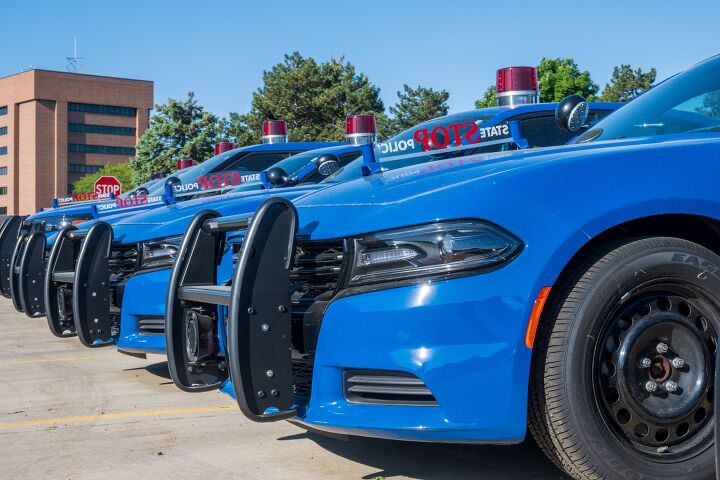
The department has a test track and is often influential in how pursuit vehicles are designed and whether or not their peers will adopt them into service. Their cars even use the old-fashioned “bubble lights” because they produce the least amount of aerodynamic drag and reinforce a heritage the department seems quite proud of. The Michigan State Police are about as serious and well-respected as it gets in terms of chasing down perps and even they’re hesitant to issue high-speed PIT maneuvers because of the inherent risks involved.
In fact, the MSP sometimes won’t bother with a high-speed pursuit unless there’s reason to believe that the suspect has committed a violent felony or is setting out to intentionally harm the public using their automobile. The reason given is that the department’s primary goal is to protect innocent bystanders and enforcement members. It’s the Michigan State Police’s contention that effectively forcing a vehicle to crash for excessive speed usually isn’t in the interest of public safety — and they’re not alone.
Many departments actually have to get special permission to PIT a suspect during a chase, as it’s frequently viewed as an execution of deadly force. Despite the California Highway Patrol (CHP) being famous for its high-speed chases, certain provisions need to be met before troopers will even engage in a pursuit. The CHP likewise won’t use the PIT maneuver without first assessing the potential danger to the public, announcing the decision over the radio, and ensuring that the officer attempting the maneuver has two other vehicles to back them up.
However, other departments have left all that up exclusively to the discretion of the officer/trooper involved. For example, the Arkansas State Police actually changed its protocols pertaining to when the maneuver can be used after a pregnant woman was killed via PIT when her car flipped after losing control. The updated guidance required Arkansas-based law enforcement to only attempt to PIT should the suspect pose an immediate threat to the public. But the department continues to use the maneuver quite frequently relative to its peers.

It could be argued that certain departments are going full Buford T. Justice — or Boss Hogg, if you prefer — on speeders and are willing to inflict the maximum amount of carnage to catch someone breaking the law. There are examples of State Police or Highway Patrol cheerfully sharing footage of themselves driving just as recklessly as the person they’re chasing.
There are similarly numerous YouTube channels dedicated entirely to posting videos (typically obtained through the Freedom of Information Act) of state law enforcement doing their thing. Based on those clips, Virginia, Florida, Georgia, Arkansas, California, and Michigan look to see the lion’s share of the action. But the latter two departments genuinely do appear to exercise a level of restraint that is sometimes absent among the former. Georgia, Florida, and Arkansas actually seem particularly willing to engage in risky maneuvers in order to wreck vehicles over minor offenses — whereas Michigan and California tend to focus on higher profile crimes and often prefer longer pursuits that end in surrender.
While one does wonder where the line should be drawn, especially considering different regions have different needs, the odds of influencing the protocols of state-based law enforcement are slim. Changes almost exclusively come from swapping leadership or in the wake of a particularly grim incident that leads to public outcry.

[Images: Florida Highway Patrol; WildSnap/Shutterstock; Focused Adventures/Shutterstock]
Become a TTAC insider. Get the latest news, features, TTAC takes, and everything else that gets to the truth about cars first by subscribing to our newsletter.
Consumer advocate tracking industry trends and regulations. Before joining TTAC, Matt spent a decade working for marketing and research firms in NYC. Clients included several of the world’s largest automakers, global tire brands, and aftermarket part suppliers. Since adding automotive writing to his repertoire, he has become an ardent supporter of the right-to-repair movement, discussed the status of the automotive sector on national broadcasts, participated in a few amateur rallying events, and driven more rental cars than anyone should ever have to. Handy with a wrench, Matt grew up surrounded by Detroit auto workers and learned to drive by twelve. Alleged to be contrarian, Matt claims to prefer understeer and motorcycles.
More by Matt Posky









Comments
Join the conversation
The solution is to stop when you see the red lights. And substantial time in jail for those that don't. Catch and release is the problem!
Whatever happened to the idea of taking a photo of the car's plate? Arrest the guy when he's home to arrest him?