


EPA Doing Away With Diesel Exhaust Fluid Power Restrictions By 2027

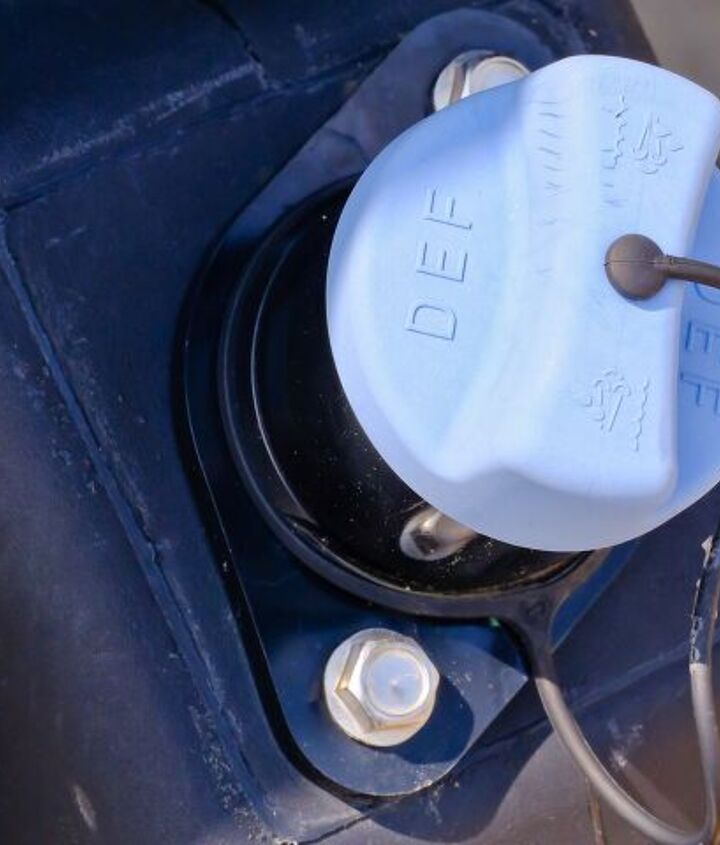
Environmental Protection Agency (EPA) Administrator Lee Zeldin has announced plans to eliminate restrictions placed on diesel-equipped vehicles when they run out of diesel exhaust fluid (DEF).
Starting with model year 2027, the EPA wants manufacturers to do away with power limitations imposed whenever diesel trucks start running out of DEF. It likewise plans on working with automakers to create software changes that can be made to existing vehicles that would undo emissions-based restrictions pertaining to diesel exhaust fluid levels.
While the EPA has stated that it’s still committed to environmentalism, it’s also concerned that these restrictions have reduced productivity on America’s work vehicles and made an entire class of vehicles less desirable. Even though future vehicles will still be able to utilize DEF to boost emissions and fuel economy, it will not be required in order to keep diesel engines running via artificial, software-based restrictions.
EPA Administrator Zeldin made the announcement alongside U.S. Small Business Administrator Kelly Loeffler at the Iowa State Fair and it looks to be getting quite a bit of support from farmers and the trucking industry.
“No farmer should ever have their tractor literally brought to a halt in the middle of a field because of a Green New Deal style regulation from Washington,” Senator Joni Ernst (R-IA) said of the plan. “The previous arbitrary diesel exhaust fluid system guidelines severely hurt farmers, truckers, and small businesses that rely on diesel powered trucks. Not only will the new guidelines save family-run farms hundreds of millions every year, but it is also simply common sense.”

Diesel vehicles used to have a lot of good things going for them. Compared to their gasoline counterparts, they typically offered superior fuel economy and torque. Despite having specialized maintenance routines, diesel engines tend to need less work overall and be exceptionally long lived due their relatively simple mechanics. Untreated diesel fuel likewise has a longer shelf life than gasoline, making it the more convenient fuel to store.
However, federal requirements for diesel exhaust fluid have undermined much of the above benefits. While it does help improve fuel economy as it treats emissions, it’s something else you have to buy and add to your vehicle at regular intervals. It also has a relatively short shelf life, particularly if you’ve exposed it to warmer temperatures and stinks horribly because it’s made from water and urea (the same chemicals you make when you go to the bathroom).
Exceptionally cold weather can result in diesel exhaust fluid freezing inside of the vehicle, creating problems. Clogged DEF systems are not uncommon on vehicles operating in extreme climates or among those that aren’t driven enough to prevent urea crystals from forming. Obviously, the biggest issue here is that it’s one more component that can go wrong on a powertrain that’s supposed to be synonymous with above-average reliability.
The EPA seems keen to eliminate some of those problems by asking manufacturers to stop putting trucks into limp mode when DEF levels are low. While this obviously isn’t an issue on older diesel vehicles, modern trucks will typically issue a series of warnings before limiting engine output and speed to prevent it from producing excess emissions.
“We have heard loud and clear from small businesses across the United States that the current DEF system is unacceptable. It is unacceptable that farmers, truckers, construction workers, and many other small businesses continually experience failures of diesel-powered equipment when they need it most — costing millions of dollars in lost productivity,” stated EPA Administrator Zeldin. “Today, we are responding to those concerns by calling on manufacturers to take action to update their software and eliminate the unnecessary sudden loss of power and frustrating shutdowns that too many Americans have experienced.”

The planned changes will allow the selective catalytic reduction (SCR) systems that inject DEF into exhaust streams to reduce nitrous oxide (NOx) emissions to be more generous. While restrictions vary between vehicles, past setups had diesels issuing low-DEF warnings before gradually reducing power. This would eventually be followed by the full-on limp mode that restricted a vehicle to just 5 mph. While the mileage varies by class for the next step, the diesel model’s on-board computer may even eventually prevent it from starting or being placed into gear until it’s been serviced.
Initial warnings are often subtle. But the later indications are basically impossible to miss. This has led proponents of DEF to claim that there’s really no excuse for diesel owners to ignore refilling their diesel exhaust fluid reservoirs. But the problem is that the same thing happens with the system fails and many vehicles have fairly large DEF tanks.
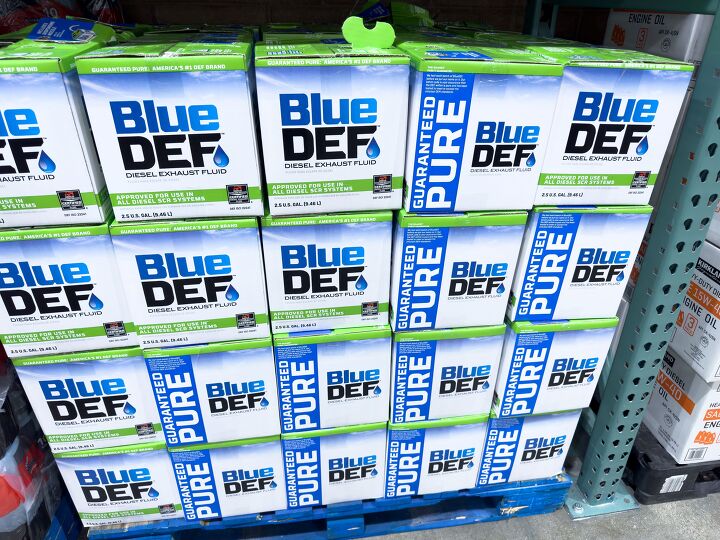
An HD pickup may have a tank sized up to 10 gallons, whereas a commercial semi could be closer to 30 gallons. Considering that diesel exhaust fluid tends to come in 2.5-gallon jugs (unless you're hitting a well-equipped truck stop), they’re not ultra convenient to haul around or pour. As previously mentioned, they also pad the price of running formerly economical diesel powertrains.
“The Trump Administration is fighting for farmers and truckers, as evidenced by the EPA’s new DEF guidance which is a big win for the millions of small businesses who rely on diesel engines — and who have been crushed by years of costly Green New Scam regulations,” said SBA Administrator Kelly Loeffler. “This change will save family farms an estimated $727 million per year and offers vital financial and operational certainty. I’m proud to work alongside EPA Administrator Lee Zeldin to reduce red tape for our nation’s producers and deliver real relief for hardworking Americans.”
[Images: Yingna Cai/Shutterstock; Tada Images/Shutterstock; Magsi/Shutterstock; The Image Party/Shutterstock]
Become a TTAC insider. Get the latest news, features, TTAC takes, and everything else that gets to the truth about cars first by subscribing to our newsletter.
Consumer advocate tracking industry trends and regulations. Before joining TTAC, Matt spent a decade working for marketing and research firms based in NYC. Clients included several of the world’s largest automakers, global tire brands, and aftermarket part suppliers. Dissatisfied, he pivoted to writing about cars. Since then, he has become an ardent supporter of the right-to-repair movement, been interviewed about the automotive sector by national broadcasts, participated in a few amateur rallying events, and driven more rental cars than anyone ever should. Handy with a wrench, Matt grew up surrounded by Detroit auto workers and learned to drive by twelve. A contrarian, Matt claims to prefer understeer and motorcycles.
More by Matt Posky









Comments
Join the conversation
I wonder what the environmental impact is of the dozens of DEF jugs I've used, the replacement of my faulty DEF system and 2 replacement DPF filters are versus the impact if my truck didn't have all this nonsense?
Anyone looked at the impact of manufacturing and transporting DEF fluid?
102,000 miles on my 2021 Ram EcoDiesel, which uses DEF. Never had a problem. Once about every 10,000 miles it needs 2.5 gallons. When towing its 5 gallons per 10,000 miles. And DEF is easily filled at truck stop when towing camper. Its also available in bulk containers and small 2.5 gallon jugs. As for running out: You've got to be a MAGOT moron not to take notice of the several low DEF warnings. You've got to be a real IDIOTrump
Pros: No diesel stink. 30 mpg on highway when not towing and at 75 mph.
Con: DEF now costs $3.00 to $5.00 a gallon. Possible mechanical issues (that I've not had).