
2027 BMW 3 Series Previewed Via All-Electric i3 50 xDrive

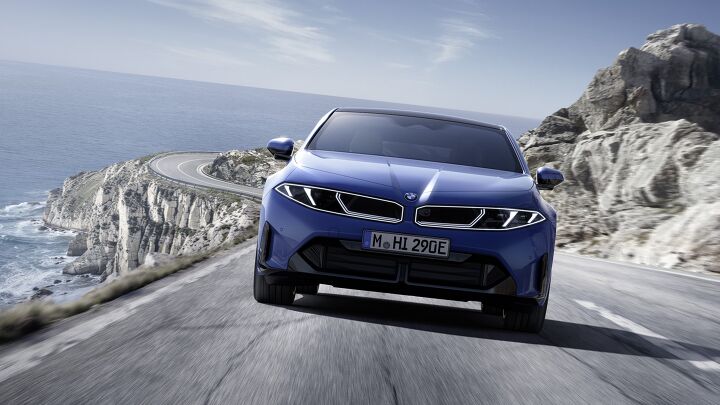
The 2027 BMW 3 Series has been revealed and it’s basically the production version of its Neue Klasse EV concept that debuted in 2023.
While there are supposed to be forthcoming gasoline and hybrid variants, BMW is leading with the all-electric i3 model. The automaker hasn’t said much about any non-electric models and may not be able to until they’re nearing production. Technically speaking, they haven’t even been officially confirmed by the automaker. But BMW would be insane not to bring them to market.
Sadly, the whole industry spent the last decade convinced that EVs would be the default powertrain by 2025. However, they failed to convince the average motorist in the process — resulting in development cycles that prioritized all-electric models. This is why you saw Stellantis leading with the all-electric Dodge Charger (despite most people wanting the gasoline model) and presumably why BMW has done the same thing with the 3 Series.
For now, the entirely new i3 is all the company has to offer. But we expect to see turbocharged variants fielding a smallish four-cylinder and inline-six eventually. We also assume that BMW will offer an electric version slotted beneath the EV they're currently previewing. But that unit may not come to our market, as the industry seems keen to try and maximize profits on low-volume electrified models by keeping the most expensive variants at the forefront. This is especially true in markets where EVs don’t get much love to begin with — like North America.
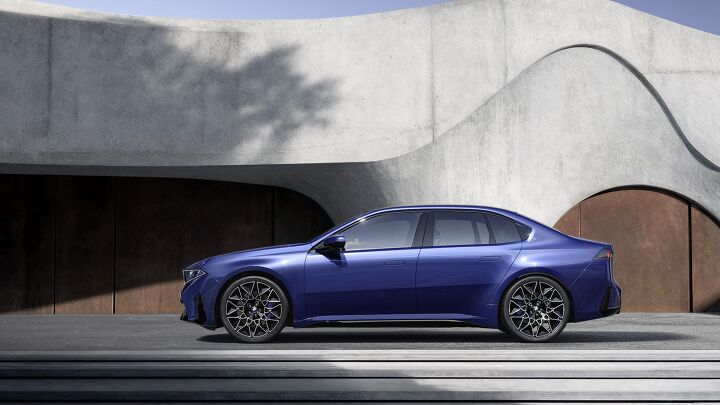
The model being featured here is the 2027 BMW i3 50 xDrive and it features two electric motors. That’s one per axle, offering a combined 463 horsepower and 476 pound-feet of torque. This makes sense because that’s basically the same recipe for the new iX3. However, BMW has hinted that there will also be a rear-drive version serving as the base model and a quad-motor M variant for those on the quest for peak performance.
Based on its similarities to BMW’s electrified crossover, we can presume the car will come with a 109-kWh battery pack. The automaker has only stated that it anticipates the i3 offering a claimed range of “up to” 559 miles on a single charge (WLTP test cycle). But subsequent statements have pegged this particular model at 440 miles (EPA estimate).
While that’s extremely good, we’ll wait to see how testing plays out. European estimates tend to be much higher than those done in the United States and both are often quite optimistic relative to real-world driving conditions.
Still, even being in the ballpark of 400 miles is genuinely impressive and the company says it also expects charging times to come down from its last batch of EVs. This is thanks to the battery’s 800-volt architecture, which allows it to utilize 400-kilowatt DC fast-charging — assuming owners can find one.
The car utilizes an integrated computer “superbrain” it calls the “Heart of Joy.” That technically makes the i3 the latest evolution in software defined vehicles. The unit allegedly works with other performance computers responsible for shaping the driving experience. It allegedly impacts everything from braking response and steering inputs, to how the car manages energy consumption and recuperation. The so-called Heart of Joy is likewise responsible for the user interface, which BMW claimed would be significantly faster than before.
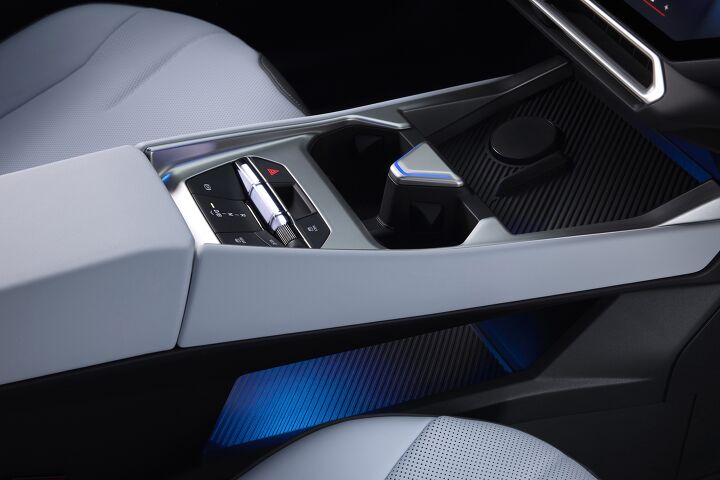
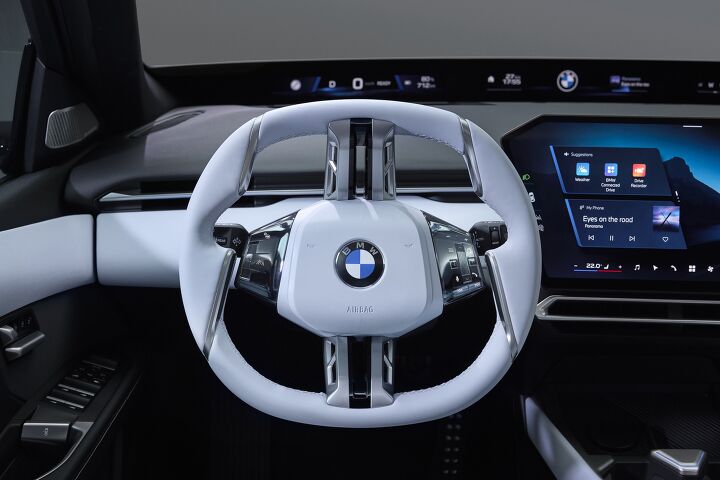
Software defined vehicles are still polarizing, however. Many drivers dislike over-the-air updates and have concerns about reliability, repairability, and data harvesting. Making cars more like smartphones hasn’t been universally appreciated and the same may go for the 3 Series’ new interior — which appears to be an all-you-can-eat buffet of touch controls.
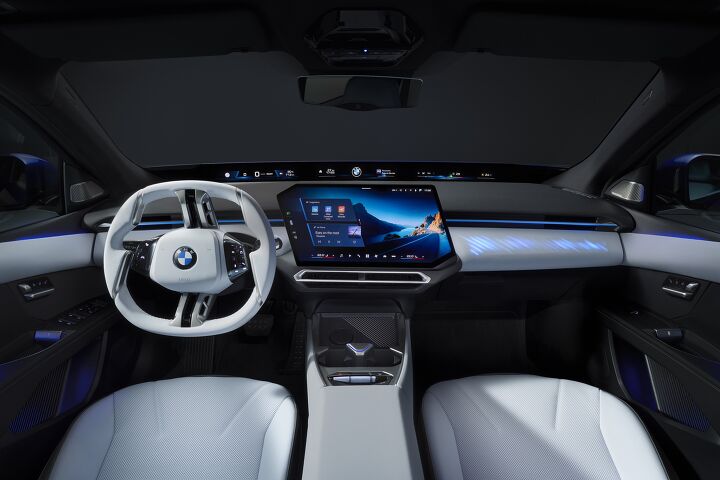
The steering wheel (which isn't round) retains traditional turn signals and wiper stalks. But every other control looks to be either haptic feedback or integrated into the 17.9-inch touchscreen that serves as the infotainment center. There isn’t even a typical instrumentation cluster positioned in front of the driver. Instead, BMW has opted to make a dashboard spanning digital display bar responsible for providing information on your current speed and fuel level.
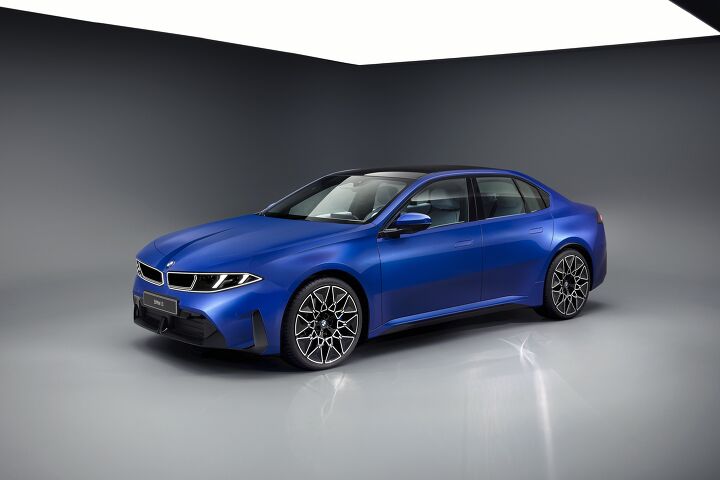
As for the styling, it’s a departure from the current 3 Series. But BMW believes it retains enough design cues so as to not confuse fans of the brand.
From BMW:
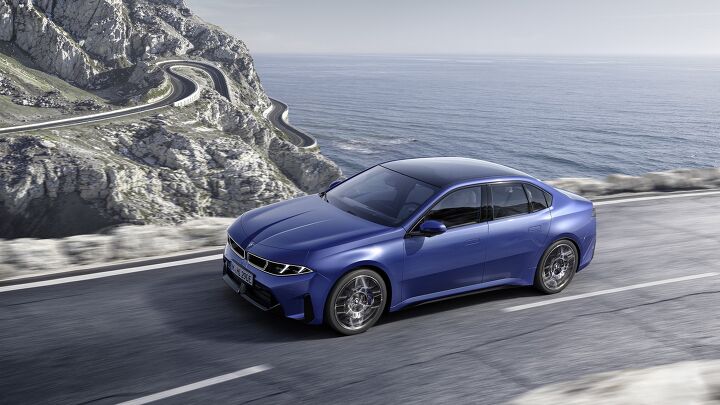
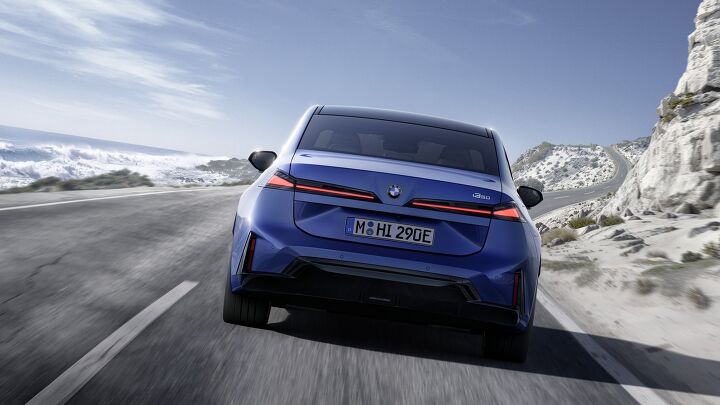
As a representative of the new design language, the new BMW i3 is immediately recognisable as a BMW 3 Series — assured, dynamic and intelligent. The hallmark BMW sporty silhouette proportions are reflected in the new 2.5-box design. Notable features are the long wheelbase, the greenhouse that slopes towards the rear and the short overhangs. The four-eyed face is familiar, yet still new. The BMW radiator grille and twin headlights merge into an innovative light signature, creating a powerful and expressive unit. The rear end, featuring prominently horizontal rear lights, further highlights precision and technological progress. The prominently flared wheel arches emphasise the sporty, wide stance of the new BMW i3. The interior offers a high level of spaciousness and makes full use of all the possibilities of the vehicle concept, which is consistently geared towards electromobility. At the same time, the interior represents driver-oriented sportiness. The new BMW Panoramic iDrive not only defines the modern and inviting interior, but also ushers in a new level of hallmark BMW driver orientation.
To be frank, nothing about the interior screams next-level “driver orientation.” The interior is clearly minimalist EV slop with synthetic-leather (see: plastic) seats. But that doesn’t preclude it from being sufficiently functional for daily duty, which is something that will need to be assessed during testing.
Things seem much better on the outside. It’s not as pretty as the original Neue Klasse concept. But a lot of the design aspects have carried over into the production model. Front and rear overhangs are extremely small and the car measures in at an overall length of 187.4 inches, with a 114.1-inch wheelbase. That’s slightly bigger than the current 3 Series, with a little over an inch of added height. Our assumption is that BMW needed that space to make room for the battery pack.
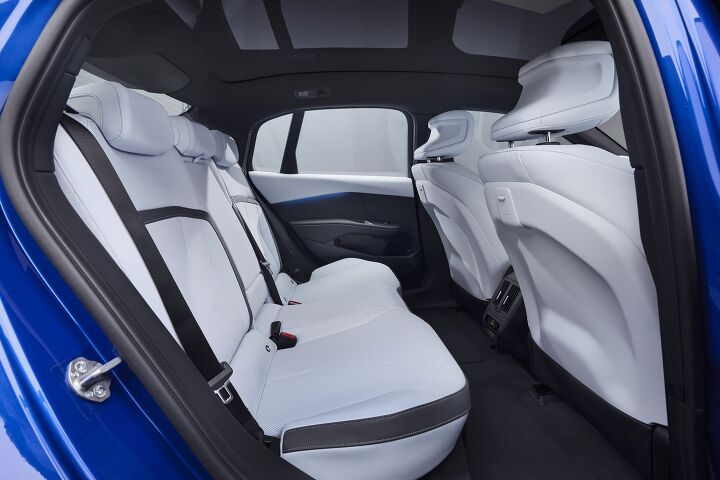
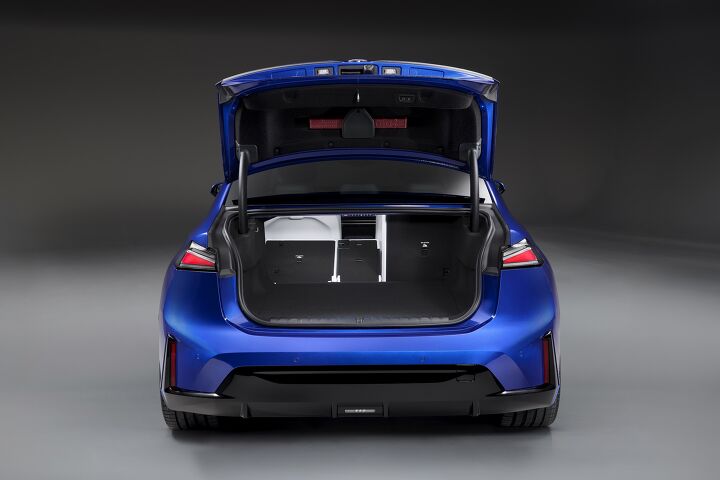
Since this is the EV model, it comes with a frunk. But the available space looks to be quite small. Thankfully, trunk space appears ample with good access. Rear seats can likewise be folded down to create a pass-through cargo compartment.
Wheels are a monstrous 21 inches with just a sliver of rubber wrapped around the outer edge. Power steering is entirely electric, dampers are active (unlike the iX3) and the car comes with a multi-link rear suspension. That’s slightly reassuring and suggests that BMW made a genuine effort to make the i3 a sportier to drive than the very similar crossover. But we won’t know how big of a difference that makes until they’ve both been driven.
Pricing hasn’t been announced but everyone seems to be expecting the electrified i3 50 xDrive to start above $50,000. How that will play out for the other trims and powertrains is anybody’s guess. But the car should land on our market by the end of this year. By then, we should have a better idea about variants and pricing.
[Images: BMW]
Become a TTAC insider. Get the latest news, features, TTAC takes, and everything else that gets to the truth about cars first by subscribing to our newsletter.
Consumer advocate tracking industry trends and regulations. Before joining TTAC, Matt spent a decade working for marketing and research firms based in NYC. Clients included several of the world’s largest automakers, global tire brands, and aftermarket part suppliers. Dissatisfied, he pivoted to writing about cars. Since then, he has become an ardent supporter of the right-to-repair movement, been interviewed about the automotive sector by national broadcasts, participated in a few amateur rallying events, and driven more rental cars than anyone ever should. Handy with a wrench, Matt grew up surrounded by Detroit auto workers and learned to drive by twelve. A contrarian, Matt claims to prefer understeer and motorcycles.
More by Matt Posky










Comments
Join the conversation
BMW seems to have gotten the price/value equation right on the iX3, as they have added another shift in order to meet demand.
It feels like BMW really nailed it with the neu classe (iX3 and new 3-series). My sense is M-B is firmly in their rear view mirror.