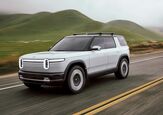


Gas War: Europe Reaches Agreement On 2035 Combustion Ban


The Czech Republic, which currently holds the European Union presidency, has announced that negotiators from member states, the European Parliament, and the European Commission have finally come together to agree upon the often-mentioned combustion ban. By 2035, every automaker operating within the continent will be required to cut emissions by 100 percent – effectively mandating what type of vehicles can be sold there.
"We have just finished the negotiations on CO2 levels for cars," French MEP Pascal Canfin, head of the European parliament's environmental commission, tweeted this week. “Historic EU decision for the climate which definitively confirms the target of 100 percent zero emission vehicles in 2035 with intermediary phases between 2025 and 2030.”
If you’re thinking that this already happened, you’d be correct – in a sense. EU leadership has been claiming all businesses need to embrace strict emissions standards for years with members frequently pitching the premise of restricting access for combustion vehicles. This has involved concepts like geo-fenced cities that only permit all-electric cars that are connected to the Internet and prohibiting automakers from selling anything with an exhaust pipe after a set phase-out period.
That came to a head in 2021, when the European Commission proposed a 55-percent cut in CO2 emissions from automobiles by 2030 versus the current levels. That’s much higher than the previous, 37.5-percent reduction slated for the same timeframe. But it did include the same ban on combustion-engined vehicles that had been scheduled for 2035.
"This is the sort of ambition we've been waiting to see from the EU, where it's been lacking in recent years," Helen Clarkson, chief executive of the EU-backed and activist-operated Climate Group, said at the time. “The science tells us we need to halve emissions by 2030, so for road transport it's simple – get rid of the internal combustion engine.”
The update is that the European Parliament and European Council have finally reached a deal and can now begin the formal process of having member states adopt the proposal into law, along with the necessary enforcement. Though it technically cannot force businesses to become carbon neutral, despite claims to the contrary from EU leadership, because EVs still produce pollution indirectly from the power stations that produce their energy. This is also true of the manufacturing process, which is often less environmentally friendly than what’s required for traditional combustion vehicles due to the mining and industrial effort required to assemble battery packs.
"It's the start of a big transition of the European Union," said Jan Huitema, the parliament's primary negotiator.
Though it may also be an unpopular one. In recent years, the European Commission has appeared singularly focused on creating a “green economy,” and has gotten pushback from other parts of the world that don’t want its role as the world’s largest trading bloc to influence their products. Europe is effectively forcing global automakers to transition toward EVs at an accelerated pace. But nations where driving distances tend to be longer (e.g. Canada, Mexico, and the U.S.) have shown they’re a little less eager to adopt them. Some carmakers have addressed this, suggesting they’ll have to build more models to cater to varied consumer tastes. But others have said they’re fine going all-electric, even if it means losing business in parts of the world where the energy grid is less robust or the residents simply aren’t sold on EVs being a desirable alternative to gasoline or diesel-powered vehicles.
Meanwhile, Volkswagen, Stellantis, Ford, Bentley, and Jaguar have all said they’ll stop selling combustion cars in Europe by 2035 – if not beforehand. Other automakers have expressed a desire for the EU to give clear-cut and concrete guidance on the issue, so they can hopefully comply without incurring any financial penalties.
However, there are already a few exceptions to the new rules. Manufacturers that produce small-batch specialty vehicles will be eligible for a one-year delay for all emission targets. This apparently includes high-end carmakers catering to a wealthy clientele – like Lamborghini – despite the fact that some of these brands would be owned by much larger companies (VW in the case of Lamborghini) moving millions of cars per year.
Additionally, member states pushed for a non-binding item that calls on the European Commission to allow vehicles running exclusively on carbon-neutral fuels after 2035 to still be registered. While we’ve seen some of the perils of producing corn-based ethanol firsthand, biofuels are getting a lot of attention in Europe right now. Companies are also working on chemically hydrogenating carbon dioxide to create synthetic alternatives, with German companies arguably leading the charge. But there are a lot of lingering questions about how the above solutions can actually be made truly carbon neutral.
While the general plan is getting a lot of praise from various lobbying groups, government institutions, and environmental activists, the plan can be viewed as contentious and increasingly political. Citizens seem split on the matter and often along party lines, with dissenters concerned that this could force them into buying vehicles they don’t really want to pay for. However, there are also voices claiming that this will effectively obliterate the European economy and cripple the automotive sector.
"With today’s agreement, a 'Havana effect' is becoming more realistic," Jens Gieseke, a lawmaker and negotiator from the conservative European People’s Party, was quoted as saying by Automotive News. "After 2035, our streets might become full of vintage cars, because new cars are not available or not affordable. Today's deal slammed shut the door to new technological developments and put all the eggs in one basket. This is a mistake."
That premise references what happened in Cuba after trade restrictions and sweeping regulations made it cost-prohibitive to import new vehicles – forcing residents to maintain vintage cars for decades even when replacement parts became unavailable. While that seems a little too specific to be replicated perfectly by the EU, valid concerns remain about what kind of tech support will be offered for EVs as they get long in the tooth (see: Unprofitable) and how healthy the market will be in such an unyielding regulatory environment.
That said, there are still plenty of prominent voices backing the EU’s decision. Many just happen to be linked to environmental groups that are supported by some of the largest corporations in the entire world. One of the best examples of this is the environmental lobbying group Transport & Environment (T&E). In addition to being funded directly by the European Commission, it’s also financially backed and supported by environmental groups who are – in turn – often funded by governments or massive corporations of their own.
"The days of the carbon spewing, pollution belching combustion engine are finally numbered. It's 125 years since Rudolf Diesel revolutionized engine efficiency, but lawmakers have decided the next chapter will be written by the cleaner, better electric vehicle. For the planet and human health, that can’t come fast enough," stated Julia Poliscanova, senior director for vehicles and e-mobility for T&E.
[Image: VanderWolf Images/Shutterstock]
Become a TTAC insider. Get the latest news, features, TTAC takes, and everything else that gets to the truth about cars first by subscribing to our newsletter.
Consumer advocate tracking industry trends and regulations. Before joining TTAC, Matt spent a decade working for marketing and research firms based in NYC. Clients included several of the world’s largest automakers, global tire brands, and aftermarket part suppliers. Dissatisfied, he pivoted to writing about cars. Since then, he has become an ardent supporter of the right-to-repair movement, been interviewed about the automotive sector by national broadcasts, participated in a few amateur rallying events, and driven more rental cars than anyone ever should. Handy with a wrench, Matt grew up surrounded by Detroit auto workers and learned to drive by twelve. A contrarian, Matt claims to prefer understeer and motorcycles.
More by Matt Posky







Comments
Join the conversation
Redapple, does Russia pay you by the comment, or are you being used by them like EBflex and do it for free?
For everyone who says EV's are impractical and that an EV-dominated car market can't be done... China is in the process of doing it. Everybody dragging their heals here is just helping to position us to fail in the long term. It will take a concerted effort to catchup with China.