


Ford Design Exits and Entrances
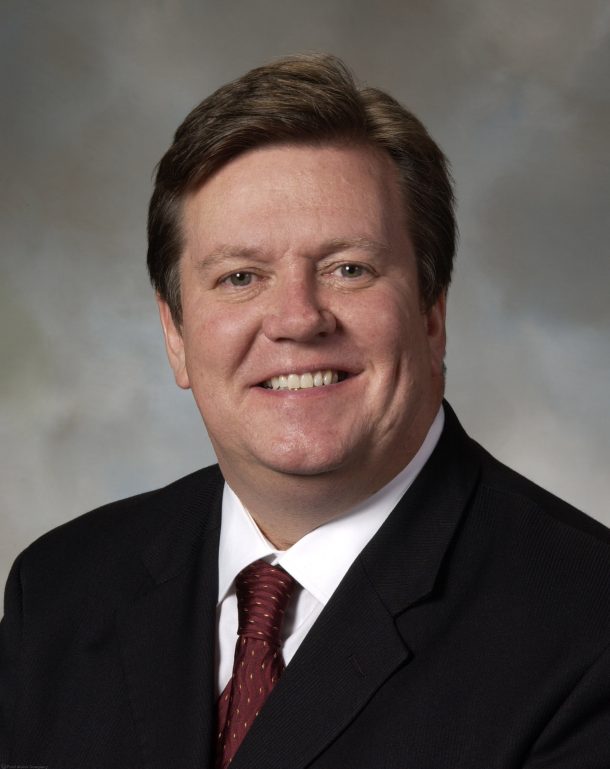
Ford design leader Moray Callum is taking his pen and going home.
Callum will call it a day after 38 years as one of the auto industry’s preeminent designers. With more than half his career at Ford, Callum vacates his post as vice president, design, for Ford and Lincoln brand vehicles worldwide. His successor is Anthony Lo, most recently vice president, exterior design, at Renault. Callum will leave on May 1, after a one-month transition period with Lo, who starts April 1.
Callum’s influence at Ford has been profound, especially the work he and his team did recently, which included the 2021 F-150, Mach-E, new Bronco, and Bronco Sport. A redefined product line at Lincoln led to the brand’s resurgence. Other successes attributed to Callum included the 1999 Super Duty truck, 2011 Explorer, 2005 Mazda MX-5, 2007 Mazda CX-7, 2015 Mustang, and F-150, and 2016 Mustang GT.
“Moray’s influence is seen on streets around the globe,” said Hau Thai-Tang, Ford’s chief product platform and operations officer, to whom Callum reported. “He brought and sustained a design vision and leadership to studios – including Ghia in Italy and Mazda in Japan, in addition to Ford and Lincoln – that has elevated the beauty, meaning and function of cars, trucks and SUVs for millions of customers.”
In the late 1980s, Callum worked as a consultant designer at Ghia SpA in Italy, where he guided the development of dozens of concept vehicles, including the Ford Ghia Via and the Aston Martin Lagonda Vignale. He also worked for Chrysler in the United Kingdom and for PSA Peugeot Citroën in France on passenger and commercial vehicles.
Scotsman Callum had two tours of duty with Ford, for a total of 20 years. From 1995 until 2001, he joined Mazda for five years to head their design, at a time when Ford was a partner with and had ownership interest in Mazda. Callum returned to Ford in 2006 as executive director, design, for the Americas, and was promoted to his current role as VP – design in 2014.

Anthony Lo arrives at Ford at a time of great management changes, new product development, and a concerted effort to be the market leader. Hong Kong-born, Lo got his break in the industry in 1987, when a professor at the Royal College of Art in London offered him a position at Lotus Cars. There, Lo designed the Lotus Carlton, at the time the world’s fastest car of its type.
Lo’s familiarity with Fords began in Hong Kong, where the brand has a strong presence. Later, he discovered Ford’s popularity in England and on the Continent, noting that models such as the Sierra RS Cosworth made a lasting impression on him.
Lo was instrumental at Renault for the past 10 years, developing the company’s design strategy. The basis for a series of award-winning concept cars, as Lo and his team implemented the strategy in Renault’s all-new global lineup of cars and SUVs. The second-generation Renault Captur, and the Dacia Duster 2, are two production vehicles which Lo spearheaded.
Joining Saab in 2000, Lo oversaw Saab, Opel, and Vauxhall as General Motors Europe’s director of advanced design from 2004 to 2010. Prior to that, Lo was with Mercedes-Benz in Japan, working on the company’s Maybach and S-Class vehicles, as well as Audi in Germany.
[Images: Ford]

With a father who owned a dealership, I literally grew up in the business. After college, I worked for GM, Nissan and Mazda, writing articles for automotive enthusiast magazines as a side gig. I discovered you could make a living selling ad space at Four Wheeler magazine, before I moved on to selling TV for the National Hot Rod Association. After that, I started Roadhouse, a marketing, advertising and PR firm dedicated to the automotive, outdoor/apparel, and entertainment industries. Through the years, I continued writing, shooting, and editing. It keep things interesting.
More by Jason R. Sakurai











Comments
Join the conversation
A great run - enjoy retirement, Mr Callum. Mr Lo appears to be an able replacement. Good luck to him.
As a kid I wanted to grow up and be this guy, a car designer. I even went as far as sending my "designs" to Ford, GM and Chrysler with surprisingly positive feedback. The ultimate ego stroke would be to see my designs driving around everywhere Good luck, Mr. Callum, I liked your work