


Rare Rides: The 1978 Dodge Magnum XE, a Holdout Coupe

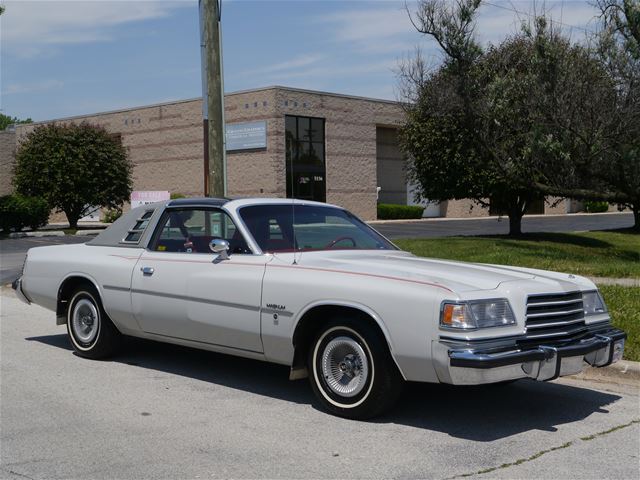
Much like the recently featured R-body New Yorker, today’s Magnum was a holdout in an automotive world that had already embraced downsizing and fuel efficiency.
Let’s take a look at a very short-lived coupe nameplate.

Introduced for the 1978 model year, Magnum was an all-new name for Dodge. The large and contemporary coupe ran alongside its predecessor, the Charger, for a single model year. The Charger’s baroque luxury styling, which debuted in 1975, was old hat by the latter part of the decade, and changes were required.

Not too flush with cash at the time, Chrysler once again used the B platform from the Charger (which debuted in 1962). The styling was much different to the outgoing Charger, as crisp corners and flush lamp covers replaced the excessive ornamentation of the disco era. Opera windows and vinyl roofs were still in play, with optional cut-outs in the form of a sunroof or T-top. Not for the basic coupe shopper, the Magnum came standard with copious power equipment that included brakes, steering, and the seats. The more basic luxury trim was the XE, while GT upped the ante with the most powerful 400 cubic inch engine. Additional features found on the GT included a faux metal dash plate instead of faux wood.

Power was carried over directly from the Charger, and largely flouted efficiency. The smallest 318 V8 (5.2L) offered the Lean-Burn system of terrible repute, but the 360 (5.9L) and 400 (6.6L) V8 engine options went with two- or four-barrel carbs. The 400 was only available for 1978, as in 1979 Chrysler discontinued all big block V8 engines.

The Magnum was mostly a compliance offering for Dodge. The company needed a car for Richard Petty to drive in NASCAR races. Starting in 1978, the ’74 Charger model Chrysler had run in races was no longer compliant with the rules. A smoother design was required, and work started from a ’75 Charger design to get there. In the second half of 1977, the Magnum’s design was settled, test cars were built by Petty’s company, and Dodge had a new coupe to sell.

The Magnum’s design was not suited to racing, however. The 360 V8 had not been developed as a racing engine previously, and was not well-suited to the task. More crucially, the Magnum’s design meant it was not stable at especially high speeds. Even before the 1978 season started, Petty declared “The Magnum is undrivable at 190 miles per hour.” Later in the season, both the Petty and Neil Bonnett Mopar teams switched to Chevrolet and Oldsmobile for their race cars.

In 1979, the now pointless Magnum found itself on the chopping block during only its second model year. Its replacement was the J-body Dodge Mirada for 1980, which was smaller and based on a derivation of the Dodge Diplomat’s M-body.

Given the difficulty of finding a Magnum for sale in modern times, this white-on-red T-top Magnum was indexed on a sale site in 2016. In excellent condition it asked $19,900.
Images: [ seller]
Interested in lots of cars and their various historical contexts. Started writing articles for TTAC in late 2016, when my first posts were QOTDs. From there I started a few new series like Rare Rides, Buy/Drive/Burn, Abandoned History, and most recently Rare Rides Icons. Operating from a home base in Cincinnati, Ohio, a relative auto journalist dead zone. Many of my articles are prompted by something I'll see on social media that sparks my interest and causes me to research. Finding articles and information from the early days of the internet and beyond that covers the little details lost to time: trim packages, color and wheel choices, interior fabrics. Beyond those, I'm fascinated by automotive industry experiments, both failures and successes. Find me on Twitter, @CoreyLewis86.
More by Corey Lewis









Comments
Join the conversation
Nate--Not that young because I remember the new 4 door 57 Chrysler Windsor with dual headlights my father bought because my mother loved the styling, the tutone dark blue and white with push button drive. The metallic blue was faded in less than 2 years and it was falling apart. My father wished he would have kept our green two door 51 Dodge or bought a new 57 Chevy. My memory of the late 70s Chrysler products was a coworker with a beautiful light gray 78 Cordoba he bought new with a maroon landau top and red interior that during the first two years of ownership went thru 3 automatic transmissions and the dealer invoicing repairs on power seats for a car with manual seats while still not repairing his transmission. I also remember looking at a new 75 Chrysler Cordoba with loose threads on the upholstery and rust on the bottom of the frame railings that you could flake off pieces of the railings along with another new Chrysler in the same dealership with bubbles in the paint and over spray. Chrysler has had poor quality for decades.
As a kid, I thought those plastic straked headlamp covers were the coolest thing EVER. Very Euro.