
Japanese Automakers: Trump's Steel Tariff Will Cost You More at the Dealership

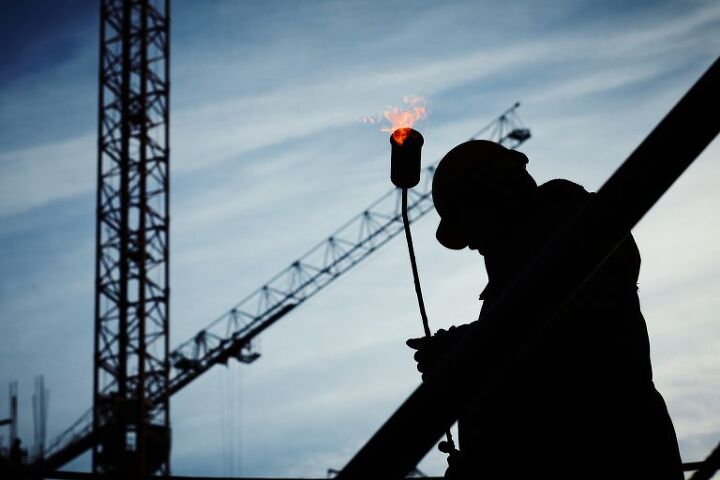
Earlier this month, President Trump signed an executive order imposing a 25 percent tariff on foreign steel and a 10 percent tariff on foreign aluminum. Hoping to receive an exception, the Japanese auto lobby warned that the U.S. import tax would definitely inflate the price of models built by the companies it represents. That’s bad news.
However, the White House has already omitted its NAFTA partners from the tariffs, adding that it would consider further exceptions based on countries’ contributions to U.S. national security, military alliances, trading history, and how much they pay into strategic alliances like NATO.
While Japan is a longtime trading partner with the U.S., there currently exists a $69 billion deficit between the two countries. Trump also bemoaned Japan’s unwillingness to accept American imports. Still, the two have shared military alliances throughout the 20th century, with one ugly exception during World War II. They currently operate under the Treaty of Mutual Cooperation and Security and the U.S. currently considers the Japan one of its closest allies, despite it not being a NATO member — placing it in reasonably positive standing for tariff exceptions.
On Thursday, the Japan Automobile Manufacturers Association (JAMA) said it is anticipating what kind of exemptions might be made for U.S. trading partners beyond Canada and Mexico. Obviously, it hopes to be considered. While Trump’s strategy may be aimed at China, which accounts for almost half of the world’s steel production, Japan is the second highest steel exporter by volume and would be hit hard by the import fees.
According to Automotive News, JAMA Chair and CEO of Nissan Motor Co. Hiroto Saikawa said U.S. tariffs would likely drive up auto prices across the board. “If there is going to be a tariff levied, then everyone will have to raise their prices,” Saikawa said in a recent press conference. “I don’t think this will have any good impact.”
Trump’s initiative drew praise from domestic steel executives and union leaders, but the general mood in Washington is one of concern. Democrats are likely to oppose the president at every turn, and many Republicans have openly voiced their opposition to the tariffs, too. House Speaker Paul Ryan said he understood China’s steel dumping was a serious problem, and certainly unfair to other countries, while urging the president to exercise caution.
“I think the smarter way to go is to make it more surgical and more targeted,” he said.
Ryan said a blanket approach could have “unintended consequences.” As of now, those consequences have not yet fully manifested. Saikawa did not bother to estimate how much Japanese car prices might rise and noted that the country’s automakers try to source steel locally whenever possible. That could help suppress the price bloat, though there’s no way of knowing by how much until more time has passed.
“We do not see the full picture,” Saikawa said. “We have to wait and see.”
Consumer advocate tracking industry trends and regulations. Before joining TTAC, Matt spent a decade working for marketing and research firms based in NYC. Clients included several of the world’s largest automakers, global tire brands, and aftermarket part suppliers. Dissatisfied, he pivoted to writing about cars. Since then, he has become an ardent supporter of the right-to-repair movement, been interviewed about the automotive sector by national broadcasts, participated in a few amateur rallying events, and driven more rental cars than anyone ever should. Handy with a wrench, Matt grew up surrounded by Detroit auto workers and learned to drive by twelve. A contrarian, Matt claims to prefer understeer and motorcycles.
More by Matt Posky







Comments
Join the conversation
Tarrifs on imported steel but not imported cars makes it all the more likely cars will be made outside the US. It would be cheaper for Honda to build an Accord in China with Chinese sourced steel than it would be to make the same car in Ohio. Don't bother to argue that Honda wouldn't be able to assemble as good of a car in China as it does in Ohio.
http://www.abc.net.au/news/2018-03-12/trump-trade-tirade-wont-fuel-us-economic-revival-ian-verrender/9537314