

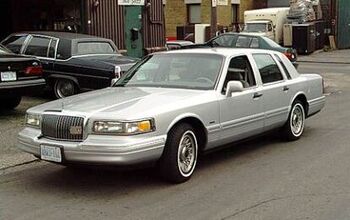
Vellum Venom: 1988 Lincoln Town Car Signature Series

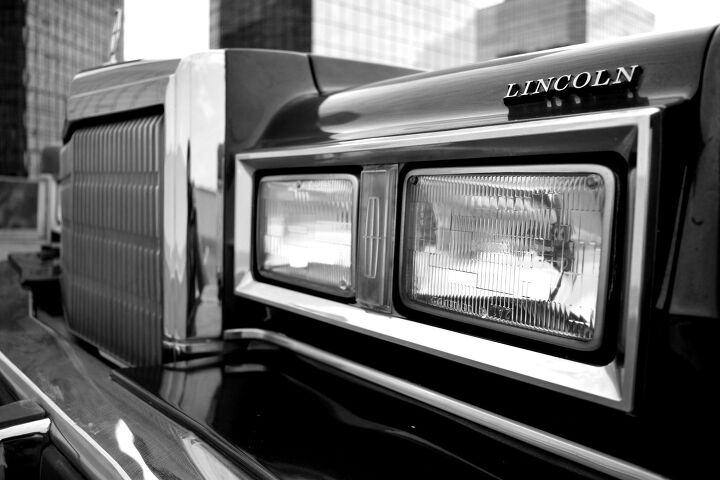
Tell me something: how can one fault Lee Iacocca for suggesting this vehicle — this blend of architecture, curves and beveled jewelry — generated over a billion dollars annually for Ford?
And how could you resist? There wasn’t a Lexus yet!
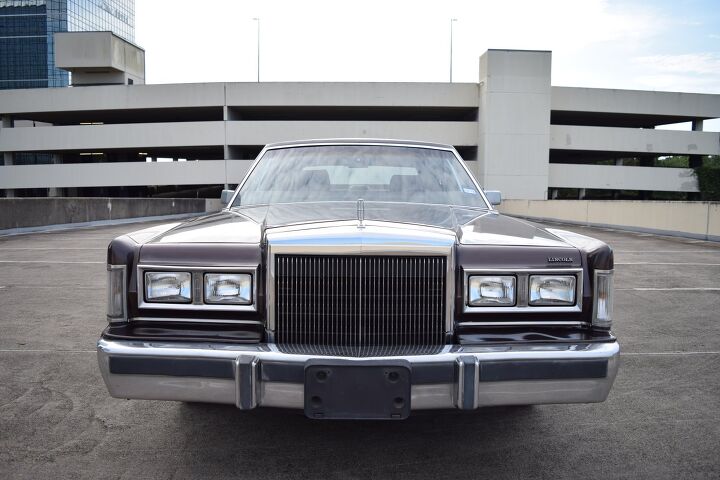
Make your boxy land yacht jokes while you can.
That’s because this is a complex machine. Look past the obvious stand-up grille and shelf-like chrome bumper. Those are the visual traps leading to stereotypes.
Unlike the Cadillac Bro-hams of the era (with their mostly flat features), the Town Car sported the peaky fenders of the 1961 Continental, the 1966 Continental’s coffin-nose, and flattened the 1969 Continental Mark III’s Rolls-Royce(ish) grille.
But that’s only what you see.
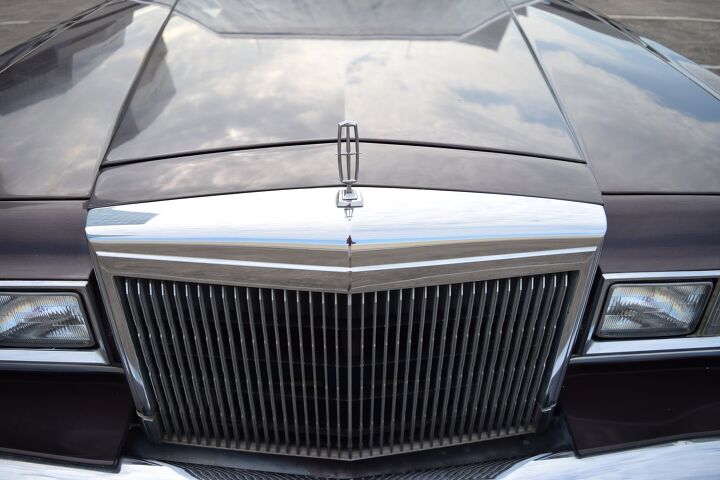
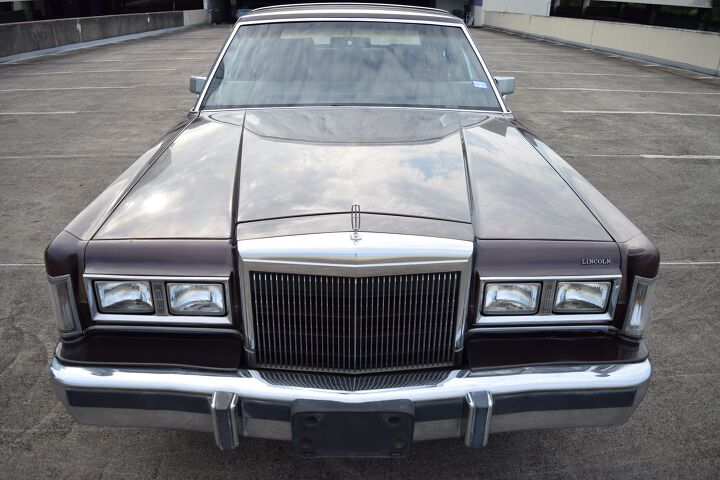
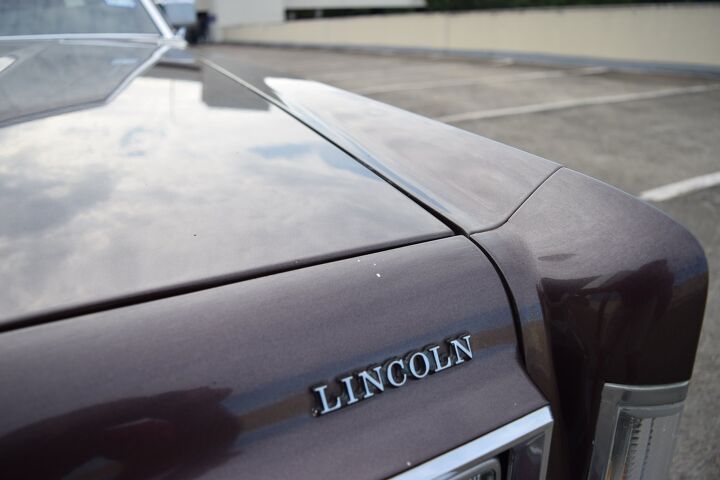
The Town Car’s headlights sink down and back from the grille, and there’s low points at each side of the power dome hood. Which is misleading, as the “dome” is merely the space where FoMoCo designers refused to carve negative area out from the hood.
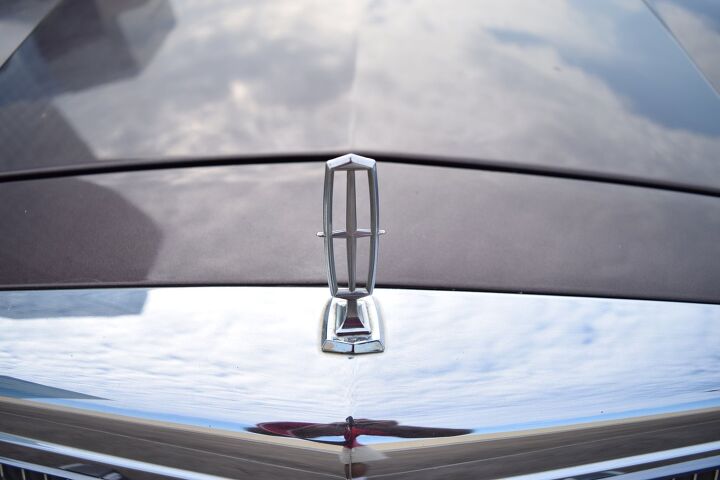
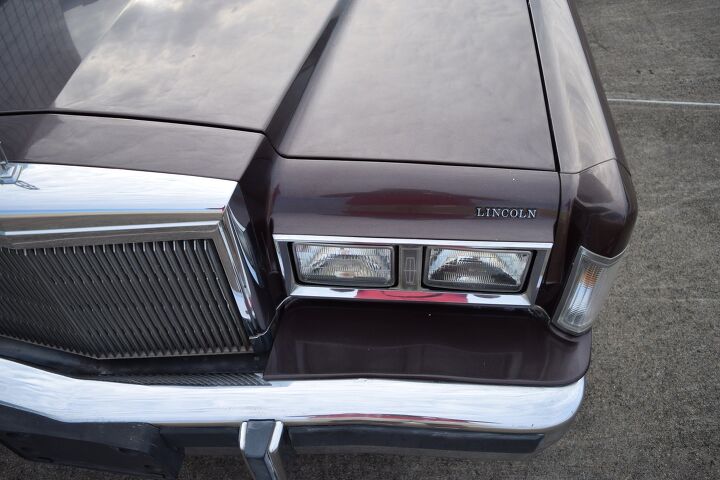
The Town Car was no stranger to Ford’s commitment to aerodynamics, even if it’s no 1986 Taurus.
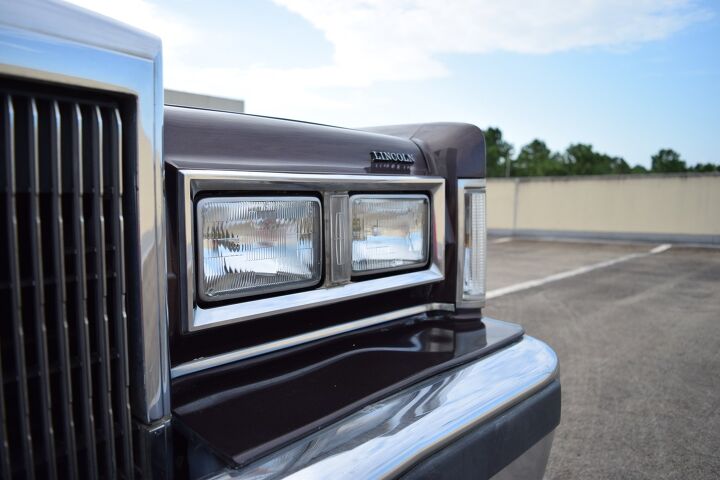
The chrome strip between that filler panel and the front facade is a nice touch. Too bad it hopelessly misses a smooth landing against the signal light’s chrome bezel.
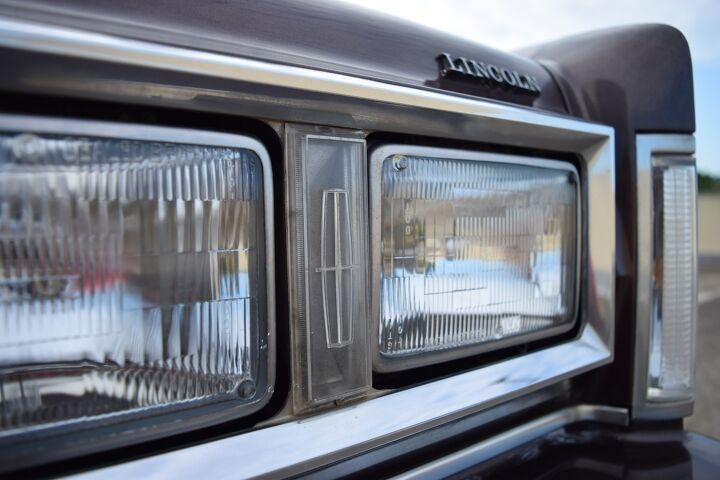
The strong bevel in the chrome headlight frame adds another layer to this supposedly “boxy” front end. And the beveled headlight-adjacent emblem is far from a cornball easter egg: it’s pure automotive jewelry.
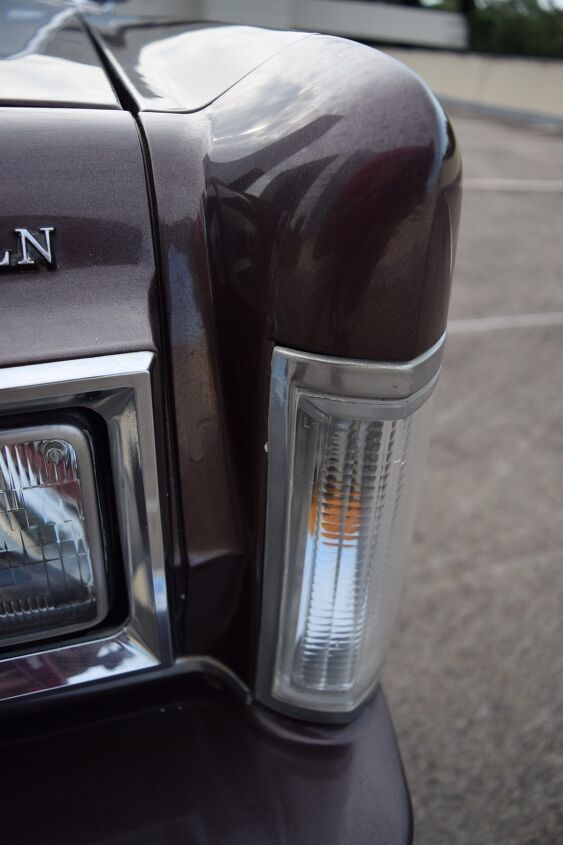
This stubbly fender is no match for the sleek architecture of the 77-79 Mark V’s blade fender, but it also looks less likely to impale unfortunate pedestrians.
But do you see that bevel in the center of the Town Car’s facade, just south of the headlights’ centerline?
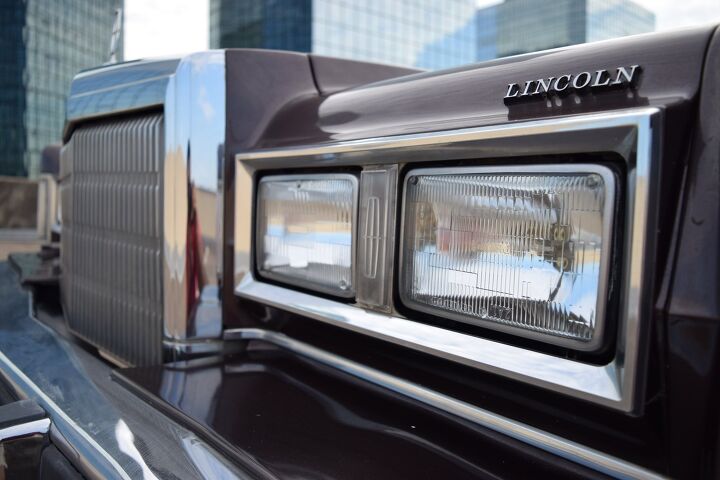
That bevel (far RH side) pays homage to the 1969 Mark III’s covered headlights, and damn near every Lincoln after that. Combined with the Town Car’s impressive utilization of negative area, and we got three decades of branding cohesiveness.
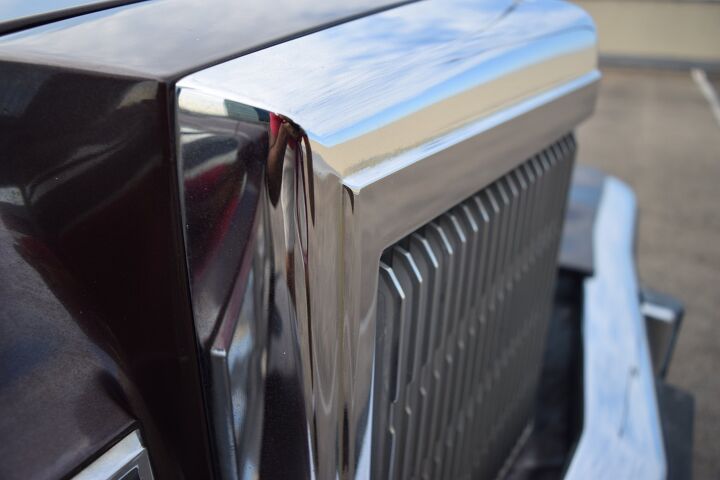
More bevels in the grille shell, along with a (1988 only) saw-tooth grille aping the Mark VII LSC.
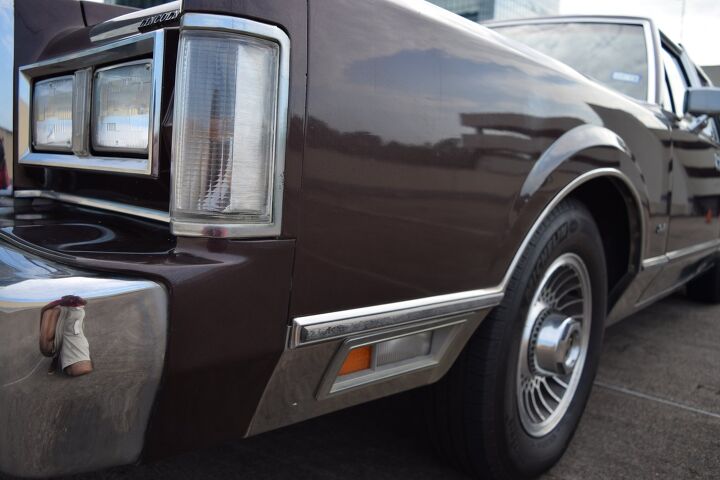
The aforementioned bumper-to-fascia chrome strip matches nicely here, and the quasi-integrated bumpers blend effortlessly with the wraparound, body-color filler panel.
Too bad about the fender’s optional (Signature Series or Cartier only) ritzy chrome paneling, as the abrupt stop gives new meaning to half-assery.
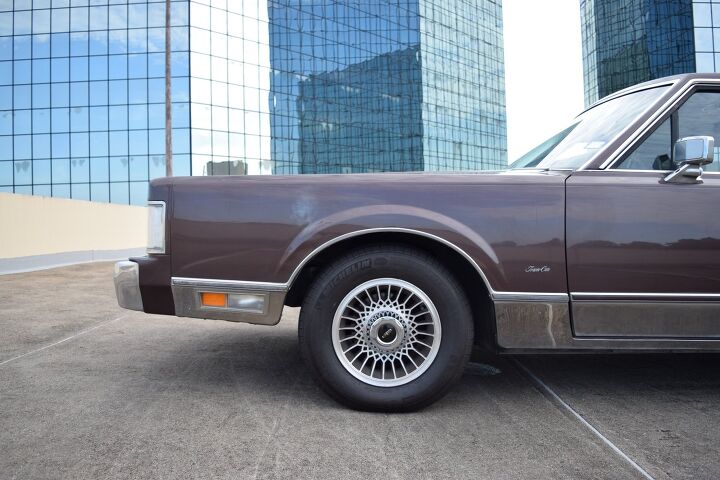
Indeed, the tacked-on chrome fails miserably over the spring-loaded chrome fenders of the 1982 Continental. But the overhangs are luxury car proper, and there’s a reasonable gap between the front wheel and the cowl (i.e. dash to axle ratio).
Perhaps the Cadillac Bro-ham’s exposed bumpers were a better idea, even if they didn’t force the American land yacht into the aerodynamic era.
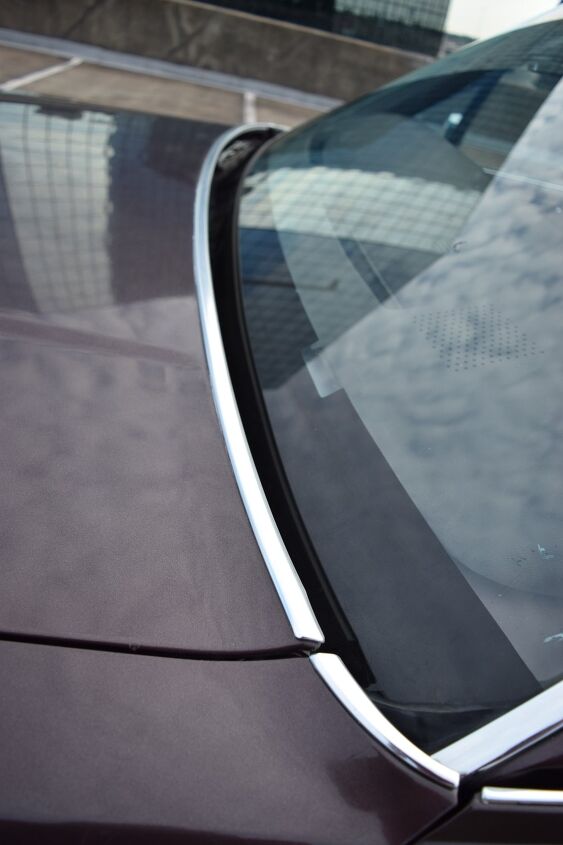
A clean and tidy cowl, with chrome trim atop the hood/fenders and hidden wiper arms.
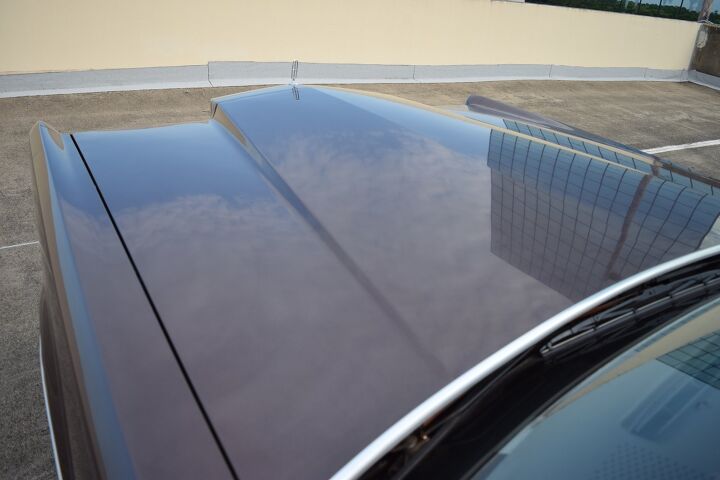
This hood is positively magnificent because of the negative area. Note how the grille and the fender tops are at the same height as the cowl (or close to it), and how everything below is negative area.
An elegant angle of a design era, lost.
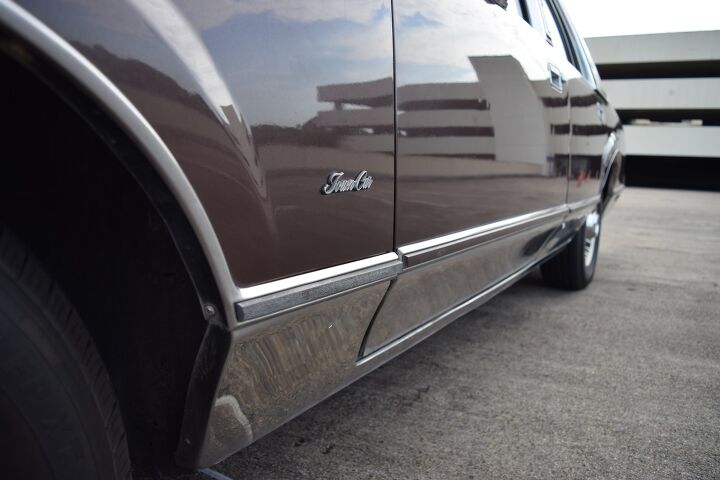
While horrid up front, the chrome paneling is fantastic on the Town Car’s center section. Credit the strong inward bend (borrowed again from the ’77-79 Mark V) before the rocker panels for adding excitement, and a logical transition from paint to chrome.
And don’t you wish emblems could be this small once more?
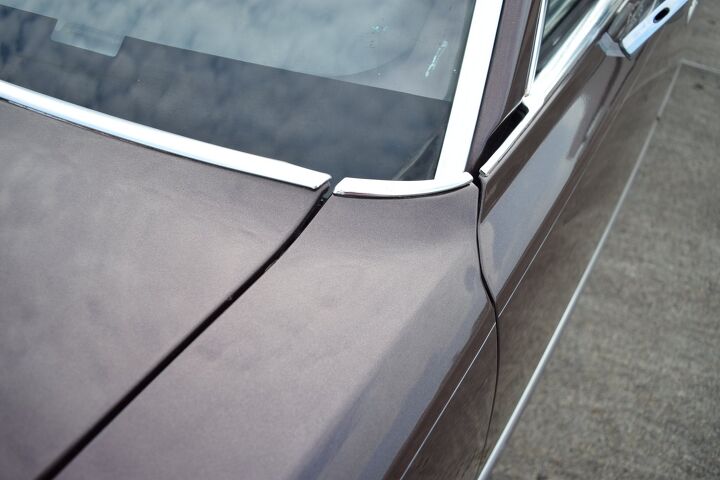
And while it’s boxy and tall, it’s kinda not: cowl height is downright earth-hugging compared to any modern car. Combined with a cab-backward design, the translates to a logical greenhouse with no need for DLO-FAIL.
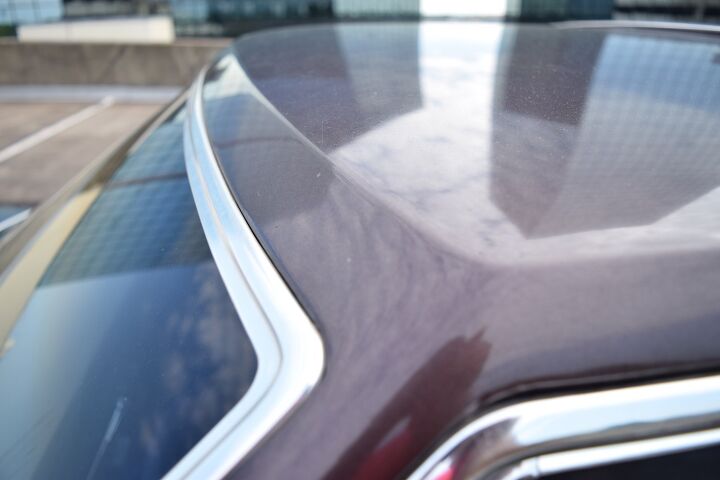
Shame about the boxy transition from windshield to roof. Things are going downhill from here.
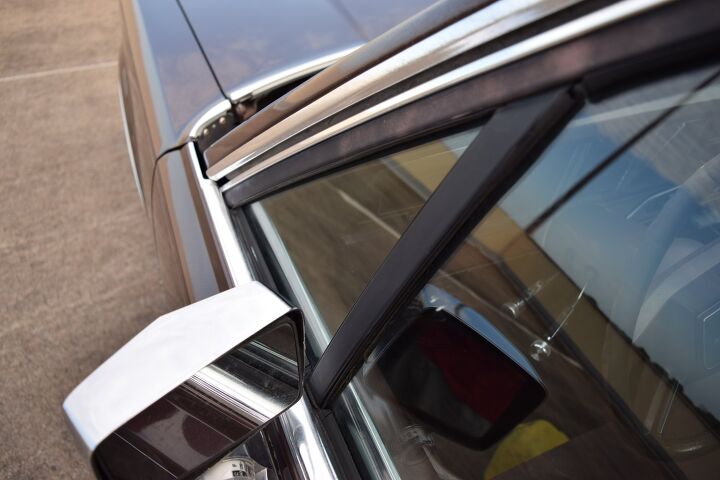
Look at all those elevation changes! If all the chrome, brown paint, black paint and glass were flush, this would be an excellent transition to the front end’s sculptural elements.

Digitally displayed HVAC controls were commonplace by 1988, but the Town Car kept a bit of old-school brilliance: a drum thermometer with a green LED backlight.
And lets not forget those power vent windows: instead of fixed black plastic, its a movable piece of glass!
Could it be a DLO FTW?
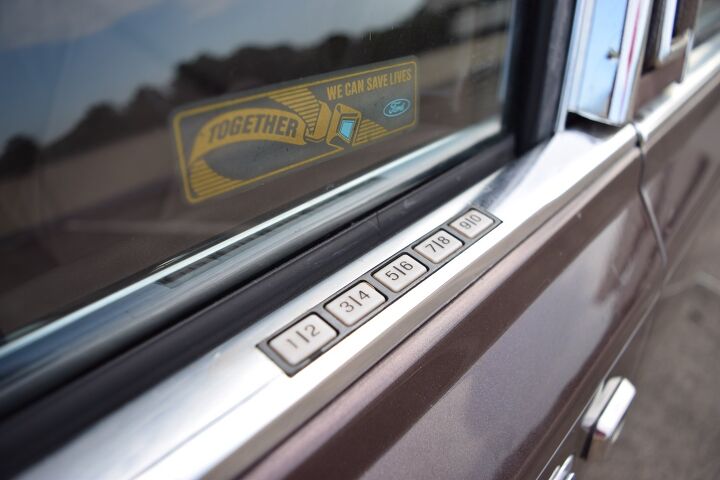
And together, we can also save door-mounted keypads for all Ford products thru the next millennia! Resting atop the window ledge, this gee-whiz tech from 1980 is a fantastic blend of engineering and design.
Too bad the flush numbers of the 1980-1983 button pad were prettier.
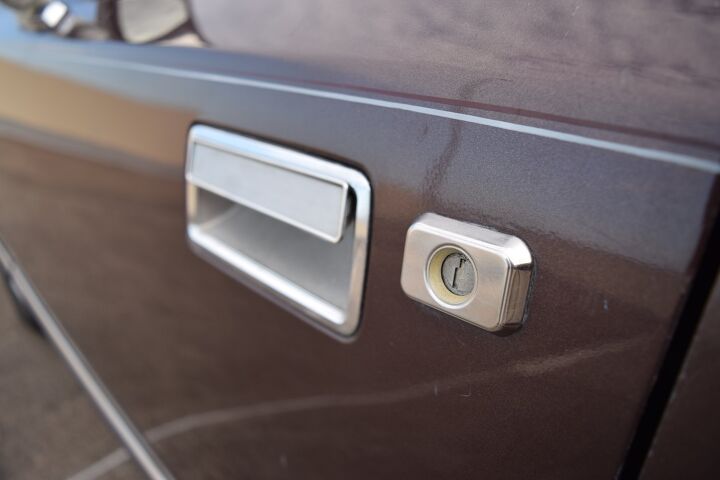
Backlit keyhole? Check.
Perfectly-integrated 1971 Mustang door handles? Son, you best believe that’s a check.
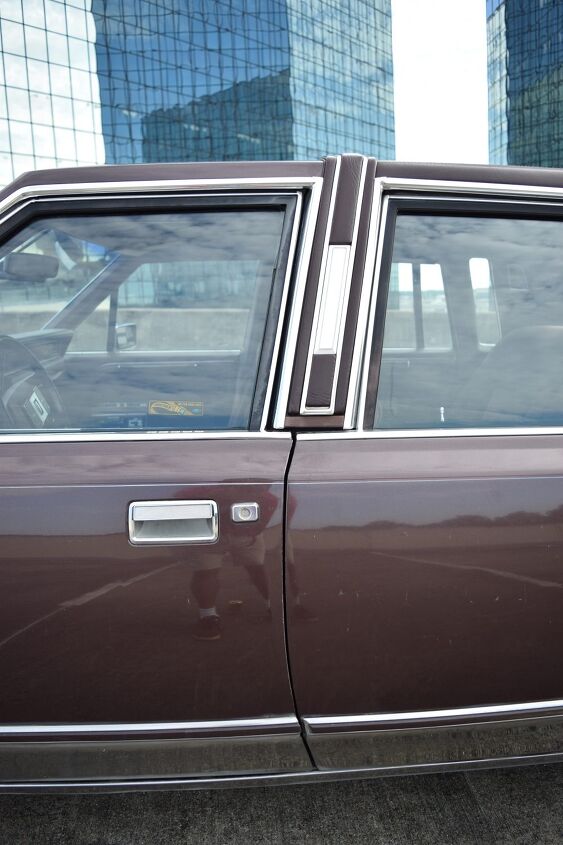
And the complimentary bands of chrome trim around the doors and windows? I’d remove the window bling to clean up the look. So much for the modest aerodynamic improvements in the front end!
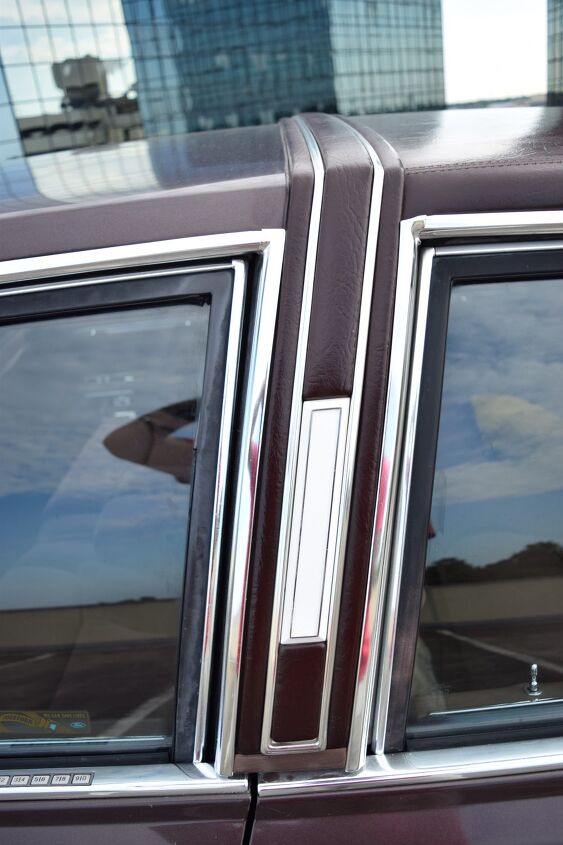
A close-up of the B-pillar’s chrome confusion. Tragic, considering the smooth transitions across the front end.
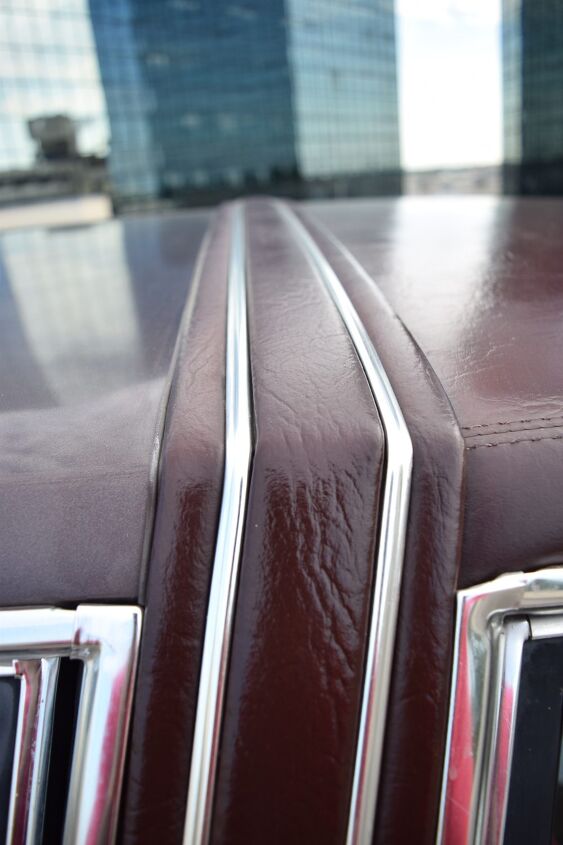
That bit of aero-killing vinyl trim sure is pretty when you add a bit of vinyl conditioner. But there’s no excuse for the chrome joints on each side of the band.
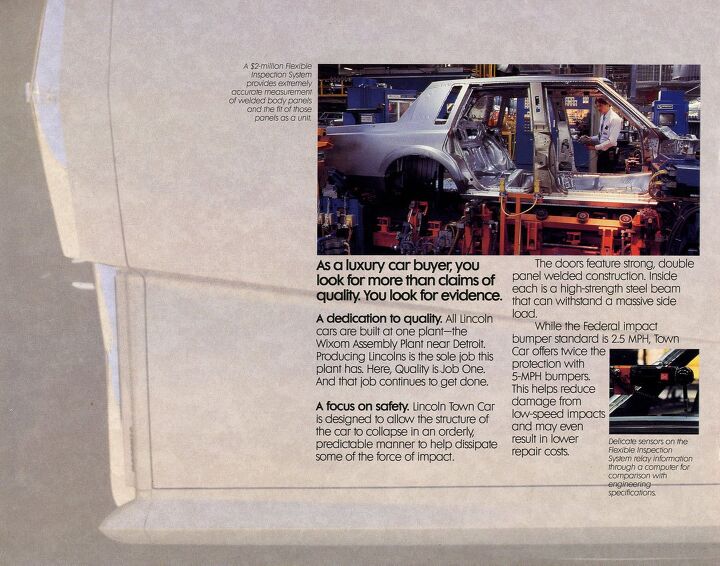
This brochure shows the naked Town Car’s clean greenhouse. With a little imagination it coulda blended like the 1982 Continental.
Also note the background photography, note the negative area from an aerial view!
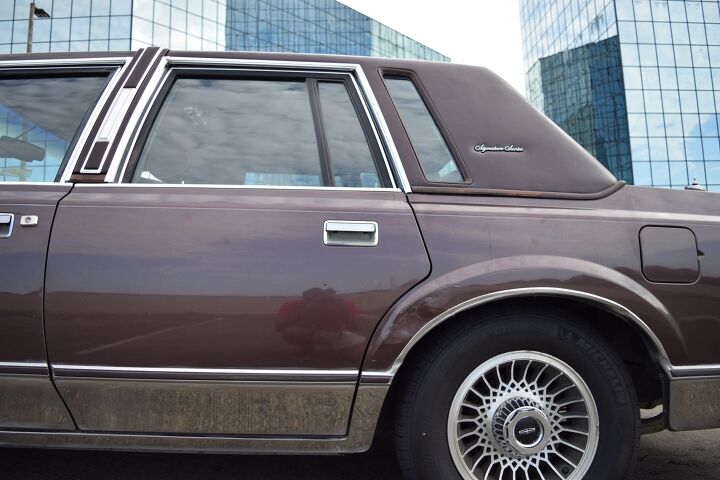
But still, with all that glass and chrome, this looks like a luxurious and enviable place: entering the back seat of a Proper Lincoln.
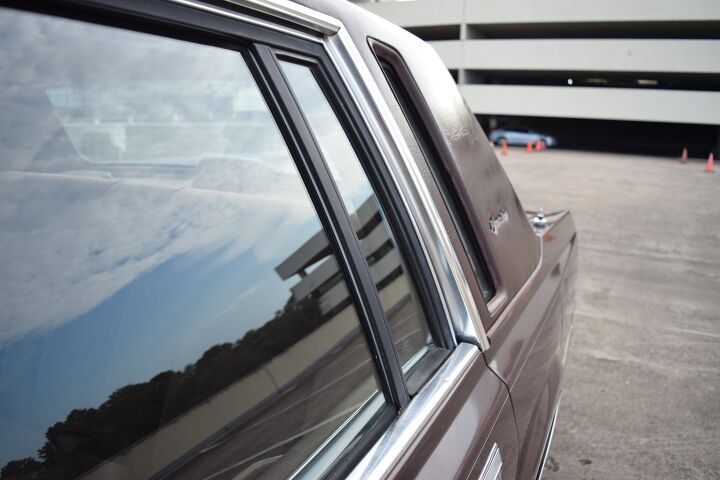
Too bad the quarter window (the one inside the C-pillar) isn’t the same size as the fixed window in the rear door. It’s a jarring mis-match.
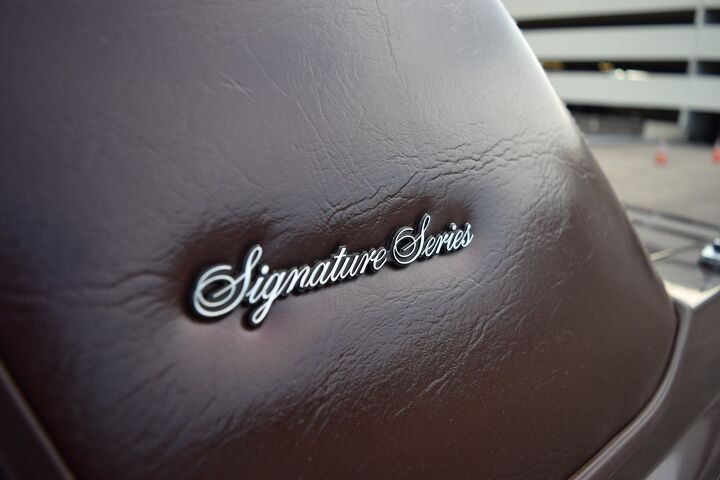
With a touch of vinyl dressing, this shot alone is worth the price of admission for a chocolate-toned Signature Series. Yum!
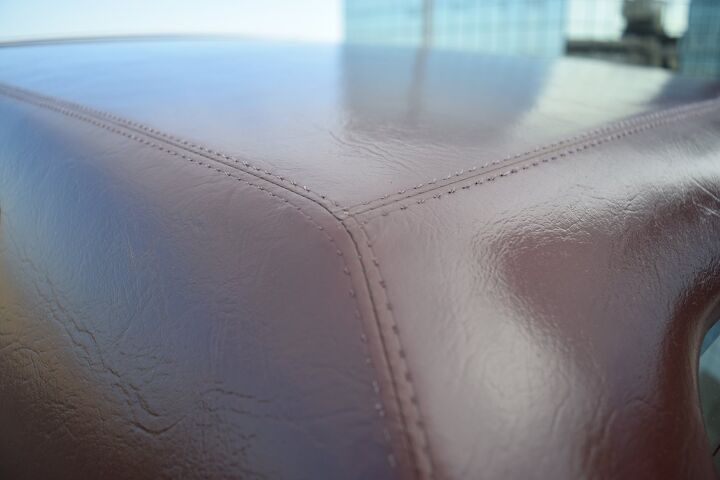
And that triple stitching? The only way to make it more impressive is to use contrast stitching! (Or not.)
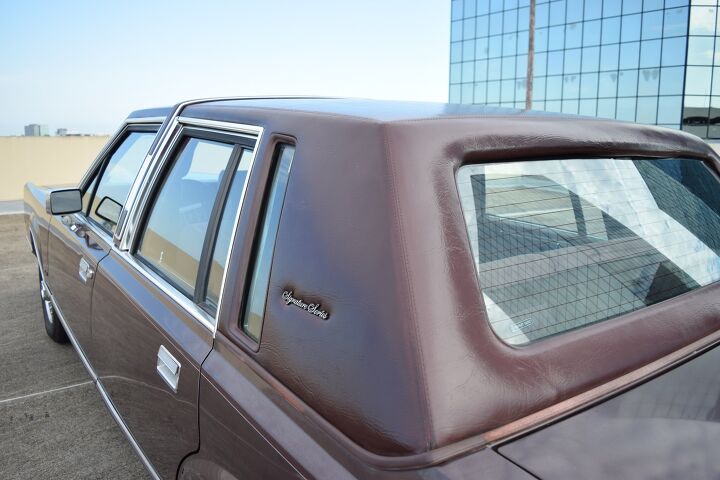
The quarter window’s overall height looks better here: turns out the problem lies within the recessed/shortened door windows. A problem cured in 1990 with an aggressive re-think of these clunky, clumsy portals.
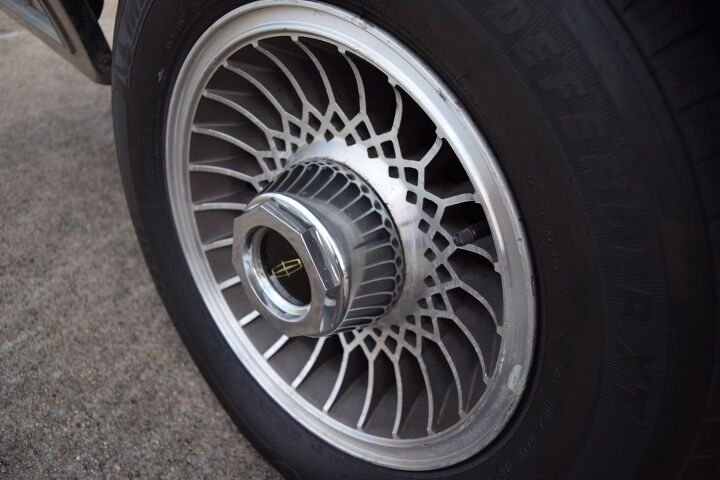
These triangle-intensive wheel spokes are a transition point between the 1970s turbine and the 1990s lacy spoke wheel. Surprisingly, it works from most angles.
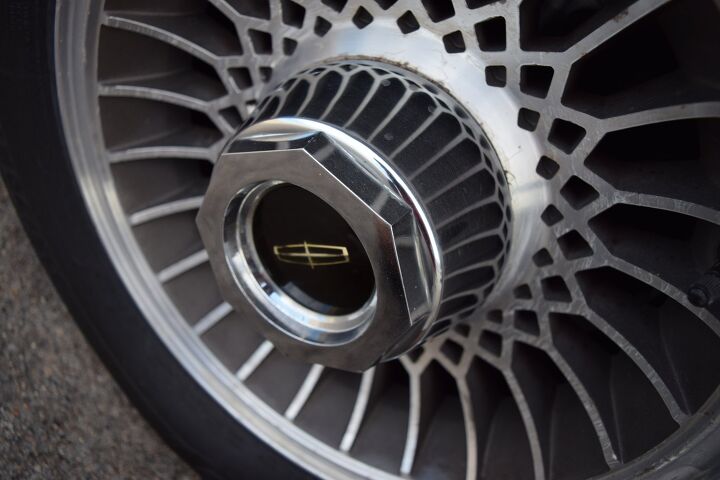
But those Lincoln-hallmark octagonal center caps? Polish those up and the beveled jewelry theme goes into overdrive.
They catch the light like no mere 15-inch wheel should: bling, not bling-bling.
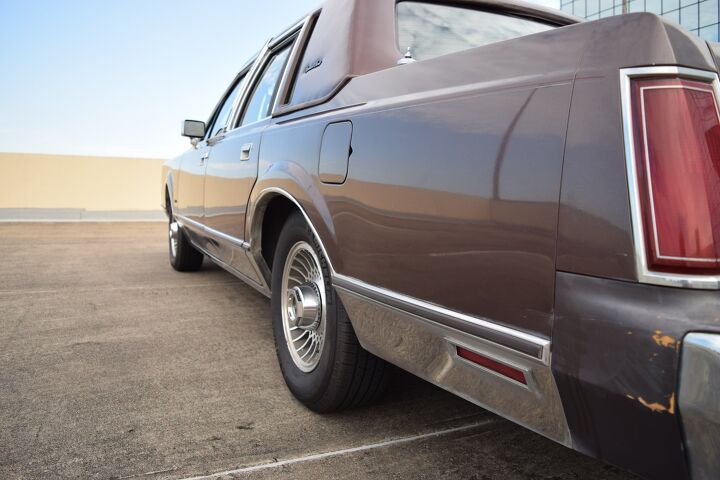
The Town Car’s legendary suitcase-carrying capability soldiered on into the 1980s. There’s a slant back clearly designated at the filler panel between the taillights and the quarter panel, but there’s no doubt this is a big, square butt.
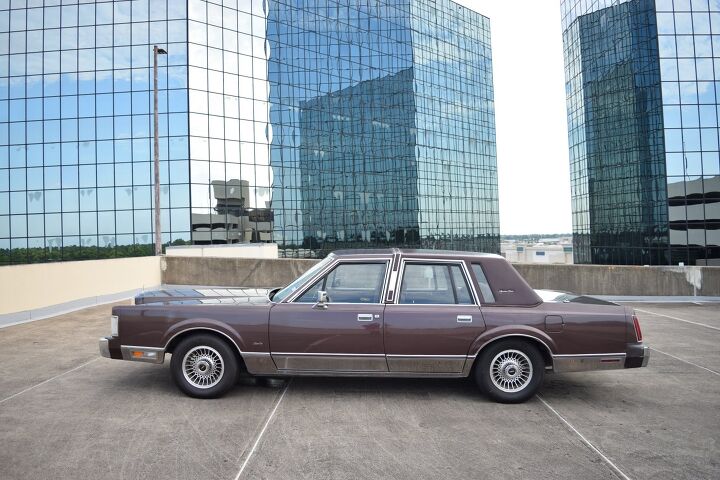
It all adds up to a ubiquitous look for the 1980s. Those overhangs, those typical American luxury details, are smaller, more efficient, and offer more space than the 1970s: the magic of downsizing without brand disfunction*.
*About the lack of whitewall tires: only one vendor makes whitewalls now and their reputation isn’t on par with these Michelins.
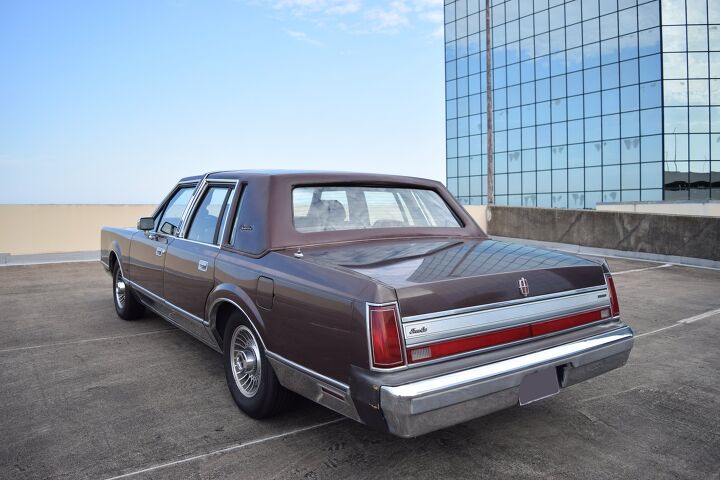
How would you integrate the Signature Series’ lower chrome trim to that form-fitted chrome bumper? Poorly: that much overhang means there’s too much real estate to sneak a chrome cheater panel to integrate both features.
But that slab-sided profile is stunning. And the half-vinyl top oozes a sort of luxury now only acceptable for limousines.
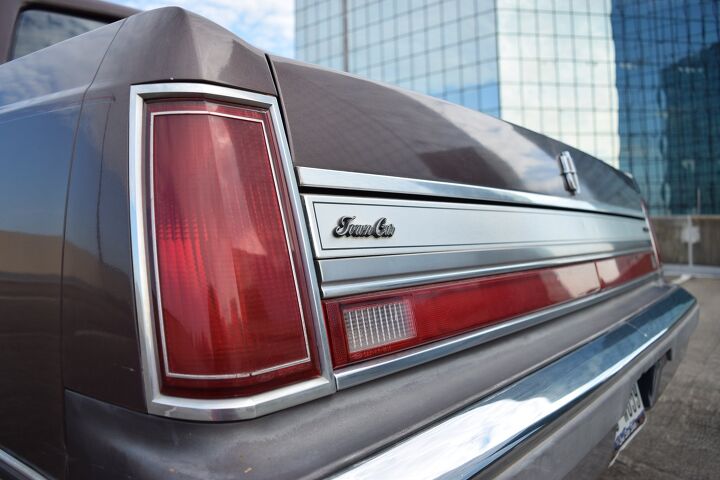
The (non-functional) full width taillight treatment is suitably luxurious and sadly clumsy. The brushed aluminum paneling is visually top heavy and poorly integrated. If only that aluminum was instead integrated inside the red panel, like a 1977 model.
The pre-88 full-width treatment was far prettier.
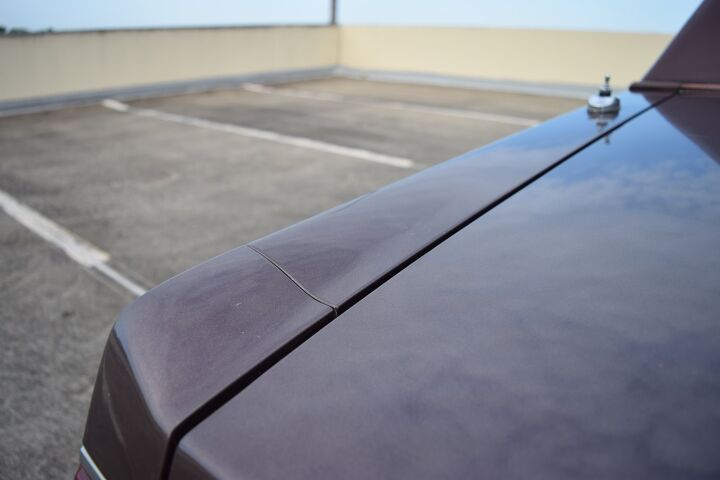
Perhaps a bit of the front end’s negative area stuck around for the back of the party?
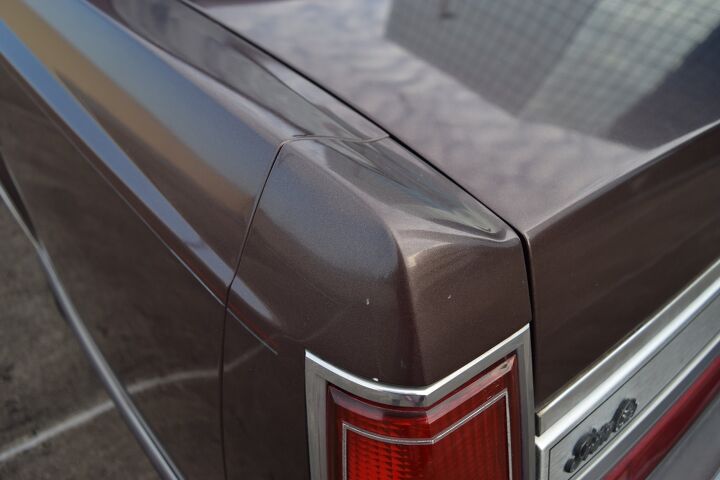
The taillights have a similar jeweled look with beveled red lense and chrome accent. And peep that remnant of the slab-sided, suicide door Continental tail fin: the trunk dips further to let this feature exist.
There’s a ton of negative area on this trunk!
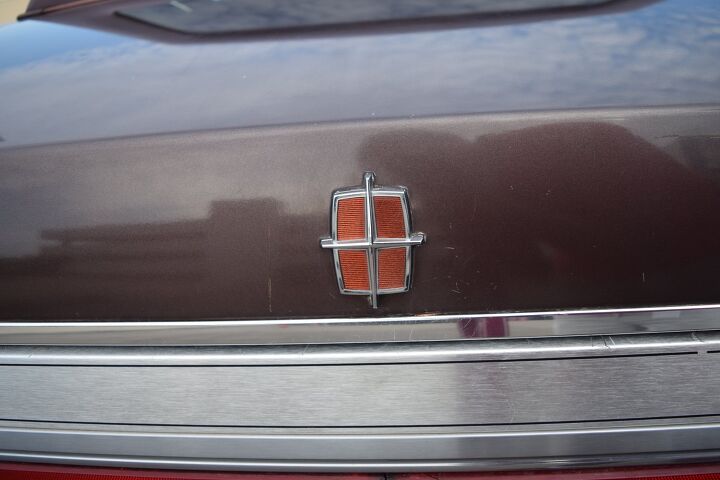
Behind that chrome and red metallic emblem is the trunk lock cylinder, even more elegant when you consider the power trunk pulldown motor behind it!
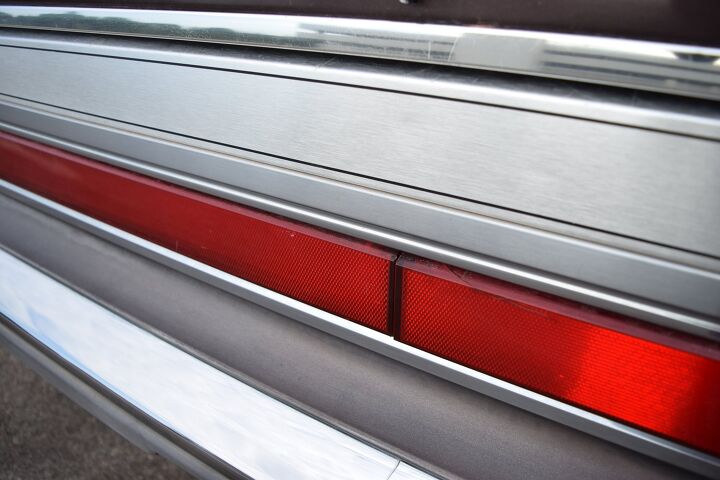
The red reflector’s meeting point is far from elegant. Perhaps you should disregard the poor alignment, as I replaced the RH reflector in 2010.
If only a more elegant transition, or a one-piece design, was implemented…
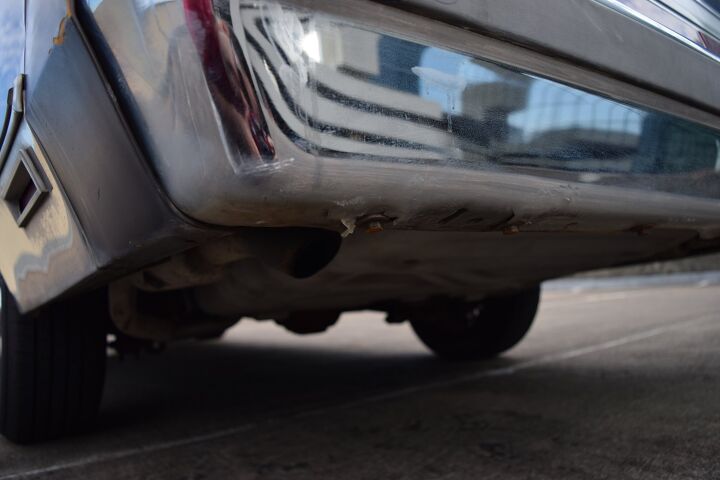
The tucked dual-exhaust treatment is another sign of a bygone era, as V8 power torque was implied.

With the slant back-ish rear fascia, there’s an eerie harmony between roof and rear end. Plus, the vinyl top gives the feeling of an infinity pool: vinyl perfectly disappears into a glass wall reflecting the sky above. The rear glass is far larger, far less luxurious, if the vinyl is removed.
But such beauty couldn’t last, and the Town Car was eventually replaced by a universally offensive turd blossom. With sales pushed in a corner, their own boffins are quick to take cheap shots at the departed. And to what extent! Perhaps one day these prodigal sons (so to speak) shall appreciate the machines that made this brand’s existence possible.
That’d take a Lincoln-worthy platform, perhaps speaking to a young gent like Alexander McGowen about his Grand Luxury Coupe concept. Since that ain’t happening, the Panther Love fanbois won’t stop loving these Town Cars. Perhaps I am one such fanboi, if only from the A-pillar forward.
Thank you all for reading, and have a wonderful week.
[Images: © Sajeev Mehta]
More by Sajeev Mehta












Comments
Join the conversation
The accessory kit for this car is for sale on Ebay: https://www.ebay.com/itm/133023789047
yet another biased report from this clown, bro go review integrity and get some while you there..