
Abandoned History: Tariffs, Toyota, and the 1984 Motor Industry Development Plan (Part II)
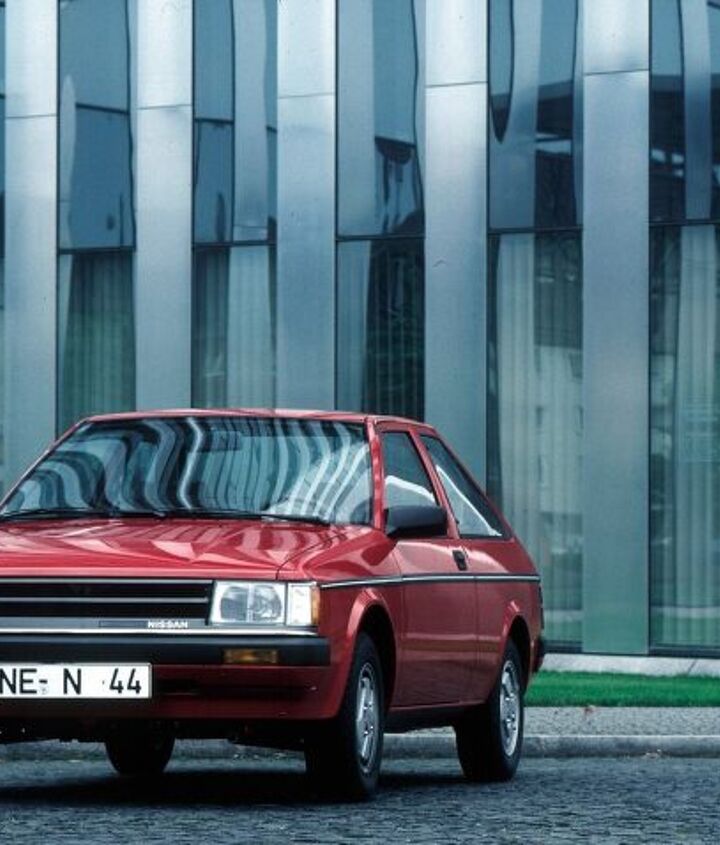
When the Australian government debuted its Motor Industry Development Plan in mid-1984, it believed the solution for the nation's automotive industry woes was at hand. Through streamlining and becoming more cost effective, the plan intended to cut the number of domestically produced vehicles in half, close down underutilized production facilities, and reduce import caps and tariffs on foreign vehicles. The plan also forced domestic Australian and Japanese automakers to work together to create badge engineered vehicles. Ford, Holden, Nissan, and Toyota were all victims of the plan as the manufacturers with the largest footprint on Australian soil. The very same year, Nissan and Holden were the first pairing to debut an exciting new badge engineered vehicle!

Abandoned History: Tariffs, Toyota, and the 1984 Motor Industry Development Plan (Part I)

Picture it, 1984. The world is filled with Malaise era automobiles, neon colors, and a hot new TV show called Miami Vice just debuted on NBC. The Australian automotive market is in turmoil, suffering from inefficiency, oversupply, import restrictions, and tariffs of around 60 percent. What’s a government to do? Force every manufacturer’s hand, that’s what!
Americans Miss Pontiac More Than Any Other Defunct Car Brand
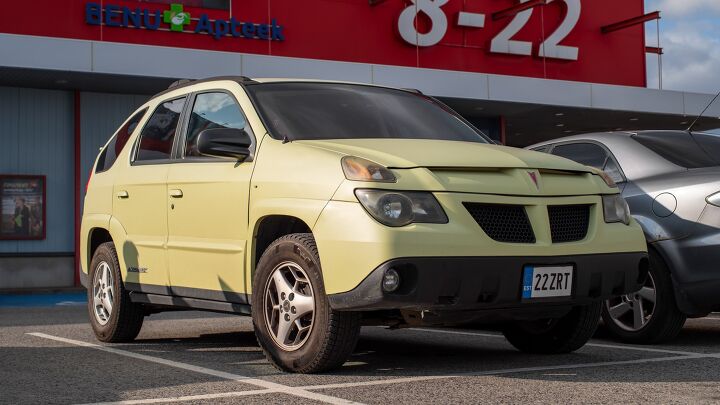
Like all industries, the automotive world has seen tons of change over the last several decades, and an unfortunate side effect of the evolutionary process has been the closure of several once-popular car brands. Here in the U.S., car nerds mourn the loss of brands like Saab, but it might be surprising to learn the brands that enthusiasts in other countries pine over.

Abandoned History: Daewoo Motors, GM's Passport to International Sales (Part IV)
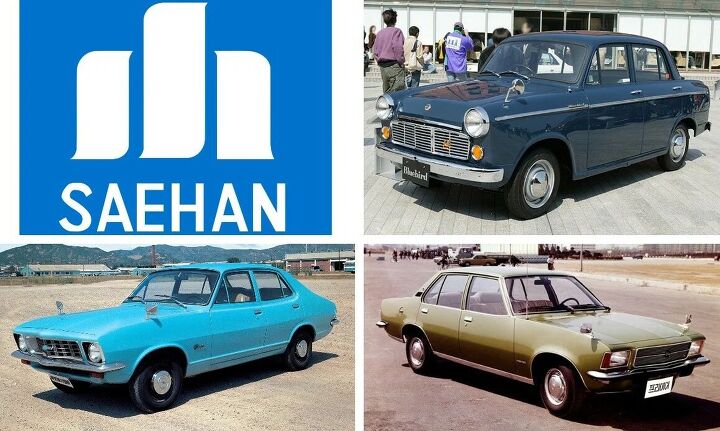
We return to Abandoned History’s coverage of the twists and turns of the Daewoo story, at a time when the company’s predecessor, Shinjin, was no more. After an early Seventies joint venture with General Motors saw the company renamed to General Motors Korea, Shinjin bowed out of the deal after just five years. In 1976 Shinjin’s ownership in the business was sold to a state-owned Korean bank, and General Motors Korea was renamed to Saehan Motor Company. But that didn’t mean GM was out of the picture - far from it.
Abandoned History: Daewoo Motors, GM's Passport to International Sales (Part III)
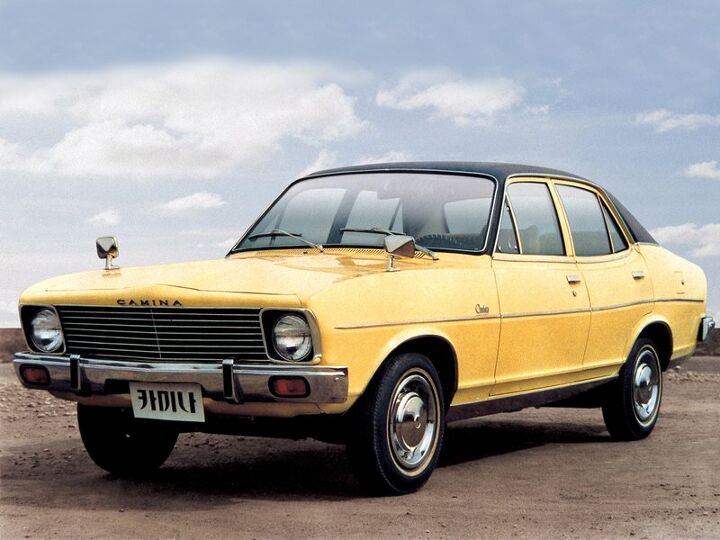
After a few successful years building a trio of Toyota models (Corona, Publica, and Crown), Shinjin was forced to look elsewhere for a business partner. Toyota wanted to sell cars in China, and China forbade any company that sold products on its shores from having operations in South Korea. As expected, the government stepped in and assisted in a new deal between Toyota, Shinjin, and General Motors.
The deal was finalized in 1972 and saw Toyota sell its stake in Shinjin directly to GM. The 50-50 GM-Shinjin venture saw the latter immediately renamed to General Motors Korea. GMK was immediately the new face of GM product distribution in South Korea. Let’s embark upon a series of particular business arrangements involving Shinjin that didn’t last very long.
This Is the End: R.I.P., Australian-built Automobiles

Maybe the dingo ate your industry? No, that cruel joke doesn’t hold a grain of truth — Australia’s domestic auto industry simply fell victim to the harsh realities of economics and globalization.
No longer a captive market, no longer a country with steep walls built of tariffs, the land Down Under found it could no longer sustain its own vehicle manufacturing presence. Because of this, today marks the end of it all. Workers will leave the Holden assembly plant in Elizabeth, South Australia, closing the door on the GM subsidiary’s 69-year Aussie car-building history.
It seems the final vehicle to leave the plant was fittingly badass.

Have No Fear, Bowtie Faithful: the Chevrolet Camaro Will Not Wear a Holden Badge in Australia

General Motors’ Australian outpost is losing all of its domestic production, but that doesn’t mean Holden is shutting down all of its Australian development operations.
Late last month, we told you the Chevrolet Camaro was going to become a right-hand-drive model five years earlier than originally planned because of special rebuilds by GM’s Holden division.
But once the Chevrolet Camaro goes on sale Down Under, it will not wear the local GM badge.

This is Not a Second-Generation Honda Crosstour

But it sure does look like one.
Honda Europe announced Wednesday that the Civic Hatchback Prototype will debut at the Geneva Auto Show on March 1. The hatch — which is likely a production car with fancy mirrors, rocket ship door handles and a dual center exhaust — will go into production in the United Kingdom next year and be exported to North America.

Fields Are Fertile For Now, But Marchionne Has a Long View
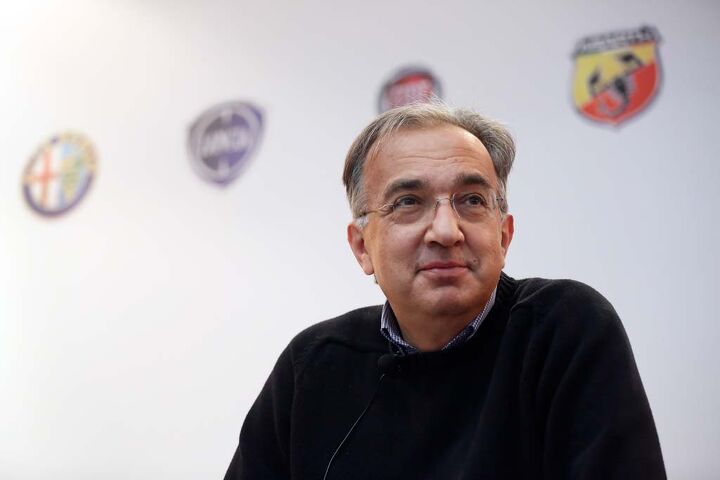
Farmers are the ultimate craftsman when it comes to small-scale production. The level of management needed to stay competitive and above the high water line is, simply put, astounding. Consolidation in certain areas of agriculture has lead to factory farming, the widespread adoption of automation and genetically modified seeds that keep seed producers competitive. Private farmers are constantly at war with the market and their own budgets.
The agriculture industry has wholly transformed itself over the last 100 years. The automotive industry, which has only really existed for that same period of time, has seen similar levels of change. We are now building more cars, trucks, SUVs, crossovers, trikes and quadracycles than ever before, just like we are growing more food than we’ve ever seen in human history.
But, there’s one major stumbling block ahead — and Sergio Marchionne sees it.
NYT: GM's Barra Declined Meeting With FCA's Marchionne to Discuss Possible Merger
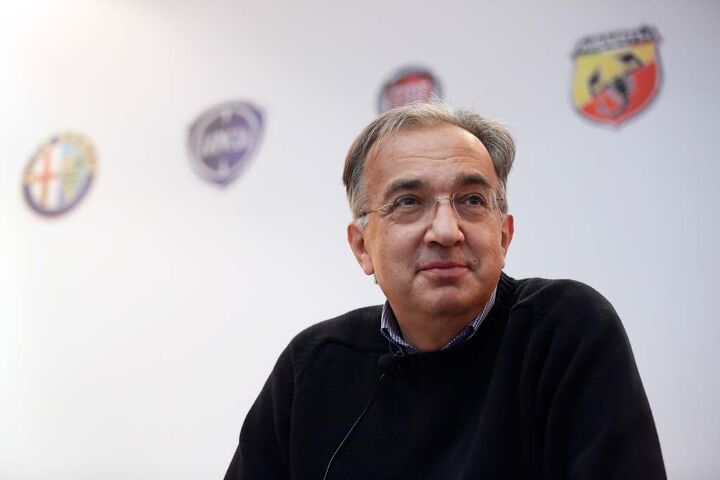
Sergio Marchionne sent Mary Barra a detailed email in the middle of March in an effort to start merger talks. Barra, CEO of General Motors, was uninterested in the offer and rebuffed Marchionne, CEO of Fiat Chrysler Automobiles.
It was the first time the two executives had ever spoken, but it wouldn’t be the last Barra would hear of Marchionne’s merger desires.
That’s the story being told by the New York Times today, detailing the lengths to which Marchionne is going to trigger consolidation within the automotive industry.
Dorizas Leaves Holden, General Motors To Pursue New Ventures

Another bell tolls as Holden draws closer to the end of local production in 2017, this time for brand boss Gerry Dorizas, who resigned after serving just eight months in the position.

2015 HSV GTS Maloo Ute Officially Unveiled

Last month, Holden Special Vehicles announced plans for the most brutal ute to ever be assembled as a send-off to the Holden Commodore Ute before all local production draws to a close in 2017.
This is that ute: The 2015 HSV GTS Maloo.
HSV Unveils Its Last, Fastest-Ever Ute

As a parting gift to the world, Holden is set to built what should be the fastest Ute ever produced, borrowing the LSA V8 from the HSV GTS sedan.



Recent Comments