


Secondhand RAV4 Prices Are Insane, Especially Hybrid Models

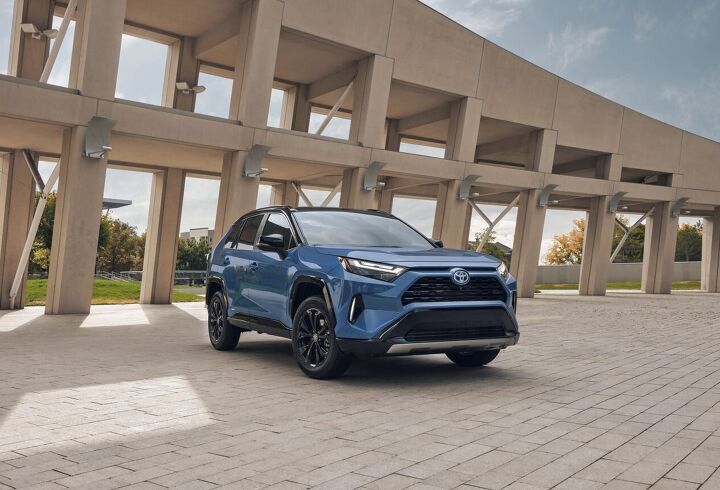
Toyota vehicles have long been known to hold their resale values exceptionally well. But the market is now confronting a situation where some used RAV4s are actually surpassing their original MSRPs.
Bloomberg first reported on the phenomenon, indicating that dealerships were occasionally pricing secondhand RAV4 Hybrids above the price of brand new models from 2026 (below).
While we all expect hybrids to gain traction during a period of economic uncertainty and expensive gasoline. Few could have predicted just how wonky today’s market was going to get. Over the last year, hybrid sales increased by 17 percent inside the United States. But estimates have them increasing by an estimated 33 percent over the last three months, indicating a dramatic shift in consumer trends.
Hybrid models gained a lot of ground during the last recession, too. Pinched financially, and confronting high fuel prices, many households gambled on the second-generation Prius. The hybrid model has been issued some dramatic improvements over its predecessor and was still relatively inexpensive, making it a popular choice during the late 2000s.
With the price per gallon now averaging well above $4.16 for 87 octane across the United States, it’s not surprising to see Americans prioritizing fuel economy again. Since Toyota sells more hybrids than anyone, this places the automaker in an enviable position. But nobody expected secondhand RAV4s to surpass their original MSRPs, despite the automaker often fielding models that enjoy extremely high value retention.
It looks to be a perfect storm for hybrid variants of the crossover. We’ve seen unprecedented inflation since about 2020, with automotive pricing frequently outpacing the claimed rates. This has coincided with surging gasoline prices and some customers turning their nose up at modern automobiles. Shrinking engine sizes, touchscreen-focused interfaces, and software-defined vehicles that are trickier to service are scaring many buyers away from brand-new models. Automakers tightening production has also become a factor in recent years, especially for an in-demand brand like Toyota.
From Bloomberg:
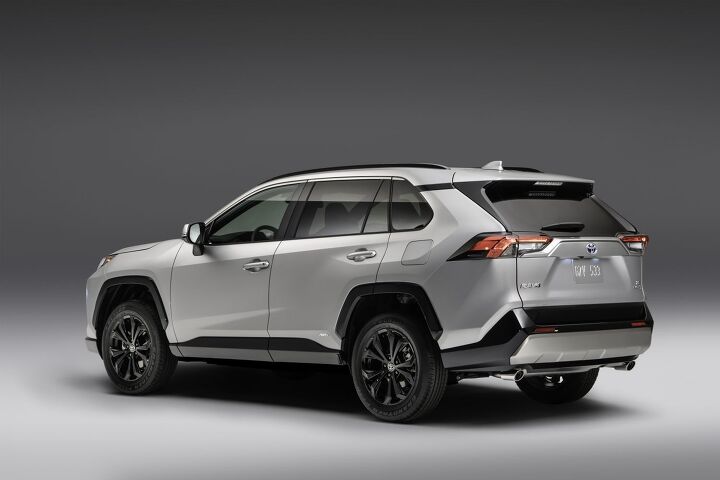
Production hit a lull last year as Toyota stopped building the fifth generation of the compact SUV and started making the sixth. With fewer new RAV4s reaching showrooms, many would-be buyers have been stuck on waiting lists. Used versions — as long as they’re from a recent year and in good shape — command a premium, even topping the list price of a new car.
The hybrid RAV4 gets upwards of 40 mpg, well above the U.S. new-car average of 27.2 mpg. It’s popular enough that Toyota discontinued all non-hybrid versions of the RAV4, starting this model year. And Brandon Wingate of Albany, Georgia, decided it was just what his family needed.
He and his wife were sold on its roominess, Toyota’s reputation for reliability and the hybrid’s promise of savings at the pump. Wingate paid $32,000 in February for a 2024 RAV4 with 44,000 miles on it — a car that listed for $38,735 when new. He drove about five hours across the state to test-drive it after spotting it online and was only able to haggle the dealer down $500 to compensate for a small window crack.
“There’s no negotiating anymore — you basically pay the asking price,” said Wingate, 42, an IT technician. “I’m just glad to have bought when we did, because prices for the same vehicle are up anywhere from $6,000 to $8,000 since then.”
We’d still recommend haggling because the worst thing that can happen is that you don’t get the discount you wanted. As for the likelihood of garnering an ultra-sweet deal on Toyota’s most-popular model, we certainly wouldn’t recommend holding your breath.
Kelley Blue Book doesn’t quite show secondhand Toyota RAV4 Hybrids trading at their original MSRP. However, the gap is so small that it almost doesn’t matter and assuredly leaves room for dealers to price them above their original MSRP.
For example, if we examine the 2023 RAV4 LE Hybrid, we can see that KBB has the “fair purchase price” presently listed as $29,300 for a vehicle in good condition. That’s not even $1,000 less than the car would have been listed for when it was brand new. While there’s a bit more difference taking place on the higher trim levels, we’re still not seeing the kind of depreciation that would be considered normal.
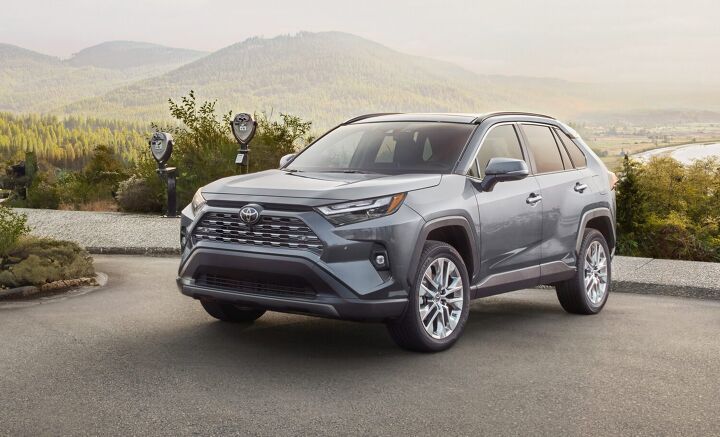
However, non-hybrid variants of used RAV4 models are also trading well above what would have formerly been considered normal. Hybrids still have the edge in terms of resale value. But this trend suggests that hybridization is only one of many factors that are helping to keep RAV4 values exceptionally high.
After searching the market for ourselves, we notice that a large number of late-model Toyotas are still valued shockingly close to their original MSRP. RAV4 Hybrids just seem to have stayed the closest and have the best chance of surpassing their original asking price.
Bloomberg even gave some real-world examples where dealerships were asking several thousand dollars above the original MSRP of a low-milage 2025 RAV4 Hybrid Limited and 2024 RAV4 Hybrid XSE. They were definitely outliers. But anyone can still find secondhand RAV4s exceeding their original price after just a few minutes of browsing the used vehicle market.
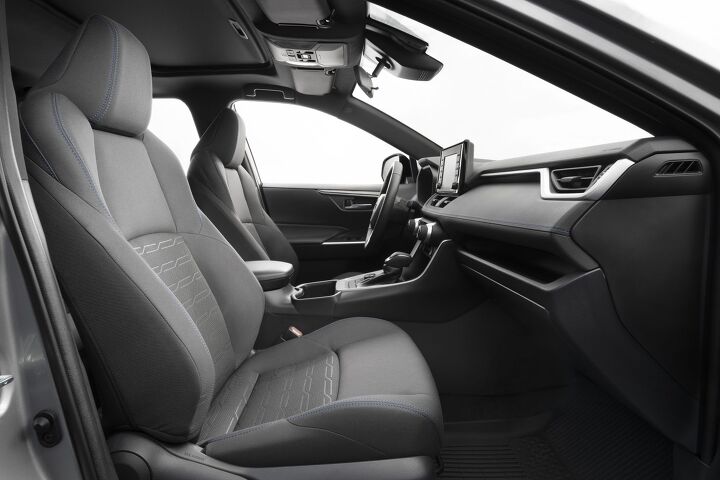
For added context, let’s compare a base-trim 2023 Ford Escape to a similarly equipped non-hybrid RAV4 from the same year. You’ll be able to find the Ford for about $18,000 at most retailers, which is about $10,000 less than when it was brand new. By contrast, you’ll be hard pressed to find the Toyota listed below $26,000 — or about $2,000 less than the original MSRP.
Of course, this applies exclusively to dealerships. Private party sales will typically be a couple thousand dollars less than the valuations you’re seeing above.
While the assumption is that this is wholly the result of elevated fuel prices and increased demand limiting supplies of the new RAV4, we’re seeing similarly high value retention with the Honda CR-V. This is despite Honda having a 34-day supply of the model against Toyota’s 5-day supply of the new RAV4.
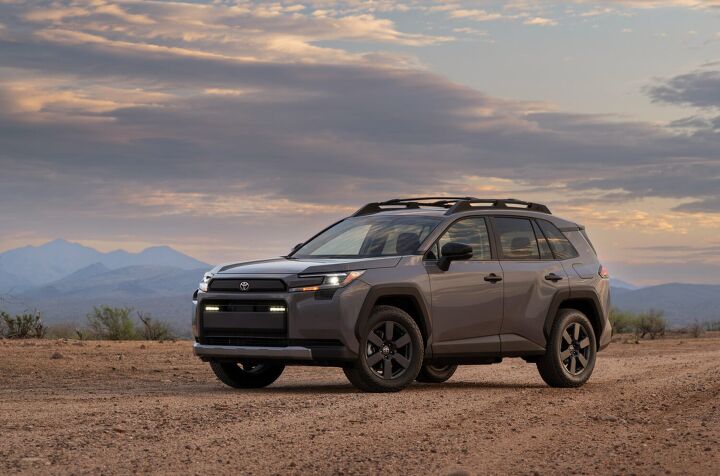
A 2023 Honda CR-V LX would ballpark somewhere around $25,000 (in good condition) today. That’s about $3,000 less than the original asking price, showcasing that the situation with Toyota isn’t quite the anomaly that it first appears. However, it was surprising to see that the difference was actually greater insofar as Honda’s hybrid models were concerned.
Toyota’s hybrids very clearly reign supreme in terms of resale value. This is great if you already happen to own one and plan on selling. But the inverse is true if you happen to be buying.
“Toyotas are in general tough to find, and hybrids are tough to find,” said Kevin Roberts, director of economic and market intelligence at CarGurus Inc. “If you’re struggling to find a new RAV4 hybrid, you might pay more for any used one you can get your hands on.”
Despite claims that Toyota has begun to sacrifice long-term reliability to chase many of the same trends being pushed by other automakers, the company still compares favorably to other brands in terms of consumer sentiment. It’s also not obvious that the Japanese automaker having embraced smaller powertrains and more hybridization has actually resulted in it falling behind the pack. Most studies continue to place Toyota products near (or at) the top in terms of overall reliability.
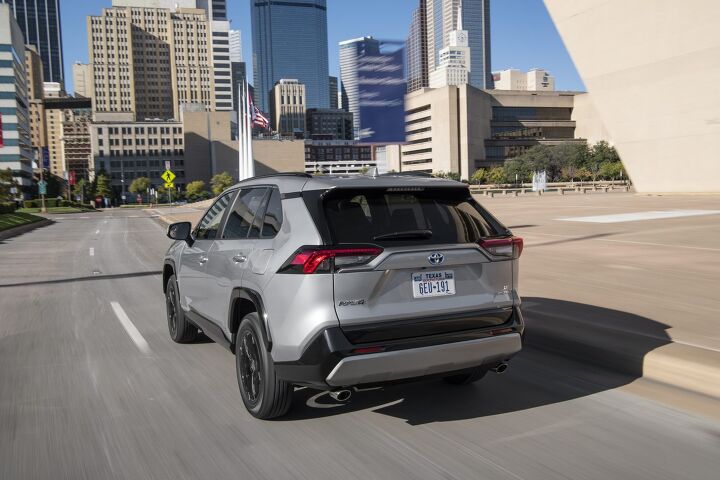
The question is whether or not that’s worth the premium customers must to pay in order to buy one. While many automakers have certain models that hold their resale value incredibly well, Toyota has managed to achieve this with nearly its entire lineup. This has resulted in used models being almost comically expensive. Assuming you stay on top of your vehicle maintenance, that strong resale value and above average reliability should result in a lower cost of ownership over time. However, the value proposition gets a little murky when late models are now trading at (if not over) the vehicle’s original MSRP.
Toyotas are likewise not known for being feature rich relative to their competition. Their perceived value revolves heavily around their assumed dependability — much in the same way Subaru trades on promoting its all-wheel-drive systems and Mazda trades on delivering driver-focused vehicles with a bend toward luxury.
However, Japanese brands are already perceived as boasting superior reliability in general and Toyota cannot afford to lose its place at the top of the mountain. Honda may eventually edge out its biggest rival by simply offering peppier vehicles, better interiors, and lower average repair costs. But there doesn’t seem to be much danger of that happening right now, demand for Toyotas has seemingly never been higher. Sticking with hybrids was clearly a winning strategy and has the automaker has stressed that it can barely keep up with U.S. demand.
[Images: Toyota]
Become a TTAC insider. Get the latest news, features, TTAC takes, and everything else that gets to the truth about cars first by subscribing to our newsletter.
Consumer advocate tracking industry trends and regulations. Before joining TTAC, Matt spent a decade working for marketing and research firms in NYC. Clients included several of the world’s largest automakers, global tire brands, and aftermarket part suppliers. Since adding automotive writing to his repertoire, he has become an ardent supporter of the right-to-repair movement, discussed the status of the automotive sector on national broadcasts, participated in a few amateur rallying events, and driven more rental cars than anyone should ever have to. Handy with a wrench, Matt grew up surrounded by Detroit auto workers and learned to drive by twelve. Alleged to be contrarian, Matt claims to prefer understeer and motorcycles.
More by Matt Posky









Comments
Join the conversation
It doesn't matter how much gas costs people will continue to buy what they want whether it is an EV, hybrid or full sized V8 pickup truck. I look at a vehicles reliability and capability not MPG.
This has been happening with Toyota hybrids for a few years. My son I was in the market for a 2022 Sienna. I could not find one. They left the dealer lots withing 24 hours of arriving. So he purchased a used one with 40,000 miles and paid more than the original MSRP.
I won't do that! I was prepared to buy a hybrid for the last two years, but I refuse to pay the "market adjustment" dealers are asking. So, I keep driving the 7 year old car ICE car I have now. If the dealers don't want to play ball, screw them!
'According to separate figures from the AAA, the average price of a gallon of regular petrol in the US is currently $4.15, a sharp increase from $2.98 on February 28.'
The Hayabusa doesn't get very good mpg compared to other sport bikes. Plus if you ride it hard on the throttle the mpg suffers. My Vstrom and KLR are pretty thrifty but not as fun as the Hayabusa.
This is my shocked face /s.