


North Dakota Raises Speed Limit to 80 MPH, Adds Stiffer Penalties

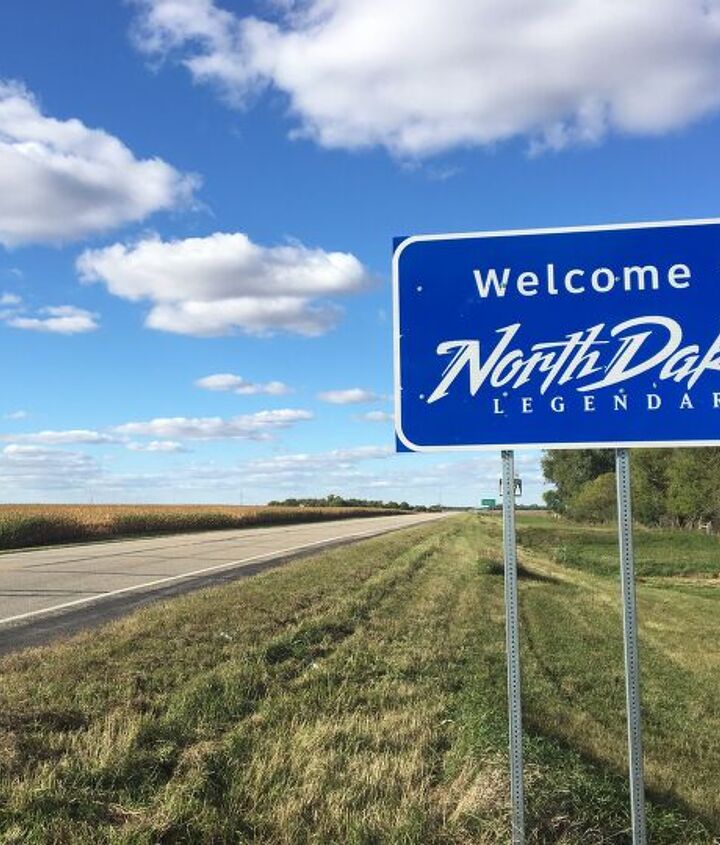
On Monday, North Dakota Governor Kelly Armstrong officially finalized provisions to raise the interstate speed limit to 80 miles per hour. However, the passing of House Bill 1298 is accompanied by new speeding fines.
The state had actually been trying to raise speed limits for quite some time. due largely to the fact that neighboring territories (South Dakota and Montana) already had 80 mph interstates. Montana even enjoyed a stint where the state technically has no speed limits during daytime hours. While the determining factor of what constituted excessive speed was often decided by law enforcement, the rules were pretty lax from 1955-1974 and 1995-1999.
We can only assume this made drivers in neighboring states mildly envious, further encouraging The Dakotas to take action. But North Dakota has been struggling to make that happen, with former Governor Doug Burgum having vetoed a successful bill in 2023. Armstrong has opted against following in his footsteps, with the new fines allegedly playing a meaningful factor.
“This bill strikes a reasonable balance by aligning North Dakota’s interstate speed limit with two of our three neighboring states and increasing fines as a deterrent to speeding," Armstrong was quoted as saying by the Jamestown Sun.
Highways boasting a speed limit of 65 mph or higher, will be raising speeding fines to $20 or $5 for every mile per hour over the limit, if that turns out to be greater. Roads with lower speed limits will do the same, with the per-mile fines being just $3. Construction zone penalties will also see fines nearly double to $150.
While there were criticisms from the opposition that North Dakota could see an uptick of serious crashes after instituting higher speed limits, there wasn’t much in the way of evidence to support the claims. State Rep. Mike Motschenbacher, who backed the bill, even went so far as to showcase how roadway safety saw little change in South Dakota since it raised its speed limits in 2015.
This is counter to the assertions made by the Insurance Institute for Highway Safety and the government’s own National Highway Traffic Safety Administration. Both of those entities claim that that speed contributes toward a significant number of on-road fatalities (up to 30 percent) and have suggested that lower speed limits and higher levels of traffic enforcement are the best defense.
However, the National Motorist Association has cited government data showing that the real danger tends to be in speed or size disparities between vehicles. Automobiles going exceptionally slow or fast in relation to the real-world speed of the surrounding traffic tend to pose the highest levels or risk. The same could be said of vehicles that are significantly heavier or lighter than average.

[Image: Dave Smallen/Shutterstock; Michael Tatman/Shutterstock]
Become a TTAC insider. Get the latest news, features, TTAC takes, and everything else that gets to the truth about cars first by subscribing to our newsletter.
Consumer advocate tracking industry trends and regulations. Before joining TTAC, Matt spent a decade working for marketing and research firms in NYC. Clients included several of the world’s largest automakers, global tire brands, and aftermarket part suppliers. Since adding automotive writing to his repertoire, he has become an ardent supporter of the right-to-repair movement, discussed the status of the automotive sector on national broadcasts, participated in a few amateur rallying events, and driven more rental cars than anyone should ever have to. Handy with a wrench, Matt grew up surrounded by Detroit auto workers and learned to drive by twelve. Alleged to be contrarian, Matt claims to prefer understeer and motorcycles.
More by Matt Posky






Comments
Join the conversation
...real danger tends to be in speed or size disparities between vehicles. Automobiles going exceptionally slow or fast in relation to the real-world speed of the surrounding traffic tend to pose the highest levels of risk...
As someone who has commuted for way too many years, I can attest to the accuracy of the above statement. I'd also add those who plug the left lane, as that often causes heavy braking and unsafe lane changes. Gotta love those fines though...not much of a deterrent. I got a school zone ticket that gave me six points for going one mph over the regular speed of 40 (zone is a stupid 15 mph), plus added fines for the fact it was a school zone, lawyer fees, and a boost in car insurance costs. Total no-lube pounding cost me $3000.
All these northern states are trying to mimic Texas with speed limit increases. 🤣