


How Are American States ‘Running Out’ of Fuel?

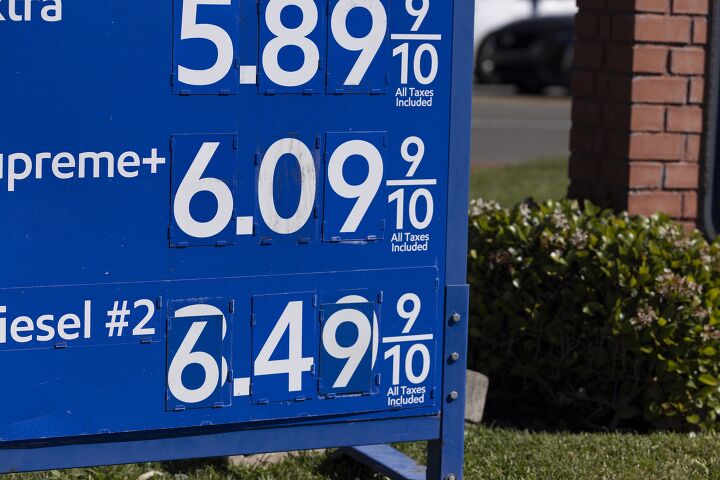
While the United States continues to endure elevated fuel prices, California recently signaled that it may be just weeks away from a legitimate energy crisis. But how exactly does a net oil exporter, like the U.S., even run into a situation where there’s not enough gasoline for domestic residents?
Earlier this month, California Energy Commission Vice Chair Siva Gunda told an oversight assembly pertaining to energy and utilities that the state had a sufficient fuel supply to last another six weeks. This implies that, should nothing change, gasoline and diesel shortages could worsen and further drive up prices. In a worse case scenario, this could even result in the kinds of shortages not seen since the 1973 Oil Crisis.
News outlets took the premise and ran with it, claiming that California was on the cusp of running out of fuel. While the state’s Energy Commission did not go quite that far, that’s still effectively what’s being claimed. Gunda noted that it wouldn’t be unreasonable to craft an emergency plan and cited that more oil could be shipped in from places like Asia.
In fact, a significant portion of the assembly was focused on global oil supplies and how the industry is shifting as a result of the Iran War. Following regional attacks from the United States and Israel, the nation closed the Strait of Hormuz — which has become the keystone issue in why fuel prices have spiked dramatically in Western nations.
But it doesn’t explain everything. Despite assurances from Gunda that California gasoline prices would remain stable until the six-week mark, that hasn’t happened. They have continued to surge through the entirety of the month, increasing by over 50 cents to reach their current average of $6.11 per gallon. You’ve presumably noticed something similar taking place wherever you happen to live, despite signals that people are already starting to drive less to conserve fuel.

We previously covered the Strait of Hormuz and why it has contributed to rising energy costs. While more commercial traffic has been allowed through the route in recent weeks, the U.S. has continued to blockade the waterway. Iran has likewise stated that it will keep Hormuz closed until peace negotiations have concluded, which will likely be delayed after today's missile strikes by the U.S. on Iranian ships and other targets.
At face value, this seems pretty cut and dried. There’s a war taking place near a major shipping corridor that’s famous for producing oil and none of it can get out.
However, this doesn’t address why it’s having lingering effects on the U.S. as a nation that’s supposed to be the world’s largest oil producer. Over the years, we’ve been told by the government that the U.S. is perfectly capable of handling its own energy needs. So then why is California alleging that it’s on the cusp of some heinous crisis that will drive up fuel prices by another dollar or two this summer?
Well, the United States also happens to be the world’s largest exporter of petroleum products. On any given day, the country produces about 13 million barrels of crude oil. Over the last decade or so, about 10.5 million barrels worth of that would be shipped to different countries — either as straight crude or as some other form of petroleum product.
But, according to the Energy Information Administration (EIA), the country actually increased net oil exports to record levels at the start of 2026 and has continued running with the trend. The United States is effectively selling off energy when its citizens are in need of relief. This has coincided with an overall decline in imported oil, resulting in the high fuel prices we’re presently confronted with.
Why this is happening is a little harder to pin down. The most obvious explanation is money. With numerous wars now disrupting global supply chains, American oil producers are in a good position to raise prices. Many countries are trying to limit oil exports to account for shortages and are desperate to bolster their own supplies. This allows the largest names to fill in the gaps at a decided premium. Companies like ExxonMobil and Chevron have been reporting massive returns and are turning them into shareholder payouts and stock buybacks.

Then there is the geopolitical matter, which also relates to money. The United States is a global superpower for numerous reasons, with many arguing that the petrodollar is the glue that holds everything together. The oil trade has assured that the dollar has remained the default global currency since the 1970s. This makes countless nations largely dependent on the status of the United States going largely unchanged, enhancing trade stability and global cooperation.
America ships a fortune in oil to other countries, they pay for it in U.S. dollars, and then other countries ship their oil back to the United States, also paying in dollars. While the goods and currencies may change over time, this has been the pathway for all global powers since the dawn of human history.
But we’ve started to see nations trying to buck the system. BRICs is a global coalition originally formed by Brazil, Russia, India, China, and South Africa (hence BRICs) with a goal to break away from Western dominance of the financial system. Boiled down, the ultimate goal is to become less dependent upon the dollar and more independent from Western influence.
They’ve been joined by numerous other countries, including Iran. You may have noticed that a lot of the names are of countries broadly deemed as rivals to the United States and its allies. This is not a coincidence.
For the purposes of this article, it only needs to be said that America suddenly cutting off oil exports would dramatically reduce faith in the petrodollar. This would be bad for Western institutions across the board and negatively impact trade relations. None of that is good for U.S. citizens. But neither is forcing Americans to pay dramatically higher prices for fuel so that oil producers can enrich themselves (and investors) while the government saves face.
We can actually see the California Energy Commission address this issue indirectly in the minutes. Numerous conversations discuss plans from the oil industry that cannot be shared in full due to corporate non-disclosure agreements (NDAs). But the gist is always that they’re targeting exports while trying to come up with alternative solutions on the domestic front.
The common solution is typically to either try and drill for more oil or offset fuel blends with something like ethanol to help stretch existing resources. It’s the same basic concept as meatloaf. When beef becomes too expensive (or happens to be in short supply) you pad it with breadcrumbs and eggs. When the same thing happens with oil, you pour in some more ethanol.

There’s also a sense that all of this public discussion is basically happening to help normalize forthcoming price hikes. We likewise saw this happening at the very start of the Ukrainian War (including the selling off U.S. fuel stockpiles) and subsequently with the conflict in Iran.
Considering just how comfortable multinational corporations have gotten with charging their customers more for less in recent years (e.g. automaker’s pivot to “software defined vehicles” and subscription services), it’s easy to assume that this is all just naked greed. But the geopolitical issues are still valid. They’d just be a lot easier to stomach if the typical residents of Western nations had anything obvious to gain.
However, too much of what’s taking place seems to be happening at the expense of regular people. Commuters cannot avoid driving to work each day and have been forced to spend more money on those mandatory trips. Their only real recourse is to drive less for themselves or attempt to purchase a more economical vehicle in the hopes that it pays off for them in the long run.
Which brings us to what’s probably the most unhinged theory about why the United States cannot seem to manage its energy resources on the homefront. Some have argued that this is the latest ploy to drive people toward all-electric vehicles.
There’s a modicum of credence to this claim. During the late 2000s and 1970s, we witnessed millions of Americans pivot toward more economical vehicles in response to high fuel prices and lackluster financial conditions. We also know that past governments went to great lengths to normalize EVs, including spending hundreds of billions of dollars to subsidize the industry as it passes aggressive regulations designed to make combustion vehicles non-competitive.
But this doesn’t ring true with your author. Despite many of the world’s largest oil producers having moved into other realms of energy production, including renewables, it seems implausible that they would risk cutting off a major revenue stream. We also know that a sudden shift toward everyone driving all-electric vehicles would be wholly unsuitable. The present energy grid could not support half the country suddenly driving EVs and there wouldn’t be much reason for drivers to even bother as electricity prices are likewise poised to increase due to the prospective influx of corporate data centers.
Automakers are also pivoting away from all-electric models due to a lack of demand and would need several years to ramp up production of EVs if there were some massive conspiracy to make gasoline unaffordable to change buying habits. It all just seems like too much.
Any environmental angle is also totally bunk if this were the industry’s big play. It’s almost impossible to imagine something worse for the environment (or more blatantly wasteful) than exporting millions of barrels of oil on massive tanker ships, only to have other countries send their oil back to us on similarly sized boats.
Still, this doesn’t change the fact that California leadership has been signaling the prospect of there being a legitimate fueling crisis in the coming weeks as the rest of the nation likewise endures higher prices at the pump. But the bottom line, regardless of the reasoning, is that there are sufficient refineries and presumably more than enough domestic oil to handle the United States’ energy needs. The relevant governments and industries have simply decided that exporting should take precedence.

[Images: Matt Gush/Shutterstock; RuslanMN/Shutterstock; JHVEPhoto/Shutterstock; Carolina K. Smith MD/Shutterstock; Matthew James Ferguson/Shutterstock]
Consumer advocate tracking industry trends and regulations. Before joining TTAC, Matt spent a decade working for marketing and research firms based in NYC. Clients included several of the world’s largest automakers, global tire brands, and aftermarket part suppliers. Dissatisfied, he pivoted to writing about cars. Since then, he has become an ardent supporter of the right-to-repair movement, been interviewed about the automotive sector by national broadcasts, participated in a few amateur rallying events, and driven more rental cars than anyone ever should. Handy with a wrench, Matt grew up surrounded by Detroit auto workers and learned to drive by twelve. A contrarian, Matt claims to prefer understeer and motorcycles.
More by Matt Posky










Comments
Join the conversation
Next time you are at the airport (yuck), take a penny (you remember pennies) and set it on top of your checked bag and you will see (by mass) how significant a large tanker truck worth of fuel is to a VLCC.
Gasoline as a motor fuel has a long history. 135 years ago, crude oil was heated in a distillation tower to a certain temperature and what boiled off was condensed and that was gasoline. Of course, oil refining goes back many centuries before that, where the main products were tar for waterproofing ships hulls and paving roads, along with other uses. Another product was kerosene for lighting and heating. Until the invention of the internal combustion engine, the part that we call gasoline was often discarded (dumped in pits or waterways).
With the invention of the piston engine and the automobile and later the airplane, the gasoline became valuable. Soon, WW I had aircraft used in warfare and increasing performance was required from the engines. In changing the engines for more power, it was found that identical engines would run well on one batch of fuel and later engines would fail on a different batch.
Scientists and engineers worked on the problem and a way of rating the gasoline was devised. A single cylinder air cooled engine with an adjustable compression ratio was created. Gasoline was run in the engine, and the compression ratio was increased until detonation (knocking) was heard. The setting for the compression was noted and calibration fuel was run. The fuel was a mixture of iso octane and n heptane. Iso octane resists detonation, n heptane detonates much easier. Various mixes of the two parts of the fuel would be tried until one was found that detonated at the same compression ratio as the sample gasoline. For example, 90 % iso octane and 10 % n heptane, matching the sample, would rate the sample at 90 octane. Similar to the yellow stickers on the gasoline pumps where you fill your car or truck. There is more complexity involved, but I'm trying to keep this a short as possible.
The method of refining crude oil to produce gasoline and all the other oil products, many of which came some decades later, was improved to get the higher octane fuel that was needed for more engine power.
Cracking and catalyzation are some of the methods used, where the oil can be broken apart near the molecular level and reassembled to make the end product.
It's important to note that higher octane gasoline does not cause an engine to make more power. If the combustion pressure is raised to work with the fuel, by a higher ratio, or super/turbo charging, then there is more power.
General Motors employee Thomas Midgley worked for 6 years to find a gasoline additive that would raise the octane and also be inexpensive to produce. Eventually tetraethyl lead was selected, in the beginning of the 1920s. Then the compression ratio of car and truck engines could be raised making more power and using less fuel to do the same work (more miles per gallon).
We all know how that turned out. There were plenty of warnings about the known toxicity of lead and 50 years later, in the 1970s, through the 1990s, lead was removed from gasoline mostly because it would poison the emissions reducing catalytic converters that would soon be on all cars and trucks.
Next, different gasoline 'blends', MTBE, and ethanol.