
France Asks Renault to Build Weaponized Drones

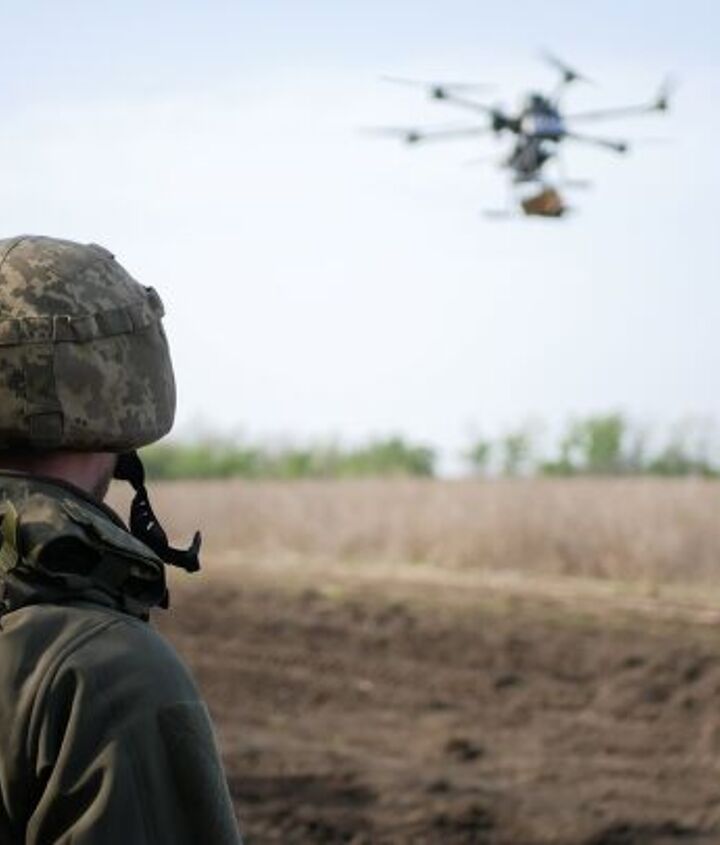
The French Defense Ministry has reached out to Renault to ask it to produce military drones. French leadership believes the automaker could supply Ukraine and help with the war effort there. However, no formal decisions have yet been made by Renault.
Drones have become a major component of modern warfare. While they lack the range and destructive power of missiles, they’re cheaper to produce and can be flown in with high levels of precision. They also come with the benefit of serving as both an offensive weapon and intelligence gathering or surveillance tool. Additionally, their psychological impact they produce on ground troops cannot be understated.
"We have been contacted by the defence [sic] ministry about the possibility of producing drones. Discussions have taken place, but no decision has been taken at this stage, as we are awaiting further details on this project from the ministry," Renault explained in a statement to Reuters.

From Reuters:
Earlier on Sunday, French news website Franceinfo reported the French carmaker was expected to produce drones in Ukraine.
Asked about the report, the ministry told Reuters it was up to the carmaker, without naming it, to say whether it would participate.
Also without naming any companies, Defence Minister Sebastien Lecornu told French news channel LCI on Friday that France would set up a partnership between a major French carmaker and a small defence firm to equip production lines in Ukraine for building drones.
While this news may seem shocking to some, there are countless companies people normally wouldn’t associate with the military that currently serve as major defense contractors. This has especially been true of automakers due to their manufacturing capabilities. It’s no secret that every major automaker stopped building cars to pivot to support the war effort during World War II. But some continued the practice through subsequent wars — and even peacetime — or spun off businesses that would focus entirely on government contracts.

For example, Oshkosh started out in 1917 building large, all-wheel drive trucks designed to haul freight through rough terrain (e.g. logging or mining operations). But the company gradually pivoted to government contracts over the next couple of decades. The company has almost exclusively focused on government contracts since the 1940s and builds everything from tactical vehicles to the latest incarnation of the U.S. mail truck.
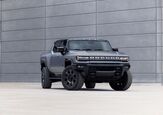
Meanwhile, General Motors has a subsidiary (GM Defense LLC) that is still wholly devoted to defense contracts. Despite most of the news about the company relating to experimental military vehicles (pictured above), it likewise builds logistical trucks, light tactical vehicles, energy storage systems, and heavily armored versions of passenger vehicles (e.g. Chevrolet Suburban) — the latter of which it announced it would be supplying to the Qatar Armed Forces and Special Forces Command. Like most automakers, General Motors also upfits vehicles for domestic law enforcement.

Perhaps unsurprisingly, Renault had its own Renault Trucks Defense division building armored personnel carriers (APCs), logistical trucks, and medium assault vehicles for NATO and the French Army. However, the business became a subsidiary of Volvo in 2001.
Known as Arquus, following another change in ownership that took place in 2018, the former Renault subsidiary has expanded to supply non-NATO African nations with military vehicles. It has also also moved into developing flying drones mobile robotic shooting platforms (pictured below).

Should the Renault of today move ahead with large scale drone production, it's bound to see some push back from French civilians. Drones been extremely contentious since being utilized to surveil Parisian protests in 2014. While the nation technically banned the use of police drones due to public criticism in 2020, they started to reappear at French protests in 2023.
Since then, local authorities have also claimed they’ve begun intercepting non-government drones over sensitive sites (e.g. nuclear plants) and numerous political rallies. More recently, French leadership has suggested imposing restrictions on who can/cannot pilot drones and already has requirements for flying drones of a certain size or above an altitude of 150 meters.

[Images: seeasign/Shutterstock; GM Defense; Arquus]
Become a TTAC insider. Get the latest news, features, TTAC takes, and everything else that gets to the truth about cars first by subscribing to our newsletter.
Consumer advocate tracking industry trends and regulations. Before joining TTAC, Matt spent a decade working for marketing and research firms in NYC. Clients included several of the world’s largest automakers, global tire brands, and aftermarket part suppliers. Since adding automotive writing to his repertoire, he has become an ardent supporter of the right-to-repair movement, discussed the status of the automotive sector on national broadcasts, participated in a few amateur rallying events, and driven more rental cars than anyone should ever have to. Handy with a wrench, Matt grew up surrounded by Detroit auto workers and learned to drive by twelve. Alleged to be contrarian, Matt claims to prefer understeer and motorcycles.
More by Matt Posky





Comments
Join the conversation
F.Y.I., "defence" is a correct British spelling of the word.
Why not Peugeot?
According to their corporate history and Clarkson, May and Hammond, Peugeot regularly changes its major product line-up.