


Driving Dystopia: Nightmare Brake Job Illustrates Problems With Modern Auto Maintenance


If you’re someone that prefers to work on your own vehicle, you’ve undoubtedly noticed that simple jobs haven’t gotten any easier over the years. You are certainly not alone in feeling that way. Automakers are very obviously making formerly simple maintenance routines an absolute chore and the latest example comes from the owner of a Hyundai Ioniq 5 N who dared to try and change his own brakes after some hard use.
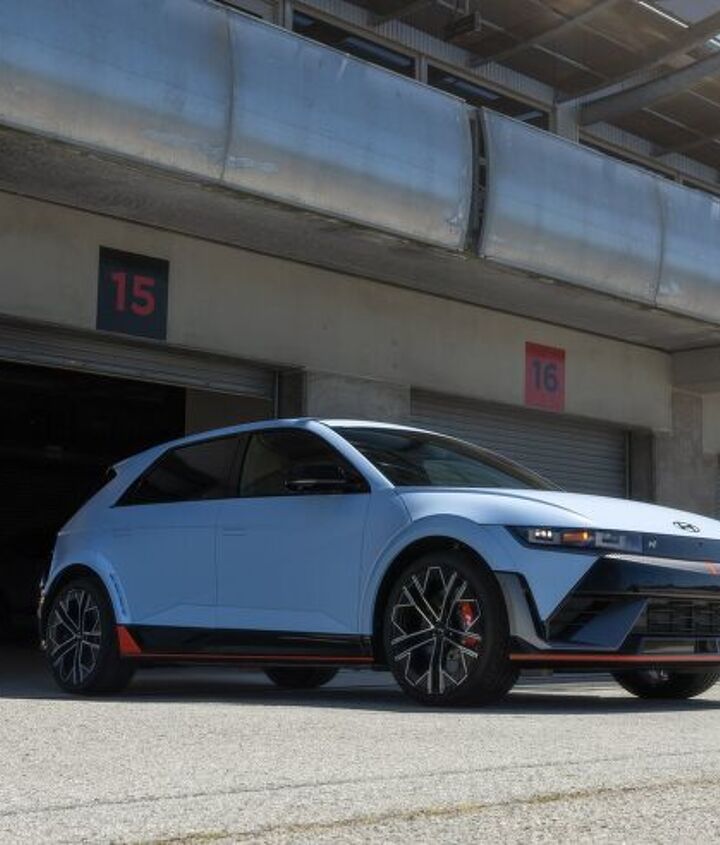
News comes from the Ioniq 5 subreddit, by way of CarScoops, where the owner of a 2025 Hyundai Ioniq 5 N shared their struggles in trying to change the rear brake pads. The poster claimed that the automaker was intentionally trying to lock out anyone the car decided wasn't a certified technician, adding that it felt like a clear Right-to-Repair issue.
From the Reddit post:
The only way (for non-dealers) to replace the brake pads is to use Hyundai's special Windows-based "J2534 Diagnostic Tool" software. That costs $60/week *PLUS* you need to buy one of only three approved J2534 adapters, the cheapest of which costs about $2k. It also requires a permanent Internet connection to authenticate and operate.
So, after exploring all non-Hyundai options (they don't work, and why they don't will become obvious shortly), I broke down and bought the subscription and special adapter. Guess what? It didn't work; the software just gives error codes.
Hyundai has no contact information on their web site hyundaitechinfo.com (where they gouge you for the software and service manual subscriptions). With a bit of luck, I was able to find the telephone number of the USA company that develops the "J2534 Diagnostic Tool".
It turns out that the Hyundai dealers don't use this piece of junk software. Dealers have completely different software that runs on an Android tablet. Despite the 2025 Hyundai IONIQ 5 N being for sale for ~18 months, the Windows software was not updated to work with current models; that functionality is reserved for dealers and their dealer-only software.
The software developers remotely collected a bunch of diagnostic information from my PC and vehicle, and a month later, there was a new version of Windows software (that I had to pay for again).
This isn’t the first time we’ve heard of issues with people running into hurdles when trying to service their own brakes. Many cars now have electronic parking brakes that activate automatically whenever the vehicle is taken out of drive. This occasionally requires owners to know the correct sequence of input controls to temporarily disable the feature or own the correct diagnostic equipment. That, or they’re simply forced to take the car into the dealership — which is possibly the reason that all exists to begin with.

In the past, increasing mechanical complexity was the biggest obstacle in terms of repairing your own car. Your author always likes to use changing headlights as the prime example. Swapping out a dead bulb for a fresh one went from being a simple two-minute job (conducted without tools) to something that might require you to pop out the fender well liner (or other of plastic components) because of how cramped engine bays started to become around after the early 2000s.
While modern LED headlamps are supposed to last significantly longer, swapping them often requires removing the entire front clip of the vehicle. From there, you’ll be removing the entire headlamp assembly — which takes more time, costs significantly more, and may even require specialized tools.
But headlamps are just the tip of the iceberg. Most vehicle repairs and servicing has become more complicated due to the way today’s vehicles have been designed. Dipsticks are starting to vanish and many components that you could previously crack open to service yourself have been “sealed,” requiring more parts, labor, and specialized know-how.

The new frontier of industry gatekeeping seems to be coming in by way of electronics and that is what looks to have stymied the aforementioned Hyundai’s brake job.
While he continued trying to accomplish the task himself, he noted having to navigate a National Automotive Service Task Force (NASTF) login that’s designed to prohibit anyone from a registered locksmith (or dealer technician) from accessing the vehicle’s electronics. However, access is limited entirely to businesses, not owners or even independent repair shops.
The owner suggested that he would be required to submit an IRS EIN application, SSN, and specialized authentication app on their smartphone just to have a chance letting the J2534 Diagnostic Tool work as intended. But they likewise remained upset at how poorly the tool functioned, noting that dealerships had better equipment at their disposal.
Comments on the post ranged from theories about the car being electric could pose additional safety risks that would encourage the manufacturer to bar at-home repairs to people just claiming it was an anti-consumer scam. In all likelihood, it seems like the Ioniq N simply ran into the increasingly common issue of having to deal with an electronic parking brake and not having the proper OEM-sanctioned equipment to disable it so he could access the pads.
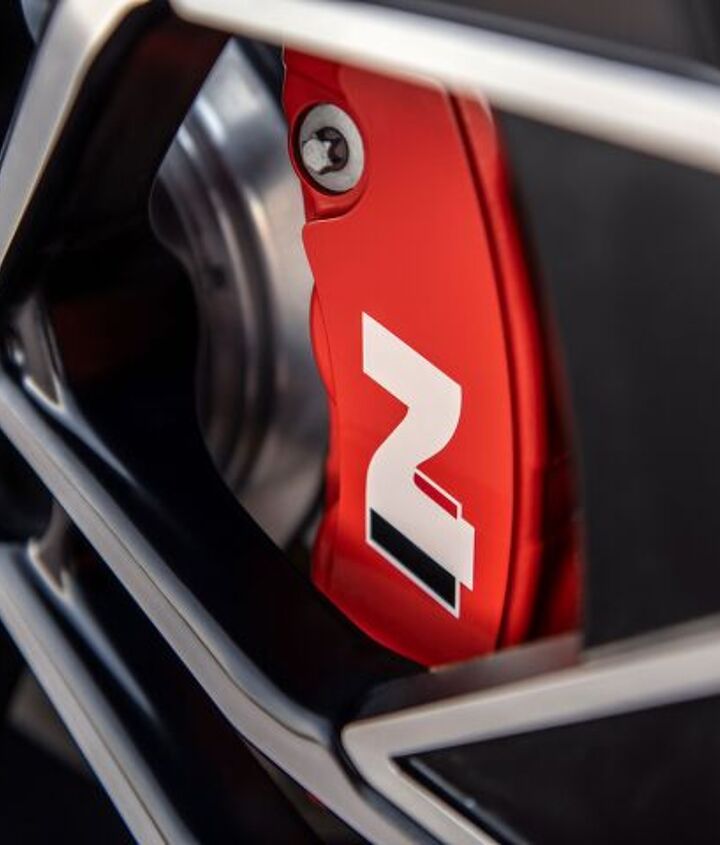
The original poster stated that it was his belief that this was becoming standard practice on all Hyundai’s built after 2018 — citing a segment about electronic authentication requirements in the vehicle’s manual. He also stated that his NASTF account was eventually blocked because “DIYers are not permitted for access.”
In the end, he tested out several other tools (over a period of weeks) and settled on the ICON T7 Professional Wired Diagnostic Scanner. While he said it struggled badly and threw tons of errors that had to be repeatedly cleared, it eventually allowed him to cut the electronic parking brake long enough to complete the brake job.
On the upside, it’s very likely that the owner will have better luck as more companies develop tools to work with his specific model. He could have also mechanically disconnected the rear brakes in a pinch. But it doesn’t resolve the issue that servicing our own vehicles hasn’t gotten any easier over the years and manufacturers seem keen on maintaining that trajectory. Even the simplest of jobs are becoming time (or cost) prohibitive chores.

[Images: Hyundai]
Become a TTAC insider. Get the latest news, features, TTAC takes, and everything else that gets to the truth about cars first by subscribing to our newsletter.
Consumer advocate tracking industry trends and regulations. Before joining TTAC, Matt spent a decade working for marketing and research firms in NYC. Clients included several of the world’s largest automakers, global tire brands, and aftermarket part suppliers. Since adding automotive writing to his repertoire, he has become an ardent supporter of the right-to-repair movement, discussed the status of the automotive sector on national broadcasts, participated in a few amateur rallying events, and driven more rental cars than anyone should ever have to. Handy with a wrench, Matt grew up surrounded by Detroit auto workers and learned to drive by twelve. Alleged to be contrarian, Matt claims to prefer understeer and motorcycles.
More by Matt Posky









Comments
Join the conversation
In 2026 the benchmarks for AI accuracy are quite different than the article opines. I see SWE-Bench scores between 80-93% today.
All car code will be agentically coded in the next few years. Honestly, this is as excited as I’ve ever been to see a forthcoming GM infotainment system.
Dropping CarPlay removes GM from purchase/lease consideration at this time, but the new AI infotainment might be a leap forward and reopen that door.
Wishing GM good luck!
Some vehicles need special attention and or tools, electronic and otherwise, to service brakes with ABS.
Of course, this is the makers trying to herd people into the dealership service department.
Someone mentioned the Autel tool, however they did not specify which model will perform the brake service function on a Hyundai. A check of the Autel website shows that their lowest price tool is about $400, but I could not find information as to whether or not it would fix the brake service problem on a Hyundai. Other Autel tools are at $2K or more. Add in any software subscription requirement and now the brake job has more than quadrupled in cost.
The auto makers are all for this, as, if you go to the dealer for service they get to sell their high priced parts and the dealer usually has to pay a fee to access the software. That's in addition to any special wrenches or other physical tools.
This type of thing is a reason why many vehicles resale price drops drastically after a certain number of years and there are often many warning lights illuminated on the dash as it is too expensive for the 3rd or 4th owner to get a shop to reset them.