Rare Rides Icons: The Cadillac Eldorado, Distinctly Luxurious (Part LXXV)

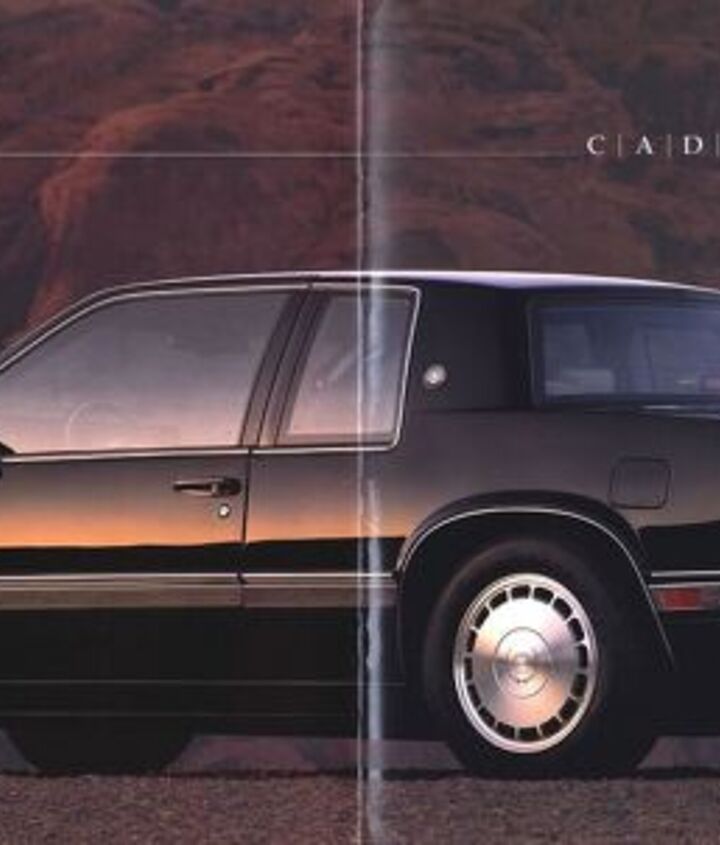
The downsized Cadillac Eldorado appeared in 1986 in its smallest ever iteration with the HT4100 V8. Within two years it shed the troublesome engine in favor of the (HT4100 derived) 4.5-liter V8 and received a visual update that made it longer and more Cadillac-like. It was also dethroned during that period as the brand’s halo two-door, as the Allanté arrived in 1988 as GM’s super expensive competitor to the Mercedes SL. The 1989 model year brought a few new features and a revision of vinyl roof configurations, but the really exciting edits arrived in 1990.
Returning from an odd absence since 1985 was the Eldorado Touring Coupe. A late addition to the 1990 model year, the Eldorado Touring Coupe was not ready for early promotional materials and was not featured in the ‘90 brochure. The lack of publicity surely hurt customer recognition in its first model year. Its sibling the Seville Touring Sedan was already badged as Seville STS, but Eldorado did not follow suit.
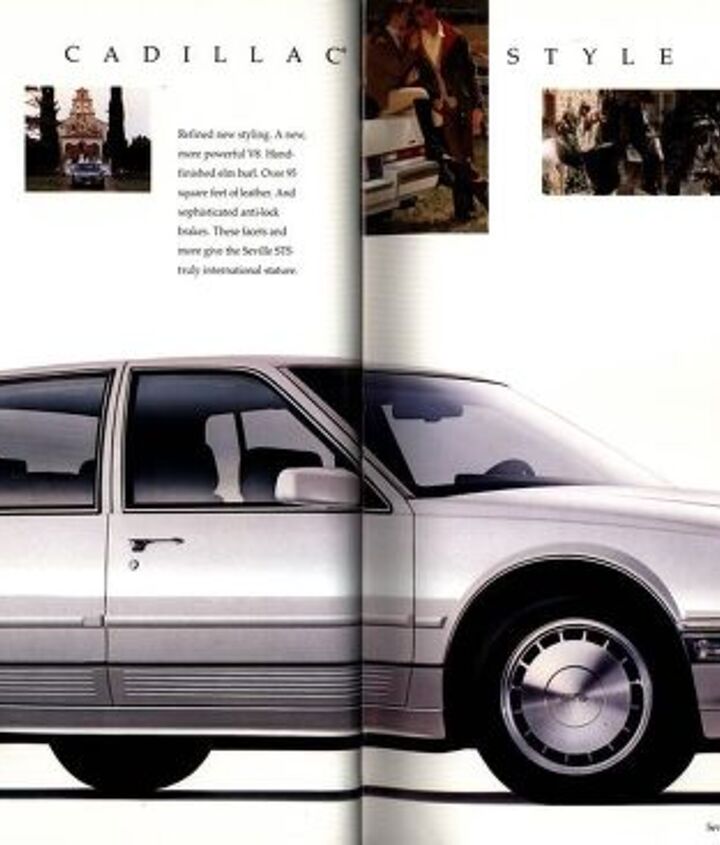
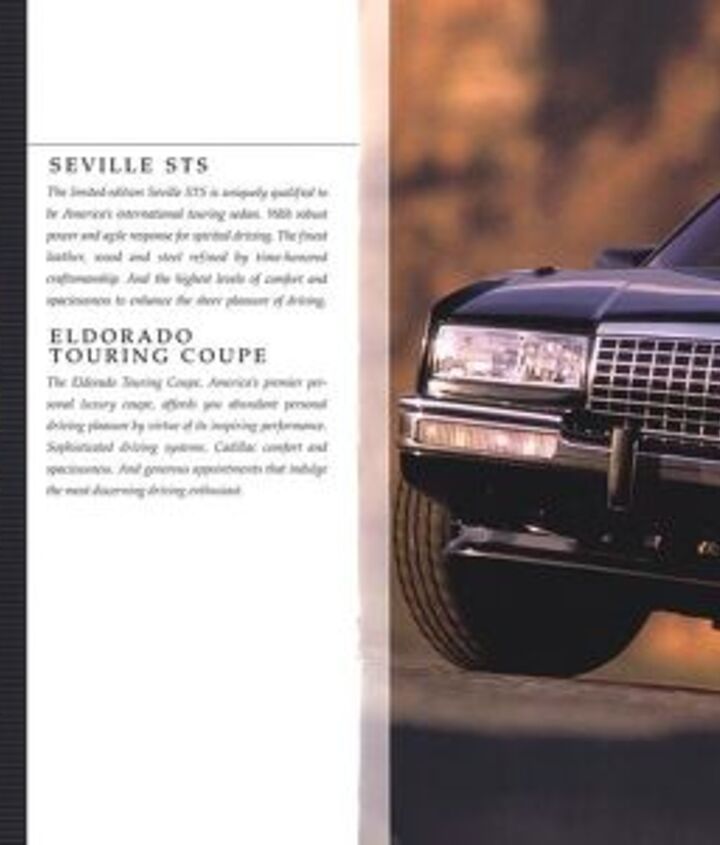
The new Eldorado Touring was once again the “exciting and European” take on the traditional Eldorado. Around the exterior there was limited badging, and the hood ornament at the front was replaced by a wreath and crest logo within the grille. Wheels were shared with the STS and Deville Touring: polished aero disc alloys that were much more modern than the standard wheel options.
At the rear the details got even more interesting. US market tail lamps were cleverly swapped with European market ones, where legislation required an amber turn indicator lens. The traditional wreath and crest at the rear was replaced with a flat cloisonne badge. And perhaps most notably, the exhaust tips featured three small square sections per side and were shared with the STS.
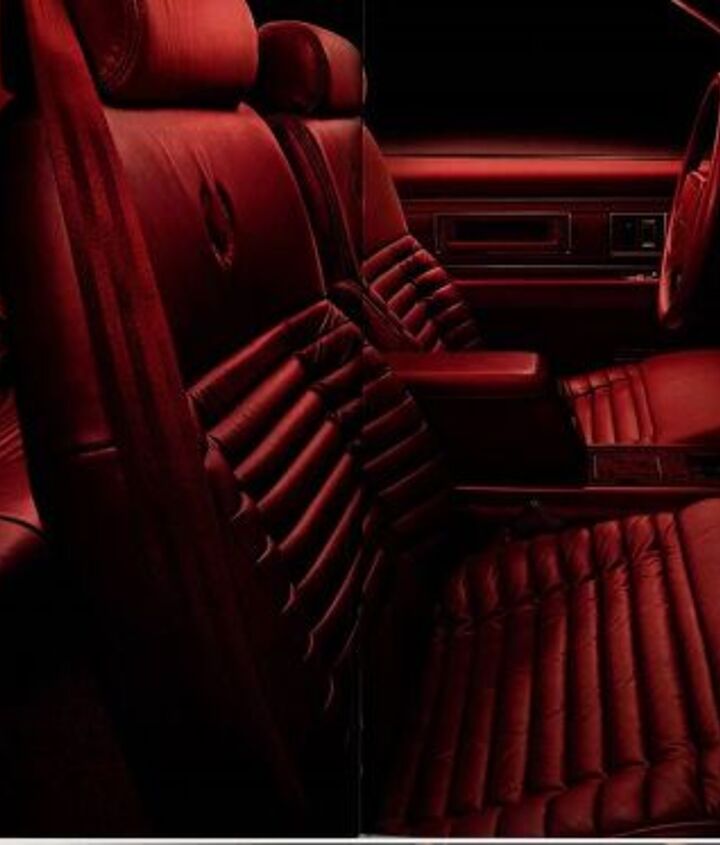
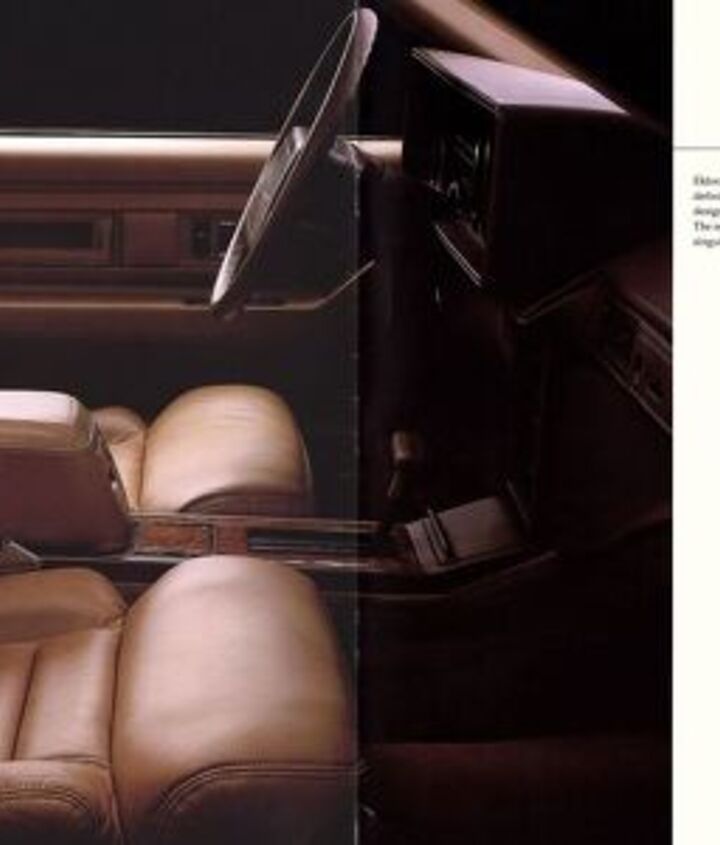
Inside the Eldorado Touring received real wood on the dash, upgraded leather seating, and seats that had more bolstering and a different cushion shape. Unlike the STS which received notably more wood on the inside than the standard version, the Eldorado’s amount of timber did not change. Both cars shared the “Touring Suspension” which changed the final drive ratio to 3.33:1.
Interestingly, all Touring vehicles (Deville, Seville, Eldorado) were available with only one interior color through this generation: camel. It was impossible for buyers to specify the most Euro-centric configuration of black on black. In other odd choices, the Allanté, STS, and Eldorado Touring formed a new “International Touring Series” of vehicles in the marketing materials.
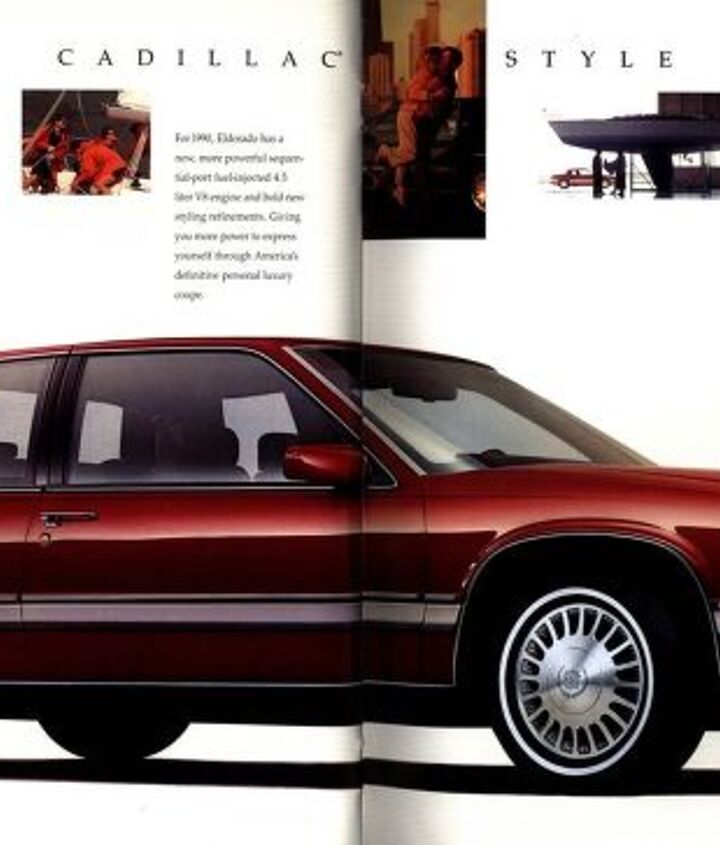
Excluded from the group for an unknown reason was the Deville Touring Sedan. Introduced in 1986, it was renamed to Cadillac Touring Sedan (the Company’s first use of the CTS initials) in 1988. In 1989 it disappeared entirely and was not sold. The Cadillac Touring Sedan returned in 1990 with its own brochure.
Other news in 1990 included a driver’s airbag as standard equipment across the Cadillac line, except Brougham. The new safety feature meant the wheel only tilted and was no longer telescopic. Cruise control buttons could no longer fit on the wheel with the huge airbag, so they were moved to a clumsy multi-function stalk with the indicators and wipers. Technology also improved under the hood, as the 4.5 V8 had electronic multi-point fuel injection. The advancement increased horsepower from 155 to 180, and also meant premium fuel was newly required.
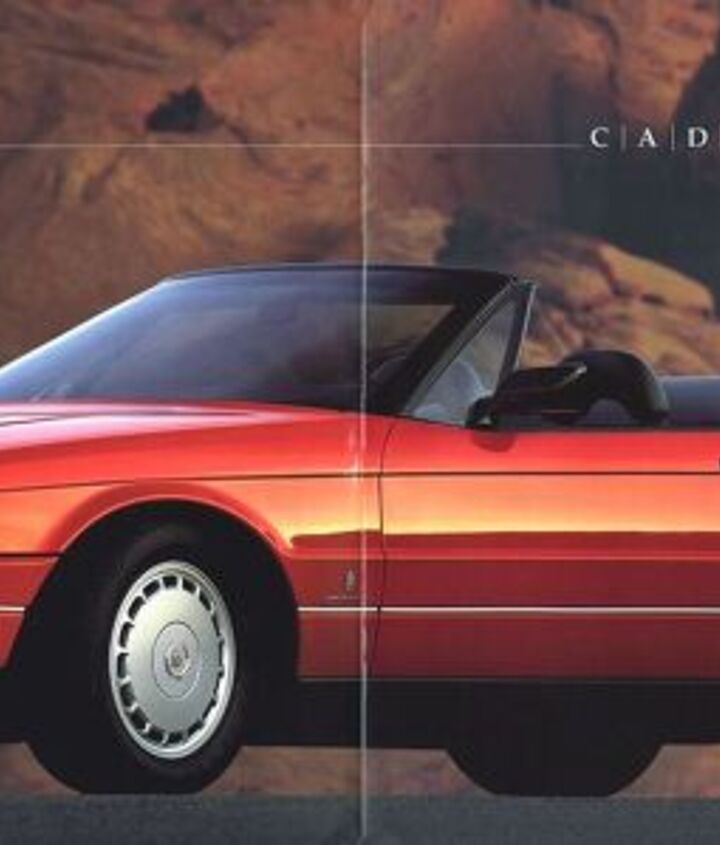
Base models received new seat shapes with better lumbar support. A full leather upholstery that nixed the cloth inserts was optional on base models but became standard on Biarritz. In exchange, base model cars no longer had map pockets behind the front seats. Other cost cutting measures included the deletion of the expensive car phone as an option.
GM threw in a few things as standard equipment in 1990 as it reworked the model: floor mats, color-keyed edge guards, illuminated vanity mirrors, and lighted lock cylinders on the exterior. Shockingly, it took until 1990 for the rear window defogger and heated mirrors to be standard on the Eldorado. Optional on base and Biarritz Eldorados and the only option on the Eldorado Touring was a new security package. It included central locking, remote keyless entry, and automatic door locks. It would be very rare for an Eldorado of this era to be specified without the security package.
In 1991 the Cadillac line prepared to replace all the “old” products and would be totally reworked between 1992 and 1994. The final eleventh-gen Eldorado received a new engine, the 4.9-liter V8. It was the final and best iteration of the HT4100 from the Seventies and was the most powerful and most reliable. Paired with it was a new four-speed automatic, the 4T60E used across the Cadillac line.
The 4.9 brought with it a new powertrain control module (PCM) and a more freely breathing catalytic converter. Computer Command Ride in theory adapted the suspension to speed for better handling and was standard on Eldorado. And better handling was more important, as the 0 to 60 time of the Eldorado had dropped from 9 seconds to 8.2 when equipped with the 4.9.
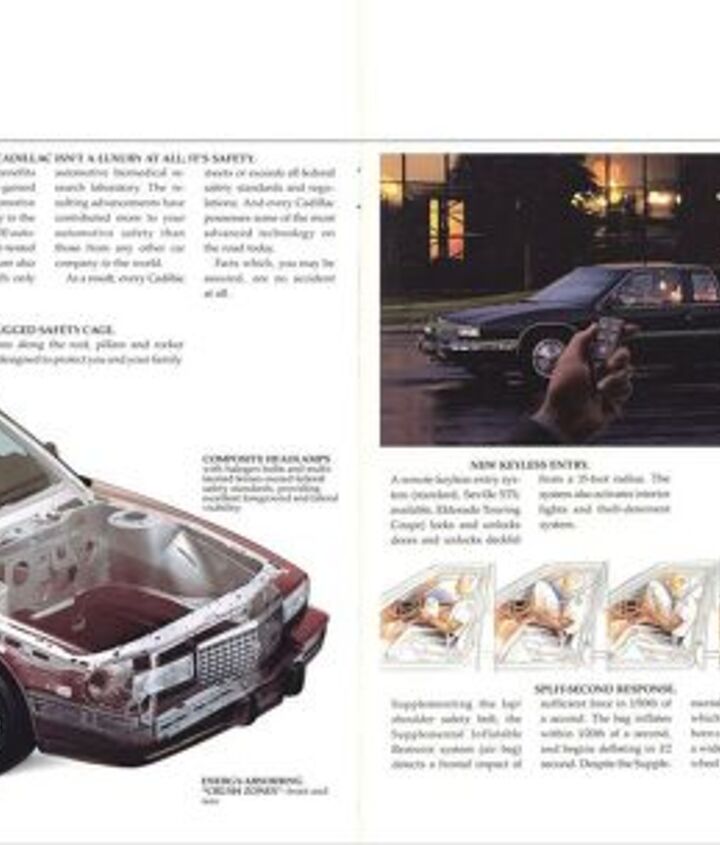
ABS braking was finally standard. The aforementioned Security Package was an optional extra on base Eldorados, but newly standard on Biarritz and Touring. GM layered on free options to tempt buyers into the model’s final year, as the vinyl and cabriolet roof options could be added free of charge. Also free to Biarritz and Eldorado Touring buyers was the previously spendy power moon roof and the premium Delco-Bose audio system. Strangely, most customers did not opt for the free moon roof.
In the background at Cadillac, engineers were readying the company’s new models for 1992. Seville and Eldorado were the headliners that year, followed by a brand-new Fleetwood in 1993, and a new Deville in 1994. Crucially, the engine that was supposed to be ready for those 1992 models - Northstar - wasn’t finished on time. The company’s brand-new modernized product used the 4.9 V8 in various ways through 1995.
In our next installment we’ll take a look at Cadillac’s sales and pricing for 1986 to 1991. It was a troubled time at the brand as the downsizing and 4.1 V8 took their toll, Japanese competition joined the fray, and the old guard Cadillac faithful stopped buying cars altogether. Believe it or not, four Cadillac models disappeared during the period. More next time.
[Images: GM]
Become a TTAC insider. the latest news, features, TTAC takes, and everything else that gets to the truth about cars first by subscribing to our newsletter.
Interested in lots of cars and their various historical contexts. Started writing articles for TTAC in late 2016, when my first posts were QOTDs. From there I started a few new series like Rare Rides, Buy/Drive/Burn, Abandoned History, and most recently Rare Rides Icons. Operating from a home base in Cincinnati, Ohio, a relative auto journalist dead zone. Many of my articles are prompted by something I'll see on social media that sparks my interest and causes me to research. Finding articles and information from the early days of the internet and beyond that covers the little details lost to time: trim packages, color and wheel choices, interior fabrics. Beyond those, I'm fascinated by automotive industry experiments, both failures and successes. Lately I've taken an interest in AI, and generating "what if" type images for car models long dead. Reincarnating a modern Toyota Paseo, Lincoln Mark IX, or Isuzu Trooper through a text prompt is fun. Fun to post them on Twitter too, and watch people overreact. To that end, the social media I use most is Twitter, @CoreyLewis86. I also contribute pieces for Forbes Wheels and Forbes Home.
More by Corey Lewis





Comments
Join the conversation
My parents started buying used in their last two Lincolns, 2006 and 2010 TCs. They looked at a used Deville in that age range. I wonder to this day how a Deville would have worked out for them. They were mostly GM folks with a Ford here and there, no Chryslers or imports.
As Corey posted model differentiation by this time became almost impossible to discern for most people.
By 1986 the 3rd generation Seville and the 11th generation Eldorado both arrived and most consumers had trouble differentiating between them.