


Abandoned History: General Motors' High Technology Engine, and Other CAFE Foibles (Part III)

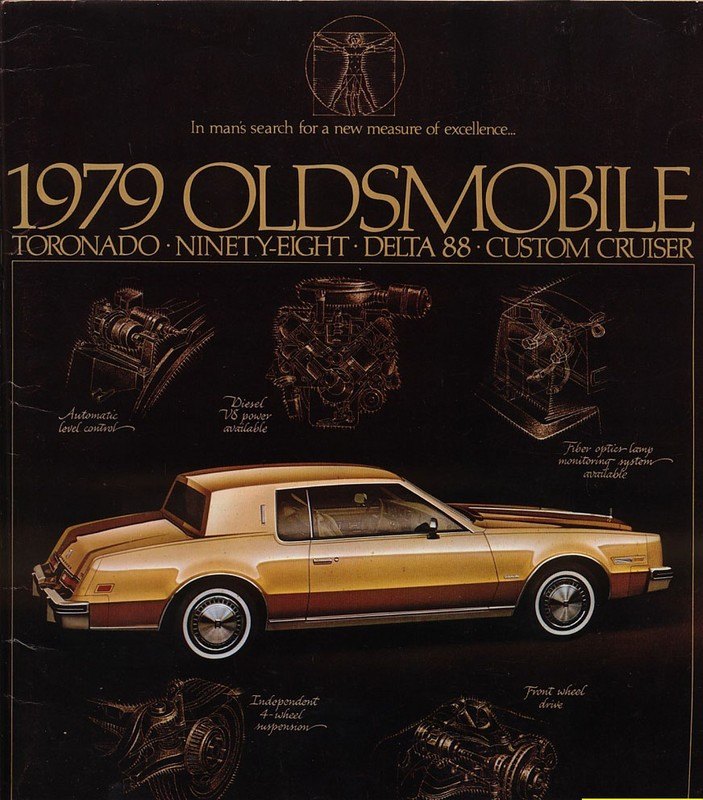
In today’s edition of Abandoned History, we return once more to the late Seventies engines of General Motors. After the disaster which was the V8-6-4 and the subsequent release of the quite flawed HT4100 V8, we take a sidestep today into diesel. Time for a turn with the cost-cut cast iron Oldsmobile oil burner that accompanied the troubled gasoline engines at GM dealerships across the country.
Unlike the prior two engines covered in this miniseries, the Oldsmobile diesel was not a Cadillac exclusive. Rather it was shared across the General Motors passenger car line in the late Seventies and existed in three different displacements with two cylinder counts. It even found its way into front- and rear-drive cars.
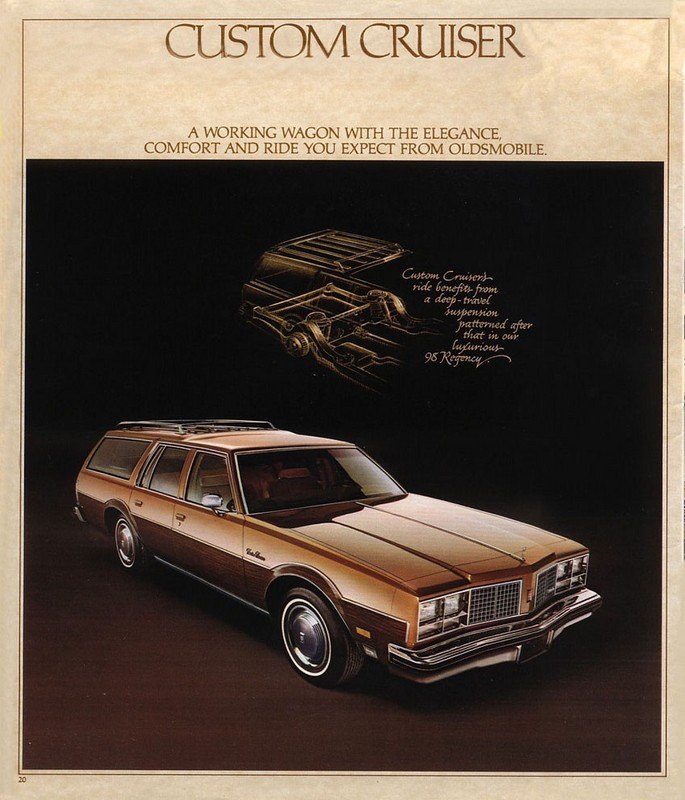
The diesel’s story begins like the others, with federal legislation. Emissions needed to fall, miles per gallon needed to increase, and diesel seemed a sensible solution. Though nearing an end, GM’s divisions were still allocated funds to develop their own engines in the late Seventies. Economical diesel duty fell to the good engineers at Oldsmobile, as closely supervised by a team of accountants who were eager and empowered to implement money-saving tactics.
When Olds designed the 350 (5.7-liter) diesel, someone decided the best and cheapest way forward was to do some parts sharing with the gasoline 350 already in production. So they used the same head bolts. Bolt design and pattern were left unchanged from the gasoline engine, which meant no new tooling was required. That was a problematic decision when it came to diesel engines, as diesels run at much higher compression than gasoline engines (22:5:1 here). The pressure in an oil burner can be three times greater than in a similar gasoline engine.
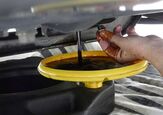
That wasn’t the only thing GM neglected to consider, however, as they also left out a water separator. In diesel engines, the water separator is a part of the fuel filter and is hydrophobic. Water in the diesel fuel can’t pass through the filter and is collected at the base of the filter where it drains outside. The drainage prevents corrosion inside the engine.
The General decided the engine didn’t need a water separator, since those cost money. It might not have been a huge problem if the U.S. was supplied with quality diesel free of contaminants in 1978. But it wasn’t. Like the quality of everything around that time, the quality of diesel fuel was lacking. Fuel-adjacent issues included the timing chain that ran the fuel injector pump. Simple usage caused the chain to stretch. That meant the pump was a bit lackadaisical about delivering fuel and did so too late.
All these components made for a perfect storm within the new Oldsmobile diesel engine; developed hastily and on the aforementioned tight budget. An engineer on the diesel project warned management the engine was not ready for primetime and had issues. But General Motors was more concerned with the big bad monster looming that was CAFE. They sent the engineer to collect his things and take an early retirement.
The completed engine was coded the LF9 and was spread to most of GM’s passenger line. Buick, Cadillac, Chevrolet, Oldsmobile, Pontiac, and GMC all implemented the LF9 350 V8 in 1978. From its 5.7 liters displacement, the engine managed 120 raucous horsepower and 22o lb-ft of torque. The diesel went over well in none of those vehicles. Keep in mind the problems in its design were often compounded by GM dealership mechanics who knew next to nothing about diesel engines and were not used to wrenching on them.
The terrible decision to use gasoline-spec head bolts lead to general overheating, head gasket failures, and head bolts that sometimes gave up the ghost. The V8s lack of water separator meant water hung around in the fuel system. A lot of said fuel system was steel, so it rusted from the inside out.
Enterprising owners had a fix for the diesel water issue and decided to add anhydrous alcohol (or “drygas”) to their fuel tanks. While that did absorb the water, the alcohol reacted badly with the insides of the (already rusting) injection pump. Pieces of the governor rings in the pump broke apart and blocked the fuel lines. Whoops. Said owners made another mistake when they failed to consider their Cadillac or similar diesel took a different engine oil than the gasoline one with which it shared a garage. With the wrong oil, the engine’s crank bearings weren’t long for the world.
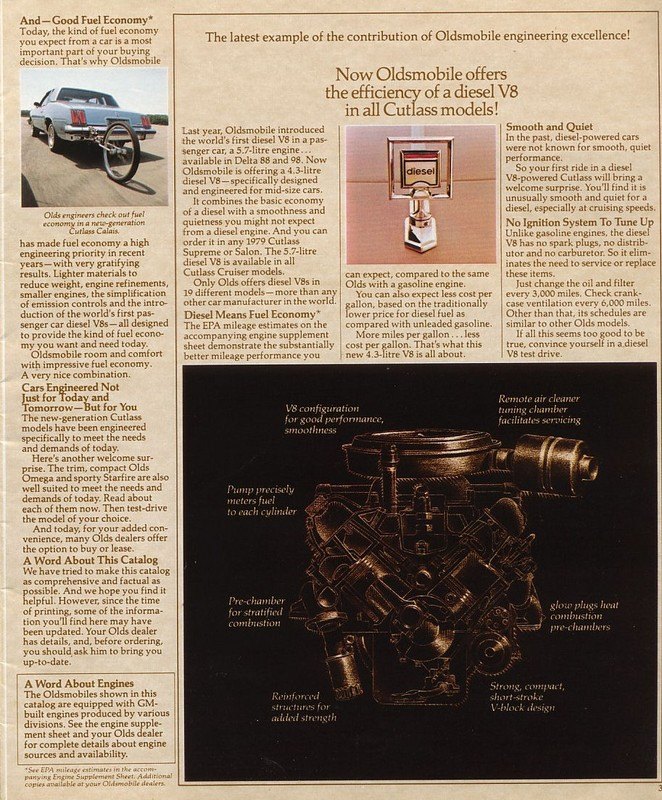
General Motors recognized (internally) the problems with the 5.7, and updated it from 1981 onward with a revised run of engine blocks. That version included a water separator and a revised cam, but there was a cost to the changes: Less power. After revisions, the engine made just 105 horses and 205 lb-ft of torque.
The changes to the 350 didn’t stop the wide variety of class-action lawsuits filed against GM for their defective diesel engines. Parties involved wanted GM to recognize publicly that its diesels had problems. CARB didn’t certify the V8 for sale in California in 1979 or 1980: The examples shipped to sunny California for testing broke down before the tests were finished. GM sent nine cars to the west coast, all of which had major engine problems. Seven of the nine had transmission failures, as the THM200 they used called it quits.
Oldsmobile developed another version of the V8 for 1979, in the LF7. A 260 cubic-inch (4.3L) engine, it was down on power considerably over its larger brother. It coaxed just 90 horses from its displacement, and 160 torques. The 4.3 was available for a single model year and was sold only in two Oldsmobile Cutlass models, the Salon and Supreme.
Issues were prevalent enough to catch the attention of the FTC in 1980, as it filed a three-part complaint against GM. The FTC cited GM’s diesel engines, present transmission issues, and some cam issues in other gasoline V8s. Unfortunately, the FTC bit off more than it could chew with the diesel issue. As the considerable administration involved with citing 12,000,000 GM vehicles came to bear like a ton of bricks. In a first-ever, the FTC recommended the issue be handed off to volunteers at the Better Business Bureau for arbitration.
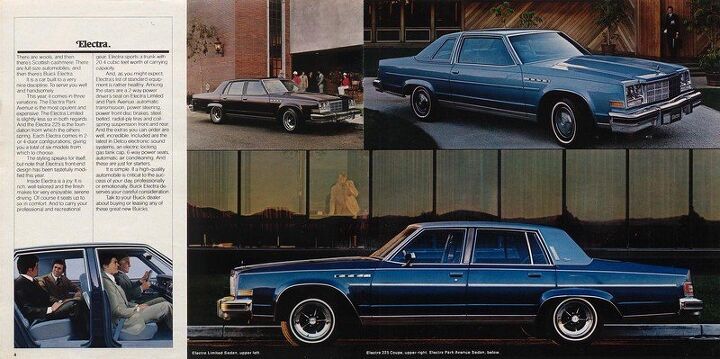
Big-name FTC interference didn’t deter GM from offering the diesel, where it was particularly prevalent at Oldsmobile lots. The 350(D) was offered in 19 of 23 Olds models in 1981. That year was the last good one for GM diesels; in 1982 the option was selected by 43 percent fewer customers. In addition to the widely publicized horrible reliability, fuel prices fell in ’82 and made the diesel even less of a draw.
Still, diesel development continued at Oldsmobile. In 1982 the LT6 debuted – the first diesel V6 in the program. With 4.3 liters displacement, it was nearly as powerful as the V8 LF7. LT6 made 85 horsepower and 165 lb-ft of torque and was very slow. Available mostly in 1982 and 1983, It was offered in mid-sizers like the Buick Regal, the Monte Carlo, and Malibu from Chevrolet. It was also offered from ’82-’84 in the Cutlass Supreme.
Around the same time as LT6, the fourth Oldsmobile diesel appeared. GM had spread its diesel infection into front-drive vehicles. A transverse version of the LT6, the LT7 diesel was offered in the introductory A-bodies: Pontiac 6000, Olds Cutlass Ciera, Chevy Celebrity, and Buick Century. Available from 1982 to 1985, LT7 had 4.3 liters displacement and offered the same 85 horsepower and 165 torques as LT6.
LT7 was notable in a few ways, mostly for its innovative design. It was the first V6 diesel designed entirely with passenger cars in mind. It was also a very early example of a diesel with an aluminum head. Volkswagen used the aluminum methodology first, and Mercedes-Benz followed GM with its aluminum head diesel in 1986. The LT7 would prove largely reliable, though head failures were not unheard of given the aluminum construction.
In general, the diesel V6 engines were not designed with the same issues as the V8 versions. Engineers had a longer timeline to prepare and test the engine, and they even used a more dense bolt pattern. By the time the more reliable V6 versions arrived, however, the reputational damage was long done.
Still, diesel was worth one more attempt, surely. For 1985, a new version of the 4.3-liter V6 appeared. It was limited in scope to the new C-bodies at Buick, Cadillac, and Oldsmobile. The downsized and sad cars used the LS2. Both LS2 and LT7 faded away in 1985, as General Motors stepped away from passenger car diesels for quite some time. The company briefly used Isuzu’s 1.8 diesel in the Chevette and Pontiac 1000 for the truly economically minded consumer. They sold 588 of those and dropped the engine option.
Through its three displacements, GM sold hundreds of thousands of diesel-equipped cars, and almost none of them worked properly. The debacle did major damage to the image of diesel engines in the United States, a reputation which arguably never recovered. In the end, GM paid $62 million to 194,000 customers. That figure is according to what was released by the Federal Trade Commission, which wasn’t up to dealing with the problem. We’ll return to Cadillac V8s in Part IV.
[Images: GM]
Interested in lots of cars and their various historical contexts. Started writing articles for TTAC in late 2016, when my first posts were QOTDs. From there I started a few new series like Rare Rides, Buy/Drive/Burn, Abandoned History, and most recently Rare Rides Icons. Operating from a home base in Cincinnati, Ohio, a relative auto journalist dead zone. Many of my articles are prompted by something I'll see on social media that sparks my interest and causes me to research. Finding articles and information from the early days of the internet and beyond that covers the little details lost to time: trim packages, color and wheel choices, interior fabrics. Beyond those, I'm fascinated by automotive industry experiments, both failures and successes. Lately I've taken an interest in AI, and generating "what if" type images for car models long dead. Reincarnating a modern Toyota Paseo, Lincoln Mark IX, or Isuzu Trooper through a text prompt is fun. Fun to post them on Twitter too, and watch people overreact. To that end, the social media I use most is Twitter, @CoreyLewis86. I also contribute pieces for Forbes Wheels and Forbes Home.
More by Corey Lewis









Comments
Join the conversation
The THM200 was an awful transmission. If a whimpy 305 was able to destroy it after 60K miles, I can easily imagine what happened with the 220 lb-ft of torque of the Diesel 350!
Hey TTAC, thanks for creating and sharing this content. We all know these vehicles weren't exactly superstars in terms of quality, engineering and performance, and while the styling in many cases is grotesque, one has to admire the character, boldness, and larger than life appearance of some of these cars. The Olds Toronado is a pretty clean design.