
Ford Introduces 'Hands-Free' BlueCruise System for F-150, Mach-E

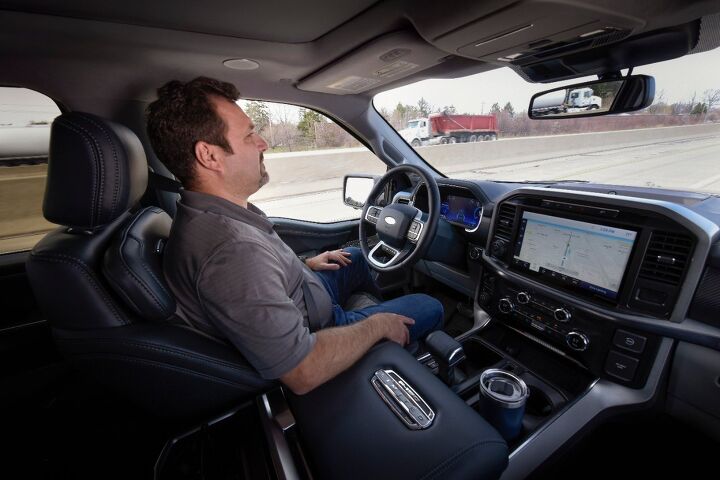
On Wednesday, Ford Motor Co. announced its upcoming hands-free driver-assist system intended to rival Tesla’s Autopilot or General Motors SuperCruise. The service, which the manufacturer has renamed BlueCruise, will be available on top trimmed “Mustang” Mach-E crossovers and F-150 pickup trucks via over-the-air-updates in the third quarter of 2021.
It will not be free, however.
Even though Ford has promised highly competitive pricing, customers will need to have purchased vehicles equipped with the necessary hardware (including driver monitoring cameras) before they’ll be eligible to spend the additional $600 Ford is asking for the privilege of using BlueCruise for three years. While more affordable than the competition, it still seems a lot to spend on a vehicle so you can pretend it’s self-driving – especially since the company failed to make it sound like it would be any more advanced than what’s being offered on Tesla and Cadillac vehicles that similarly cannot drive themselves.
BlueCruise seems to tap into all the latest automotive trends we’ve taken umbrage with – subscription services, locking features behind over-the-air (OTA) paywalls, invasive driver monitoring, and potentially delivering a tech product that’s less advanced than it appears at first blush. But that’s not really all that different from what’s being offered by Ford’s rivals.
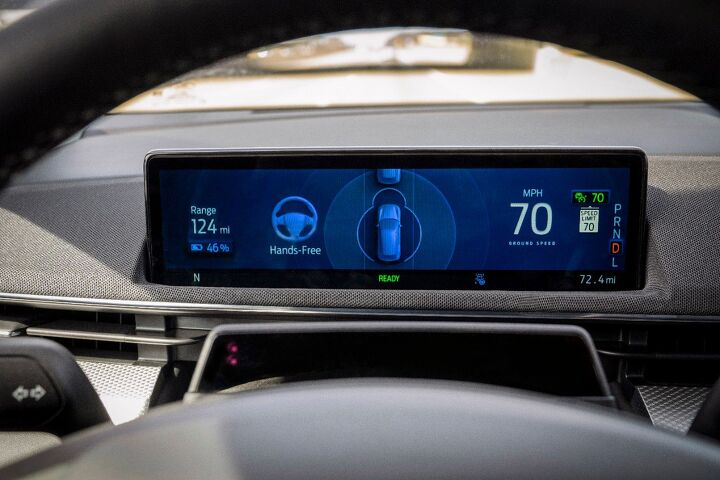
GM’s SuperCruise has limitations on where it can be used, comes with an interior camera, and requires that a driver remain constantly attentive or it will deactivate itself. Tesla’s Autopilot is more flexible, however, it’s been modified to keep operators more invested while running and will likewise shut down when it thinks you’ve checked out. Meanwhile, the EV manufacturer’s formerly lauded Full Self-Driving Capability has effectively evolved into a $10,000 version of Autopilot Plus with a promise from CEO Elon Musk that it might someday result in a vehicle that’s capable of SAE Level 5 autonomy. With the addition of several years worth of testing data on the fallibility of advanced driving aids, we’ve grown skeptical of the general premise.
But Ford said BlueCruise would be easier to use, claiming it would be a legitimate hands-free experience that would have features added as the technology matures. To prove this, it unleashed a batch of vehicles equipped with the system for a 110,000 mile (combined) road trip. The company also made a direct comparison between the new system and the Model T in an effort to make it seem more relevant.
The system is presently capable of navigating over 100,000 miles of divided highway (based on Ford’s GPS mapping network) in hands-free mode and that’s what customers will get at launch. But the automaker said that would increase over time, noting that future updates would gradually add new features to BlueCruise.
“There are highway intricacies and driving conditions that you simply cannot replicate in a lab,” said Hau Thai-Tang, Ford’s chief product platform and operations officer. “Sending these vehicles out for real-world driving experience is just one of many ways we ensured that BlueCruise technology offers confidence and convenience for drivers all across the continent.”
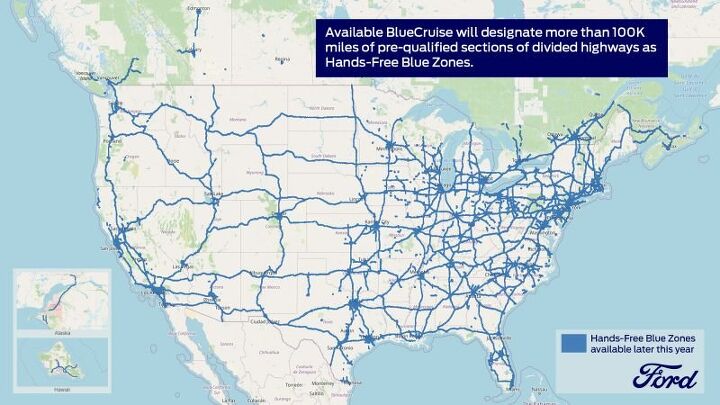
Additional details were given back in October, when the system was still called Active Drive Assist, that frankly paint a more comprehensive picture of what Ford is going for and even how it wants to market BlueCruise. By comparison, this week’s release offered very little information about what the system is actually capable of. Though we did learn that it wouldn’t launch with automatic lane changing or predictive speed adjustments designed to help the vehicle slow for turns or obstacles. Ford said they would be available later, however.
From Ford:
Henry Ford helped millions of people lay hands on their first automobiles beginning more than 117 years ago. Today, his company is helping many more people take their hands off steering wheels by applying the same approach to democratizing technology to Ford’s state-of-the-art Active Drive Assist hands-free driver assist innovation.
Ford developed Active Drive Assist based on advanced computing of camera and radar sensing technologies to provide real-time hands-free driving opportunities. The technology also enables expanded hands-free driving zones in the future based on system and customer patterns.
“As breakthroughs in new technology allow us to help reduce the stress of long highway drives, it’s important to make sure these capabilities can be enjoyed by the largest spread of people possible,” Hau Thai-Tang explained last fall. “Active Drive Assist can help improve the driving experience while ensuring people remain aware and fully in control, all for a price unmatched by our competitors – a commitment to affordable innovations that has driven us since Henry Ford put the world on wheels.”
Ford’s pricing claims appear to be accurate for the most part, though we’re not ready to call BlueCruise the deal of the century. For starters, customers appear to be paying $600 to spend 3 years beta testing the system and helping Ford accumulate data. While this is hardly a new practice for the automotive industry, there’s always something bothersome about paying for unfinished features. But let’s say you’re still interested and will be one of the 100,000 people Ford thinks will subscribe to the service within its first year. How can you make absolutely sure your vehicle is eligible?
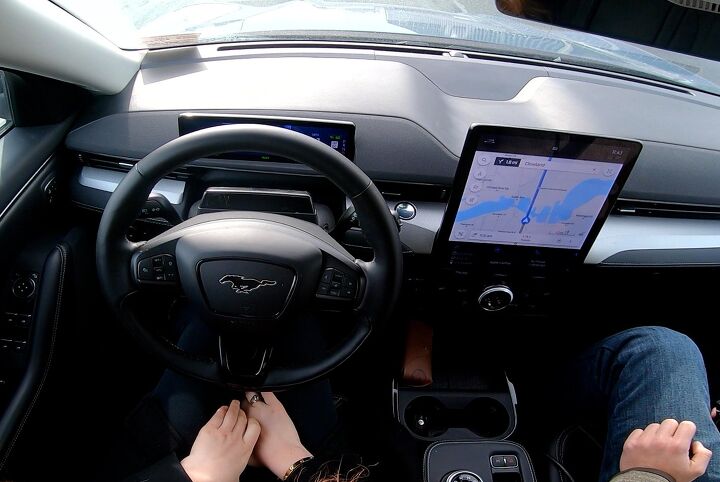
Customers will need to have purchased an F-150 equipped with the Co-Pilot 360 Active 2.0 package – which is standard on the Limited trim and can be added for $995 on others. From there, they can purchase BlueCruise and have it installed via the aforementioned OTA update and 3-year subscription. Alternatively, those who purchased a Mach-E CA Route 1, Premium, or First Edition model will find they have all the necessary hardware in advance and only need to pony up the $600. The Mach-E Select will also be eligible, provided it has the $3,200 Comfort and Technology package.
Availability is supposed to begin in the third quarter of this year and we expect to see another announcement a few days ahead of the official launch of Ford BlueCruise.
[Images: Ford Motor Co.]
Consumer advocate tracking industry trends and regulations. Before joining TTAC, Matt spent a decade working for marketing and research firms based in NYC. Clients included several of the world’s largest automakers, global tire brands, and aftermarket part suppliers. Dissatisfied, he pivoted to writing about cars. Since then, he has become an ardent supporter of the right-to-repair movement, been interviewed about the automotive sector by national broadcasts, participated in a few amateur rallying events, and driven more rental cars than anyone ever should. Handy with a wrench, Matt grew up surrounded by Detroit auto workers and learned to drive by twelve. A contrarian, Matt claims to prefer understeer and motorcycles.
More by Matt Posky








Comments
Join the conversation
Makes sense for the Mustang Model E, but I can't see this working too well with heavy loads, trailers, nor illegal lift kits. Basically your usual F-150 things. Can't say that I like Fords higher focus on data collection than quality control. But when you have iconic names to throw around I guess you can get away with anything.
How many people believe that THE best reason for a self driving vehicle is the ability to be making out with your girlfriend while the car cruises around on its own? But with a driver-focused camera?