Junkyard Find: 1985 Volkswagen Quantum GL Turbo Diesel Sedan
Murilee Martin
by Murilee Martin

Volkswagen of America used model names that didn’t match up to those of its European counterparts for much of the 1970s and 1980s. The Golf was the Rabbit through 1984 and the Passat started out as the Dasher and then became the Quantum over here. I find the occasional Dasher or Quantum during my junkyard voyages, but nearly all of the Quantums that have survived into our current century will be gasoline-burning Syncro Wagons. Diesels? After the Oldsmobile Diesel 350 debacle of the late 1970s and early 1980s, few Americans had the guts to buy a new oil-burner.

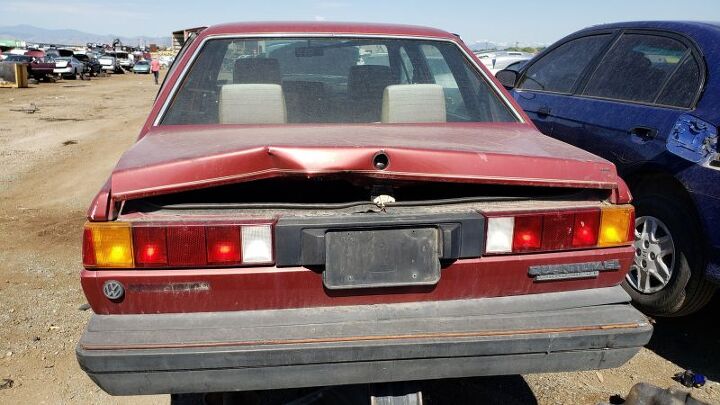
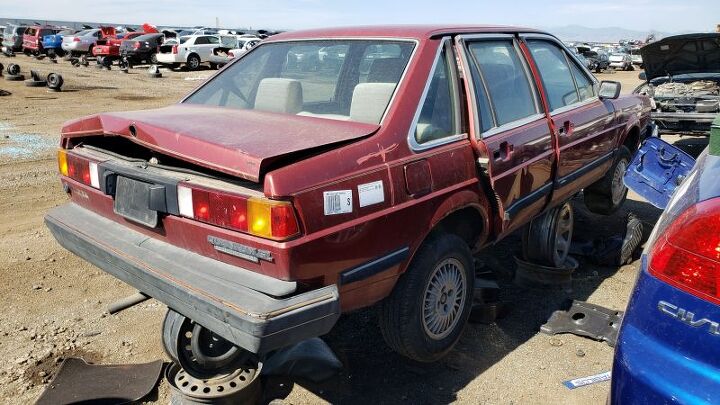
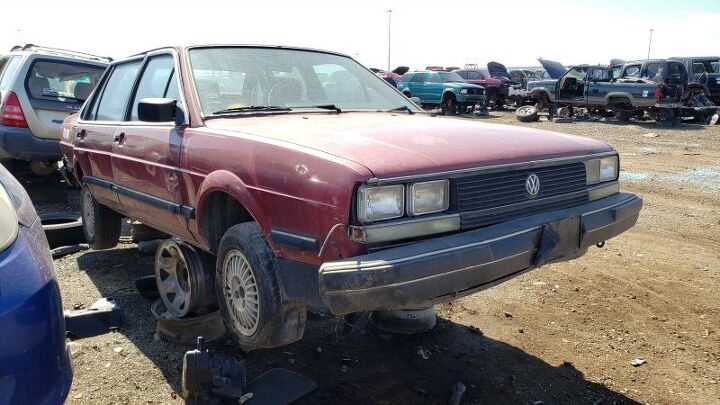
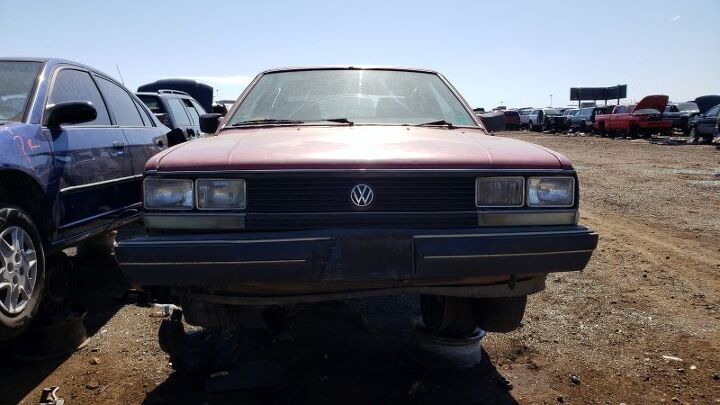
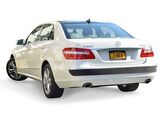
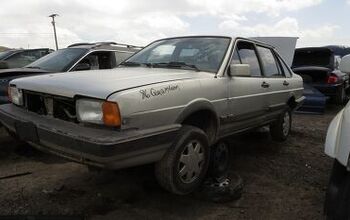
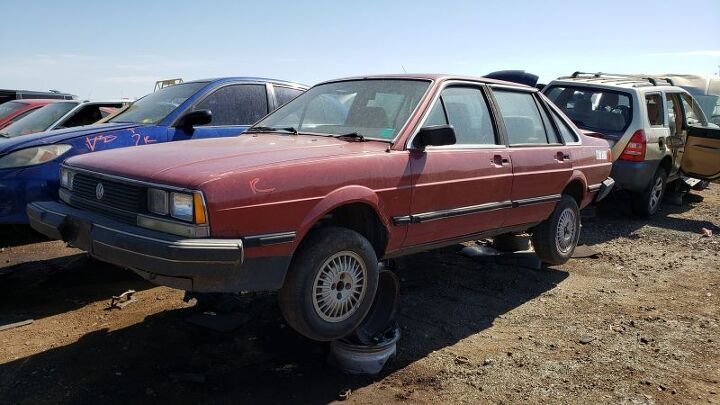
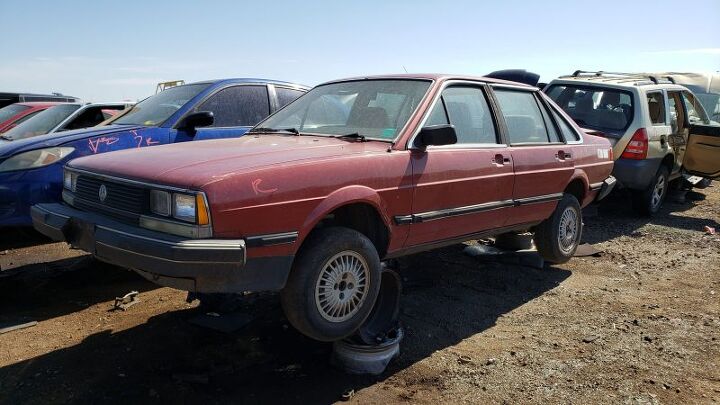
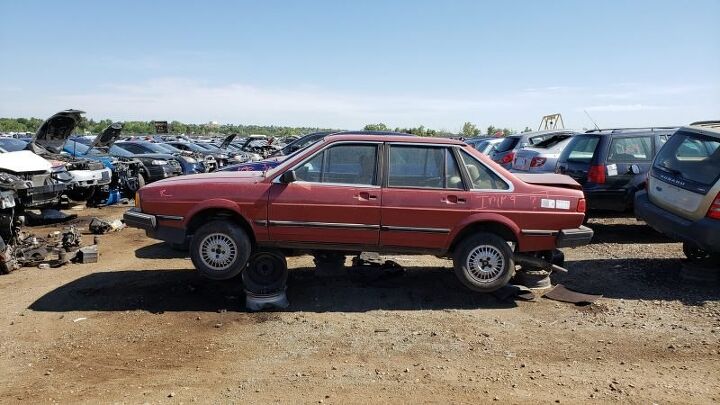
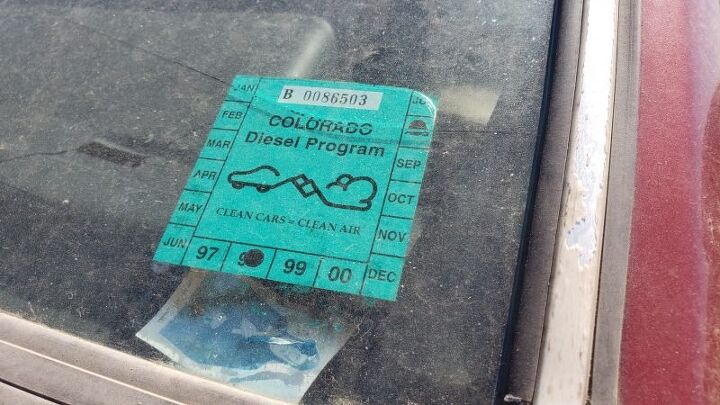
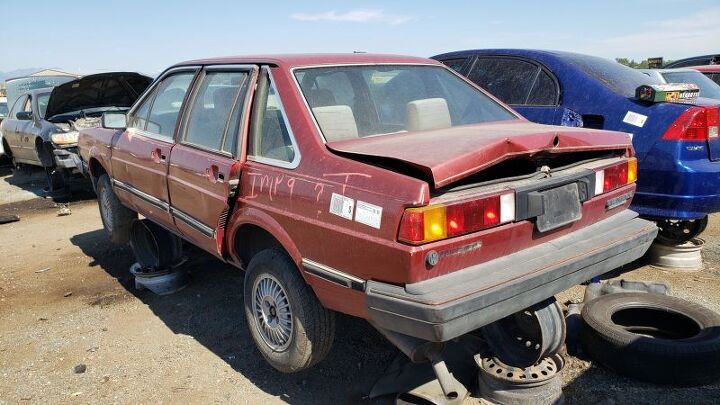
Here’s an extremely rare ’85 Quantum sedan with turbocharged diesel engine and manual transmission, finally laid to rest in a Denver self-service yard last month.
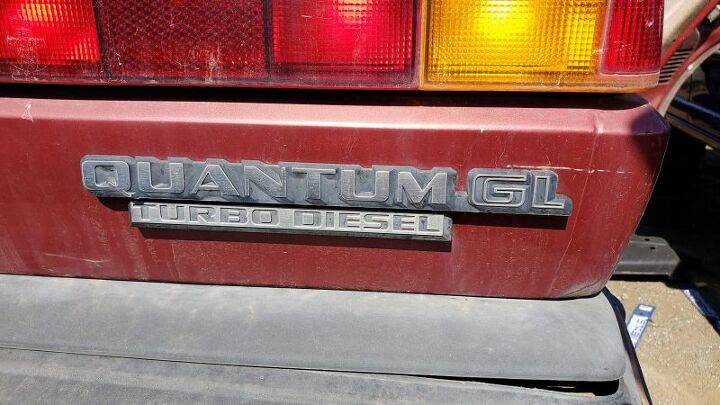
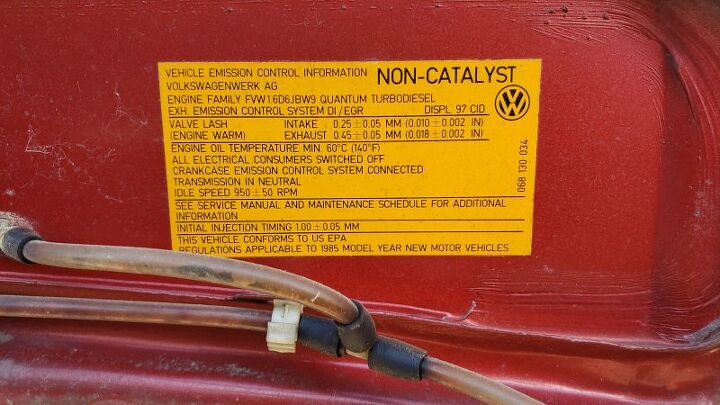
Most American Quantum sedan buyers in 1985 went with the five-cylinder Audi gasoline-burner, rated at 110 horsepower. The turbodiesel was the only other engine available in the ’85 sedan, and the original buyer of this car said I’ll have that!
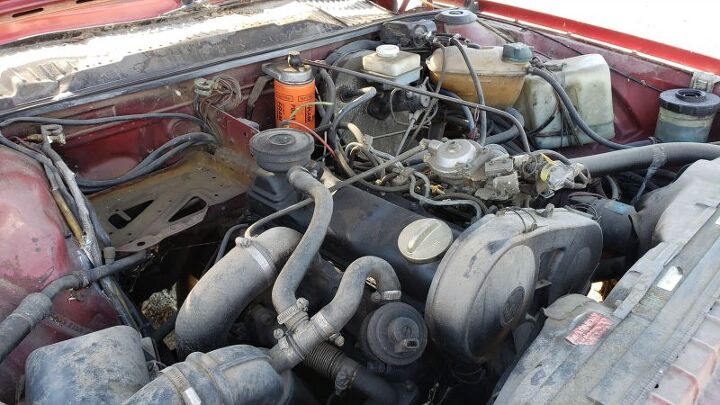
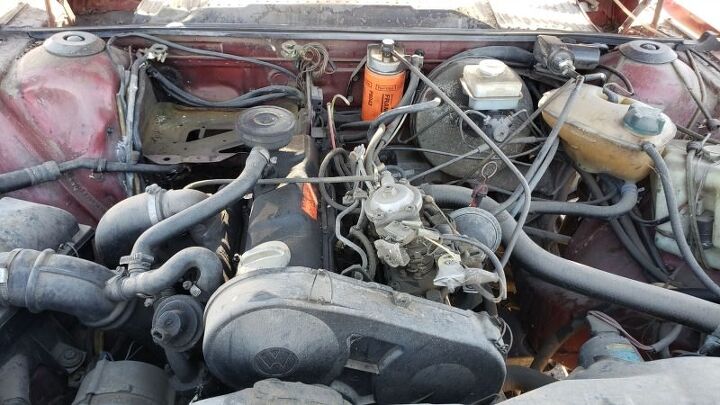
Four cylinders, 1.8 liters, 68 horsepower (and a tolerable 98 lb-ft of torque). American VW shoppers in 1985 could get this engine in the Golf and Jetta, too; if they really wanted to be cheap, they could opt for the naturally-aspirated version of this engine, rated at a horrific 52 horses. That was pretty good power compared to the Diesel Rabbits of the late 1970s, which offered just 48 horses.
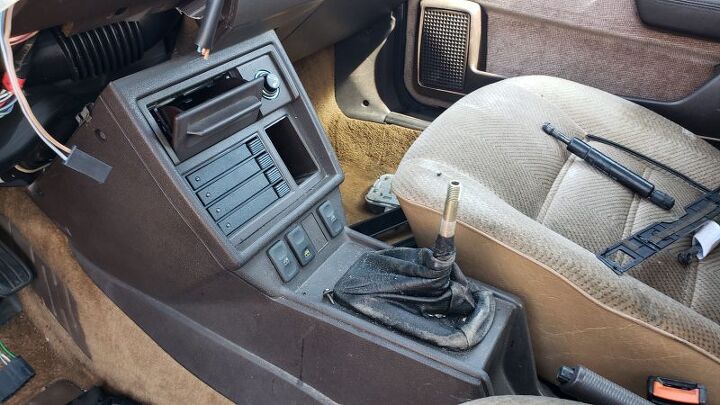
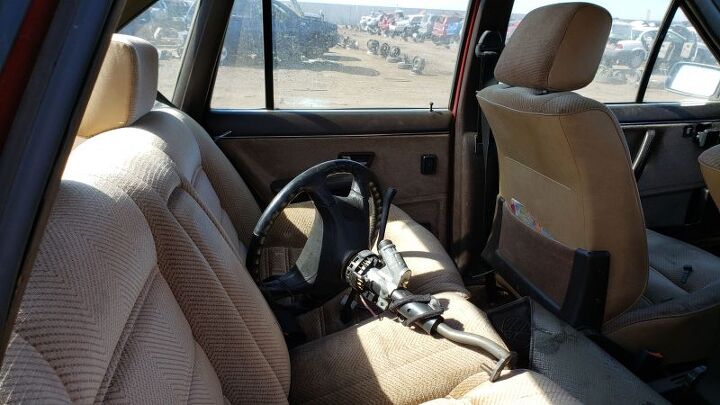
Fortunately for everyone who ever had to drive this machine, it has the five-speed manual transmission instead of the Matsch-O-Matisch™ three-speed automatic.
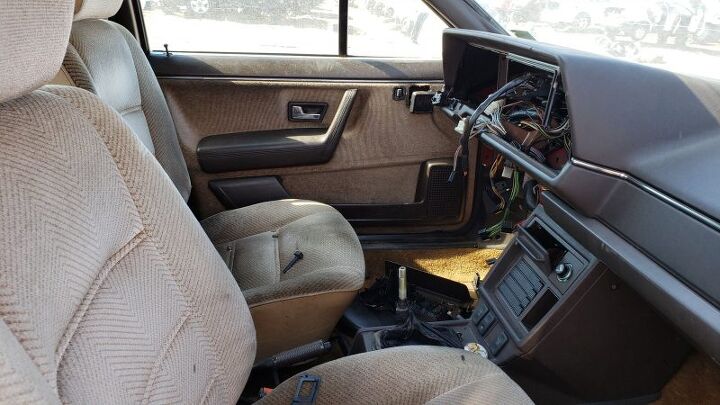
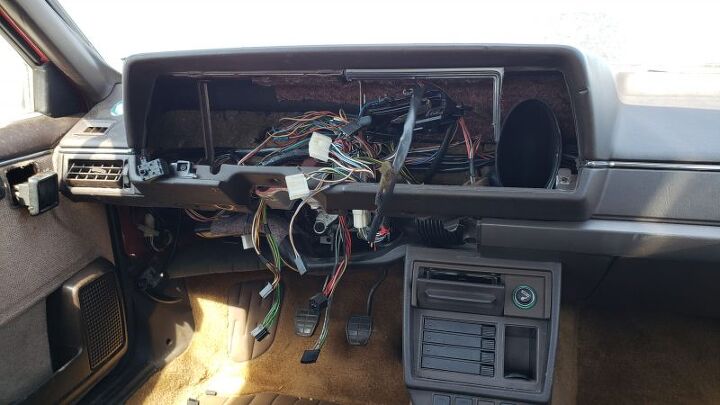
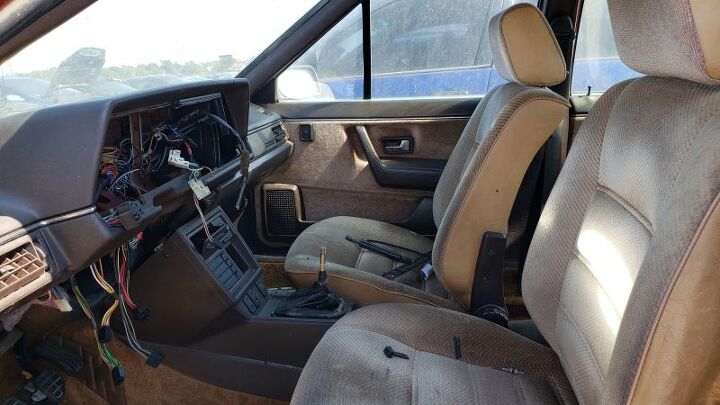
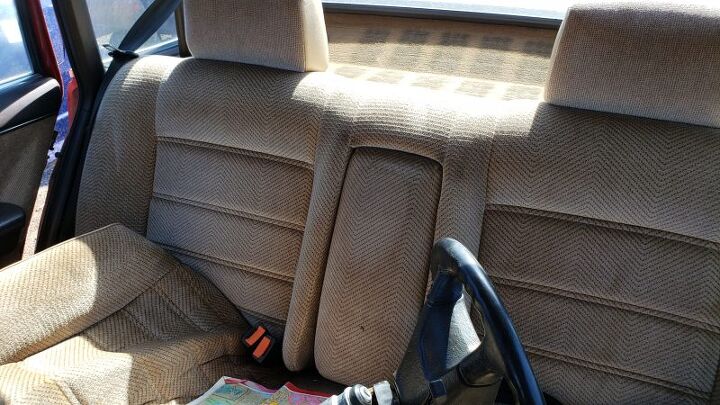
Someone bought the gauge cluster before I arrived, so the final mileage figure must remain a mystery to us. The interior looks clean enough for this to be a well-cared-for low-miler.
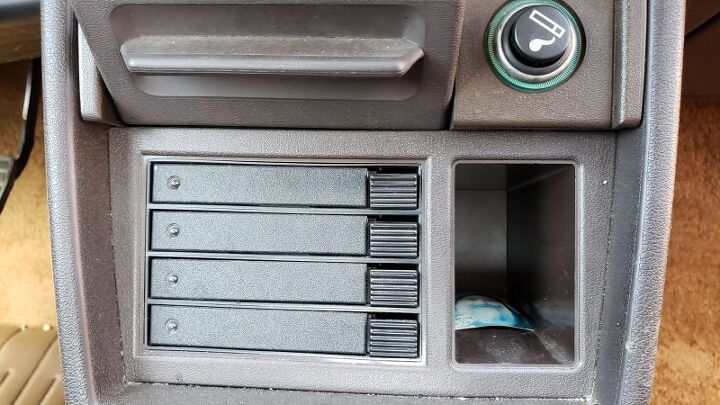
These pop-out tape cassette holders showed up in plenty of German cars during the 1980s. You push the button on the right and out pops a little drawer containing a cassette (presumably something by Laid Back or Nena, or maybe even some Nina Hagen). The next junkyard-parts boombox I build will feature several of these.
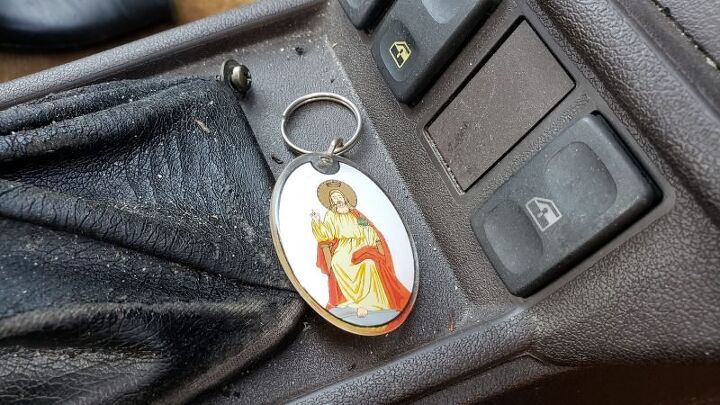
The religious keychain and dash stickers suggest that this car’s final owner belonged to some denomination of Orthodox Christianity.
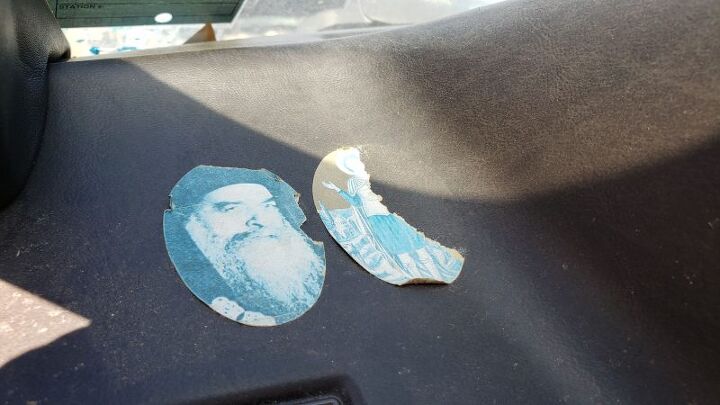
These saints watched over the car for 35 years, but now its journey is over.
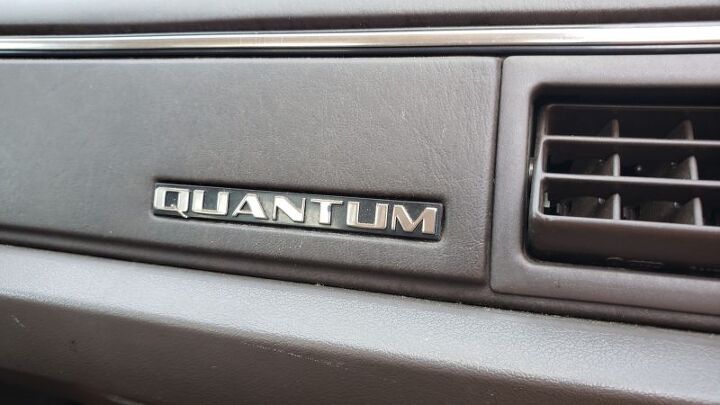
The final Quantums (Quanta?) sold in the United States were 1988 models. Starting in the 1990 model year, we got Passats over here.

It’s German and it’s cheap!

Sensible, too.

Perhaps we’d be better off learning about this car in its native language.

If you enjoy these junkyard tales, be sure to head over to the Junkyard Home of the Murilee Martin Lifestyle Brand™, where you’ll find links to more than 2,000 more.
Murilee Martin
Murilee Martin

Murilee Martin is the pen name of Phil Greden, a writer who has lived in Minnesota, California, Georgia and (now) Colorado. He has toiled at copywriting, technical writing, junkmail writing, fiction writing and now automotive writing. He has owned many terrible vehicles and some good ones. He spends a great deal of time in self-service junkyards. These days, he writes for publications including Autoweek, Hagerty and The Truth About Cars.

More by Murilee Martin

Comments
Join the conversation
2 of 14 comments
  • JimC2 JimC2 on Jul 29, 2020

    If we're talking music selection for those cassette tape holders and a fine, but slow German automobile, perhaps something by Accept would be suitable??

  • Shane Shane on Sep 19, 2020

    I remember back around 1994, I was in high school, a buddy of mine had what I believe was an ’85 Quantum. I took special interest because I drove an ’86 Audi 5000S, and recognized the Quantum as basically a slightly downmarket Audi 4000. I remember it being a decent car when he first got it. Next time I saw it, not long after, it didn’t run anymore and seemed to never run again. It was weird.

  • Amwhalbi My 1972 Mercury Capri was my first stick shift car. God, I miss that thing. It was a blast to drive.
  • Vid169489471 The technology exists today to produce a variable color temperature (kelvin) LED lamp. It can vary from 2700k that soft orange look to 6500k the bright daylight with the bluish tint.Since everything in a late model car is computer controlled, it would be an easy task to write a few lines of code that enables your vehicle to not only dim down from hi to low beam but to shift color temp down to the 2700k range for oncoming traffic, then back up to 5000k once oncoming traffic has passed. For the operator it would be automatic and seamless. For older cars they could be retrofitted with LEDs that are 2700k on low beam and 5000k on hi beam. As far as standards, there could be a lumens max, and a minimum. Several States already have minimum lumen standards going back to the old incandescent bulbs. Why not update these to national standards.
  • Jam169859557 More regulation is needed for ALL vehicle lighting systems. [list=1][*]The lighting that is most blinding are the rapidly flashing red, blue and amber lights on emergency vehicles. The lights themselves are blinding, flashing so rapidly that it's impossible for even the sharpest eyes to adjust. What's worse, is the nature of the emergency requires a careful view of the area surrounding the emergency vehicle. There is something going on that needs to be seen. More flashing lights is not the solution.[/*][*]Brighter headlights need to be regulated. The tall riding vehicles do not need headlights positioned so high that they blind drivers in lower riding vehicles. And those heasdlights need to be aimed properly. When I first started driving my 2020 Subaru Outback, many drivers would flash their lights, hoping I would dim my lights. This stopped after I performed am easy adjustment that tilted the beam lower. Late model Subaru headlamps are designed with a sharp cutoff that project less glare above the hood line. When the headlights are properly aimed, other drivers are not blinded by the beam.[/*][*]Customized light assemblies make it more difficult to see the marker lights (tail lamps, turn signals and side marker lamps) that have been tinted. There are many municiple codes that prohibit this tinting, but these laws are seldom enforced.[/*][/list=1]Solutions: Tight controls on emergency vehicle lighting. In trying to make these vehicles more visible, a dangerous side effect is reducing the ability of drivers to see the surrounding perils.Headlight design regulations that reduce the height of the headlight assemblies. Just because a pickup truck has a hood that sits 4 feet abouve the pavement, it does not mean the headlights need to be so high. Owneres should maintain proper adjustments to their vehicle headlights.Establish and enforce regulation requiring a illumination standard be followed.
  • Stl170698708 as someone who hates big government, and their interference;but you can add me to the list of people that are blinded by the lights.unfortunately "the poop is out of the horse and no way is it going back in"They have had 5 years to make lights bigger, badder and brighter because in the vehicle work it is go big or go home!Trucks are the worst because so many people use them to express their dominance and that is big, big, big $$ both at the Original Purchase and in the Aftermarket world.If, we are so lucky to get some good government regulation on this it will also take some very good Court enforcement to get the aftermarket people with fines and lawsuits.Much like the EPA did with the Diesel Tuner Industry that felt emission regulations didn't apply to them.This is from someone that owns said pickup truck with the same bright headlights,but i only use the truck when I have too and always turn off the Fog lights when driving in traffic.
  • Art65765977 I saw a porsche 911 with the most amazing headlights from behind approaching the Sunshine skyway in Florida. The pattern was 108 degrees across sweeping the road like a broom. My brother and I were amazed. I don't know what it looked like from the front but i am sure it was better than American cars
Next