
Rare Rides: The Obscure 1984 Frazer Tickford Metro, Aston Martin's Hatchback

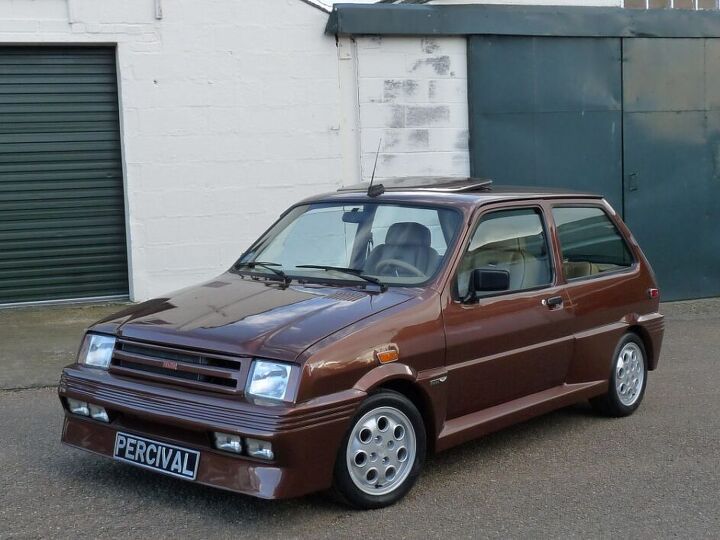
Ever wonder what would happen if a division of Aston Martin decided to create a luxury sports hatchback for a select few wealthy customers? Wonder no more — it’s Tickford Metro time.
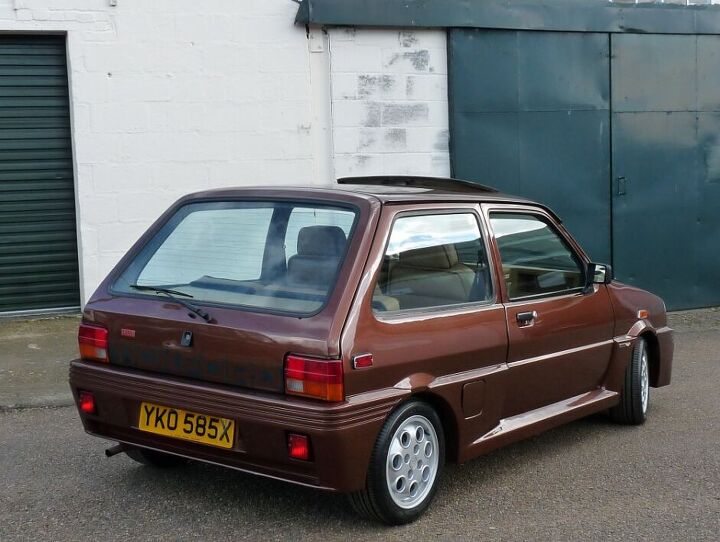
First, the car. Underneath the heavy modifications seen here is a Rover Metro. Launched in 1980 as theoretical replacement for the Mini, the Metro was a very important product for British Leyland. The Metro wore many different badges, and was even developed into a rally car by MG. The first generation was on sale from 1980 to 1990, at which point it was replaced by an all-new Metro that was actually just a revised version of the original. Its name changed to Rover 100 for the 1995 model year; the new identity attempted to cover up the car’s origins (which were still in 1980). As the 100, the Metro soldiered on through 1998, replaced in part by the more modern and expensive 200.
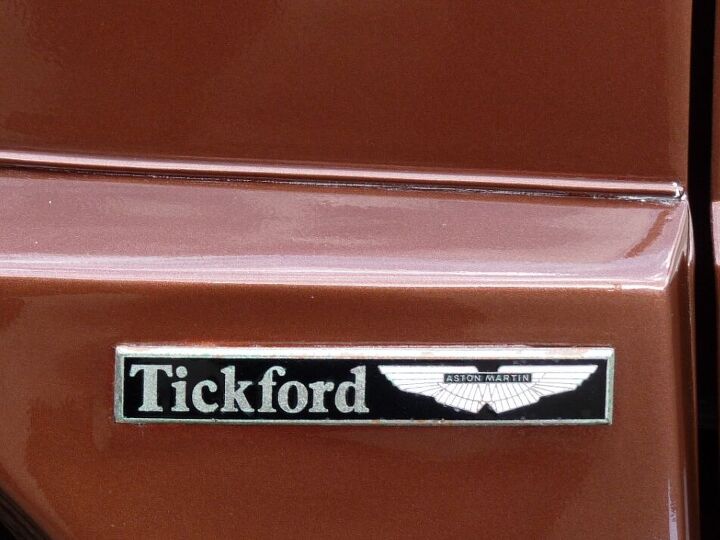
Metro covered, let’s talk Tickford. The company was founded in the 1820s in Buckinghamshire. Originally a builder of carriages, Tickford started making car bodies once internal combustion came on the scene. Through the 1930s, the company mostly built convertibles for companies like MG, Standard, and Daimler.
Well established as a coachbuilder, the company experienced high demand for its craftsmanship. Ownership changed in 1955 when Tickford was purchased by David Brown, then owner of Aston Martin. Brown moved Aston Martin production to the Tickford site, where it stayed through the DB7. All tied up with one another, Aston Martin created an engineering branch in 1981 and called it Aston Martin Tickford. Once again, Tickford could work on projects outside the confines of Aston Martin.
One of the new entity’s first projects was a turbo Capri for Ford, but Tickford also worked for British Leyland. Enter Metro.
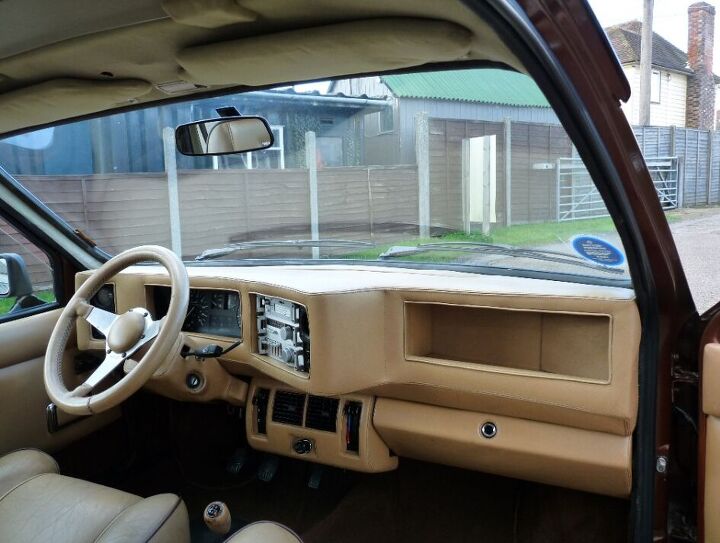
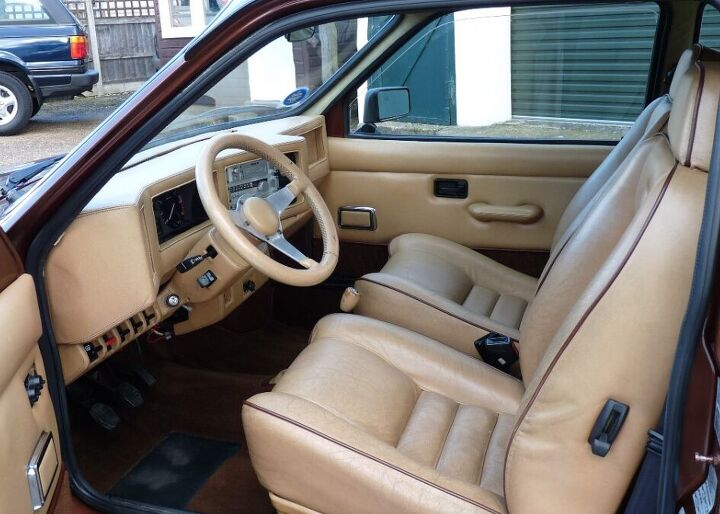
Introduced in 1981 at a cost of about $15,000 ($44,916 adjusted for inflation), the Tickford Metro was all about bespoke luxury and performance. The interior came coated in leather; it wrapped the doors, dash, and all new seats (from a Jag?) at the front. Premium audio with graphic equalizer occupied the newly swathed dash. A sunroof was standard, as were power windows and mirrors and phone dial wheels. The exterior also featured an aggressive body kit, revised fascias, and quad fog lamps. Underneath, Tickford tuned the standard Metro engine: New camshafts, valves, and heads were paired with a Weber carburetor for a full 80 horsepower.
Almost intended for obscurity, Tickford completed only 26 cars for some very special customers. Of that number, three were built with left-hand drive. Finished in beautiful brown, today’s Rare Ride is one of those three. Delivered straight to Los Angeles in 1984, it returned to its home country in 1986. With 9,600 miles since new, this one sold for an undisclosed sum in the recent past. It’s highly unlikely you’ll see another.
(H/T to Adam Tonge for finding this obscure ride.)
[Images: seller]
Interested in lots of cars and their various historical contexts. Started writing articles for TTAC in late 2016, when my first posts were QOTDs. From there I started a few new series like Rare Rides, Buy/Drive/Burn, Abandoned History, and most recently Rare Rides Icons. Operating from a home base in Cincinnati, Ohio, a relative auto journalist dead zone. Many of my articles are prompted by something I'll see on social media that sparks my interest and causes me to research. Finding articles and information from the early days of the internet and beyond that covers the little details lost to time: trim packages, color and wheel choices, interior fabrics. Beyond those, I'm fascinated by automotive industry experiments, both failures and successes. Lately I've taken an interest in AI, and generating "what if" type images for car models long dead. Reincarnating a modern Toyota Paseo, Lincoln Mark IX, or Isuzu Trooper through a text prompt is fun. Fun to post them on Twitter too, and watch people overreact. To that end, the social media I use most is Twitter, @CoreyLewis86. I also contribute pieces for Forbes Wheels and Forbes Home.
More by Corey Lewis







Comments
Join the conversation
Initial look made me think Renault Le Car . -Nate
This screams 80s hot hatch... I love it! The interior is a bit too fancy and over the top given the car's rally-like exterior. I bet it was blast to drive since I assume it was a featherweight.