


How Do Americans Manage to Pay Record High Prices for New Cars in 2017? By Paying Forever

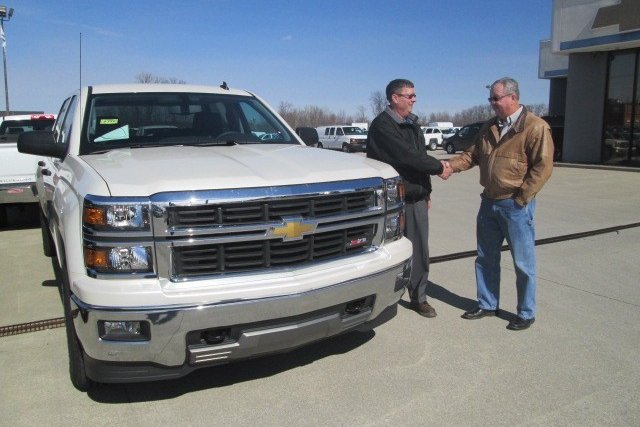
Yet month after month, for six consecutive months to begin 2017, automakers are witnessing fewer and fewer buyers walking into dealers after sales shot to record levels in calendar year 2016.
Incentives, at $3,550 per car, are an effective lure. But that doesn’t change the fact that buyers are paying, on average, $33,000 and borrowing, according to Edmunds, $31,000 in order to finance a purchase.
How do car buyers afford the highest prices on record? By stretching the payment period to the longest terms ever: 69.3 months in June, Edmunds says.
Still, the payments in June, at $517/month, were the highest they’d been all year; 11 percent higher than the average monthly payment was in 2012.
But the $500-plus payment is deemed tolerable, in part because it could have been much worse. Instead, because the average loan term now stretches to 69.3 months — meaning you won’t stop paying for the Ford Escape you drive away in today until April 2023 — America’s typical new car buyer can keep the payment in a comfortable zone.
Yet while the payment is comfortable now, the individual economic situation faced two or three years down the road when circumstances change may not be so enjoyable.
“It’s financially risky, leaving borrowers exposed to being upside down on their vehicles for a large chunk of their loans,” says Edmunds director of industry analysis, Jessica Caldwell, “but it’s also a sign that consumers are still confident enough in the economy to spend more on their vehicles and commit to paying for them longer.”
The length of an average new vehicle loan has grown 7 percent over the last five years.
But we’re just talking averages. Long-term loans with payment plans stretching 72 months or more now account for one-third of all loans, up from barely one-in-ten eight years ago, according to Experian.
As an example of enticing long-term loans, a 2017 Dodge Charger R/T is currently discounted by $2,750 and can be financed at 4.04 percent through FCA for a payment of $491/month over 72 months, or six years. Dropping the term to four years lowers the interest rate to 0.9 percent, but increases the payment by nearly $200, in part because FCA removes some of the discounts.
What about a 2017 Ford F-150, prior to the revamped 2018 F-150’s arrival? A Supercrew XLT 4×4 V8 Lariat is financed interest-free over 60 months at $813/month. Spread over 84 months, Ford increases the interest rate to 5.9 percent but drops the price by $1,250, lowering the payment to $692.
Consumers’ collective willingness to stretch those terms explains, in part, how Dodge sold 24-percent more Challengers this June than last; how Ford F-Series sales grew twice 10 percent.
[Images: GM, Ford]
Timothy Cain is a contributing analyst at The Truth About Cars and Autofocus.ca and the founder and former editor of GoodCarBadCar.net. Follow on Twitter @timcaincars.
More by Timothy Cain









Comments
Join the conversation
I've owned five cars, two new. I never felt like going and buying a new car when I commissioned in the Navy, as many do, and both of my new cars have been compact hatches. The urge to buy an expensive car mystifies me. Rather, the willingness to do it does, if not the desire. In the end, they all burn the same fuel, and the differences are mostly window dressing. But I wonder what the psychological explanation for this might be. The conventional wisdom is that Americans are pretty miserable with financial literacy, but I just don't buy that as the sole explanation. Could it be that a lot of people probably have no real chance of owning a decent home? Maybe for some, a relatively nice car is something they can eventually own in full. It's not a smart move, but I wonder if it doesn't factor in.
From MIT: Cash for Clunkers, total failure https://fee.org/articles/cash-for-clunkers-was-a-complete-failure/